The Lowest Point in the Western Hemisphere Is in Argentina - Not Death Valley
Laguna del Carbón: A Depression Deeper Than Most People Realize
Most people instinctively cite Death Valley when asked about the lowest point in the Western Hemisphere. That answer is wrong. Laguna del Carbón, located in the Santa Cruz province of Patagonia, sits at **105 meters (344 feet) below sea level** - significantly lower than Death Valley's 86 meters (282 feet) below sea level. It also holds the record as the lowest point in the Southern Hemisphere and the seventh lowest on Earth. The site is a salt lake within the Gran Bajo de San Julián depression, an arid, wind-scoured basin that sees almost no tourism despite holding a planetary geographic record.
How Argentina's Altitude Range Rivals That of Entire Continents
Argentina's vertical range is staggering. From Laguna del Carbón at −105 meters to Aconcagua at **6,961 meters (22,838 feet)** - the highest peak outside Asia - the country spans roughly **7,066 meters of elevation**. For context, that range exceeds the entire vertical relief of the continental United States. Aconcagua itself sits entirely within Argentine territory in Mendoza province and draws over 3,000 summit attempts annually.
Perito Moreno Glacier: One of the Only Growing Glaciers on Earth
Why This Glacier Defies Global Climate Trends
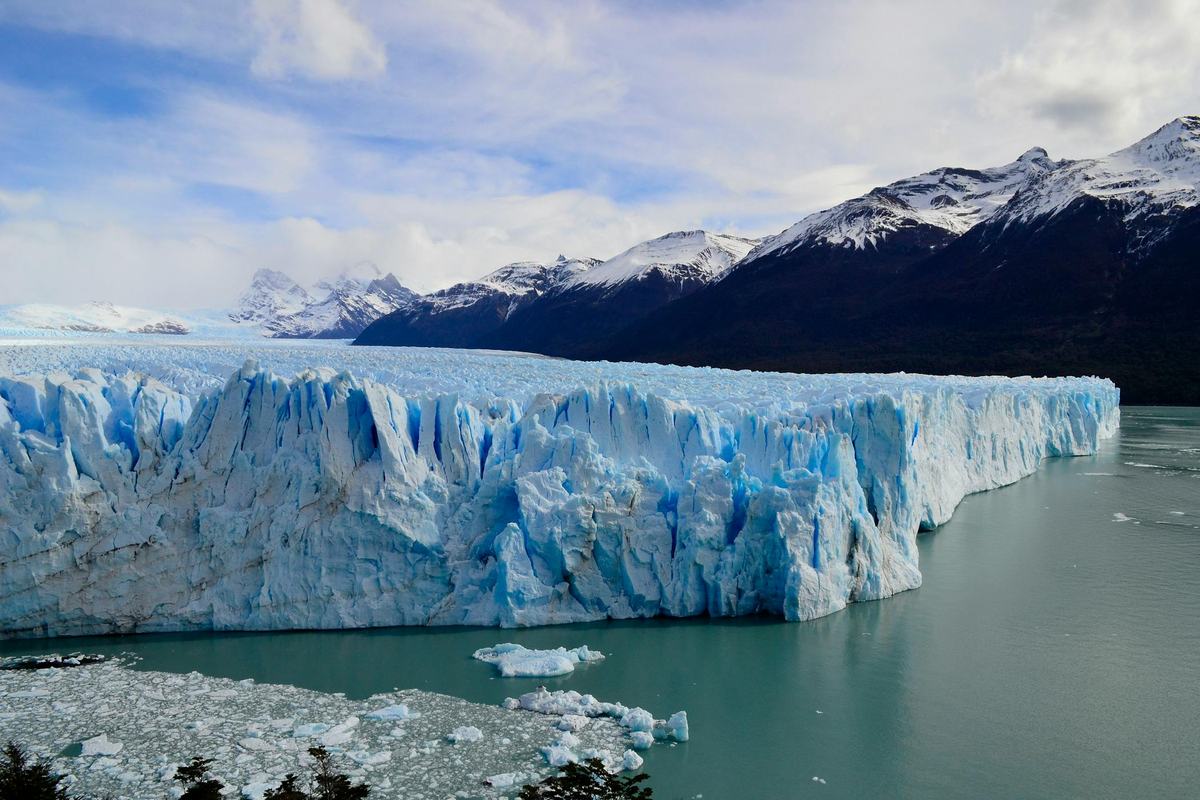
While roughly 90% of the world's glaciers are retreating, Perito Moreno in Los Glaciares National Park maintains a rare dynamic equilibrium - and has even advanced in recent decades. The glacier covers approximately **250 square kilometers** and reaches depths of up to **170 meters**. Its stability is driven by specific regional precipitation patterns and the geometry of the Andes, which channel moisture efficiently onto the Southern Patagonian Ice Field, the largest temperate ice mass in the Southern Hemisphere.
The Rupture Cycle That Happens Every Few Years and Draws Thousands of Witnesses
Perito Moreno periodically advances until it contacts the Magallanes Peninsula, blocking Brazo Rico from the main lake body. Pressure builds for months until a dramatic ice arch collapse - a **rupture event** - occurs, sometimes sending house-sized icebergs crashing into Lago Argentino. These events, which recur roughly every 2–4 years, attract tens of thousands of visitors and are among the few large-scale glaciological events observable safely by the public.
Argentina Controls the Largest Freshwater Reserve in South America
The Guaraní Aquifer: A Hidden Ocean Beneath Four Countries
The Guaraní Aquifer System underlies approximately **1.2 million square kilometers** across Argentina, Brazil, Paraguay, and Uruguay. Argentina holds around **255,000 square kilometers** of it - roughly the size of the United Kingdom. Total estimated volume is **37,000 cubic kilometers** of freshwater, enough to supply the entire global population for around 200 years at current consumption rates.
How Argentina's Share Compares to the Great Lakes of North America
The Great Lakes collectively hold approximately **22,671 cubic kilometers** of surface freshwater. The Guaraní Aquifer contains nearly **1.6 times that volume**, yet remains largely invisible to public awareness precisely because it's underground.
The Wind Corridor of Patagonia: Among the Fiercest Sustained Winds on the Planet
Why Patagonian Winds Are Structurally Different From Hurricanes
Hurricane-force winds are episodic and rotating. Patagonian winds are **persistent and directional** - driven by the near-unobstructed westerly flow across the Southern Ocean between 40°S and 60°S, a band mariners historically called the "Roaring Forties" and "Furious Fifties." This corridor funnels wind eastward with little landmass resistance until it hits Patagonia, producing sustained velocities that routinely exceed **100 km/h (62 mph)** for days at a stretch.
Comparing Patagonia's Wind Speeds to Those of Antarctic Stations
Certain Patagonian locations, particularly around Punta Arenas and Tierra del Fuego, record mean annual wind speeds comparable to coastal Antarctic research stations. Esperanza Base in Antarctica averages around **65 km/h**, while exposed Patagonian sites regularly match or approach this figure on a seasonal basis - without the polar temperature extremes, making Patagonia's wind environment uniquely hostile for infrastructure and agriculture.
Argentina Has the Highest Number of Psychologists Per Capita in the World
Buenos Aires: The City With More Therapists Than Any Other on Earth
Argentina holds a statistical anomaly that surprises virtually every researcher who encounters it: approximately 198 licensed psychologists per 100,000 inhabitants, according to data from the World Health Organization and the Argentine Federation of Psychologists. Buenos Aires alone concentrates this density dramatically, with estimates suggesting one therapist for every 100 porteños - a ratio that dwarfs New York, Vienna, and São Paulo combined. The neighborhood of Palermo has been nicknamed "Villa Freud" for decades, a half-joking reference to the near-impossible task of walking a single block without passing a therapeutic consultation office.
The Cultural and Historical Roots of Argentina's Psychoanalysis Obsession
This didn't emerge accidentally. European Jewish immigration between 1880 and 1950 brought a disproportionate number of physicians and intellectuals fleeing persecution, many of them directly trained in Freudian and Lacanian traditions. The Argentine Psychoanalytic Association was founded in 1942 - one of the earliest in Latin America - and psychoanalysis quickly embedded itself into middle-class identity rather than remaining a clinical specialty. Going to therapy became a mark of intellectual seriousness, not stigma. Military dictatorship periods (particularly 1976–1983) paradoxically accelerated this, as collective trauma created genuine demand that persisted across generations.
Comparing Argentina's Therapist Density to the United States and Germany
Context sharpens the picture. The United States, frequently cited as a therapy-saturated culture, maintains roughly 30 psychologists per 100,000 people. Germany, with its rigorous mental health infrastructure, sits near 52 per 100,000. Argentina's figure - approaching 200 - isn't a rounding error. It reflects a country where therapy is discussed at dinner tables, referenced in mainstream television, and considered a reasonable line item in a monthly budget even during economic crises.
Tango Was Actually Born in the Slums - And Was Once Banned
The African and Indigenous Roots of Tango That History Books Ignore
The sanitized version of tango history skips an uncomfortable origin: the genre emerged in the late 19th century from conventillos (tenement housing) in La Boca and the outskirts of Montevideo, where African candombe rhythms, Cuban habanera, and the milonga of gaucho culture collided. Enslaved Africans and their descendants brought syncopated percussion structures that form tango's rhythmic backbone. Mainstream Argentine nationalism later whitewashed these roots to construct a more "European" cultural identity.
How Tango Was Outlawed in Argentina Before It Became a National Symbol
Before tango became Argentina's proudest export, municipal authorities in Buenos Aires attempted to suppress it. Early 20th-century police ordinances targeted the dance's explicit physical contact and working-class associations. Catholic clergy condemned it publicly. The dance was considered obscene - practiced in brothels and low-end dance halls - and middle-class Argentines actively avoided it.
Why Paris Embraced Tango Before Buenos Aires Did
The reversal came through Paris. By 1910–1913, Parisian high society had adopted tango as fashionable exoticism, transforming it into a symbol of sophisticated modernity. That European validation functioned as a permission slip for Argentine elites to reclaim tango as national heritage - a classic pattern of cultural legitimization through foreign approval that Argentina repeated with several art forms throughout the 20th century.
Argentina's Book Publishing Industry Rivals That of Spain and Mexico Combined
Buenos Aires as the UNESCO World Book Capital and What That Really Means
Buenos Aires received UNESCO's World Book Capital designation in 2011, but the underlying numbers justify the title independently. Argentina produces approximately 25,000 new book titles annually, with Buenos Aires hosting over 700 bookstores - more per capita than any other city in the world, according to UNESCO's own assessments. The Buenos Aires International Book Fair consistently ranks among the three largest in the world by attendance, drawing over one million visitors in strong years.
The Argentinian Tradition of Independent Bookstores Compared to Global Trends
While independent bookstores collapsed across North America and much of Europe through the 2000s and 2010s, Buenos Aires sustained and in some neighborhoods expanded its independent book retail presence. This reflects both cultural priority and economic pragmatism - books remained price-controlled during certain inflationary periods, making them accessible commodities. The result is a reading culture that isn't merely nostalgic but structurally supported.
Mate Is Not Just a Drink - It's a Legally Protected Cultural Practice
Argentina's National Infusion Law and What It Actually Prohibits
In 2013, Argentina passed Law 26,871 formally declaring mate the "national infusion," a designation with practical teeth. The legislation prohibits mate from being taxed as a luxury good and mandates its availability in certain institutional settings. It also established promotional frameworks protecting traditional production methods. This isn't cultural symbolism - it's trade and consumption policy built around a beverage.
How Mate Consumption in Argentina Dwarfs Coffee Consumption in Italy Per Capita
Argentines consume approximately 6–8 kilograms of yerba mate per person annually, compared to Italy's coffee consumption of roughly 5.5 kilograms per capita - a country defined internationally by its coffee culture. Mate isn't consumed occasionally; it accompanies work, study, social gatherings, and solitary afternoons with a consistency that makes Italian espresso habits look moderate by comparison. The shared gourd and bombilla (metal straw) also encode social ritual - passing mate is an act of trust and inclusion that no coffee culture has replicated at equivalent scale.
Little-Known Facts About Argentina's Political and Economic History
The Golden Era of 1900–1930: When Buenos Aires Outshone Paris
At the turn of the 20th century, Argentina was not merely prosperous - it was a global economic powerhouse. By 1913, Argentina held the seventh-highest GDP per capita in the world, ahead of France, Germany, and Italy. Buenos Aires earned the nickname "Paris of the South" not as flattery but as genuine comparison: the city boasted grand Haussmann-style boulevards, a thriving opera scene at the Teatro Colón, and an immigrant population that rivaled New York's in scale and ambition. Between 1870 and 1930, Argentina absorbed over 6 million European immigrants, primarily from Italy and Spain, fueling an agricultural export boom built on beef, wheat, and wool.
Economic Comparison: Argentina vs. Australia and Canada in the Early 20th Century
The statistics are striking even today. In 1900, Argentina's GDP per capita was roughly equivalent to that of Canada and significantly higher than that of Sweden or Switzerland. Economists at the time grouped Argentina alongside Australia as one of the world's most promising settler economies. By 1929, Argentina accounted for approximately 3% of global trade - a remarkable figure for a single nation. The Rio de la Plata region alone was exporting more beef and grain than almost any comparable territory on earth.
What Caused the Most Dramatic Economic Collapse of a Wealthy Nation in Modern History
The decline unfolded across decades rather than overnight. The 1930 military coup disrupted institutional continuity. Perón's nationalist industrialization policies in the 1940s and 50s shifted capital away from the agricultural sector without building a sustainable industrial base. Chronic deficit spending, currency controls, and repeated debt defaults - Argentina has defaulted on sovereign debt nine times - compounded structural weaknesses. By 2002, a country that once rivaled Western Europe in living standards saw over 50% of its population fall below the poverty line within months.
Argentina Had Three Different Presidents in One Week in 2001
The Constitutional Crisis That the Western Media Largely Ignored
In December 2001, Argentina experienced one of the most acute political collapses in democratic history. Fernando de la Rúa resigned on December 20 amid violent protests that killed 39 people. What followed was a constitutional cascade: Ramón Puerta served two days, Adolfo Rodríguez Saá lasted a week before also resigning, Eduardo Camaño held the position briefly, and Eduardo Duhalde was finally appointed by Congress in January 2002 - five presidents in under two weeks by most counts. The trigger was the *corralito*, a banking freeze that locked citizens out of their own deposits, sparking mass street mobilizations and the iconic *cacerolazo* protests.
How This Event Compares to Political Instability in Other Democracies
Few established democracies have experienced comparable executive turnover in peacetime. Bolivia and Ecuador saw presidential removals during similar periods, but Argentina's crisis was distinctive because it occurred within constitutional frameworks - each succession technically followed procedure. Political scientists note this as a case study in how institutional legitimacy can collapse while formal legality is nominally preserved.
Argentina Was a Refuge for Nazi War Criminals - And Officially Acknowledged It
The Scale of Post-War Migration That Historians Still Debate
Estimates vary, but historians including Uki Goñi (*The Real Odessa*, 2002) document that between 1945 and 1952, Argentina received between 5,000 and 10,000 Nazi war criminals and collaborators. High-profile figures included Adolf Eichmann, architect of the Holocaust's logistics, and Josef Mengele, the Auschwitz physician. Ratlines - escape networks facilitated partly through Vatican intermediaries and Argentine consular officials - moved fugitives through Italy and Spain. President Juan Perón's government actively facilitated many of these entries, motivated by a desire for German technical expertise and ideological sympathy with European fascism.
Argentina's Official Apology and the Documents That Were Finally Declassified
In 1998, President Carlos Menem ordered the declassification of wartime immigration archives. The released documents confirmed that Argentine officials had issued false identity papers and expedited visas for known war criminals. In 2000, President Fernando de la Rúa issued a formal acknowledgment of Argentina's role - stopping short of a full apology but representing an unprecedented admission. The declassified files identified over 180 individuals who had entered under fraudulent documentation with government knowledge.
The Falklands War Had a Consequence That Changed Argentine Civil-Military Relations Forever
How Defeat Led Directly to the End of the Military Dictatorship
The 1982 Falklands War lasted 74 days and resulted in 649 Argentine military deaths and a humiliating defeat against British forces. The strategic miscalculation by General Leopoldo Galtieri - who assumed Britain would not respond militarily - destroyed the junta's credibility overnight. Within months of the surrender, the military government collapsed under the weight of defeat, economic crisis, and growing public awareness of the *Dirty War* atrocities (1976–1983) in which an estimated 30,000 people were disappeared. Elections were held in 1983, bringing Raúl Alfonsín to power and initiating one of Latin America's more successful democratic transitions.
Comparing Argentine Civil-Military Transition to Spain's Post-Franco Democratization
Spain's transition (*La Transición*, 1975–1982) involved negotiated continuity - Franco-era elites were largely accommodated within the new democratic framework, and a 1977 amnesty law shielded perpetrators of political violence from prosecution. Argentina's path was markedly different. The *Juicio a las Juntas* in 1985 prosecuted and convicted former junta leaders, including Videla and Massera, in a civilian court - a genuinely rare event in Latin American history. This prosecutorial approach, despite subsequent amnesty laws that temporarily reversed gains, established a precedent for transitional justice that influenced tribunals from Chile to Rwanda.
Remarkable Facts About Argentina's Science and Innovation
The Nobel Laureates Almost Nobody Outside Argentina Knows
Argentina's five Nobel laureates span medicine, chemistry, and peace - a breadth that reflects genuine scientific depth rather than isolated achievement. Bernardo Houssay won the 1947 Nobel Prize in Physiology or Medicine for his work on the pituitary gland's role in regulating blood sugar, making him Latin America's first science Nobel laureate. Luis Federico Leloir followed in 1970 with the Nobel Prize in Chemistry for discovering sugar nucleotides and their role in carbohydrate biosynthesis - research that remains foundational to biochemistry. César Milstein shared the 1984 Nobel Prize in Physiology or Medicine for developing monoclonal antibody technology, which now underpins billions of dollars in pharmaceutical treatments annually. Adolfo Pérez Esquivel received the 1980 Peace Prize for his human rights work during the dictatorship era, and Jorge Luis Borges - while never winning the Nobel - was a perennial candidate whose influence on global literature rivals that of many laureates.
Comparing Argentina's Nobel Count to the Rest of Latin America
Argentina's five Nobel Prizes in sciences and peace place it first in Latin America by a significant margin. Brazil, with a population nearly five times larger, has produced one Nobel laureate in sciences. Mexico has none. This disproportion traces directly to Argentina's early investment in public universities - the University of Buenos Aires, founded in 1821, became a serious research institution by the early twentieth century - and to the influence of European immigration, which brought scientific traditions from Germany, Italy, and Spain.
Argentina Developed Its Own Nuclear Technology Independently in the 1950s
The INVAP Company: Argentina's Largely Unknown Nuclear and Satellite Export Industry
INVAP, a state-owned company based in Bariloche, is one of the world's few organizations that designs and exports research nuclear reactors. It has sold reactors to Algeria, Egypt, Australia, and Peru, competing directly with suppliers from the United States, France, and Russia. Beyond reactors, INVAP builds satellites, radar systems, and medical equipment - a portfolio that would be remarkable for any country, let alone one rarely discussed in technology policy circles.
How Argentina Became a Nuclear Technology Exporter While Most Countries Are Importers
Argentina's nuclear program began in 1950 under President Perón, who established the Comisión Nacional de Energía Atómica (CNEA). Unlike Brazil or Mexico, Argentina chose to develop enrichment and reprocessing capabilities domestically. By the 1980s it had mastered the full nuclear fuel cycle. This decision, controversial during the Cold War, produced an industrial base that now generates export revenue and diplomatic leverage.
Argentina Is a Global Leader in Lithium and the Green Energy Transition
The Lithium Triangle: Argentina, Chile, and Bolivia's Combined Reserves vs. the Rest of the World
The Lithium Triangle - Argentina, Chile, and Bolivia - holds approximately 58% of the world's known lithium reserves, according to the U.S. Geological Survey. Argentina alone holds roughly 21 million metric tons of identified lithium resources, the second-largest national reserve globally after Bolivia. As electric vehicle demand accelerates, that concentration gives South America structural leverage in the green energy supply chain that few analysts outside the sector fully appreciate.
Why Argentina's Lithium Governance Model Differs Radically From Chile's
Chile channels lithium extraction through state control via CODELCO and strict licensing. Argentina, by contrast, devolves mineral rights to its provinces under a federal constitutional structure, creating a more fragmented but faster-moving investment environment. Provinces like Jujuy and Salta negotiate directly with companies including Lithium Americas and Allkem. This decentralization accelerates permitting but complicates environmental oversight - a tradeoff with no clean resolution.
Argentina Launched Its Own Satellites and Has a Homegrown Space Agency
CONAE vs. ESA and NASA: A Proportional Comparison of Capabilities
Argentina's space agency, CONAE (Comisión Nacional de Actividades Espaciales), operates on a budget a fraction of NASA's $25 billion annual allocation, yet has delivered functional Earth observation satellites, maintained international partnerships with NASA and ESA, and contributed meaningful data to global climate monitoring. On a per-dollar-spent basis, CONAE's output is striking.
The SAC Satellite Series and Its Contributions to Global Climate Science
CONAE's SAC (Satélite de Aplicaciones Científicas) series began with SAC-B in 1996 and progressed through SAC-C, SAC-D, and SAC-E. SAC-D, launched in 2011 in collaboration with NASA, carried the Aquarius instrument, which produced the first global maps of ocean surface salinity - data critical for modeling climate patterns and ocean circulation. That a mid-income South American country contributed instrumentation central to NASA's climate research program remains one of the more underreported stories in contemporary science.
Unusual Facts About Argentina's Biodiversity and Wildlife
Patagonia as the Dinosaur Capital of the World: Why Argentina Beats Montana and China
Patagonia's sedimentary basins have yielded more titanosaur species than any other region on Earth, with over 150 dinosaur species described from Argentine soil - a figure that continues to climb with each field season. The Neuquén Basin alone has produced more than 50 distinct genera. Montana's Hell Creek Formation and China's Gobi Desert are formidable competitors, but neither matches Argentina's combination of geological exposure, fossil density, and the sheer size of specimens recovered. The arid, wind-eroded terrain of Patagonia naturally exhumes fossils that would remain buried under vegetation elsewhere, giving paleontologists near-ideal excavation conditions.
The Patagotitan Mayorum: The Largest Animal That Ever Walked the Earth
Discovered in 2012 near La Flecha farm in Chubut Province and formally described in 2017, *Patagotitan mayorum* holds the verified record for the largest terrestrial animal in Earth's history. It measured approximately 37 meters in length, stood 6 meters at the shoulder, and weighed an estimated 69 metric tons - heavier than a Space Shuttle orbiter. The specimen, housed at the Egidio Feruglio Museum in Trelew, required a custom-built gallery because it couldn't fit in a standard exhibition hall. Its femur alone stands taller than most adult humans at 2.4 meters.
How Argentina's Fossil Export Laws Compare to Those of the United States and Mongolia
Argentina's Law 25.743, passed in 2003, classifies all paleontological remains as public domain property of the state, making unauthorized export a federal crime. Mongolia enforces similarly strict regulations, having famously repatriated smuggled specimens from U.S. auction houses. The United States, by contrast, allows fossils found on private land to be sold commercially - a policy that has driven significant black-market activity and led to the controversial auctioning of *T. rex* specimens. Argentina's framework is closer to Mongolia's protective model, though enforcement in remote Patagonia remains logistically challenging.
The Gran Chaco Is the Second Largest Forest in South America - And Almost Nobody Talks About It
Biodiversity Comparison: Gran Chaco vs. Amazon in Terms of Unique Species
The Gran Chaco spans roughly 1.1 million square kilometers across Argentina, Paraguay, Bolivia, and Brazil, making it the second largest contiguous forest in South America after the Amazon. It supports over 3,400 plant species, 500 bird species, and 150 mammal species, including the giant anteater and the elusive Chacoan peccary - a species so obscure it was known only from fossil records until its living discovery in 1975. While it lacks the Amazon's total species count, its dry forest ecosystem hosts a disproportionate number of endemic species adapted to extreme heat and seasonal drought.
Deforestation Rates in the Chaco That Exceed Those Reported for the Amazon
Between 2010 and 2018, the Argentine Chaco lost forest at rates frequently surpassing 400,000 hectares per year, driven primarily by soy expansion and cattle ranching. Satellite analysis by organizations including NASA and the Universidad de Buenos Aires identified the Argentine dry Chaco as one of the four global deforestation hotspots during that period - a designation the Amazon has historically monopolized in public discourse. Argentina's Forest Law (No. 26.331), enacted in 2007, mandated land-use zoning but has faced persistent violations, with enforcement budgets chronically underfunded.
Argentina Has More Species of Wild Cats Than Any Country in the Americas Except Brazil
The Jaguar, Puma, Ocelot, and Three Others: A Breakdown of Argentina's Felid Diversity
Argentina hosts six wild felid species: the jaguar (*Panthera onca*), puma (*Puma concolor*), ocelot (*Leopardus pardalis*), margay (*Leopardus wiedii*), Geoffroy's cat (*Leopardus geoffroyi*), and the pampas cat (*Leopardus colocola*). Only Brazil, with eight species, surpasses this count in the Western Hemisphere. Each occupies a distinct ecological niche - the jaguar dominates the subtropical northeast, the puma ranges across virtually every Argentine biome from Patagonian steppe to Andean cloud forest, while Geoffroy's cat is one of the most southerly distributed wild felids on the planet, recorded as far south as Santa Cruz Province.
Conservation Efforts That Brought the Jaguar Back to Argentina's Northeast
By the early 2000s, fewer than 200 jaguars remained in Argentina, confined to isolated pockets of Misiones Province. Rewilding Argentina's Iberá Project, in partnership with the government of Corrientes Province, began reintroducing jaguars in 2021 using individuals sourced from Brazil and Bolivia. As of 2023, cubs had been born within the Iberá wetlands - the first wild jaguar births in the region in approximately 70 years. The program targets a self-sustaining population of 100 individuals within the greater Iberá landscape, which at 1.3 million hectares represents one of South America's largest rewilding projects by area.
Fascinating Facts About Argentina's Food Culture Beyond Steak and Empanadas
Historical Peak Consumption vs. Today: What Changed Argentine Eating Habits
Argentina's relationship with beef is legendary, but the numbers tell a more nuanced story. In the 1950s, Argentines consumed an extraordinary 98 kilograms of beef per capita annually - a figure that remains unmatched in recorded history. By 2023, that number had fallen to approximately 46–48 kg per capita, still among the world's highest but representing a dramatic halving over seven decades.
What drove the decline? A combination of economic inflation, rising domestic beef prices, and genuine dietary diversification. As beef became increasingly expensive relative to wages - particularly during Argentina's recurring economic crises - chicken and pork consumption rose sharply. Chicken consumption grew from under 10 kg per capita in the 1980s to roughly 45 kg today, nearly matching beef. Younger urban Argentines are also adopting vegetarian and flexitarian diets at measurably higher rates than previous generations.
Argentina vs. Uruguay vs. Uruguay vs. USA: A Beef Consumption Comparison by Decade
Country 1990 (kg/capita) 2010 (kg/capita) 2022 (kg/capita) Argentina ~73 ~57 ~47 Uruguay ~68 ~52 ~42 USA ~45 ~40 ~37
Uruguay consistently trails Argentina by a small margin, while the United States - often assumed to be the world's top beef consumer - has never come close on a per-capita basis.
Dulce de Leche Was Almost Certainly Not Invented in Argentina - But Argentina Made It Global
The Three Countries That Claim Dulce de Leche's Origin and Who Has the Best Evidence
Argentina, Uruguay, and France all stake claims. The French candidate is *confiture de lait*, documented as early as the 19th century. Uruguay points to oral tradition and geographic proximity to early Argentine production centers. Argentina's most specific claim involves an 1829 legend tied to General Juan Manuel de Rosas, where a cook allegedly created the mixture by accident - though food historians widely regard this as apocryphal.
The most credible evidence suggests caramelized milk-sugar products emerged independently across multiple cultures wherever cattle herding and sugar access coincided. Indonesia, Mexico, and the Philippines have analogous preparations predating Argentine documentation.
How Argentina's Dairy Industry Turned a Regional Condiment Into a Worldwide Export
What Argentina unquestionably did was industrialize and standardize it. The first commercial production began in the early 20th century. Today, Argentina exports dulce de leche to over 40 countries, with the United States and Spain as primary markets. The Argentine dairy industry produces approximately 120,000 metric tons annually, embedding dulce de leche into global food culture through its croissants, ice cream industry, and confectionery exports.
Argentina Is the Fifth Largest Wine Producer in the World - And Malbec Is Not Originally Argentine
The French Origin of Malbec and Why It Thrives in Mendoza But Died Out in France
Malbec originated in Cahors, southwest France, where it was known as Côt or Auxerrois. It was one of Bordeaux's traditional blending grapes until phylloxera devastated French vineyards in the 1870s and 1880s. Replanting decisions effectively marginalized Malbec in France - it now represents under 1% of French vineyard plantings.
Argentine viticulture received Malbec cuttings before phylloxera arrived, and Mendoza's specific conditions - high altitude, intense UV radiation, dramatic diurnal temperature swings of 15–20°C - produced a fuller, richer expression of the grape than its French homeland ever achieved. The altitude matters enormously: Mendoza's vineyards sit at 600–1,100 meters, with some premium plots at Luján de Cuyo reaching 1,500 meters.
Altitude Comparison: Mendoza Vineyards vs. French and Italian Wine Regions
Region Average Vineyard Altitude Cahors, France (original Malbec home) 150–300 m Bordeaux, France 0–80 m Tuscany, Italy 250–600 m Mendoza, Argentina 600–1,100 m Luján de Cuyo (premium) up to 1,500 m
This altitude advantage concentrates sugars while preserving acidity, producing the bold-yet-structured profile that made Argentine Malbec an international phenomenon. Argentina now exports Malbec to over 100 countries, generating more than $900 million USD in wine export revenue annually.
Argentina Has a Thriving Pizza Culture That Differs Fundamentally From Italian Pizza
The Fugazzeta: A Pizza Style That Exists Nowhere Else on Earth
Buenos Aires receives less tourism credit for pizza than Naples or New York, which is genuinely puzzling given what the city produces. Argentine pizza is thicker, doughy, and cheese-heavy by design - a product of the massive Italian immigration wave between 1880 and 1930, when over two million Italians arrived and adapted their food traditions to local ingredients.
The fugazzeta is Argentine pizza's most distinctive creation: a double-crusted pizza filled internally with mozzarella, topped with caramelized onions, and finished with minimal tomato or none at all. It has no direct Italian equivalent. El Cuartito and Güerrín in Buenos Aires have been serving versions of it since the 1930s and remain institutions.
Buenos Aires Per Capita Pizza Consumption vs. Naples and New York City
Buenos Aires reportedly has approximately 600 dedicated pizzerias - one of the highest concentrations per capita of any city globally. Porteños consume an estimated 14–16 slices of pizza per person per month, a figure that rivals or exceeds New York City's famous pizza consumption rates. Naples, while pizza's birthplace, has a population that eats pizza frequently but maintains a smaller per-capita pizzeria density than Buenos Aires. The Argentine capital's pizza culture is not derivative - it is a fully evolved parallel tradition with its own vocabulary, techniques, and cultural rituals.
Overlooked Facts About Argentina's Demographics and Society
Argentina's population is approximately 97% white or mestizo by some census estimates, making it demographically distinct from virtually every other Latin American nation. But that headline figure obscures a genuinely complex layering of migrations across different historical periods.
The Wave Migrations That Shaped Argentina: Italians, Spanish, Jews, Welsh, and Japanese
Between 1880 and 1930, Argentina received roughly 6.6 million immigrants - one of the largest mass migrations in the Western Hemisphere relative to the existing population. Italians dominated, comprising nearly half of all arrivals; today, an estimated 25 million Argentines claim Italian descent. Spanish immigrants followed closely. But Argentina also absorbed the third-largest Jewish population in the world by the early 20th century - a community that still numbers around 180,000 to 300,000, concentrated heavily in Buenos Aires. Japanese agricultural communities settled in Misiones and Entre Ríos. Syrian and Lebanese migrants became economically influential far beyond their numbers. The result is a country where the president can be named Milei or Macri, surnames that signal Italian and Greek ancestry respectively.
The Welsh Colony in Patagonia That Still Speaks Welsh After 150 Years
In 1865, 153 Welsh settlers landed at Golfo Nuevo in Patagonia, seeking to establish a colony where Welsh culture and language could survive outside of Britain. The settlement, called Y Wladfa, succeeded more durably than almost anyone predicted. Today, the Chubut Province towns of Gaiman and Trelew retain functioning Welsh-language schools, chapels, and tea houses that serve tourists. An estimated 1,500 to 5,000 people in Argentina still speak Welsh, and language exchange programs with Wales remain active. It is arguably the most successful deliberate linguistic preservation colony in modern history.
Comparing Ethnic Composition: Argentina vs. Uruguay vs. Brazil
Argentina's demographic profile diverges sharply from its neighbors. Brazil is roughly 43% white, 47% mixed-race (pardo), and 8% Black - a direct reflection of its plantation economy and the scale of the transatlantic slave trade. Uruguay shares Argentina's heavily European composition at around 87% white, partly because both countries had lower Indigenous populations at contact and aggressively promoted European immigration. Argentina's Indigenous population today represents roughly 2.4% - significant in absolute numbers (over one million people) but a smaller share than Bolivia (60%+) or Peru (45%+).
Argentina Was the First Country in Latin America to Legalize Same-Sex Marriage
How Argentina Beat Spain, France, and the United States to Full Marriage Equality
Argentina legalized same-sex marriage on July 15, 2010 - four years before France, five years before the United States' *Obergefell v. Hodges* ruling, and in the same year as Portugal. The legislation passed the Senate by a narrow 33–27 vote after an overnight debate that drew tens of thousands of protesters and supporters to Buenos Aires.
The Legal Frameworks That Made Argentina a Model for Gender Identity Law Globally
Argentina followed in 2012 with a Gender Identity Law considered among the most progressive in the world: individuals can legally change their gender marker without surgery, psychiatric diagnosis, or judicial approval - a standard that most European countries did not reach until years later.
Buenos Aires Is Larger Than Many Countries - And Functions Like a Nation Within a Nation
Population and GDP Comparison: Greater Buenos Aires vs. Entire Countries in South America
Greater Buenos Aires holds approximately 15 million people - more than Bolivia, Paraguay, or Uruguay individually. The metropolitan area generates roughly 50% of Argentina's GDP while containing about 33% of its population, a concentration without parallel in South America.
The Political Tension Between Buenos Aires and the Interior That Has Shaped Argentine History
This imbalance has driven recurring political conflict. The federalism vs. centralism debate consumed Argentine politics throughout the 19th century, including a civil war. Today, provincial governments frequently clash with Buenos Aires over revenue-sharing (coparticipación federal), and interior provinces like Mendoza, Córdoba, and Santa Fe have periodically organized political coalitions explicitly to counterbalance porteño dominance.