Why Afghanistan Continues to Astonish the World: An Expert Overview
Afghanistan's Geographic Position: The Crossroads of Ancient Civilizations
The Wakhan Corridor: Afghanistan's Narrow Finger Touching China
The Wakhan Corridor is one of geography's most unusual political formations — a narrow strip of territory stretching approximately 350 kilometers eastward, tapering to as little as 15 kilometers wide at certain points before touching the Xinjiang region of China. Created deliberately during the 1880s as part of the Anglo-Russian agreements that defined the "Great Game" buffer zones, the corridor served as a deliberate geographic barrier between British India and the Russian Empire. Today, it remains one of the most remote inhabited territories on Earth, home to small communities of Wakhi and Kyrgyz people living above 4,000 meters elevation with virtually no road infrastructure.
How Afghanistan Borders Six Nations and Why That Matters Geopolitically
Afghanistan shares borders with six countries: Pakistan (2,670 km), Iran (921 km), Turkmenistan (804 km), Uzbekistan (144 km), Tajikistan (1,357 km), and China (76 km). This configuration is not merely cartographic trivia. It positions Afghanistan at the convergence of South Asia, Central Asia, and the Middle East — three of the world's most strategically consequential regions. Every major power that has sought regional dominance, from Alexander the Great to the Soviet Union, has recognized that controlling Afghanistan means influencing multiple adjacent power blocs simultaneously.
The Landlocked Reality: Comparing Afghanistan to Other Landlocked Nations
Afghanistan's landlocked status places it among 44 landlocked countries worldwide, but its situation is particularly severe. Unlike Switzerland or Austria, which are landlocked but surrounded by wealthy trading partners with excellent infrastructure, Afghanistan is what economists classify as a "doubly landlocked" adjacent nation — meaning several of its neighbors are themselves landlocked. This dramatically increases trade costs, with estimates suggesting landlocked developing nations face trade costs roughly 50% higher than coastal equivalents.
Afghanistan's Age: One of the World's Oldest Continuously Inhabited Regions
Mundigak: A 5,000-Year-Old City Predating Many Famous Civilizations
Located near modern Kandahar, Mundigak is an archaeological site with occupation layers dating to approximately 3000 BCE, making it contemporary with early Dynastic Egypt and predating Rome by over 2,500 years. French archaeological missions in the 1950s uncovered evidence of sophisticated urban planning, palatial structures, and long-distance trade networks connecting the site to the Indus Valley Civilization.
How Afghanistan's Settlement History Compares to Mesopotamia and Egypt
While Mesopotamia and Egypt dominate popular historical narratives, Afghanistan's Amu Darya basin hosted the Oxus Civilization (Bactria–Margiana Archaeological Complex) around 2200–1700 BCE — a Bronze Age urban culture with standardized weights, monumental architecture, and trade contacts stretching from the Persian Gulf to the Eurasian steppe.
Top Interesting Facts About Afghanistan Most People Have Never Heard
Afghanistan Produces Over 85% of the World's Lapis Lazuli
The Sar-e-Sang Mine: Operating for Over 6,000 Years Without Interruption
Located in Badakhshan province, the Sar-e-Sang mine in the Kokcha River valley represents one of the longest continuously operated extraction sites in human history. Archaeological evidence confirms active mining here since approximately 4000 BCE, predating the Egyptian pyramids. Ancient trade records show lapis lazuli from this single location reaching Mesopotamia, the Indus Valley, and dynastic Egypt, making it arguably the world's first globally traded luxury commodity.
How Afghan Lapis Lazuli Colored Renaissance Masterpieces in Europe
The vivid ultramarine blue defining works by Vermeer, Raphael, and Michelangelo originated almost exclusively from Badakhshan. Painters ground the stone into pigment to produce ultramarine, which cost more per ounce than gold throughout the 14th and 15th centuries. Patrons who commissioned lapis-heavy paintings were explicitly signaling wealth. The Virgin Mary's iconic blue robes in Renaissance art became standardized precisely because lapis lazuli was the most expensive pigment available, making it theologically appropriate for the holiest female figure in Christianity.
Lapis Lazuli Export Value Compared to Other Global Gem-Producing Nations
Afghanistan generates an estimated $30–$60 million annually from lapis lazuli exports, though significant portions move through informal channels. Myanmar, the only other notable producer, supplies roughly 5–8% of global output. No other nation competes meaningfully at scale.
Afghanistan Sits on Nearly $1 Trillion in Untapped Mineral Wealth
Rare Earth Minerals: Why Afghanistan May Become the 'Saudi Arabia of Lithium'
A 2010 Pentagon geological survey estimated Afghanistan's mineral deposits at approximately $908 billion. Internal USGS assessments specifically flagged lithium concentrations in Ghazni province as potentially matching Bolivia's Salar de Uyuni, currently the world's largest known lithium reserve. With global lithium demand projected to increase 40-fold by 2040 driven by battery technology, Afghanistan's reserves carry extraordinary strategic significance.
Comparing Afghanistan's Mineral Reserves to Congo, Chile, and Australia
Country Primary Mineral Wealth Estimated Reserves Afghanistan Iron, copper, lithium, rare earths ~$908 billion Chile Copper, lithium ~$14.3 trillion total resources DR Congo Cobalt, coltan ~$24 trillion Australia Iron ore, gold, LNG ~$19.9 trillion
Afghanistan's figures remain conservative given incomplete geological surveying across conflict-affected regions.
The Helmand River Valley: Copper Deposits Larger Than Most Known Reserves
The Aynak copper deposit in Logar province contains an estimated 5.5 million metric tons of copper, ranking among the largest undeveloped copper reserves globally. China's MCC Group secured extraction rights in 2008 for $3 billion but suspended operations indefinitely amid security deterioration.
The World's First Oil Paintings Were Created in Afghan Caves
Bamiyan Cave Paintings Dated to the 5th-9th Century AD
Researchers from the European Synchrotron Radiation Facility analyzed pigment samples from Bamiyan's cave murals in 2008, identifying drying oils - walnut and poppy - as binding agents. These findings pushed the documented origin of oil painting back by approximately 500 years, predating Jan van Eyck's Flemish techniques, long credited as the invention point.
How These Paintings Predate European Oil Painting Techniques by Centuries
The Bamiyan artists applied oil-based paint in layered techniques across caves numbered 57 and 58, depicting Buddhist figures in styles reflecting both Hellenistic and Gandharan influences. European painters didn't demonstrably adopt oil-binding methods until the 12th century at earliest, with systematic use emerging only in the 15th century. The Afghan precedent fundamentally revises Western art history's standard timeline.
Afghanistan Once Had a Thriving Film Industry Before 1996
Afghan Cinema in the 1970s: A Comparison to Bollywood's Early Growth
Afghan Film, the state production house established in 1968, produced commercially screened features through the 1970s and 1980s. Kabul operated functioning cinemas with regular domestic releases. The industry remained modest compared to Bollywood's output but maintained genuine cultural traction, with films addressing social themes under both republican and communist-era governments.
The Afghan Film Archive and Its Secret Preservation of 2,000+ Films Under Taliban Rule
When the Taliban banned cinema in 1996, Afghan Film employees concealed over 2,000 reels inside the organization's Kabul building, stacking them behind false walls and mislabeling containers. The archive survived intact through five years of prohibition. After 2001, international film preservationists including teams from the Library of Congress assisted in cataloging and restoring recovered reels, many representing the only surviving documentation of pre-war Afghan urban culture.
10 Fun Facts About Afghanistan That Defy Common Stereotypes
Buzkashi: A Sport So Extreme It Influenced the Origin of Polo
Rules of Buzkashi and How It Differs From Any Other Sport in the World
Buzkashi — literally "goat pulling" in Dari — involves mounted horsemen competing to grab a headless goat or calf carcass (called a boz) and carry it across a designated scoring circle. There are no fixed team sizes, no strict time limits in traditional formats, and physical contact between riders is not just permitted but expected. The carcass typically weighs 40–50 kilograms after being soaked in cold water to toughen it. Two primary formats exist: tudabarai (free-for-all) and qarajai (structured team play with defined goals). Professional players, called chapandaz, often don't reach peak skill until their 40s, requiring decades of horsemanship training.
Comparing Buzkashi to Polo: Origins, Similarities, and Cultural Significance
Polo historians trace the sport's earliest documented origins to Central Asia and Persia around 600 BCE, with strong evidence that buzkashi-style competitions directly preceded formalized polo. Both sports are equestrian, both involve controlling an object while mounted, and both originated in the same geographic corridor stretching from Afghanistan through Persia into northern India. British colonial officers observing Central Asian buzkashi in the 19th century helped codify polo into the structured game exported globally. Where polo became aristocratic and rule-bound, buzkashi retained its chaotic, warrior-culture roots.
Afghanistan Has Its Own Distinct New Year Called Nowruz
Nowruz in Afghanistan vs. Nowruz Celebrations Across Iran, Turkey, and Central Asia
Nowruz (meaning "New Day") marks the Persian New Year on the spring equinox — around March 21 — and is celebrated across Afghanistan, Iran, Tajikistan, Azerbaijan, Turkey, and parts of Iraq and India. UNESCO inscribed Nowruz on its Intangible Cultural Heritage list in 2009. While celebrations share roots, Afghan Nowruz is distinguished by its deep pre-Islamic, Zoroastrian character and its connection to agricultural renewal. In Iran, haft-seen table arrangements dominate; in Afghanistan, communal outdoor gatherings, tent festivals, and buzkashi tournaments take center stage.
The Mazar-i-Sharif Flower Festival: A Tradition Over 1,000 Years Old
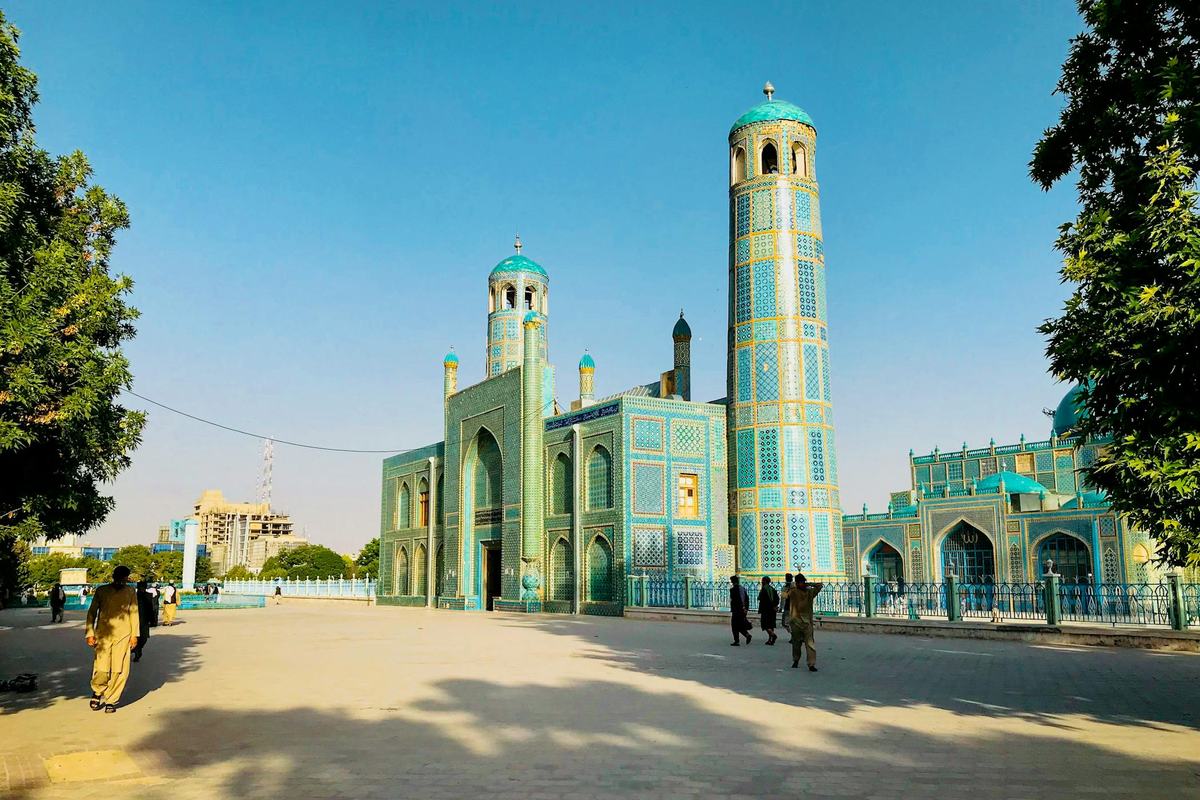
Mazar-i-Sharif hosts the Gul-e-Surkh (Red Flower) Festival during Nowruz, centered on the blooming of red tulips around the iconic Blue Mosque (Shrine of Hazrat Ali). Historical records place organized spring celebrations at this site going back over a millennium. Pilgrims travel from across Afghanistan and neighboring countries. Raising the janda — a sacred banner — at the Blue Mosque officially opens the New Year and draws tens of thousands annually, representing one of Central Asia's most enduring living traditions.
Afghanistan's National Sport Is Not What Most People Think
Why Buzkashi Was Officially Declared the National Sport and When
Most outsiders assume football (soccer) or cricket — both widely played — represents Afghanistan's national sport. In fact, buzkashi holds official national sport status, a designation formalized during the reign of King Mohammed Zahir Shah, who ruled from 1933 to 1973. Zahir Shah personally patronized buzkashi tournaments in Kabul, elevating the sport from regional tradition to national symbol. The Afghan Olympic Federation has documented buzkashi's formal status, though exact codification dates vary across sources between the 1950s and 1970s.
How Afghanistan's Sports Culture Compares to Neighboring Pakistan and India
Cricket dominates Pakistan and India — both nations rank among the world's top-10 cricket-playing populations, with India's cricket board (BCCI) generating over $1.6 billion annually. Afghanistan, by contrast, developed cricket prominence only recently; the Afghanistan Cricket Board gained Full Member status from the ICC in 2017. Yet Afghanistan's cricket rise has been remarkable — the national team has defeated test-playing nations including the West Indies and Ireland. Buzkashi remains culturally irreplaceable, but cricket's grassroots penetration, particularly among younger Afghans in the north and east, now rivals traditional equestrian sports in popularity.
Afghanistan Has Over 40 Recognized Ethnic Groups and 30+ Languages
The Nuristani People: A Group With Possible Ancient Greek Ancestry
The Nuristani people of northeastern Afghanistan — numbering approximately 500,000 — carry a distinctive genetic and cultural profile that has fueled speculation about Macedonian Greek ancestry since Alexander the Great's campaigns in the region (327–325 BCE). Physical features including light eyes and fair hair appear at higher rates than surrounding populations. A 2012 genetic study published in Human Genetics found elevated European haplogroup markers among Nuristani samples. Their pre-Islamic religion, practiced until forced conversion in 1895–96 (which renamed their region from "Kafiristan" to "Nuristan"), involved polytheistic practices bearing structural similarities to ancient Indo-European belief systems.
Linguistic Diversity Comparison: Afghanistan vs. Papua New Guinea and India
Afghanistan recognizes Dari and Pashto as official languages but hosts 30–50 distinct languages depending on classification methodology. These include Uzbek, Turkmen, Balochi, Pashayi, Nuristani dialects, and Pamiri languages. Papua New Guinea leads globally with approximately 840 languages across a population of 10 million. India documents 22 scheduled languages with over 1,600 mother tongues recorded in its census. Afghanistan's linguistic density — roughly one distinct language per 800,000 people — reflects its position as a crossroads civilization absorbing Turkic, Indo-Iranian, and Indo-European linguistic streams over 3,000 years.
Afghans Invented the Game of Chess? Tracing Shatranj's Origins
The Debate Between Afghanistan, India, and Persia Over Chess Origins
Chess origins remain genuinely contested among historians. The dominant academic consensus places chaturanga — the Sanskrit precursor to chess — in the Gupta Empire of northern India around the 6th century CE. However, competing theories cite the Kushan Empire (which covered modern Afghanistan, Pakistan, and northern India) as an earlier development zone. Persian scholars transmitted the game westward as shatranj following the Islamic conquest of Persia in the 7th century. Afghanistan's Balkh — one of the ancient world's great intellectual cities — appears in Arabic manuscripts as a center of shatranj scholarship by the 8th century CE.
How Afghan Shatranj Boards Were Traded Along the Silk Road
Archaeological excavations at Silk Road sites in Central Asia have recovered carved game pieces consistent with early shatranj sets. Balkh's position on primary Silk Road routes made it a natural distribution point for board games, manuscripts, and luxury goods moving between China, India, Persia, and the Mediterranean. Medieval Arab texts, including Al-Masudi's Meadows of Gold (943 CE), reference Central Asian origins for certain chess variants. Whether Afghanistan invented chess remains unresolved, but its role in transmitting and refining the game across Eurasia is historically documented and significantly underrecognized.
{'heading': 'Buzkashi: A Sport So Extreme It Influenced the Origin of Polo', 'h4': ['Rules of Buzkashi and How It Differs From Any Other Sport in the World', 'Comparing Buzkashi to Polo: Origins, Similarities, and Cultural Significance']}
{'heading': 'Afghanistan Has Its Own Distinct New Year Called Nowruz', 'h4': ['Nowruz in Afghanistan vs. Nowruz Celebrations Across Iran, Turkey, and Central Asia', 'The Mazar-i-Sharif Flower Festival: A Tradition Over 1,000 Years Old']}
{'heading': "Afghanistan's National Sport Is Not What Most People Think", 'h4': ['Why Buzkashi Was Officially Declared the National Sport and When', "How Afghanistan's Sports Culture Compares to Neighboring Pakistan and India"]}
{'heading': 'Afghanistan Has Over 40 Recognized Ethnic Groups and 30+ Languages', 'h4': ['The Nuristani People: A Group With Possible Ancient Greek Ancestry', 'Linguistic Diversity Comparison: Afghanistan vs. Papua New Guinea and India']}
{'heading': "Afghans Invented the Game of Chess? Tracing Shatranj's Origins", 'h4': ['The Debate Between Afghanistan, India, and Persia Over Chess Origins', 'How Afghan Shatranj Boards Were Traded Along the Silk Road']}
Interesting Things About Afghanistan: Nature, Climate, and Geography
The Band-e-Amir Lakes: Afghanistan's Hidden Natural Wonder
How Band-e-Amir's Natural Dams Form One of the World's Rarest Geological Phenomena
Band-e-Amir, established as Afghanistan's first national park in 2009, comprises six deep blue lakes in Bamyan Province, held in place by natural travertine dams. These walls form when calcium carbonate precipitates from mineral-rich spring water, hardening into barriers that can reach several meters in height. The result is a series of lakes with startlingly vivid cobalt and turquoise hues caused by high mineral content and exceptional light refraction. The park covers approximately 670 square kilometers at an elevation around 2,900 meters.
Comparing Band-e-Amir to Plitvice Lakes in Croatia and Jiuzhaigou in China
The same travertine dam mechanism underlies Croatia's Plitvice Lakes and China's Jiuzhaigou Valley, both UNESCO World Heritage Sites drawing millions of visitors annually. Band-e-Amir's geological structure is equally sophisticated, yet it receives a fraction of international attention due to decades of conflict. Where Plitvice hosts over 1.4 million visitors per year, Band-e-Amir sees only thousands — an imbalance driven by circumstance, not by the quality of the natural phenomenon itself.
Afghanistan's Climate Extremes: From Desert Heat to Arctic Cold in One Country
Temperature Ranges That Rival Canada and the Sahara in the Same Nation
Afghanistan's climate spans extremes rarely contained within a single country. Southern lowlands regularly exceed 45°C (113°F) in summer, while northern and central mountain regions drop to -25°C (-13°F) in winter. Annual precipitation ranges from under 50mm in southwestern deserts to over 1,000mm in parts of the Hindu Kush — a variance comparable to the difference between the Sahara and the Scottish Highlands.
The Hindu Kush Mountain Range: Comparing Its Peaks to the Alps and Rockies
The Hindu Kush extends roughly 800 kilometers across Afghanistan, with Noshaq reaching 7,492 meters — Afghanistan's highest peak and the second-highest in the entire Hindu Kush range. By comparison, Mont Blanc in the Alps stands at 4,808 meters and Mount Elbert in the Rockies at 4,401 meters, making Noshaq significantly more formidable than either. The range effectively divides the country into distinct climatic and ecological zones.
Afghanistan's Snow Leopard Population: One of the Highest Concentrations in Asia
How Afghanistan Compares to Nepal and Bhutan in Snow Leopard Conservation
Afghanistan harbors an estimated 100–200 snow leopards, primarily concentrated in the Wakhan Corridor and Pamir highlands. While Nepal and Bhutan have more established conservation infrastructure, Afghanistan's relative inaccessibility has inadvertently preserved habitat. The Snow Leopard Trust identifies Afghanistan among the 12 range countries, with its northeastern terrain offering critical connectivity between Central and South Asian populations.
The Wakhan Corridor as a Biodiversity Hotspot Few Scientists Have Explored
The Wakhan Corridor — a narrow panhandle stretching into the Pamirs — contains Marco Polo sheep (Ovis ammon polii), wolves, brown bears, and significant bird diversity alongside snow leopards. Wildlife Conservation Society surveys conducted in the 2000s confirmed species richness comparable to better-studied Himalayan corridors, yet systematic scientific documentation remains limited due to access restrictions.
The Registan Desert: Afghanistan's Own Sahara
Comparing Registan's Sand Dunes to the Sahara, Gobi, and Arabian Deserts
The Registan Desert occupies roughly 40,000 square kilometers in southwestern Afghanistan, characterized by massive erg formations — vast seas of sand dunes reaching heights of 30 meters or more. While modest compared to the Sahara's 9 million square kilometers or the Gobi's 1.3 million, the Registan shares their core arid dynamics: minimal precipitation, extreme temperature swings, and active dune migration driven by seasonal winds.
Ancient Camel Trade Routes That Once Crossed the Registan
Silk Road caravans historically skirted or crossed Registan margins, connecting Kandahar and Zaranj — a route still traceable through archaeological remnants. The desert's edge hosted caravanserais spaced approximately one day's camel march apart (roughly 30–40 kilometers), a logistical system that sustained long-distance trade between Persia, India, and Central Asia for over a millennium.
Interesting Facts About Afghanistan Culture: Traditions That Predate Islam
Zoroastrianism Was Born in or Near Afghan Territory
Most people associate Zoroastrianism with Iran, but scholarly consensus increasingly places the religion's origin in Bactria — modern-day northern Afghanistan — around 1500–1000 BCE. The prophet Zoroaster (Zarathustra) is believed to have lived and preached in the region surrounding ancient Balkh, one of the oldest continuously inhabited cities on Earth.
The Ancient Fire Temples of Balkh That Predate Islam by Millennia
Balkh, once called "the mother of cities," contains archaeological remnants of Zoroastrian fire temples dating back over 2,500 years. The Naw Bahar complex — later converted into a Buddhist monastery and eventually absorbed into Islamic architecture — followed a structural pattern consistent with Zoroastrian sacred sites. Fire remained a central ritual element across all three iterations of the site, illustrating how deep pre-Islamic spiritual frameworks persisted through successive conquests.
Comparing Zoroastrian Influence in Afghanistan vs. Iran and Tajikistan
Iran's Zoroastrian community today numbers roughly 25,000–30,000 practicing adherents, with formal fire temples operating in Yazd and Tehran. Afghanistan retains no formal Zoroastrian community, yet Zoroastrian cultural residue appears throughout Nowruz celebrations, agricultural fire rituals, and architectural symbolism. Tajikistan similarly preserves pre-Islamic cosmological traditions within nominally Muslim practice, but Afghanistan's claim is stronger geographically — Balkh sits closer to the scholarly estimated birthplace of Zoroaster than any Iranian city.
Afghan Carpet Weaving: A 2,500-Year-Old Art Form With Its Own Language
The Pazyryk carpet, discovered in a Siberian burial mound and dated to approximately 500 BCE, is the world's oldest surviving pile carpet. While found in Siberia, its design vocabulary — precise knotting, geometric medallions, animal friezes — corresponds directly to weaving traditions archaeologists trace to the Afghan-Central Asian corridor. Afghan carpet weaving is not craft; it is encoded communication.
How Afghan Carpet Patterns Encode Tribal Identity, History, and Geography
Every major Afghan ethnic group maintains distinct pattern systems. Turkmen tribes use the gul (flower medallion) as a clan identifier — different gul configurations signal the Tekke, Yomut, or Ersari tribes as precisely as a heraldic crest. Hazara weavers favor geometric interlocking patterns reflecting Mongol aesthetic inheritance. Pashtun tribal carpets from the Khyber-Pakhtunkhwa border region use angular boteh motifs that predate the paisley pattern Westerners recognize from Indian textiles. Color choices carry meaning: madder-red signals celebration, deep indigo indicates mourning in certain Badakhshan traditions.
The Economic Value of Afghan Carpets vs. Persian and Turkish Rugs Globally
The global handmade carpet market was valued at approximately $14.6 billion in 2023. Persian rugs historically dominate premium auction results — a 17th-century Safavid carpet sold at Christie's for $33.7 million in 2013. Afghan carpets trade in a lower but substantial tier, with fine Ersari or Mauri pieces fetching $5,000–$50,000 at specialist auctions. Afghan carpet exports generated roughly $137 million in 2022, down significantly from pre-war peaks but recovering. The critical distinction: Afghan carpets use a higher average knot density in traditional Ghazni wool pieces than most Turkish competitors, yet command lower prices primarily due to geopolitical perception rather than quality differentials.
War Rugs: The Unique Afghan Tradition of Weaving Historical Events Into Carpets
Beginning in the early 1980s Soviet-Afghan War, weavers began incorporating AK-47s, tanks, helicopters, and maps into traditional carpet formats. This genre — called "war rugs" by collectors — represents a globally unique folk art response to prolonged conflict. Museum collections at the Textile Museum in Washington, D.C., and the British Museum hold documented examples. Prices at Western auction houses range from $300 for simple examples to over $10,000 for complex compositions depicting the World Trade Center attacks or named battles. Scholars debate whether these represent trauma processing, commercial adaptation to Western curiosity, or genuine political commentary — likely all three simultaneously.
Hospitality (Melmastia) as a Cultural Law: Pashtunwali Explained
Pashtunwali is the unwritten ethical code governing roughly 42–44 million Pashtuns across Afghanistan and Pakistan. It predates Islam by an indeterminate but substantial period — historians identify structural parallels with pre-Islamic Arabian tribal codes and Vedic dharma frameworks. Its core pillars include melmastia (hospitality), nanawatai (asylum), badal (revenge), and namus (honor of women/family).
How Melmastia Obligates Afghans to Protect Even Enemies Who Seek Refuge
Melmastia is not courtesy — it is obligation enforceable by social sanction. A host who fails to protect a guest faces permanent reputational destruction within the tribal network. This principle has produced historically documented cases of Afghans sheltering individuals their community actively opposed. The 2005 case of Navy SEAL Marcus Luttrell, sheltered by Pashtun villagers from Taliban pursuers under nanawatai (a related asylum principle), illustrates the code's operational reality. The protection extended regardless of the villagers' political sympathies — the code superseded ideology.
Comparing Pashtunwali's Honor Code to Bushido in Japan and Chivalry in Medieval Europe
All three systems — Pashtunwali, Bushido, and chivalry — emerged as oral codes among warrior classes operating in environments where state law was absent or unreliable. Bushido was partially codified in Yamamoto Tsunetomo's Hagakure (1716); chivalry found partial expression in the Song of Roland and later Raymond Lull's Book of the Order of Chivalry (1275). Pashtunwali remains almost entirely oral. The critical structural difference: chivalry and Bushido were absorbed or neutralized by centralized state authority. Pashtunwali survived 2,500+ years of empire, colonialism, and modern statehood because the Pashtun tribal network never fully submitted to centralized governance — making it arguably the world's most durable functioning honor code.
Afghan Poetry Culture: A Nation Where Poets Are Revered More Than Politicians
Afghanistan has a documented continuous poetic tradition stretching back to at least the 9th century CE in Dari literature, with oral traditions considerably older. Literacy rates remain below 40% nationally, yet poetry recitation is a widespread practice across literate and non-literate populations — a phenomenon that distinguishes Afghanistan from virtually every other low-literacy nation.
Rumi Was Born in What Is Now Afghanistan: The Balkh Connection
Jalal ad-Din Muhammad Rumi was born in Balkh (present-day northern Afghanistan) in 1207 CE. His family fled westward ahead of the Mongol invasion, eventually settling in Konya, modern Turkey, where he produced his major works including the Masnavi — a 25,000-verse spiritual epic. Iran, Turkey, and Afghanistan each claim cultural ownership of Rumi, but the geographic fact is unambiguous: the most widely read poet in the United States (per a 1990s-2000s publishing data analysis by Christian Science Monitor) was born Afghan. His work is read by an estimated 500 million people globally across translations.
The Landay: A 22-Syllable Oral Poetry Form Unique to Afghan Women
The landay is a two-line oral poem: the first line contains 9 syllables, the second 13. It is composed and transmitted by Pashtun women, primarily in contexts of grief, protest, love, and war commentary. Journalist Eliza Griswold's 2012 Poetry magazine investigation documented landays being composed by women responding to Taliban restrictions and civilian casualties — some women faced violence for composing them. The form predates Islam, predates literacy in the region, and has no known parallel in world literature in terms of its social function as anonymous collective female voice within a patriarchal tribal system.
How Afghanistan's Poetry Tradition Compares to Ancient Greek and Persian Literature
Greek epic poetry (Iliad, Odyssey) emerged around 800–700 BCE from oral bardic tradition. Persian court poetry formalized under the Samanid dynasty (9th–10th centuries CE) produced Ferdowsi's Shahnameh (60,000 verses, completed 1010 CE). Afghanistan's Dari poetic tradition intersects directly with Persian literary history — Rumi, Sanai of Ghazni (1080–1131 CE), and Jami (1414–1492 CE) are all figures of Afghan geographic origin who wrote in Persian and shaped the broader tradition. The structural difference: Greek and Persian literary traditions became primarily textual relatively quickly; Afghanistan's oral dimension remained dominant into the modern era, making its poetry simultaneously more ancient in transmission method and more democratically accessible.
Afghan Cuisine: A Culinary Crossroads of Persia, India, and Central Asia
Afghan cuisine sits at the intersection of Persian, Mughal, Turkic, and South Asian food traditions — a direct result of geography. The country lies on the ancient Silk Road, and its food vocabulary reflects every empire that passed through: saffron and pomegranate from Persia, cardamom and turmeric from India, dumplings and noodle techniques from Central Asian Turkic and Mongolian traditions.
Mantu and Ashak: Dishes That Share Origins With Chinese Dumplings
Mantu — steamed dumplings filled with spiced lamb or beef, topped with yogurt and tomato sauce — bear structural and etymological resemblance to Central Asian manti dumplings, which food historians trace to Mongolian and Turkic steppe cooking that spread westward between the 13th–15th centuries. The same manti lineage connects to Chinese mantou (steamed buns), Turkish manti, and Kazakh meat dumplings. Ashak, leek-filled dumplings served with meat sauce and dried mint yogurt, follows a comparable wrapper-and-filling logic. The shared dumpling tradition across a geographic band from Xi'an to Istanbul represents one of the clearest edible records of Silk Road cultural transmission.
How Saffron Production in Afghanistan Rivals Iran's World-Famous Harvest
Iran produces approximately 90% of the world's saffron — roughly 430 metric tons annually. Afghanistan's saffron production reached approximately 19–20 metric tons in recent peak years, concentrated in Herat province. Per-kilogram quality assessments by the International Trade Centre have rated Afghan saffron — particularly Herat Super Negin grade — equal to or above Iranian Sargol grade on safranal and crocin content (the compounds measuring flavor and color intensity). Afghan saffron earns $2,000–$3,000 per kilogram at wholesale, providing an income approximately 250 times greater per hectare than wheat. Development agencies have actively promoted saffron as a substitute crop for opium poppy cultivation — a commercially viable alternative with significant cultural resonance given saffron's 3,000-year documented history in the region.
Top Facts About Afghanistan's Historical Significance
Afghanistan Was Never Fully Colonized: A Rare Historical Achievement
The Three Anglo-Afghan Wars and Why Britain Never Succeeded
Britain fought three separate wars against Afghanistan — 1839–42, 1878–80, and 1919 — and lost effective control each time. The First Anglo-Afghan War ended in one of the British Empire's most catastrophic retreats, with approximately 16,000 soldiers and camp followers killed during the Kabul withdrawal. Despite superior firepower, Britain never subdued Afghan tribal resistance long enough to establish administrative control.
Comparing Afghanistan's Resistance to Ethiopia and Thailand as Non-Colonized Nations
Historians typically cite Ethiopia, Thailand, and Afghanistan as the world's clearest examples of nations that resisted formal colonization. Unlike Ethiopia, which briefly fell under Italian occupation (1936–41), Afghanistan maintained continuous sovereignty. Unlike Thailand, which used diplomacy as a buffer between British Burma and French Indochina, Afghanistan achieved this through sustained military resistance across multiple generations.
How the Soviet-Afghan War Parallels Earlier Failed Invasion Attempts
The Soviet invasion (1979–1989) replicated the same structural failure. Despite deploying over 100,000 troops and suffering approximately 15,000 combat deaths, the USSR withdrew without achieving political objectives — a pattern British commanders would have recognized immediately.
Alexander the Great Was Stopped and Married in Afghanistan
Roxana of Bactria: The Afghan Princess Who Became Queen of the Macedonian Empire
Alexander spent nearly three years in the region corresponding to modern Afghanistan — longer than in any other conquered territory. His marriage to Roxana, daughter of the Bactrian nobleman Oxyartes, around 327 BCE was both political and, by ancient accounts, genuine. She became his primary wife and bore his only legitimate heir, Alexander IV.
Alexandria ad Caucasum: One of Alexander's Cities Built in Modern-Day Afghanistan
Alexander founded multiple cities on Afghan soil, including Alexandria ad Caucasum near modern Bagram. These settlements weren't merely military outposts — they introduced Greek urban planning, coinage, and artistic traditions that produced the remarkable Greco-Buddhist Gandharan culture flourishing centuries later.
The Silk Road's Most Critical Junction Ran Through Afghan Territory
How Balkh Was Called the 'Mother of Cities' and Rivaled Rome in Wealth
Balkh, located in northern Afghanistan, earned the Persian title Umm al-Bilad — Mother of Cities — due to its age and commercial dominance. At its height, it functioned as a critical node connecting Chinese, Indian, Persian, and Mediterranean trade networks simultaneously.
Comparing Balkh's Historical Importance to Samarkand, Constantinople, and Chang'an
Where Constantinople controlled east-west maritime routes and Chang'an anchored China's western terminus, Balkh sat at the convergence of routes heading in four continental directions — arguably making it structurally irreplaceable in pre-medieval commerce.
Genghis Khan's Most Ferocious Destruction Occurred in Afghanistan
Why Balkh and Bamyan Were Specifically Targeted and Erased From History
The Mongol destruction of Balkh (1220) and Bamyan was exceptional even by Mongol standards. Bamyan was ordered completely annihilated — every living thing killed — reportedly after Genghis Khan's grandson Mutugen died there in battle. Balkh, one of the ancient world's greatest cities, never meaningfully recovered.
Population Loss in Afghanistan Under Mongol Invasion Compared to Black Death in Europe
Demographic estimates suggest Afghanistan lost between 50–75% of its population during the Mongol campaigns — a destruction rate comparable to, and by some regional measures exceeding, Europe's Black Death mortality of roughly 30–60%. The agricultural infrastructure of the region took centuries to partially rebuild.
{'heading': 'Afghanistan Was Never Fully Colonized: A Rare Historical Achievement', 'h4': ['The Three Anglo-Afghan Wars and Why Britain Never Succeeded', "Comparing Afghanistan's Resistance to Ethiopia and Thailand as Non-Colonized Nations", 'How the Soviet-Afghan War Parallels Earlier Failed Invasion Attempts']}
{'heading': 'Alexander the Great Was Stopped and Married in Afghanistan', 'h4': ['Roxana of Bactria: The Afghan Princess Who Became Queen of the Macedonian Empire', "Alexandria ad Caucasum: One of Alexander's Cities Built in Modern-Day Afghanistan"]}
{'heading': "The Silk Road's Most Critical Junction Ran Through Afghan Territory", 'h4': ["How Balkh Was Called the 'Mother of Cities' and Rivaled Rome in Wealth", "Comparing Balkh's Historical Importance to Samarkand, Constantinople, and Chang'an"]}
{'heading': "Genghis Khan's Most Ferocious Destruction Occurred in Afghanistan", 'h4': ['Why Balkh and Bamyan Were Specifically Targeted and Erased From History', 'Population Loss in Afghanistan Under Mongol Invasion Compared to Black Death in Europe']}
Surprising Modern Facts About Afghanistan Few Outsiders Know
Afghanistan Has the World's Youngest Population Structure
Median Age of 18: Comparing Afghanistan's Demographics to Japan, Germany, and Niger
Afghanistan's median age sits at approximately 18 years, positioning it among the youngest populations globally. Japan's median age exceeds 48, Germany's hovers around 45, and even Niger—often cited as the world's youngest nation—registers near 15. Afghanistan occupies a striking middle ground: not the absolute youngest, but dramatically younger than every developed economy. With a fertility rate of roughly 4.6 births per woman and life expectancy around 65 years, the demographic pyramid is overwhelmingly base-heavy.
What a Youth-Dominated Population Means for Afghanistan's Economic Future
A youth-heavy population carries a dual edge. Historically, nations that successfully channeled similar demographic dividends—Bangladesh, South Korea in earlier decades—generated sustained economic growth. Afghanistan's challenge is infrastructure, education access, and political stability sufficient to convert this potential into productivity rather than unemployment-driven instability.
Afghanistan Produces Some of the World's Finest Pomegranates and Grapes
Kandahar Pomegranates: Why They Command Premium Prices in Middle Eastern Markets
Kandahar's pomegranates are genuinely exceptional by measurable standards—lower acidity, higher sugar content, and a distinctive deep-red arils profile that differentiates them from Iranian or Indian varieties. Before conflict disrupted export chains, Afghan pomegranates fetched 30–40% premium prices in Dubai and Karachi wholesale markets. The Kandahar variety's reputation isn't marketing; it reflects specific soil alkalinity and temperature variation in the region.
Comparing Afghan Fruit Agriculture to California's Central Valley and Spanish Regions
Afghanistan's Helmand and Kandahar provinces share climate characteristics with California's Central Valley and Spain's Murcia region—arid summers, cool winters, and mineral-rich soils. Pre-1978, Afghanistan exported significant volumes of dried fruits and nuts, accounting for nearly 50% of global raisin exports at peak. That infrastructure collapsed under successive conflicts but represents a legitimate reconstruction pathway.
Kabul Was Once Called the 'Paris of Central Asia'
Life in Kabul During the 1960s and 1970s: A Comparison to Its Current State
Photographs from 1960s Kabul document women in miniskirts attending Kabul University, functioning cinemas, and a relatively open civil society. The city had a literacy rate approaching 40% among urban populations—modest by Western standards but significant regionally. That reality is largely unrecognizable today.
The Hippie Trail: Why Thousands of Western Travelers Chose Kabul as Their Destination
The overland Hippie Trail route—London to Kathmandu—ran directly through Kabul throughout the late 1960s and 1970s. Chicken Street in Shar-e-Naw became internationally known among backpackers for affordable guesthouses, handicrafts, and relatively accessible border crossings. Guidebooks of the era described Kabul favorably against Istanbul and Tehran.
Afghanistan's Underground Water System Called Karez Predates Modern Irrigation
How the Qanat-Karez System Sustained Civilizations for 3,000 Years
The karez system—horizontal underground channels tapping groundwater from alluvial fans—has sustained Afghan agriculture for approximately 3,000 years. An estimated 6,000–7,000 individual karez systems remained operational into the late 20th century, collectively irrigating hundreds of thousands of hectares without pumps or electricity.
Comparing the Karez Network to Roman Aqueducts and Persian Qanats in Efficiency
Roman aqueducts moved water through gravity above ground, requiring substantial maintenance infrastructure. The karez, like Persian qanats, operates entirely underground, minimizing evaporation losses by 60–70% compared to open channels—a critical advantage in arid climates. The engineering sophistication involved calculating gradient slopes across kilometers of terrain using only rudimentary surveying tools.
Afghanistan's Contributions to Science, Art, and Global Knowledge
Al-Biruni: The Afghan Scholar Who Calculated Earth's Circumference in the 11th Century
Born in 973 AD in Khwarezm (modern Uzbekistan but deeply embedded in the Ghaznavid Afghan intellectual sphere), Abu Rayhan al-Biruni conducted fieldwork across the Afghan subcontinent that produced one of history's most remarkable scientific achievements.
How Al-Biruni's Accuracy Compared to NASA's Modern Measurements
Using a method involving mountaintop observations near modern-day Nandana, al-Biruni calculated Earth's circumference at approximately 40,253 kilometers. NASA's accepted figure stands at 40,075 kilometers. That margin of error — roughly 0.44% — was achieved without satellites, computers, or precision instruments. He employed trigonometric calculations combining the angle of depression to a flat horizon with known mountain heights, a methodology that remained unmatched in elegance for centuries.
Afghanistan's Golden Age of Science During the Ghaznavid Empire
Under Sultan Mahmud of Ghazni (971–1030 AD), the Afghan court became Central Asia's preeminent intellectual center. Al-Biruni alone produced over 146 documented works spanning astronomy, pharmacology, mineralogy, and comparative religion. His Kitab al-Hind remains one of the most rigorous ethnographic studies of medieval India ever written.
Ibn Sina (Avicenna) Wrote the Canon of Medicine in Afghan Territory
Abu Ali ibn Sina (980–1037 AD) composed significant portions of his Canon of Medicine (Al-Qanun fi al-Tibb) during his time connected to the Ghaznavid intellectual world operating across Khorasan — territory encompassing much of northeastern Afghanistan.
How the Canon of Medicine Dominated European Medical Education for 600 Years
The Canon was translated into Latin in the 12th century and served as the primary medical textbook at European universities including Montpellier and Louvain until the mid-17th century — approximately 600 years of institutional dominance. Its five volumes systematized over 760 drugs, described contagious disease transmission, and outlined quarantine procedures predating germ theory by eight centuries.
Comparing Avicenna's Contributions to Hippocrates, Galen, and Vesalius
Where Hippocrates established clinical observation and Galen codified anatomy through animal dissection, Avicenna synthesized both traditions while adding original contributions in psychosomatic medicine and experimental pharmacology. Vesalius (1514–1564) would later correct Galenic anatomical errors, but Avicenna's pharmacological and diagnostic frameworks remained largely unchallenged even as anatomy evolved.
The Minaret of Jam: A UNESCO Site More Remote Than Machu Picchu
Built in 1190 AD and Taller Than the Leaning Tower of Pisa
Standing 65 meters tall in the Shahrak District of Ghor Province, the Minaret of Jam surpasses the Leaning Tower of Pisa's 56-meter height by nearly 9 meters. Constructed under Ghiyath al-Din Muhammad of the Ghurid dynasty in 1190 AD, its intricate turquoise tile inscription and geometric brickwork represent the apex of medieval Islamic architectural engineering.
Why the Minaret of Jam Remained Unknown to the Western World Until the 1950s
Located at the confluence of the Hari and Jam rivers, accessible only by rugged mountain tracks with no paved road access even today, the minaret evaded Western documentation until French archaeologist André Maricq photographed it in 1957. UNESCO designated it a World Heritage Site in 2002, simultaneously listing it as endangered — a classification that remains active due to ongoing regional instability and river erosion threatening its foundation.