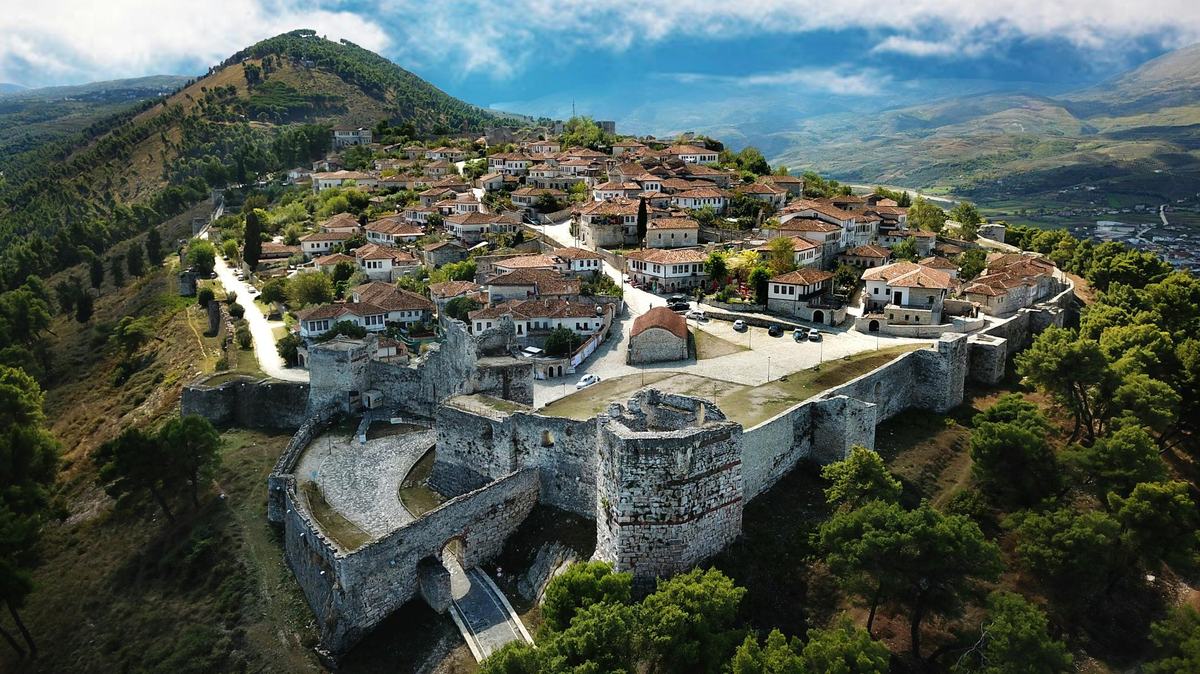
Why Albania Defies Every Expectation: An Overview of Surprising Truths
Albania consistently ranks among the least-visited countries in Europe, yet it contains more historical layers, geographic intrigue, and demographic peculiarities than most of its better-known neighbors. The gap between Albania's reality and its reputation is not merely large-it is almost systematically inverted.
Albania Is Older Than Rome: A Brief Note on Historical Depth
The Illyrian Origins That Predate Most European Nations
Albanian civilization traces its roots to the Illyrians, an Indo-European people documented in the Balkans as early as the 4th century BCE, with archaeological evidence pushing settlement patterns back to approximately 1000 BCE. The modern Albanian language belongs to its own distinct branch of the Indo-European family-neither Slavic, nor Romance, nor Germanic-suggesting unbroken linguistic continuity across roughly three millennia.
How Albanian Continuity Compares to Greece and Italy
Rome was founded, by traditional dating, in 753 BCE. Greece's classical period peaked around 500–400 BCE. Albanian proto-history predates both as a continuous ethnic and linguistic thread. While Greek and Latin evolved into successor languages-modern Greek, Italian, Romanian-Albanian survived as a single branch with no known extinct relatives, making it linguistically isolated in a way that signals remarkable cultural persistence through Roman conquest, Ottoman occupation, and communist isolation.
The Only Country in the World With More Bunkers Than People Per Square Mile
Enver Hoxha's Paranoia: 173,000 Bunkers Built Between 1967 and 1986
Between 1967 and 1986, Albanian dictator Enver Hoxha commissioned approximately 173,000 concrete bunkers across a country of just 28,748 square kilometers. That equates to roughly six bunkers per square kilometer-one bunker for every 16 Albanians alive at the time. The program consumed enough concrete and steel to have built a modern housing complex for every family in the country. The bunkers were never used militarily.
Comparing Albania's Bunker Density to Switzerland's Military Shelters
Switzerland, famous for its civil defense infrastructure, maintains roughly 370,000 nuclear shelters-but for a population of 8.7 million across 41,285 square kilometers. Albania's bunker-to-land-area ratio remains the highest of any nation on Earth, a physical monument to institutional paranoia with no equivalent in modern governance history.
Albania's Geographic Position: The Crossroads Few People Know About
Closer to Italy Than Most Europeans Realize: The 72-Kilometer Adriatic Gap
The Albanian port city of Vlorë sits approximately 72 kilometers from the heel of Italy's boot across the Strait of Otranto. On clear days, the Italian coastline is visible from Albanian shores-a proximity that made Albania a major transit point for migration in the 1990s and that historically placed it squarely within Mediterranean trade and cultural networks.
How Albania's Location Shaped Its Culture Compared to Balkan Neighbors
Unlike landlocked Serbia or North Macedonia, Albania faces both the Adriatic and Ionian seas, giving it dual maritime exposure that pulled its culture simultaneously toward Italian, Greek, and Ottoman influences. This tripartite pressure produced a society that absorbed external forces without fully assimilating into any single regional identity-arguably explaining why Albanian language, customs, and clan structures remain distinctly their own.
Shocking Facts About Albanian Culture That Challenge Western Assumptions
The Kanun: A 500-Year-Old Legal Code Still Influencing Modern Albanian Life
What the Kanun of Lekë Dukagjini Actually Contains
The Kanun is a comprehensive customary legal code attributed to the 15th-century Albanian nobleman Lekë Dukagjini, comprising 1,262 articles organized into 12 books. It governs land ownership, marriage, hospitality, honor, and crime with surgical precision. Suppressed but never eradicated during five decades of communist rule under Enver Hoxha, the Kanun re-emerged after 1991 with remarkable force, particularly in northern Albania's mountainous regions. Its influence on property disputes, family hierarchy, and conflict resolution remains demonstrably active today, not as folklore but as a functioning parallel legal framework.
Besa: The Albanian Code of Honor With No Direct Equivalent in Europe
Besa - loosely translated as "faith" or "pledge" - functions as an inviolable promise that supersedes personal safety, political allegiance, and even survival instinct. During World War II, Albanian families sheltering Jewish refugees operated under Besa, resulting in Albania being the only Nazi-occupied country to end the war with a larger Jewish population than it started with. Yad Vashem has recognized 75 Albanian Righteous Among the Nations, though historians estimate the actual number is substantially higher due to documentation gaps.
Blood Feuds and the Sworn Virgin: Cultural Practices Almost Unknown Outside Albania
Gjakmarrja: The Blood Feud Tradition and Its Decline in the 21st Century
Gjakmarrja ("blood-taking") operates on a precise principle: a murder creates an obligation for the victim's male relatives to kill a male from the perpetrator's family. At its post-communist peak in the early 1990s, an estimated 20,000 Albanian families were trapped in active blood feuds, with thousands of men confined to their homes for years - legally "safe" indoors under Kanun rules. The Albanian government's reconciliation campaigns, combined with emigration and urbanization, have substantially reduced active cases, though verified contemporary instances continue to emerge from northern regions.
Burrnesha: Women Who Legally Became Men Under the Kanun and What It Meant
Burrnesha ("sworn virgins") were women who took an oath of lifelong celibacy in exchange for full male social status - the right to own property, carry weapons, lead a household, and participate in public life. This institution emerged as a practical solution when a family lacked male heirs. Anthropologist Antonia Young documented surviving Burrnesha in the early 2000s; photographer Jill Peters later brought international attention through her 2011 documentary work. The practice is functionally extinct among younger generations, representing one of the most distinctive gender-role constructs ever documented in European ethnography.
Albanian Head-Nodding Is Reversed Compared to Most of the World
Nodding Means No and Shaking Means Yes: Origins of This Inversion
Albanian head-gesture inversion - nodding for "no," lateral shaking for "yes" - disorients virtually every foreign visitor. The precise historical origin is debated, but linguists and anthropologists point to Ottoman cultural influence and pre-Ottoman Balkan traditions as contributing factors. The inversion is not universal within Albania; younger urban Albanians and those with significant Western exposure increasingly use the conventional European system, creating a generational split that itself reveals how rapidly Albanian society is transforming.
Comparing This Phenomenon to Bulgaria and India's Similar Gestures
Albania is not entirely alone. Bulgaria shares a similar inversion, and parts of India - particularly in Tamil Nadu and Bengal - exhibit comparable head-gesture patterns, though with regional variation. What distinguishes the Albanian case is its intersection with intense Western cultural contact since 1991 and the speed at which the traditional gesture system is eroding. Unlike Bulgaria, where the inversion remains widely consistent, Albania's pattern is actively fragmenting along urban-rural and generational lines.
Hospitality as a Sacred Obligation: How Albanian Xhiro Culture Works
The Evening Promenade Ritual Practiced in Nearly Every Albanian Town
The xhiro (pronounced roughly "jeero") is a structured evening promenade practiced in virtually every Albanian town and city. Between approximately 6 PM and 9 PM, residents walk designated routes - often specific streets or seafront promenades - greeting neighbors, conducting informal business, and reinforcing community bonds. The ritual is not casual; it carries social expectation. Absence is noticed. In coastal cities like Vlorë and Sarandë, xhiro routes draw thousands of participants nightly during summer months, functioning as the primary arena for social life.
How Albanian Hospitality Laws Compare to Arab and Georgian Traditions
Under the Kanun, a guest's protection is the host's absolute legal and moral obligation - including protection from blood feud retaliation. This places Albanian hospitality law among the world's most codified. Georgian tamada (toasting ritual) and Arab diyafa traditions share underlying structures of sacred guest protection, but the Albanian framework is distinctive in its legal specificity: the Kanun explicitly states that a host who fails to protect a guest forfeits their own honor permanently. Few hospitality traditions anywhere encode social obligation with comparable juridical precision.
Little-Known Albania Facts About Religion and Identity
Albania Was the World's First Officially Atheist State in 1967
How Hoxha Banned All Religion and Converted Mosques Into Cinemas
In 1967, Enver Hoxha's communist regime made Albania the first and only country in history to constitutionally ban all religious practice. The 1976 constitution explicitly declared Albania an atheist state-a designation no other government has formally adopted before or since. Approximately 2,169 religious buildings were seized, including mosques, Catholic churches, and Orthodox sanctuaries, repurposed as cultural centers, sports facilities, warehouses, and cinemas. Clergy faced imprisonment or execution; possessing a Bible carried a 10-year prison sentence. An estimated 200 religious figures were executed outright during the campaign.
Comparing Albania's Enforced Atheism to the Soviet Union's Approach
The USSR suppressed religion aggressively but never constitutionally abolished it. Soviet citizens faced persecution for public worship, yet private belief remained technically tolerated. Hoxha went further, criminalizing private religious identity entirely. Where Moscow promoted state atheism as ideology, Tirana enforced it as law with active punishment mechanisms. Albania's approach was categorically more extreme in both legal codification and enforcement severity.
Albanians Practice a Unique Form of Religious Coexistence Found Nowhere Else
The Bektashi Order: A Sufi Brotherhood That Calls Albania Home
The Bektashi Order-a heterodox Sufi Muslim sect founded in 13th-century Anatolia-established its world headquarters in Tirana in 1925 after Atatürk abolished Sufi orders in Turkey. Roughly 200,000 Albanians identify as Bektashi today. The order incorporates elements of Shia Islam, Christian mysticism, and pre-Islamic Balkan traditions, making it theologically distinct from Sunni practice and institutionally independent from any foreign Muslim authority.
Why Albanians Celebrate Both Eid and Christmas in the Same Household
A 2015 Pew Research survey found that 65% of Albanian Muslims reported celebrating Christian holidays, and interfaith marriage is culturally unremarkable. The Albanian proverb "feja e shqiptarit është shqiptaria"-"the religion of Albanians is Albanianism"-attributed to 19th-century poet Pashko Vasa, reflects a national identity that has historically superseded sectarian affiliation. Religious practice functions as cultural inheritance rather than doctrinal commitment for large segments of the population.
Mother Teresa Was Albanian: The Fact Most People Get Wrong
Born Anjezë Bojaxhiu in Skopje to Albanian Parents: Setting the Record Straight
Mother Teresa was born Anjezë Gonxhe Bojaxhiu on August 26, 1910, in Skopje-then part of the Ottoman Empire-to Albanian parents from the Prizren region. She left for Ireland at 18 and never held Albanian citizenship. Her ethnicity is Albanian; her nationality at birth was Ottoman.
How Albanian Identity Claims Compare to North Macedonia's on This Issue
North Macedonia claims Teresa based on birthplace; Albania claims her based on ethnicity. Both positions have legitimate grounding. Teresa herself stated in 1994, "By blood and origin, I am all Albanian." That direct statement makes the ethnic claim primary, though it doesn't invalidate Skopje's geographic connection.
Fun Facts About Albania's Language: One of the Oldest in Europe
Albanian Is a Language Isolate With No Close Relatives on Earth
How Albanian Stands Alone in the Indo-European Family Tree
Albanian occupies one of the most unusual positions in all of linguistics. It forms its own independent branch within the Indo-European family - meaning it shares no close genealogical relationship with any living language. While it borrows heavily from Latin, Greek, Turkish, and Slavic languages due to centuries of occupation and trade, its core grammatical structure and vocabulary trace back to an ancient substrate that linguists still debate. The leading hypothesis connects Albanian to ancient Illyrian or Thracian, both extinct languages with minimal written records, making definitive conclusions nearly impossible.
Comparing Albanian's Isolation to Basque, Greek, and Armenian
The comparison to Basque is frequently made but requires precision. Basque is a true language isolate - it belongs to no recognized language family whatsoever. Albanian is different: it is Indo-European, but constitutes its own solitary branch, similar to Greek and Armenian, which also form single-branch subfamilies. What makes Albanian particularly striking is the degree of lexical replacement. Estimates suggest that roughly 60–70% of its modern vocabulary derives from loanwords, yet the grammatical skeleton remains stubbornly archaic and unique.
Albanian Has Two Mutually Distinct Dialects That Are Barely Mutually Intelligible
Gheg vs Tosk: The Northern and Southern Divide Explained
The Shkumbin River, running east to west through central Albania, marks one of Europe's sharpest linguistic fault lines. North of it lies Gheg; south of it, Tosk. The two dialects differ substantially in phonology, vocabulary, and morphology. Gheg preserves nasal vowels absent in Tosk and uses distinct verb tenses. Standard Albanian - codified in 1972 - is based primarily on Tosk, which created lasting tension with the Gheg-speaking majority in Kosovo, where roughly 1.8 million Albanians live.
How This Compares to the Norwegian Bokmål and Nynorsk Division
The Gheg-Tosk divide draws reasonable parallels to Norway's dual written standards, though the Albanian division runs deeper phonologically. Norwegian's two standards reflect historical and political choices more than organic divergence. Albanian's dialects evolved separately for centuries under different administrative rulers - Gheg under Ottoman and later Serbian influence, Tosk under Greek and later communist Albanian standardization.
The Albanian Alphabet Was Only Standardized in 1908
The Congress of Manastir and the 36-Letter Alphabet That Unified a Nation
In November 1908, Albanian intellectuals convened in Manastir (modern-day Bitola, North Macedonia) and adopted a unified Latin-based alphabet of 36 letters. This was a landmark political act as much as a linguistic one, occurring during the final years of Ottoman rule when a standardized script represented national identity and resistance.
Why Albanians Previously Wrote in Arabic, Greek, and Latin Scripts Simultaneously
Before 1908, no consensus existed. Religious affiliation largely dictated script choice: Muslim Albanians often wrote in Arabic script, Orthodox communities used Greek letters, and Catholic northern Albanians favored Latin. Some writers even invented personal alphabets - the Elbasan and Vithkuqi scripts among them - reflecting how urgently a unified system was needed.
Remarkable Historical Facts About Albania Most Textbooks Ignore
Gjergj Kastrioti Skanderbeg: The Man Who Held Off the Ottoman Empire for 25 Years
Albania's national hero, Gjergj Kastrioti Skanderbeg (1405–1468), achieved something most European powers failed to do: he successfully resisted the Ottoman Empire for 25 consecutive years using a force that rarely exceeded 20,000 soldiers against Ottoman armies numbering into the hundreds of thousands.
Why Pope Calixtus III Called Skanderbeg the Champion of Christ
Skanderbeg won 25 of 26 recorded military engagements against Ottoman forces, a battlefield record that prompted Pope Calixtus III to formally designate him Athleta Christi-Champion of Christ-in 1457. The Vatican's interest was strategic, not purely spiritual. Skanderbeg's Albanian League held the western Balkan corridor, effectively blocking Ottoman expansion into Italy. When he died in 1468, the Ottomans captured Albania within 12 years, confirming exactly what his resistance had prevented.
Comparing Skanderbeg's Military Record to Other European Resistance Fighters
Placed alongside contemporaries, Skanderbeg's record is extraordinary. Jan Žižka of Bohemia won decisive battles but commanded far larger forces and operated within a more defensible geography. William Wallace fought for six years before defeat. Skanderbeg maintained operational resistance for a quarter century with limited external support, no standing national army, and a fractured feudal coalition. Military historians at West Point have included his campaigns in guerrilla warfare curricula specifically because of his resource-to-outcome ratio.
Albania Saved More Jews Per Capita During WWII Than Almost Any Other Country
How the Besa Code Led Albanians to Hide Jewish Refugees From the Nazis
Albania entered WWII with approximately 200 Jewish residents. By liberation in 1944, that number had increased-not decreased. The driving force was Besa, an Albanian cultural code of honor roughly translated as "keeping the promise" or "word of honor," which obligated families to protect guests regardless of personal risk. Albanian families sheltered Jews from across occupied Europe, often hiding families for years and providing false documentation.
Albania's Jewish Population Actually Grew During the Holocaust: A Statistical Comparison
While Poland lost approximately 90% of its Jewish population, the Netherlands 75%, and France roughly 25%, Albania's Jewish population grew from around 200 to nearly 2,000 by war's end. Yad Vashem has recognized 75 Albanians as Righteous Among the Nations, a figure that, adjusted per capita, positions Albania among the highest-ranked countries in Europe for Jewish rescue. In 2004, a dedicated exhibition at the United States Holocaust Memorial Museum documented Albania as the only Nazi-occupied country where the Jewish population increased.
Albania Was the Last Country in Europe to Emerge From Communism
Why Hoxha's Regime Lasted Until 1992 When Others Fell in 1989
Enver Hoxha constructed arguably the most hermetically sealed communist state in history. By 1983, Albania had built over 173,000 concrete bunkers-one for every 12 citizens-reflecting a siege mentality that permeated governance. Hoxha severed ties with Yugoslavia in 1948, the Soviet Union in 1961, and China in 1978, leaving Albania ideologically isolated even within the communist world. When the Berlin Wall fell in 1989, Albania's internal security apparatus remained sufficiently intact to suppress early protests through 1990.
The Great Albanian Exodus of 1991: When 20,000 People Stormed Italian Ships in One Day
On August 8, 1991, approximately 20,000 Albanians stormed the cargo ship Vlora in Durrës harbor and sailed to Bari, Italy, in one of the most dramatic mass migrations in postwar European history. Italian authorities, overwhelmed, housed refugees in a football stadium before repatriating most within days. The event crystallized the desperation inside a country that had been legally prohibited from emigration for four decades and remains one of the most visually documented moments of post-communist European history.
Albania Declared Independence on November 28, 1912: A Date Still Celebrated Fanatically
The Flag of Skanderbeg: Why the Double-Headed Eagle Is One of Europe's Oldest National Symbols
The Albanian flag-a black double-headed eagle on a red field-dates symbolically to Skanderbeg's 15th-century seal and represents one of the oldest continuously used national symbols in Europe. The double-headed eagle predates many European national flags by centuries, with roots in Byzantine heraldry. When Ismail Qemali raised this flag in Vlorë on November 28, 1912, he deliberately connected the new state to a pre-Ottoman Albanian identity.
Comparing Albanian Independence Day Celebrations to Similar Balkan National Days
Albanians refer to November 28 as Dita e Flamurit-Flag Day-and celebrate it with an intensity that distinguishes it from comparable Balkan commemorations. Unlike Serbian Statehood Day or Greek Independence Day, which carry religious dimensions, Albanian Flag Day functions as a purely civic and ethnic celebration, observed simultaneously in Albania, Kosovo, and Albanian diaspora communities across Europe and North America, reflecting a nation whose identity remains split across multiple borders.
Surprising Economic and Social Facts About Albania Today
Albania Has One of the Highest Emigration Rates in the World Relative to Population
Nearly 40 Percent of All Albanians Live Outside Albania: A Global Comparison
Albania's demographic story is inseparable from its emigration crisis. Estimates suggest that between 1.4 and 1.7 million Albanians live abroad against a domestic population of roughly 2.8 million, meaning approximately 38–40 percent of ethnic Albanians reside outside their home country. This places Albania alongside Samoa, Tonga, and Lebanon in the global emigration intensity rankings - company that underscores just how extraordinary the outflow has been. The exodus accelerated sharply after communism collapsed in 1991, when Albanians flooded into Italy and Greece virtually overnight, and has continued steadily ever since.
How Diaspora Remittances Shape Albania's Economy More Than Tourism
Remittances consistently contribute 9–11 percent of Albania's GDP annually, outpacing both tourism revenue and foreign direct investment in most years. In 2022, remittance inflows exceeded $1.8 billion. Greece and Italy remain the primary source countries, though significant Albanian communities now exist in the United Kingdom, Germany, and the United States. This financial lifeline stabilizes household consumption but also creates structural dependency, suppressing pressure on the government to diversify the productive economy.
Albania Has the Youngest Population in Europe by Median Age
Comparing Albania's Demographics to Aging Germany and Italy
Albania's median age sits at approximately 36 years, which - while rising - remains the lowest in Europe. Germany's median age exceeds 46; Italy's approaches 48. Albania's total fertility rate has declined sharply from the communist-era average of 5.6 children per woman to around 1.6 today, yet its population pyramid remains comparatively young due to decades of sustained high birth rates extending into the 1980s.
What a Young Population Means for Albania's Economic Trajectory
A younger workforce theoretically offers a demographic dividend, but only if jobs exist domestically to absorb it. Currently, youth unemployment in Albania hovers around 25–27 percent, pushing educated young Albanians toward EU labor markets. The risk of brain drain converting a demographic asset into a liability is acute and well-documented by World Bank economists analyzing Western Balkan labor trends.
Albania Is One of the Fastest-Growing Tourist Destinations in the World
The Albanian Riviera vs the Croatian Coast: A Price and Beauty Comparison
Albania received approximately 10.1 million visitors in 2023, a figure that has roughly tripled since 2016. The Albanian Riviera - stretching from Vlorë to Sarandë - offers comparable Adriatic clarity and mountainous coastal scenery to Croatia's Dalmatian coast at 40–60 percent lower accommodation and dining costs. Dubrovnik's old town entrance now costs tourists €35; Albania charges nothing comparable for its equivalents.
Butrint: A UNESCO World Heritage Site Less Visited Than Pompeii but Equally Significant
Butrint, a UNESCO-listed archaeological site near Sarandë, layers Greek, Roman, Byzantine, and Venetian ruins across a single compact peninsula. Pompeii draws over 3.5 million annual visitors; Butrint receives fewer than 200,000. The density of civilizational strata at Butrint is archaeologically remarkable - Virgil referenced the city in the Aeneid - yet it remains almost entirely absent from mainstream European travel itineraries.
Albania Produces Nearly 100 Percent of Its Electricity From Hydropower
How This Compares to Norway and Makes Albania One of Europe's Greenest Energy Producers
Albania generates 95–98 percent of its electricity from hydropower, a figure rivaled in Europe only by Norway, which sits at approximately 88–90 percent. This makes Albania's electricity grid among the lowest in carbon intensity globally. The country's rivers - particularly the Drin - power a cascade of dams that have supplied domestic electricity since the communist infrastructure buildout of the 1960s and 1970s.
The Downside: Why Droughts Cause National Energy Crises in Albania
Single-source energy dependence creates severe systemic vulnerability. During drought years - increasingly frequent under shifting Mediterranean climate patterns - reservoir levels drop critically, forcing Albania to import expensive electricity from regional markets. The 2021–2022 drought triggered significant import costs and rolling supply instabilities. Analysts consistently flag this concentration risk as Albania's most pressing energy infrastructure problem, recommending solar and wind diversification to buffer against hydrological volatility.
Fun and Unexpected Facts About Albanian Food and Daily Life
Raki Is Not Just a Drink in Albania: It Is a Social Institution
How Albanian Grape Raki Differs From Turkish and Greek Versions
Albanian raki is predominantly grape-based (raki rrushi), distinguishing it from Turkish rakı, which is anise-flavored, and from Greek tsipouro or tsikoudi. Albanian home-distilled raki typically reaches 40–60% ABV, produced in copper stills (kazan) that families pass between generations. Mulberry raki (raki mani) is a northern specialty, prized for its smoother finish. Unlike the commercially standardized Turkish product, Albanian raki remains almost entirely artisanal-most production happens in private homes, operating in a legal gray zone that authorities largely tolerate as cultural heritage.
The Role of Raki in Business Negotiations, Funerals, and Celebrations
Refusing raki in an Albanian home is a genuine social misstep. It appears at births, engagements, gjama (traditional mourning ceremonies), and business handshakes with equal frequency. In northern Albania's Kanun-influenced communities, offering raki to a guest is inseparable from the hospitality code of besa. Sealing a property deal, resolving a dispute, or cementing a business agreement without shared raki is culturally incomplete.
Fërgesë and Tavë Kosi: Albanian Dishes That Predate Ottoman Influence
Tavë Kosi: Albania's National Dish and Why It Has Ancient Illyrian Roots
Tavë kosi-slow-baked lamb in yogurt and egg custard-uses techniques and ingredients that predate the Ottoman period by centuries. Yogurt fermentation and lamb herding were central to Illyrian pastoral culture, and the dish's simplicity suggests pre-medieval origins. The Ottoman Empire occupied Albania from 1479, but tavë kosi appears rooted in a much older shepherding tradition where preserving milk as yogurt was essential to highland survival.
Comparing Albanian Cuisine to Greek, Turkish, and Italian Influences
Albanian cuisine occupies a genuinely distinct position. Fërgesë, a Tirana-style dish of peppers, tomatoes, and cottage cheese (gjizë), shares structural similarities with Greek dishes but uses Albania's specific fresh cheese varieties. Italian influence-strong in coastal Vlorë and Durrës due to centuries of Adriatic trade-is visible in pasta dishes, while Turkish influence appears in byrek, baklava, and grilled meats. The synthesis is real but doesn't erase Albanian culinary identity.
Coffee Culture in Albania Is More Intense Than in Italy
Why Albania Has More Cafes Per Capita Than Almost Any Country in Europe
Albania reportedly has one of the highest cafe-per-capita ratios in Europe, with estimates suggesting over 4,500 cafes in Tirana alone for a city of roughly 800,000 people. Cafes function as offices, meeting rooms, and social anchors simultaneously.
The Macchiato Obsession: How Albanian Coffee Rituals Compare to Italian Espresso Bars
Albanians consume espresso macchiato-locally called simply macchiato-as their default coffee order, far outpacing plain espresso or filtered coffee. Unlike Italian espresso bars, where coffee is consumed standing in under three minutes, Albanian cafe culture is deliberately unhurried. A single macchiato sustains a two-hour conversation. The ritual prioritizes presence over caffeine efficiency-a meaningful cultural inversion of the Italian original.
Little-Known Facts About Albanian Nature and Geography
Lake Ohrid Is One of the Oldest and Deepest Lakes in Europe
Shared Between Albania and North Macedonia: A UNESCO Natural and Cultural Heritage Site
Lake Ohrid straddles the border between Albania and North Macedonia, covering approximately 358 square kilometers, with roughly one-third falling within Albanian territory. UNESCO granted it dual World Heritage status-recognizing both its natural and cultural significance-making it one of only 39 mixed sites globally. The lake supports over 200 endemic species, including the Ohrid trout (Salmo letnica) and unique living fossils among its invertebrate fauna that exist nowhere else on Earth.
Comparing Lake Ohrid's Age to Lake Baikal and Lake Titicaca
Geologists estimate Lake Ohrid is between 1.36 and 1.9 million years old, placing it among the world's rare ancient lakes. While it cannot match Lake Baikal's 25-million-year age or its 1,642-meter depth, Ohrid's maximum depth of 289 meters and its uninterrupted ecological continuity make it scientifically comparable in terms of endemic biodiversity density. Like Titicaca, Ohrid functions as a biodiversity refugium-an isolated evolutionary laboratory that preserved species lost elsewhere during glacial periods.
Albania Has Three Distinct Climate Zones Within a Country Smaller Than Maryland
Mediterranean Coast, Continental Interior, and Alpine North: A Geographic Comparison
Albania covers just 28,748 square kilometers-smaller than the U.S. state of Maryland-yet contains three sharply defined climate zones. The Adriatic and Ionian coastline experiences a classic Mediterranean climate, with Sarandë averaging 300 sunny days annually. Moving inland, the central plateau and river valleys shift to a continental regime with hotter summers and colder winters. The northern highlands, exceeding 2,500 meters, operate under a sub-alpine and alpine climate with heavy snowfall persisting into late spring.
How Albania's Biodiversity Per Square Kilometer Rivals the Balkans as a Whole
Albania hosts approximately 3,500 plant species-roughly 30% of Europe's total flora-within its compact territory. The country contains 91 species of mammals and over 330 bird species. Per square kilometer, its biodiversity density rivals regional aggregates across the broader Balkan Peninsula, a fact that makes Albania disproportionately significant for European conservation efforts.
The Albanian Alps: Europe's Last True Wilderness That Almost Nobody Visits
The Accursed Mountains and Why They Are Called That
The Bjeshkët e Namuna-literally "the Accursed Mountains"-earned their name from the brutal isolation and lethal winters that historically trapped and killed travelers. Peaks regularly exceed 2,600 meters, with Maja Jezercë reaching 2,694 meters as Albania's highest point.
Comparing Valbona Valley to the Swiss Alps in Terms of Untouched Landscape
Valbona Valley National Park offers scenery that directly rivals alpine Switzerland in dramatic verticality, yet receives a fraction of the visitors-under 30,000 annually compared to Switzerland's alpine regions drawing millions. No mass tourism infrastructure exists, making it among Europe's most genuinely undisturbed mountain landscapes still accessible to independent travelers.