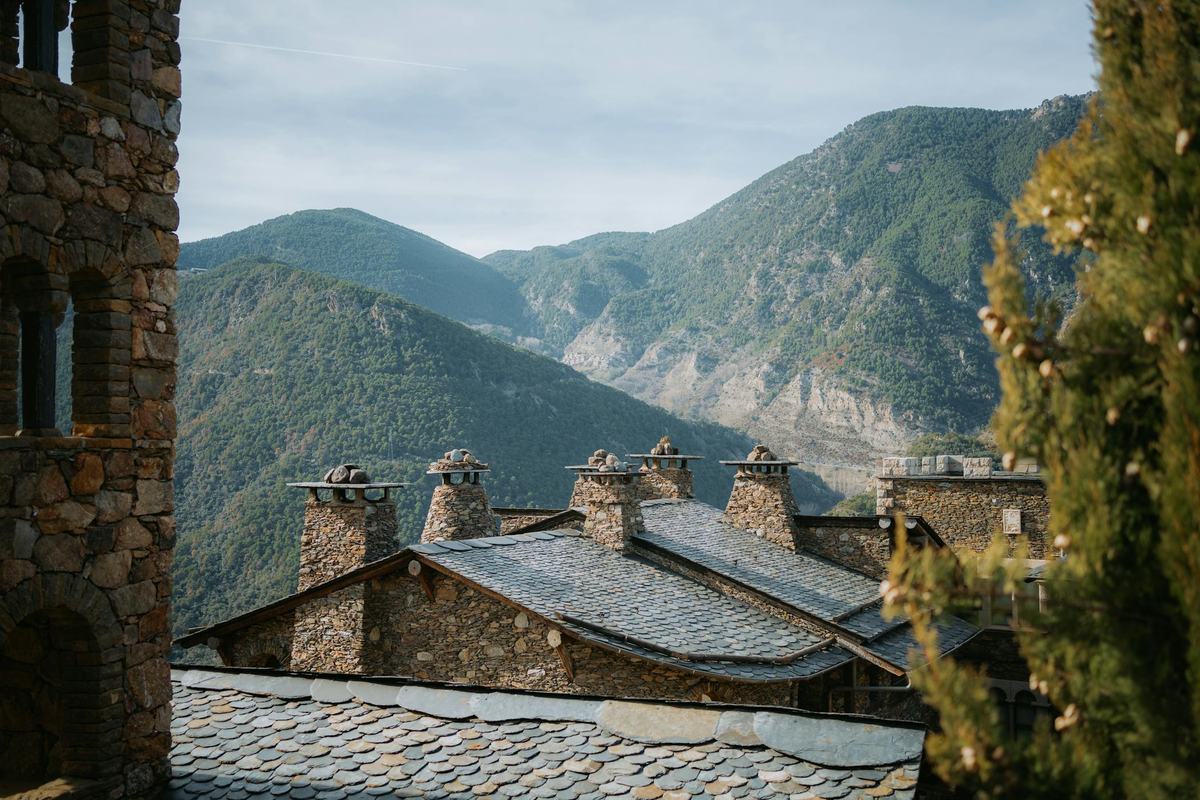
Why Andorra Is Unlike Any Other Country on Earth
The World's Only Co-Principality: Two Rulers, Zero Residents in Charge
How a French President and Spanish Bishop Share a Throne
Andorra operates under a governance structure found nowhere else on Earth. Since 1278, the country has been ruled jointly by two co-princes: the Bishop of Urgell (a Spanish diocese) and the French head of state. Today, that means Emmanuel Macron holds feudal authority over a sovereign European nation - not through conquest or inheritance, but through a medieval treaty that has simply never been dissolved.
The arrangement originated from a paréage agreement signed on September 8, 1278, designed to resolve territorial disputes between the Count of Foix and the Bishop of Urgell. When France abolished its monarchy, the presidential office absorbed the co-prince role automatically.
Why Andorra Has Never Had Its Own Head of State Living on Its Soil
Neither co-prince resides in Andorra, and neither is Andorran. The Bishop of Urgell lives in Spain; the French President in Paris. Day-to-day governance falls to the elected Cap de Govern (head of government), currently Xavier Espot Zamora. Andorra has a functioning parliament - the General Council, established in 1419 - but its ceremonial sovereignty remains permanently outsourced to foreign officials.
Andorra Has Never Fought a War - And Has an Army of Exactly 12 Men
The Ceremonial Military Force That Has Not Fired a Shot in Centuries
Andorra's military consists of precisely 12 volunteer soldiers, making it one of the smallest armed forces on the planet. Their duties are almost entirely ceremonial: parading during national holidays and providing an honor guard for official functions. The force carries rifles but has no operational combat role. By law, Andorra cannot send these soldiers abroad.
Comparing Andorra's Defense Strategy to Other Micro-States Like Monaco and Liechtenstein
Andorra's approach mirrors Liechtenstein, which abolished its military entirely in 1868 after the Austro-Prussian War, finding it cheaper and safer to simply remain neutral. Monaco maintains a slightly larger force of around 255 personnel but relies heavily on France for real defense. Andorra similarly depends on French and Spanish security guarantees, embedding its protection within larger geopolitical relationships rather than military capacity.
Andorra Technically Remained in a State of War with Germany Until 1958
The Forgotten Diplomatic Oversight After World War One
When World War One ended in 1918, Andorra was technically among the belligerents - having symbolically declared war on Germany. However, Andorra was excluded from the Treaty of Versailles negotiations. The war, legally speaking, never ended for the small principality.
How a Letter Finally Ended the Conflict Decades Later
The resolution came through diplomatic correspondence in 1958 - a formal letter rather than a treaty - officially establishing peace between Andorra and West Germany, approximately 40 years after hostilities had ceased everywhere else.
Surprising Political and Legal Facts About Andorra
Andorra Did Not Hold Its First Democratic Elections Until 1933
The Long Road from Feudal Governance to Modern Democracy
Andorra operated under a feudal co-principality system for over 700 years before introducing any meaningful democratic process. The 1278 Paréage agreement established joint sovereignty between the Bishop of Urgell and the French Count of Foix - a structure that persisted largely unchanged for centuries. Universal male suffrage wasn't introduced until 1933, making Andorra one of the last European territories to formally democratize its electoral system.
How Andorra's Constitution Was Only Written in 1993 - Later Than Most Countries
Andorra ratified its first written constitution on March 14, 1993, making it one of the last countries in Europe to do so. Before 1993, governance relied on medieval customary law and feudal decrees. The constitution formalized the co-principality structure while establishing a parliamentary system, an independent judiciary, and a bill of rights - frameworks most European nations had codified more than a century earlier.
Women Could Not Vote in Andorra Until 1970
Comparing Andorra's Suffrage Timeline to Other European Nations
Andorra granted women the right to vote in 1970, placing it among the latest in Europe. By contrast, Finland extended suffrage to women in 1906, the UK in 1918, and France in 1944. Even Switzerland, often cited as a laggard, enfranchised women nationally in 1971 - just one year after Andorra.
How Political Rights Evolved Slowly in This Mountain Nation
Geographic isolation and deeply conservative social structures slowed political reform considerably. Until the 1993 constitution, political parties were technically illegal, and civic participation was heavily restricted by tradition rather than formal legislation. The shift toward full political pluralism took decades of incremental pressure.
Andorra Has No Official Capital City in the Traditional Sense
What Andorra la Vella Actually Is and Why It Holds the Record for Highest Capital in Europe
Andorra la Vella functions as the administrative center and is internationally recognized as the capital, sitting at approximately 1,023 meters (3,356 feet) above sea level - the highest capital city in Europe.
Comparing Its Elevation to Other High-Altitude Capitals Like Quito and Thimphu
Globally, it ranks behind La Paz (3,640 meters), Quito (2,850 meters), and Thimphu (2,334 meters), but surpasses every other European capital by a significant margin.
Andorra Is Not a Member of the European Union but Uses the Euro Anyway
The Unique Monetary Agreement That Grants Andorra Euro Usage Rights
A formal monetary agreement signed with the EU in 2011 - effective from 2012 - grants Andorra the legal right to use the euro and mint limited quantities of its own euro coins.
How This Compares to Kosovo and Montenegro's Unofficial Euro Adoption
Unlike Kosovo and Montenegro, which adopted the euro unilaterally without EU authorization, Andorra operates under a negotiated legal framework, giving it a structurally distinct status despite similarly lacking EU membership.
Economic Facts About Andorra That Defy Expectations
Andorra Has One of the Highest GDP Per Capita Figures in the World Without Oil or Industry
How Tax Haven Status and Tourism Built a Prosperous Economy from Scratch
Andorra's GDP per capita hovers around $49,900 (nominal), placing it comfortably among Europe's wealthiest micro-states. What makes this remarkable is the complete absence of natural resources, manufacturing, or agriculture at scale. The economy was deliberately engineered around low taxation, duty-free retail, and mountain tourism - a model that took decades to mature but now sustains one of the highest living standards on the continent.
Comparing Andorra's Economic Model to Luxembourg and Liechtenstein
Luxembourg and Liechtenstein built wealth through financial services and favorable corporate law. Andorra's approach is more consumer-facing - it functions as a physical destination for tax-advantaged purchasing rather than a financial conduit. Per capita GDP remains competitive with both nations, but the structural fragility is higher, given its dependence on visitor numbers rather than capital flows.
Andorra Collects No Income Tax and Has Done So for Centuries
The Historical Origins of Andorra's Famously Low Tax Burden
Personal income tax did not exist in Andorra until 2015, when a modest rate of up to 10% was introduced under pressure from the European Union to align with international transparency standards. Before that reform, residents paid no income tax whatsoever - a tradition rooted in medieval fiscal arrangements between its two co-princes, the Bishop of Urgell and the French head of state.
How the Tax Structure Attracts Wealthy Residents from Across Europe
The current top rate of 10% remains among Europe's lowest, and corporate tax caps at 10% as well. This draws high-net-worth individuals, professional athletes, and entrepreneurs seeking legal tax optimization. VAT, introduced in 2013, sits at just 4.5% - roughly one-fifth of Spain's standard rate - reinforcing Andorra's appeal as both a residence and a retail destination.
Tourism Accounts for Over 80 Percent of Andorra's GDP
Why Over 10 Million Tourists Visit a Country Smaller Than New York City Each Year
Andorra's total area is 468 square kilometers, yet it receives approximately 10–12 million visitors annually - more than 100 times its resident population of roughly 77,000. The draw is straightforward: duty-free shopping combined with Pyrenean ski resorts creates a dual-season appeal unavailable elsewhere in the region.
Ski Tourism vs. Shopping Tourism: Which Drives More Revenue
Grandvalira, Andorra's main ski area, is the largest ski domain in the Iberian Peninsula. However, retail and duty-free commerce consistently generates greater total revenue, with tobacco, alcohol, electronics, and perfume driving significant cross-border purchasing activity.
Andorra Is One of Europe's Leading Tobacco Markets Per Capita
How Duty-Free Tobacco Sales Became a Cornerstone of the Economy
Andorra sells tobacco at prices significantly below EU member states due to its non-EU status and zero excise alignment obligations. Per capita tobacco consumption figures are among Europe's highest, largely because bulk purchases by visiting tourists inflate the statistics considerably.
The Environmental and Health Debates Surrounding This Industry
Critics argue the model exports health costs to neighboring France and Spain while Andorra absorbs the revenue. The WHO and EU have periodically pressured Andorra to raise tobacco duties, creating an ongoing tension between economic self-interest and regional public health responsibilities.
Extraordinary Geographic Facts About Andorra
Andorra Is the Sixth Smallest Country in Europe but Has More Ski Runs Than Austria's Smallest Resorts
A Detailed Size Comparison: Andorra vs. San Marino, Monaco, and Vatican City
Andorra covers 468 square kilometers, making it the sixth smallest sovereign state in Europe. Vatican City (0.44 km²), Monaco (2.02 km²), San Marino (61 km²), Liechtenstein (160 km²), and Malta (316 km²) all rank smaller. What makes Andorra remarkable is what its territory actually delivers: Grandvalira, its primary ski area, spans 210 kilometers of marked runs across 130 slopes - a figure that eclipses many established Alpine resorts operating across far larger national footprints.
How the Pyrenean Terrain Creates Disproportionate Geographic Diversity
The Pyrenean geology compresses extraordinary variety into Andorra's compact area. Elevations range from 840 meters at Riu Runer to 2,942 meters at Coma Pedrosa. This 2,100-meter vertical spread - packed into less than 470 km² - produces distinct microclimates, vegetation zones shifting from riverside deciduous forest to high-altitude tundra, and glacially carved valleys that create natural separation between parishes.
Every Single Part of Andorra Sits Above 900 Meters in Altitude
What Life at Extreme Altitude Means for Agriculture, Climate, and Daily Life
Andorra la Vella, the capital, sits at approximately 1,023 meters - the highest capital city in Europe. The national minimum elevation hovers around 840–900 meters. Winters are cold and snowy, summers mild, and the growing season abbreviated. Arable land constitutes less than 2% of the territory, which historically forced dependence on pastoral farming, tobacco cultivation, and trade rather than grain agriculture.
Comparing Andorra's Minimum Elevation to the Maximum Elevation of Several European Countries
Andorra's lowest point exceeds the highest points of several European nations. The Netherlands peaks at just 322.7 meters (Vaalserberg), Denmark at 170.9 meters (Møllehøj), and Estonia at 318 meters (Suur Munamägi). Andorra's valley floors sit higher than the summits of three EU member states.
Andorra Has No Airport, No Railway, and No Seaport
How a Country with 10 Million Annual Visitors Operates Without Major Transport Infrastructure
Andorra receives roughly 8–10 million visitors annually - approximately 130 times its resident population - entirely via road. The CG-1 and CG-2 national roads carry virtually all cross-border traffic. No railway has ever operated within Andorran territory, and the mountainous terrain makes construction prohibitively expensive.
The Nearest Airports and How Visitors Actually Get In
The closest airports are Barcelona El Prat (200 km south) and Toulouse-Blagnac (185 km north). Regular bus services connect both cities directly to Andorra la Vella, with journey times of approximately 3–3.5 hours. A heliport in La Seu d'Urgell handles occasional charter and emergency flights just across the Spanish border.
The Gran Valira River Is Andorra's Only Significant Waterway and Flows Into Spain
How Water Resources Are Managed in a Landlocked Mountain State
The Gran Valira forms from the confluence of the Valira del Nord and Valira d'Orient rivers, draining the majority of Andorra's watershed before crossing into Spain at Sant Julià de Lòria. The river system supplies domestic water and supports FEDA (Forces Elèctriques d'Andorra), the national energy utility.
Andorra's Hydroelectric Power Generation Compared to Its Energy Needs
Hydroelectric generation covers approximately 40% of Andorra's electricity consumption. The remaining demand is imported primarily from Spain and France. Given Andorra's mountainous topography and reliable snowmelt, hydropower remains the backbone of domestic energy production - a practical advantage directly tied to its extreme geographic position within the Pyrenees.
Remarkable Cultural Facts About Andorra
Catalan Is the Only Official Language Despite Andorra Bordering France and Spain
Why Andorra Became the Only Country in the World with Catalan as Its Sole Official Language
Andorra holds a linguistic distinction shared by no other sovereign state: Catalan is its one and only official language. This is remarkable given that the country is entirely landlocked between France and Spain, two nations with dominant languages spoken by hundreds of millions. The reason traces directly to Andorra's medieval origins. The Principality emerged from territories historically tied to the County of Urgell, a Catalan-speaking region, and its unique co-prince governance structure preserved that cultural continuity for over 700 years. French and Spanish are widely spoken - roughly 30% of residents speak Spanish as a first language and significant French-speaking communities exist near the northern border - but neither holds any official status.
How Language Politics in Andorra Differ Radically from Neighboring Catalonia
Unlike Catalonia, where Catalan coexists in constant political tension with Spanish under Spain's constitutional framework, Andorra faces no such conflict. There is no pressure from a dominant central government to impose another tongue. The result is a stable, relatively uncontested linguistic environment. Approximately 38% of the population are native Catalan speakers, yet the language governs all official documents, legislation, and public signage without dispute.
Andorra Has Its Own Unique Folklore Tradition: The Legend of the Bear
How Ancient Pyrenean Mythology Shaped Andorran Cultural Identity
The Pyrenean bear occupies a central place in Andorran folklore, reflecting a pre-Christian animistic tradition common across mountain cultures of southern Europe. Local legends describe bears as ancestral figures, sometimes portrayed as the origin of certain Andorran family lines. This mythology reinforced a distinct cultural identity separate from both French and Spanish narratives, giving communities in isolated mountain valleys a shared symbolic heritage rooted in the natural environment.
Comparing Andorran Folk Traditions to Those of the Basque Country and Catalonia
Andorran folk traditions share structural similarities with Basque mythology - particularly the emphasis on nature spirits and mountain deities - but lack the elaborate codified pantheon found in Basque culture, such as the goddess Mari and her consort Sugaar. Compared to Catalan folklore, which heavily features humanized figures like giants (gegants) paraded at festivals, Andorran tradition is more intimate and locally specific, tied to individual valleys rather than urban civic celebrations. The Festa Major celebrations in parishes like Andorra la Vella and Escaldes-Engordany incorporate elements of both Catalan and distinctly Pyrenean folk heritage, illustrating a cultural position genuinely between, yet independent of, its two neighbors.
The Andorran National Day Celebrates a Diplomatic Agreement, Not a Battle or Independence
What Happened on September 8, 1278 That Still Defines the Nation Today
Andorra's National Day, observed on September 8, commemorates the signing of the first Pareatge in 1278 - a feudal co-sovereignty agreement between the Bishop of Urgell, Pere d'Urtx, and the Count of Foix, Roger Bernart III. This treaty established the dual-prince system that governs Andorra to this day, with the Bishop of Urgell and the French head of state serving as co-princes. It was not a declaration of independence, a military victory, or a revolutionary moment, but a negotiated legal arrangement that proved extraordinarily durable.
How This Differs from the National Day Origins of France, Spain, and Most of Europe
France celebrates Bastille Day on July 14, marking revolutionary violence in 1789. Spain's Día de la Hispanidad on October 12 references Columbus's 1492 arrival in the Americas. Most European national days anchor identity in conflict, liberation, or territorial conquest. Andorra's celebration of a bilateral contract is nearly unique globally - perhaps most comparable to Switzerland's Federal Charter of 1291, though even that document carries stronger independence connotations.
Andorra Has One of the Lowest Crime Rates of Any Country in the World
Statistical Comparisons Between Andorra and Other Low-Crime Nations Like Iceland and Japan
Andorra consistently ranks among the world's safest countries. Its homicide rate is effectively zero across most recorded years - the country sometimes goes five or more consecutive years without a single murder. Iceland, frequently cited as the world's most peaceful nation by the Global Peace Index, recorded a homicide rate of approximately 0.5 per 100,000 in recent years. Japan's rate sits around 0.2 per 100,000. Andorra's figures are comparable or lower, though its population of roughly 77,000 makes statistical rates volatile.
What Social and Economic Factors Contribute to Andorra's Safety Record
Key contributing factors include near-full employment, no extreme poverty, a high GDP per capita (approximately $49,900 USD), strong social cohesion in small communities, and a police force with a ratio of officers to residents that would be unsustainable in larger nations. The absence of a standing army and minimal gang activity further reduce violence drivers.
Andorra Has No Universities of Its Own Despite High Literacy and Education Standards
Where Andorran Students Go to Study and How the Tri-Language School System Works
The University of Andorra (Universitat d'Andorra), established in 1997, offers limited programs primarily through virtual learning. For full undergraduate and postgraduate education, students typically travel to Spanish or French universities. Literacy stands at approximately 100%, reflecting a robust pre-tertiary system.
The Unique Educational Model Running Three Parallel School Systems Simultaneously
Andorra operates three entirely separate school systems simultaneously: Andorran (Catalan-language), Spanish, and French. Each follows its respective national curriculum and is state-funded. Children attend one system based on family preference, not geography. This extraordinary arrangement means a student educated in the French system and a neighbor in the Spanish system may receive fundamentally different curricula 200 meters apart - a genuinely unprecedented educational structure among sovereign nations.
Health, Demographics, and Social Facts About Andorra
Andorrans Have One of the Highest Life Expectancies on the Planet
Comparing Andorra's Average Lifespan to Japan, Switzerland, and Monaco
Andorra consistently ranks among the top five nations globally for life expectancy, with citizens living an average of approximately 83–84 years. This places it in direct competition with Japan (84.3 years), Switzerland (83.8 years), and Monaco, which leads global rankings at roughly 87 years. For a country with a population under 80,000, this statistical achievement is extraordinary and demands explanation beyond mere coincidence.
The Lifestyle, Diet, and Healthcare Factors Behind the Longevity Statistics
Three converging factors drive Andorra's longevity. First, its universal healthcare system provides comprehensive coverage with minimal bureaucratic friction. Second, the mountainous terrain naturally encourages physical activity - residents integrate elevation and walking into daily routines without deliberate effort. Third, a Mediterranean-influenced diet rich in olive oil, legumes, and fresh produce reduces cardiovascular risk significantly. Low population density also means reduced exposure to urban pollution and infectious disease transmission.
Fewer Than 50 Percent of Andorra's Residents Are Actually Andorran Citizens
The Strict and Lengthy Path to Andorran Citizenship
Only around 48 percent of Andorra's population holds Andorran nationality. Obtaining citizenship requires either 25 years of continuous legal residency or being born to at least one Andorran parent. Active naturalization pathways exist but remain deliberately narrow. This restrictive framework is intentional - Andorra protects its citizens' exclusive access to land ownership and certain business privileges, creating a legally stratified resident population.
How the Expatriate Population from Spain, Portugal, and France Shapes Society
Spanish nationals comprise approximately 25 percent of residents, Portuguese around 14 percent, and French roughly 5 percent. These communities sustain the service, construction, and retail sectors that underpin Andorra's tourism economy. Despite decades of residence, many never acquire citizenship, creating a significant permanent-resident class with limited political rights but deep cultural integration.
Andorra Has Never Had a Single Recorded Case of Dying from a Wartime Conflict on Its Soil
How Geographic Isolation and Diplomatic Neutrality Protected the Population
Andorra's Pyrenean geography made military invasion logistically unattractive. During both World Wars, it declared neutrality and was effectively ignored by all major belligerents. Even the Spanish Civil War, which devastated neighboring regions, caused no combat casualties on Andorran territory.
Comparing Andorra's Conflict-Free Record to Other Historically Neutral Nations
Switzerland and Sweden maintained neutrality but experienced wartime civilian deaths from accidental bombings. Andorra's record is genuinely unblemished by wartime fatalities on its soil - a distinction even Switzerland cannot claim.
Andorra's Population Has Grown Over 400 Percent Since 1950 Due to Economic Immigration
The Demographics Behind One of Europe's Fastest-Growing Small Populations
Andorra's population stood at roughly 6,000 in 1950. By 2024, it reached approximately 77,000 - representing growth exceeding 1,100 percent, far surpassing the commonly cited 400 percent figure. This expansion was driven almost entirely by labor migration tied to tourism infrastructure development.
How This Growth Compares to Neighboring Spain and France Over the Same Period
Spain's population grew from 28 million to 47 million between 1950 and 2024 - roughly 68 percent. France expanded from 42 million to 68 million, approximately 62 percent. Andorra's proportional growth dwarfs both neighbors, reflecting its transformation from an isolated agrarian microstate into a commercially active tourist economy within a single lifetime.
Hidden Historical Facts About Andorra Most People Have Never Heard
Charlemagne Is Credited with Founding Andorra in the 8th Century as a Buffer State
The Historical Evidence Behind the Carolingian Origins Theory
Andorra's founding legend traces to 788 AD, when Charlemagne allegedly granted the Andorran valleys autonomy in exchange for their assistance guiding Frankish troops through Pyrenean passes during campaigns against the Moors. The primary documentary anchor for this claim is the Carta de Fundació, though historians note its authenticity remains contested. What is better established is the 1278 Pareatge agreement between the Bishop of Urgell and the Count of Foix, which formalized the co-principality structure still governing Andorra today.
Why Andorra's Foundation Myth Has Been Both Celebrated and Disputed by Historians
The Carolingian origin story functions politically as much as historically. Critics point to the absence of contemporary 8th-century documentation, arguing the legend was retrospectively constructed to legitimize ecclesiastical authority. Supporters counter that oral and administrative traditions in isolated mountain communities frequently predate their written records by centuries.
Andorra Was Used as a Smuggling Route During Both World Wars
How the Pyrenean Passes Became Corridors for Refugees, Spies, and Contraband
Andorra's neutrality and mountainous geography made it invaluable during both World Wars. During World War II specifically, the territory served as a transit corridor for the Pat O'Leary Line and other escape networks moving Allied airmen, Jewish refugees, and intelligence operatives between occupied France and neutral Spain. Tobacco, wolfram, and penicillin were among the most smuggled commodities, with wolfram - critical for hardening steel in munitions - commanding extraordinary wartime prices.
Comparing Andorra's Wartime Role to Switzerland's Neutral Wartime Economy
Switzerland leveraged neutrality into banking and industrial contracts worth billions. Andorra's wartime economy was smaller but structurally similar in principle - using political insulation to profit from surrounding conflict. The key difference was scale and formalization; Switzerland had institutional infrastructure, while Andorra operated largely through individual entrepreneurial networks operating across mountain trails.
The First Road Connecting Andorra to the Outside World Was Only Built in 1913
What Life Was Like in Andorra Before Modern Road Access
Before 1913, Andorra was accessible only by mule track. Goods, mail, and people traveled through passes that became impassable under winter snow, effectively isolating communities for months annually. The population at that time numbered approximately 5,000 people, subsisting primarily on tobacco cultivation, livestock, and small-scale iron smelting.
How Infrastructure Development Transformed the Economy Within a Single Generation
The 1913 road - connecting Andorra la Vella to the Spanish border - triggered rapid economic restructuring. Within 30 years, tobacco exports expanded significantly, and by mid-century, duty-free commerce had begun replacing agriculture as the primary economic driver, a transformation that accelerated further after paved road connections to France were completed in 1931.
Andorra Printed Its Own Postage Stamps Decades Before It Had a Defined Currency
The Philatelic History of Andorra and Why Its Stamps Are Collectors' Items
Andorra issued its first postage stamps in 1928, yet the country operated without an official defined currency until adopting the euro in 2011 - relying informally on both French francs and Spanish pesetas throughout the 20th century. Early Andorran stamps, particularly the 1929 definitives featuring landscapes and the co-princes, now fetch significant sums among specialized collectors.
How Andorra Manages Dual Postal Administration Through Both France and Spain
Andorra operates two entirely separate postal systems simultaneously. Correus d'Andorra handles Spanish-side postal services using Spanish stamp designs, while La Poste administers the French system with French-format stamps. Both are legally valid only within Andorra and to their respective neighboring countries, making Andorra one of very few territories where two distinct national postal authorities operate concurrently within the same borders.
Fun and Quirky Facts About Andorra You Can Use to Impress Anyone
Andorra Has Competed in the Olympics Since 1976 but Has Never Won a Medal
Which Sports Andorra Competes In and Its Closest Near-Medal Finishes
Andorra made its Olympic debut at the 1976 Innsbruck Winter Games and has participated in both Summer and Winter editions ever since. The country's athletes primarily compete in alpine skiing, athletics, judo, and swimming. Given Andorra's mountainous terrain, alpine skiing remains its most competitive discipline. Skier Màrius Robau and others have represented the principality with consistency, though no podium finish has materialized. The squad sizes are typically small - often fewer than ten athletes per Games - which statistically limits medal probability.
Comparing Andorra's Olympic Record to Other Micro-States Like Liechtenstein Which Has Won Medals
The contrast with Liechtenstein is stark and instructive. Liechtenstein, with a comparable population of roughly 38,000, has won ten Olympic medals - all in alpine skiing, all at Winter Games. The difference largely comes down to investment in elite sports infrastructure and the emergence of standout individual athletes like Hanni Wenzel, who won two golds at the 1980 Lake Placid Games. Andorra has not yet produced that singular breakout competitor.
Andorra Has Its Own Top-Level Internet Domain: .AD
The Story Behind How Andorra Secured Its Country Code Domain
Andorra's country code top-level domain (ccTLD) .ad was assigned in 1996 under the ISO 3166-1 alpha-2 standard, which allocates two-letter codes to every recognized nation and territory. Administration falls under the Andorran Telecommunications Authority. Registrations are restricted - applicants must demonstrate a legitimate connection to Andorra, which keeps the domain relatively exclusive compared to commercially open ccTLDs.
Comparing Andorra's Domain Usage to Other Micro-States and Their Digital Presence
Monaco uses .mc, San Marino uses .sm, and Liechtenstein uses .li - all similarly restricted and low-volume. By contrast, some micro-state domains have become globally commercialized: Tuvalu's .tv and Niue's .nu generate significant revenue by licensing their domains internationally. Andorra has not pursued that monetization route, keeping .ad functional but narrow in scope.
There Is No Andorran Airline and There Has Never Been One
How Citizens and Tourists Navigate the Absence of a National Carrier
Andorra has no airport. The nearest commercial airports are Barcelona El Prat (approximately 200 km south) and Toulouse-Blagnac (roughly 170 km north). Travelers rely on road connections, with bus services operating regularly between Andorra la Vella and both airports. A heliport in La Seu d'Urgell provides limited helicopter access.
Comparing to Other Tiny Nations That Do Run Their Own Airlines Like Bhutan
Bhutan, with a population of under 800,000, operates Druk Air as its national carrier, serving international routes from Paro Airport. The difference is geographic necessity - Bhutan's terrain makes road access from major hubs impractical. Andorra's road connectivity to two major European airports makes a national airline economically nonviable.
Andorra la Vella Is the Highest Capital City in Europe's Geographic Neighborhood
The Exact Elevation and What It Means for Weather Patterns Year-Round
Andorra la Vella sits at approximately 1,023 meters (3,356 feet) above sea level, making it the highest capital city in Europe. This elevation produces cold, snowy winters and mild summers, with average January temperatures hovering around -2°C (28°F) and July averages near 19°C (66°F). Snowfall is reliable from November through March, directly supporting the ski tourism economy.
A Fun Comparison of European Capital Cities by Altitude
For context: Madrid, often cited as Western Europe's highest capital, sits at around 667 meters. Bern reaches roughly 540 meters, Vienna approximately 170 meters, and Amsterdam barely clears sea level at about 2 meters. Andorra la Vella's 1,023-meter elevation isn't just a talking point - it shapes the country's climate, infrastructure costs, and seasonal tourism patterns in measurable, practical ways.