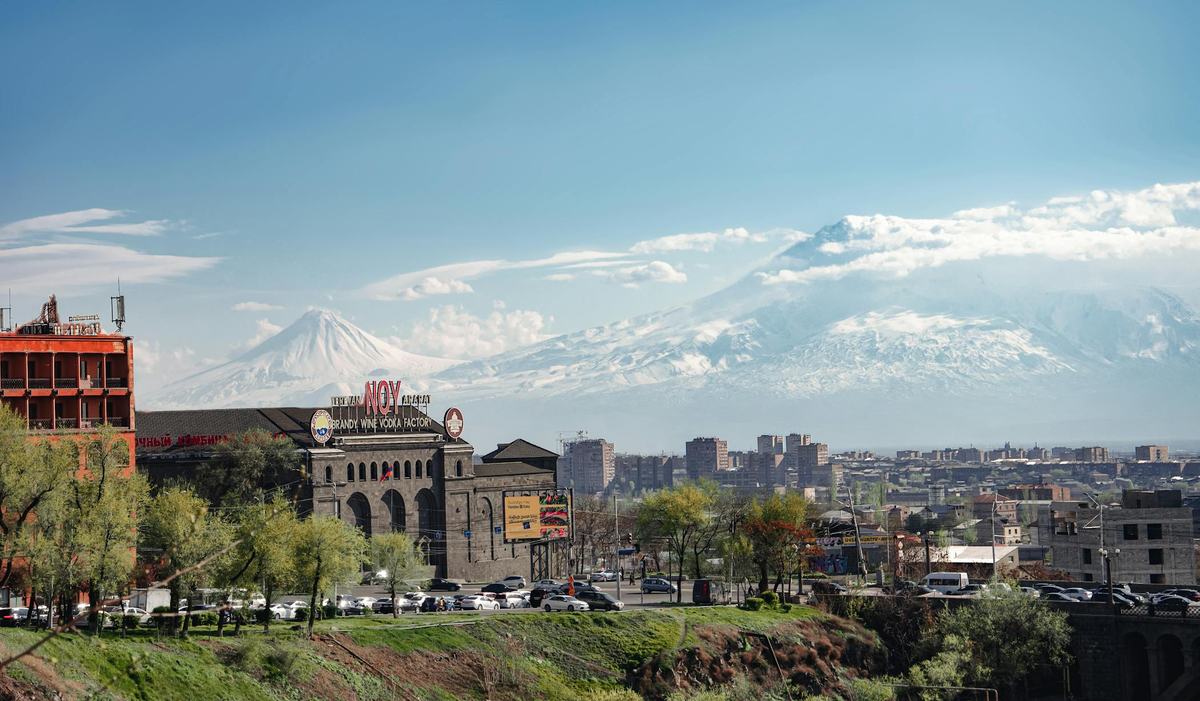
Why Armenia Defies Everything You Think You Know About It
Armenia Is Older Than Rome, Greece, and Most European Nations
The Urartu Kingdom: Armenia's Predecessor That Predates Classical Antiquity
The Kingdom of Urartu emerged around 860 BCE in the Armenian Highlands, centered near Lake Van in what is now eastern Turkey. This Iron Age civilization built sophisticated fortresses, developed an independent cuneiform script, and maintained a centralized state apparatus centuries before Rome was anything more than a cluster of hilltop villages. Urartu's capital, Tushpa, featured hydraulic engineering systems and military architecture that rivaled anything in the ancient Near East at the time.
Armenian historiography traces direct cultural and ethnic continuity from Urartu through the Orontid dynasty, which established the first Armenian kingdom around 570 BCE. This isn't disputed mythology - it's documented through Assyrian records, Urartian inscriptions, and Greek historical sources including Xenophon, who described Armenian settlements during his Anabasis march in 401 BCE.
How Armenian Statehood at 2800+ Years Compares to the Age of Major World Powers
Armenia celebrated 2,800 years of statehood in 2018, a milestone that puts its political history in sharp perspective. The United States is 248 years old. France's modern statehood traces to roughly the 10th century. Even the Roman Republic, often treated as the benchmark of ancient Western civilization, wasn't founded until approximately 509 BCE - more than three centuries after Urartu's consolidation.
Only a handful of nations - China, Iran, Egypt, and India among them - can credibly claim comparable continuity of civilization and governance.
The Only Country in the World With a Church Older Than Its Official Christianity
Garni Temple: A Pagan Hellenistic Structure Preserved Inside a Christian Nation
The Temple of Garni, built in the 1st century CE by Armenian King Tiridates I, is the sole surviving Hellenistic colonnaded temple in the South Caucasus. Constructed using Ionic-order architecture and basalt stone, it served as a pagan sun temple dedicated to the god Mihr. What makes it remarkable is its survival: when Armenia adopted Christianity in 301 CE, most pagan structures were systematically destroyed. Garni survived, likely repurposed as a royal bathhouse, and still stands today near Yerevan.
Why Armenia's 301 AD Adoption of Christianity Beats Rome's Edict of Milan by 12 Years
Armenia officially became the world's first Christian nation in 301 CE under King Tiridates III, converted by Gregory the Illuminator. Rome's Edict of Milan, which merely tolerated Christianity rather than adopting it as state religion, didn't come until 313 CE - a full 12 years later. This distinction matters: Armenia didn't just permit Christianity; it institutionalized it, establishing a national church structure that has operated continuously for over 1,700 years.
Astonishing Facts About Armenia's Geography and Natural World
Lake Sevan: One of the Largest High-Altitude Freshwater Lakes on Earth
How Sevan Compares to Lake Titicaca and Lake Geneva in Altitude and Volume
Sitting at 1,900 meters above sea level, Lake Sevan ranks among the largest high-altitude freshwater lakes on the planet. Its surface area covers approximately 1,242 square kilometers, making it vastly larger than Lake Geneva (580 km²) while sitting at nearly double Geneva's elevation. Lake Titicaca, often cited as the world's highest navigable lake, sits higher at 3,812 meters, but Sevan holds its own as a dominant freshwater body in the Eurasian highland context. Sevan accounts for roughly 80% of Armenia's total freshwater reserves-a statistic that underscores its existential importance to the country.
The Soviet-Era Engineering Mistake That Nearly Destroyed the Lake
Between the 1930s and 1980s, Soviet planners diverted Sevan's water through tunnels to irrigate lowland agriculture and generate hydroelectric power. By the 1980s, the lake's water level had dropped by nearly 20 meters, reducing its volume by approximately 40%. Shorelines receded, salinity increased, and endemic fish species including the Sevan trout (Salmo ischchan) faced near-extinction. Remediation efforts began in 2004 with a tunnel project designed to redirect water from the Arpa River back into the lake. Water levels have since recovered by roughly 4 meters, though full restoration remains decades away.
Armenia's Secret Biodiversity: More Plant Species Per Square Kilometer Than Most of Europe
Over 3,500 Species of Vascular Plants in a Country Smaller Than the State of Maryland
Armenia covers just 29,743 square kilometers-smaller than Maryland-yet hosts over 3,500 species of vascular plants. That density rivals the biodiversity of countries several times its size. The country sits at a convergence of three biogeographical zones: the Euro-Siberian, Irano-Turanian, and Mediterranean, producing an unusually compressed range of ecosystems from semi-desert to alpine meadow within short distances.
The Ararat Valley: A Botanical Hotspot Sitting Just Across a Closed Border
Much of historic Armenian botanical diversity concentrated in the Ararat Valley, now largely within Turkish territory following the closed Armenia-Turkey border. Wild relatives of wheat, rye, and apricot originated in this region. Armenia remains a recognized center of origin for cultivated plants according to Vavilov Institute classifications, with the apricot (Prunus armeniaca)-its very Latin name referencing Armenia-domesticated here thousands of years ago.
The Mysterious Metsamor Volcanic Ridge and Armenia's Seismic Reality
Why Armenia Sits on One of the Most Seismically Active Zones Outside the Pacific Ring of Fire
Armenia occupies the collision zone between the Arabian and Eurasian tectonic plates, generating persistent seismic stress across the Lesser Caucasus. The country records hundreds of minor earthquakes annually, with major fault systems running through its northern and central regions.
The 1988 Spitak Earthquake: How It Reshaped Modern Armenian Infrastructure Policy
On December 7, 1988, a 6.8-magnitude earthquake devastated northern Armenia, killing an estimated 25,000 people and destroying the cities of Spitak and Leninakan (now Gyumri). The disaster exposed catastrophic failures in Soviet prefabricated construction standards. Post-independence Armenia overhauled its building codes, mandating seismic resistance standards that now require structures in high-risk zones to withstand ground accelerations exceeding 0.4g-among the stricter requirements in the post-Soviet space.
Groundbreaking Historical Facts About Armenia Most People Have Never Heard
The World's Oldest Winery Was Discovered in Armenia, Not France or Italy
The Areni-1 Cave Complex: A 6,100-Year-Old Winemaking Facility With Intact Equipment
In 2011, archaeologists excavating the Areni-1 cave in the Vayots Dzor province of southern Armenia uncovered something extraordinary: a fully intact winemaking facility dating to approximately 4100 BC. The site contained a wine press, fermentation vats, storage jars, a cup, and even grape seeds and skins - all preserved by the cave's dry, controlled microclimate. Published in the Journal of Archaeological Science, the findings pushed back the earliest confirmed large-scale wine production by roughly 1,000 years beyond previously known sites in the Near East.
The equipment wasn't primitive. The facility included a shallow basin where grapes were trodden by foot, drainage channels directing juice into fermentation vessels, and clay storage jars capable of holding significant quantities of wine. Residue analysis confirmed the presence of malvidin, an anthocyanin compound associated with red wine, alongside grape seeds from Vitis vinifera, the same species cultivated commercially today.
Comparing Armenian Ancient Viticulture to Georgia's 8,000-Year Tradition: Who Really Invented Wine?
Georgia holds a legitimate counter-claim. Chemical traces of wine found in ceramic jars at Gadachrili Gora and Shulaveris Gora date to approximately 6000 BC - nearly 2,000 years earlier than Areni-1. However, the Georgian evidence consists primarily of residue analysis on pottery shards, not intact production infrastructure. Armenia's Areni-1 site represents the oldest complete winemaking facility with physical equipment, while Georgia holds priority for the oldest confirmed wine consumption. The distinction matters: one demonstrates craft knowledge, the other proves industrial-scale production.
The World's Oldest Leather Shoe Was Also Found in Armenia
The 5,500-Year-Old Areni-1 Shoe vs. Ötzi the Iceman's Footwear: A Comparison
The same Areni-1 cave yielded another record-breaking artifact in 2008: a single leather shoe radiocarbon-dated to approximately 3500 BC, making it the oldest known leather shoe on earth. Constructed from a single piece of cowhide, it was laced with leather cord through eyelets along the front and back - a design remarkably similar to modern shoes. It measured a European size 37 (US women's 7).
For comparison, Ötzi the Iceman's footwear, found in the Alps and dated to roughly 3300 BC, was actually a complex composite construction using multiple materials - bearskin soles, deer hide panels, and tree bark netting - suggesting a different technological tradition. The Armenian shoe is simpler but older by approximately 200 years, and its preservation was near-perfect due to the cave's cool, dry conditions and a layer of sheep dung that acted as a natural sealant.
What the Areni Cave Discoveries Tell Us About Pre-Bronze Age Civilization in the Armenian Highlands
The concentration of significant finds within a single cave system is not coincidental. The Armenian Highlands sit at a geographic crossroads between Mesopotamia, Anatolia, and the Caucasus - a position that facilitated early adoption and development of agricultural and craft technologies. The Areni-1 discoveries, taken together, suggest a sophisticated, settled community capable of food preservation, organized agriculture, and material craftsmanship well before the Bronze Age transition. The cave appears to have served ritual functions as well: human skulls and ceramic vessels containing brain matter were found alongside the utilitarian artifacts, pointing to a society with complex funerary or ceremonial practices integrated into daily productive life.
Karahunj: Armenia's Stonehenge Predates Britain's Version by Thousands of Years
The Zorats Karer Site and Its Astronomical Alignments: What Scientists Have Confirmed
Located near the town of Sisian in southern Armenia, Zorats Karer - commonly called Karahunj - consists of approximately 223 standing stones, 84 of which contain deliberately bored holes near their tops. Astrophysicist Paris Herouni, who studied the site extensively, argued in the 1990s that the holes align with specific stellar and solar events, functioning as a prehistoric observatory. Subsequent analysis by international researchers has confirmed that certain stones align with sunrise and sunset positions during solstices and equinoxes, though scholarly consensus on the site's precise age remains contested, with estimates ranging from 5,500 to 7,500 years old.
Comparing Karahunj to Göbekli Tepe and Stonehenge in Age, Purpose, and Complexity
Stonehenge's main construction phase dates to roughly 2500 BC. Göbekli Tepe in southeastern Turkey, currently the oldest known monumental structure, dates to approximately 9600 BC but lacks evidence of astronomical alignment sophistication. Karahunj sits between them in estimated age and arguably exceeds Stonehenge in functional complexity if the astronomical interpretation holds. Unlike Stonehenge, where the alignment evidence centers on a limited number of axes, Karahunj's perforated stones suggest a multi-directional observational system. The site remains underexplored relative to its potential significance.
Armenia Once Stretched From the Caspian Sea to the Mediterranean Under Tigranes the Great
The Brief But Spectacular Armenian Empire of the 1st Century BC
Tigranes II, known as Tigranes the Great, ruled from 95 to 55 BC and transformed Armenia from a regional kingdom into the most powerful state in Asia west of Parthia. At its peak between 83 and 69 BC, his empire spanned from the Caspian Sea in the east to the Mediterranean coast in the west, incorporating parts of modern-day Iran, Iraq, Syria, Lebanon, and Turkey. Roman historian Appian described him as "a king of kings," a title he formally adopted. His capital, Tigranakert - one of four cities he founded bearing his name - was built in southeastern Anatolia and reportedly populated with 300,000 inhabitants drawn from conquered territories.
How Tigranes II's Territory Compared to the Roman Republic at Its Peak
At Tigranes' imperial zenith around 80 BC, Armenia controlled roughly 3 million square kilometers. The Roman Republic at a comparable moment held approximately 1.3 million square kilometers - less than half. The imbalance shifted dramatically after 69 BC, when Roman general Lucullus sacked Tigranakert, and again after 66 BC when Pompey forced Tigranes into a subordinate alliance. Armenia retained nominal independence but was reduced to its core territories. The episode represents the only period in recorded history when an Armenian state functioned as a genuine imperial superpower, a fact largely absent from mainstream Western historical education.
Remarkable Facts About Armenian Culture and Its Global Influence
The Armenian Alphabet Was Invented by a Single Person - and It's Still Used Unchanged
Mesrop Mashtots in 405 AD: One of History's Rarest Linguistic Achievements
In 405 AD, the monk and linguist Mesrop Mashtots created the Armenian alphabet in a single deliberate act - one of the most extraordinary events in linguistic history. The script's 36 original letters (two more were added in the 12th century, bringing the total to 38) were designed with phonetic precision, capturing sounds specific to the Armenian language that Greek and Syriac scripts could not represent. The immediate consequence was transformative: the Bible was translated into Armenian within decades, producing what scholars still call the "Queen of Translations" for its fidelity and literary quality.
How the Armenian Script Compares to Hangul and Georgian as Purposefully Invented Alphabets
Armenian belongs to an exceptionally rare category - scripts with a known, single inventor. Korean Hangul, created by King Sejong in 1443, and the Georgian Mkhedruli script, also attributed to Mesrop Mashtots by some historians, share this distinction. What separates Armenian is continuity: the script has remained in active, daily use for over 1,600 years without structural modification.
Armenia Has the Highest Density of UNESCO-Listed Monasteries Relative to Its Size
Haghpat, Sanahin, Geghard, and Echmiadzin: Each With a Distinct Architectural Fingerprint
Armenia covers approximately 29,743 square kilometers - smaller than Belgium - yet contains four UNESCO World Heritage Sites centered on medieval religious architecture. Haghpat and Sanahin monasteries (inscribed 1996, extended 2000) demonstrate the mature Armenian style: basalt construction, conical domed roofs, and elaborate gavits (narthexes). Geghard Monastery, partially carved directly into a cliff face, represents an integration of natural and built form unmatched in the region. Echmiadzin Cathedral, consecrated in 301 AD, is widely considered the world's oldest national cathedral.
Why Armenian Medieval Architecture Influenced Byzantine and Early Romanesque Styles Across Europe
Armenian architects were documented participants in the construction of Constantinople's Hagia Sophia. The pendentive dome system and decorative blind arcading found in early Romanesque churches across France and Italy carry structural and aesthetic parallels to Armenian prototypes that predate them by one to two centuries.
Armenian Khachkars: Every Single One of the Millions in Existence Is Unique
The Mathematical and Theological Logic Behind Cross-Stone Design
Khachkars - carved memorial stele combining a cross with interlaced geometric patterns - follow strict compositional rules rooted in Armenian Christian theology, yet no two are identical. UNESCO inscribed khachkar craftsmanship in 2010. The geometric lacework, known as vishapakar, uses rotational symmetry and interlocking knot patterns that modern mathematicians have compared to quasi-crystalline tiling systems.
How Khachkar Carving Compares to Japanese Kintsugi as a Philosophy of Sacred Craft
Both traditions treat the act of making as inseparable from spiritual meaning. Where kintsugi repairs fracture with gold to honor impermanence, khachkar carvers invest each unique composition with intercessory purpose - the stone functions as a permanent prayer. The irreproducibility is not accidental; it is theologically intentional.
The Armenian Duduk: An Instrument the UN Declared a Masterpiece of Intangible Heritage
Why the Apricot Wood Duduk Produces a Sound Found Nowhere Else in World Music
UNESCO proclaimed the Armenian duduk a Masterpiece of the Oral and Intangible Heritage of Humanity in 2005. The instrument is carved exclusively from Armenian apricot wood (Prunus armeniaca - a species whose Latin name references Armenia directly), which gives it a warm, breathy timbre that wooden substitutes cannot replicate. Its double-reed mouthpiece spans nearly the entire length of the approximately 35-40 cm instrument, producing an unusually wide, resonant tone with a range of roughly one octave.
Comparing the Duduk's Cultural Role to the Oud in Arab Music and the Sitar in Indian Classical Tradition
Like the oud in Arabic musical culture and the sitar in Hindustani classical tradition, the duduk functions as both a sonic identity marker and a vehicle for modal improvisation. All three instruments carry entire philosophical systems within their technique - the duduk's dam (the sustained drone held by a second player) mirrors the tanpura's role in Indian classical performance, providing a tonal anchor against which the lead melody achieves expressive freedom.
Surprising Facts About Armenia's Scientific and Intellectual Legacy
Armenia Produces More Chess Grandmasters Per Capita Than Almost Any Country in the World
Armenia's chess dominance is statistically remarkable. With a population of roughly 3 million, the country has produced over 40 FIDE grandmasters, giving it one of the highest grandmaster-per-capita ratios globally. The national team won three consecutive Chess Olympiad gold medals between 2006 and 2012, defeating powerhouses including Russia and China.
Chess as a Mandatory School Subject: Armenia's Unique Educational Policy Compared to Russia and India
In 2011, Armenia became the first country in the world to make chess a compulsory subject in primary schools, introducing it for children ages 6 to 8. The government allocated dedicated funding and trained over 1,500 chess teachers nationwide. While Russia and India have produced legendary players-Kasparov, Anand, Carlsen's primary rivals-neither country has institutionalized chess at the elementary curriculum level with the same legislative commitment. India's chess programs remain largely extracurricular or state-specific. Armenia's approach treats chess explicitly as a cognitive development tool, with research cited by policymakers linking it to improved mathematics scores and logical reasoning benchmarks.
The Kasparov Factor: How Soviet-Era Chess Culture Shaped Modern Armenian Grandmaster Pipelines
Garry Kasparov, though Azerbaijani-Armenian by heritage, trained within the Soviet chess infrastructure that deeply shaped Armenian players of the 1970s and 1980s. The Soviet system funneled exceptional talent into centralized training academies, and Armenian players-particularly from Yerevan-benefited disproportionately. Levon Aronian, ranked world number two at his peak with an Elo rating exceeding 2800, represents the direct inheritor of that pipeline. The Soviet legacy created institutional muscle memory that Armenia converted into national policy after independence in 1991.
Armenians Were Among the First to Build Observatories in the Medieval Islamic World
Armenian scholars operated sophisticated astronomical instruments centuries before Western Europe consolidated similar institutions. The Carahunge site, sometimes called "Armenian Stonehenge," contains basalt stones with deliberate apertures aligned to stellar events, predating formal observatory construction but indicating systematic sky observation as far back as 5,500 BCE according to some archaeoastronomical analyses-though scholarly debate on exact dating remains active.
The Gladzor University of the 13th Century: Armenia's Medieval Academic Hub
Gladzor University, operating from approximately 1280 to 1340 CE in the Vayots Dzor region, functioned as a genuine multi-disciplinary institution offering theology, philosophy, medicine, law, and illuminated manuscript production. At its peak, it attracted students from across the Armenian world and maintained a scriptorium producing some of the most technically refined manuscripts of the medieval period.
Comparing Gladzor's Curriculum to Bologna and Oxford Universities of the Same Era
Bologna, founded around 1088, and Oxford, consolidating around 1167, focused heavily on Roman law and Scholastic theology respectively. Gladzor's curriculum was comparably structured but integrated Armenian philosophical traditions with Neoplatonic frameworks transmitted through Byzantine and Syriac intermediaries. Unlike Bologna, which served primarily legal training for secular administration, Gladzor maintained a holistic model closer to Oxford's collegiate structure-remarkable given Armenia's political fragmentation under Mongol pressure during the same period.
The Armenian Diaspora's Outsized Contribution to Science, Art, and Technology
From William Saroyan to Raymond Damadian (MRI Inventor): A Pattern of Diaspora Innovation
Raymond Damadian, the Armenian-American physician who filed the foundational MRI patent in 1974, exemplifies a recurring pattern: diaspora Armenians achieving outsized scientific impact relative to their demographic footprint. William Saroyan won the Pulitzer Prize in 1940, refusing it on principle. Microelectronics pioneer Alexandre Yersin, astronomer Benjamin Markarian (who catalogued Markarian galaxies), and more recently figures in Silicon Valley technology leadership trace Armenian heritage. The pattern suggests a diaspora culture that systematically converts displacement into intellectual ambition.
How Armenia's 10 Million Diaspora Compares Proportionally to Jewish and Irish Global Networks
Armenia's diaspora of approximately 10 million people dwarfs its homeland population of 3 million-a roughly 3:1 ratio that exceeds even the Jewish diaspora's proportional dispersion and rivals the Irish diaspora's demographic spread relative to Ireland's population. The Jewish global diaspora numbers around 8–9 million outside Israel against a domestic population of 9 million, producing a near 1:1 ratio. Ireland's diaspora reaches an estimated 70–80 million people of Irish descent globally, but this figure spans centuries of emigration waves. Armenia's diaspora concentration in specific intellectual and commercial hubs-Los Angeles, Paris, Beirut, Moscow-has created dense network effects that amplify individual achievement into collective influence disproportionate to raw population numbers.
Little-Known Facts About Armenian Food Culture and Its Ancient Roots
Lavash: A Flatbread With 3,000 Years of Continuous Baking Tradition
Lavash is not simply bread. It is a living artifact. Armenian families have been stretching this thin, unleavened flatbread against the inner walls of clay ovens for at least three millennia, using a technique that has remained functionally unchanged since the early Iron Age.
Why UNESCO Listed Armenian Lavash as Intangible Cultural Heritage in 2014
UNESCO's 2014 inscription specifically recognized lavash-making as an expression of Armenian cultural identity, family structure, and community knowledge transfer. The listing cited not just the bread itself but the entire social ritual: women working in groups, passing technique across generations without written instruction, and using lavash in religious ceremonies, wedding traditions, and hospitality customs. Dried lavash can last up to six months, a preservation quality that made it strategically important across centuries of Armenian history.
Comparing Lavash to Injera, Tortilla, and Naan as Ancient Bread Traditions With Living Rituals
Each of these breads represents a civilization's relationship with grain and heat. Ethiopian injera uses teff fermentation, a process requiring days of preparation. The tortilla connects directly to Mesoamerican nixtamalization dating back 3,500 years. Indian naan, leavened and tandoor-baked, carries Central Asian influence. Lavash is distinctive for its extreme thinness and its direct contact with a superheated clay surface, producing a bread that functions simultaneously as food, utensil, and ritual object.
The Apricot Is Genetically Traced Back to the Armenian Highlands
Modern genomic studies confirm that the apricot (Prunus armeniaca) originated in the Armenian Highlands before spreading westward. Ancient apricot groves still exist in Armenia, and genetic diversity in the region's wild apricot populations is measurably higher than anywhere else on earth - a standard marker for a species' geographic origin.
Prunus armeniaca: Why the Scientific Name Literally Means 'Armenian Plum'
Linnaeus assigned the name Prunus armeniaca in 1753, reflecting a long-standing European understanding that the fruit came from Armenia. Roman sources, including Pliny the Elder, called it malum Armeniacum - the Armenian apple.
How the Apricot Spread From Armenia to Persia, Rome, and Eventually the Americas
Armenian trade routes carried apricot cultivation into Persia around 3,000 BCE. Alexander the Great's campaigns helped introduce it to the Mediterranean. By the first century CE, Romans were cultivating it in Italy. Spanish missionaries brought apricots to California in the 18th century - the same California that now produces roughly 95% of U.S. commercial apricot supply.
Armenian Cuisine Preserves Cooking Techniques That Disappeared Everywhere Else
Tonir Cooking: A Clay Underground Oven Method Older Than Most Written Languages
The tonir - a cylindrical clay oven embedded vertically in the ground - predates cuneiform writing systems. Archaeological evidence from the Armenian Highlands places tonir use at over 4,000 years ago. Bread, meat, and vegetables cook simultaneously using radiant heat from clay walls and residual heat from the earth itself.
Comparing Tonir to Georgian Tone, Turkish Tandoor, and Indian Tandoor as a Shared but Distinct Culinary Heritage
The Georgian tone, Turkish tandır, and Indian tandoor all share a structural ancestor with the Armenian tonir, but key differences exist. The Armenian version sits lower in the ground, maximizing thermal retention. Georgian and Indian variants are typically above-ground or semi-recessed. These distinctions affect heat distribution and cooking style. Scholars of culinary anthropology generally position the Armenian Highlands as the probable origin point of this entire oven family, citing both archaeological depth and geographic centrality along ancient Silk Road trade corridors.
Unexpected Facts About Modern Armenia That Contradict Common Perceptions
Armenia Has One of the Highest Rates of Tertiary Education in the Post-Soviet Space
Over 45% Tertiary Enrollment Rate: Comparing Armenia to Regional Neighbors Georgia, Azerbaijan, and Turkey
Armenia's gross tertiary enrollment ratio consistently exceeds 45%, positioning it above regional peers including Azerbaijan (approximately 32%) and Turkey (around 44%), while roughly matching Georgia. This pattern reflects a Soviet legacy that prioritized technical and scientific education, combined with a post-independence cultural emphasis on academic credentials as a primary vehicle for social mobility. Yerevan State University alone enrolls tens of thousands of students annually, and Armenia maintains over 20 state-accredited universities relative to a population of roughly 2.97 million - a concentration that few comparable nations match.
Yerevan's Silicon Mountains: Why Major Tech Companies Have Opened R&D Centers in Armenia
Armenia's tech sector now contributes approximately 7–8% of GDP and is growing faster than any other industry. Companies including Microsoft, Google, Intel, and Synopsis have established engineering and R&D offices in Yerevan, drawn by a dense pool of mathematics and computer science graduates, competitive labor costs, and favorable tax treatment under Armenia's IT sector incentive framework. The government-backed TUMO Center for Creative Technologies, serving teenagers free of charge, functions as a talent pipeline that has attracted international attention as a replicable model.
Armenia Is One of the Few Countries Where the Capital Holds Over 35% of the Total Population
Yerevan's Demographic Dominance Compared to Paris, Bangkok, and Buenos Aires
Yerevan concentrates roughly 35–38% of Armenia's entire population within its metropolitan boundaries - a degree of primacy that surpasses Paris (under 20% of France), Bangkok (approximately 17% of Thailand), and Buenos Aires (around 35% of Argentina). While Buenos Aires offers the closest comparison, Armenia's total population is dramatically smaller, making Yerevan's dominance structurally more distorting. Economic activity, cultural institutions, and political power are almost entirely consolidated within the capital, creating a stark urban-rural divide.
How Soviet Urban Planning Created a Primate City That Still Defines the Nation
Soviet industrial policy deliberately funneled investment into Yerevan throughout the mid-20th century, constructing large chemical, machine-building, and electronics plants that attracted internal migration from rural provinces. Post-Soviet deindustrialization hollowed out secondary cities like Gyumri and Vanadzor without reversing migration flows, entrenching Yerevan's primacy further.
Armenia Was the First Soviet Republic to Legalize a Multi-Party System Before the USSR Collapsed
The 1988 Karabakh Movement as a Democratic Precursor to Soviet Dissolution
The Armenian National Movement, emerging directly from the 1988 Karabakh protests, pressured the Armenian SSR Supreme Soviet into permitting formal political pluralism by 1990 - preceding similar reforms across most Soviet republics.
Comparing Armenia's Political Awakening to the Baltic States' Independence Movements
Unlike the Baltic states, which framed independence primarily through international legal arguments around the Molotov-Ribbentrop Pact, Armenia's democratic mobilization was initially driven by an ethnic territorial dispute that unexpectedly generated broader civic and institutional reform, producing competitive parliamentary elections in 1990 that the Baltic republics themselves recognized as a legitimate democratic benchmark.
Hidden Facts About Armenian Religious and Spiritual Traditions
The Armenian Apostolic Church Is Not Eastern Orthodox - and the Difference Matters Enormously
Miaphysitism vs. Chalcedonian Christianity: A Theological Split From 451 AD Still in Effect Today
Most Western observers casually categorize the Armenian Apostolic Church alongside Eastern Orthodoxy, but this reflects a fundamental misunderstanding with deep historical roots. The split occurred at the Council of Chalcedon in 451 AD, where mainstream Christianity defined Christ as having two distinct natures - divine and human - unified in one person. Armenia rejected this formula entirely.
The Armenian Church follows Miaphysitism, the belief that Christ possesses one unified nature that is simultaneously divine and human, inseparably fused. This isn't a minor liturgical distinction - it's a foundational Christological position that placed Armenia outside communion with both Rome and Constantinople for over 1,500 years. The Armenian Church belongs instead to the Oriental Orthodox family, a grouping that includes the Coptic, Ethiopian, Syriac, and Malankara churches, all of which rejected Chalcedon for the same theological reasons.
How the Armenian Church's Independence Compares to the Coptic and Ethiopian Orthodox Traditions
Armenia, Egypt's Coptic Church, and Ethiopia's Orthodox Tewahedo Church share the same non-Chalcedonian theological foundation, but each developed entirely autonomous ecclesiastical structures. Unlike Eastern Orthodoxy's loose communion under Constantinople's honorary primacy, these Oriental Orthodox churches have never operated under a shared hierarchical authority. The Armenian Catholicos - currently seated at Etchmiadzin - holds jurisdiction independently, with a parallel Catholicate at Antelias, Lebanon, further demonstrating the church's decentralized yet doctrinally unified structure.
Pre-Christian Armenian Religion Survived Underground for Centuries After 301 AD
The Cult of Anahit, Vahagn, and Aramazd: Deities That Merged Into Christian Practice
Armenia's official adoption of Christianity in 301 AD - the first nation to do so - did not erase its pre-Christian religious landscape. The Armenian pantheon, heavily influenced by Zoroastrian and Hellenistic traditions, included Aramazd (a cognate of Ahura Mazda), Anahit (goddess of fertility and wisdom, equivalent to Anahita), and Vahagn, the dragon-slaying deity of fire and war. Rather than disappearing, these figures absorbed into Christian iconography. Anahit's attributes migrated to the Virgin Mary; Vahagn's fire symbolism persisted in Candlemas traditions.
Comparing Armenia's Syncretism to Japan's Shinto-Buddhist Coexistence and Mexico's Catholic-Indigenous Fusion
This pattern mirrors well-documented syncretic processes elsewhere. Japan's Shinto-Buddhist overlap (shinbutsu-shūgō) allowed shrine and temple practices to coexist for over a millennium. Mexico's post-conquest Catholicism absorbed Nahua ritual calendars and deity attributes into saint veneration. Armenia's case is arguably more compressed - the official conversion happened rapidly under royal decree, giving folk religion less time to be formally suppressed, which paradoxically allowed it to embed more deeply into everyday Christian practice.
The Holy See of Etchmiadzin Is the Oldest Cathedral in the World Still in Active Religious Use
Built in 301–303 AD: How It Predates the Lateran Basilica, Hagia Sophia, and Canterbury Cathedral
Etchmiadzin Cathedral was constructed between 301 and 303 AD under King Tiridates III and Gregory the Illuminator, placing it roughly 11 years before Constantine's Lateran Basilica in Rome (314 AD), 230 years before Hagia Sophia (537 AD), and over 800 years before Canterbury Cathedral's current structure. UNESCO recognized this by inscribing Etchmiadzin on the World Heritage List in 2000. The cathedral has undergone renovations - most notably in the 5th and 7th centuries - but has functioned continuously as the spiritual center of Armenian Christianity without interruption.
Why Etchmiadzin's Relics Include Items Claimed to Be From the Crucifixion and Noah's Ark
The cathedral's treasury holds several extraordinary relics, including a fragment of the Holy Lance (the spear believed to have pierced Christ's side), a piece of Noah's Ark sourced from Mount Ararat - geographically visible from the cathedral itself - and the hand of St. Gregory the Illuminator. Whether historically verifiable or not, these relics function as both spiritual and national symbols, anchoring Armenian identity to both biblical geography and the foundational narrative of Christian conversion. The Lance fragment in particular has been venerated since at least the 7th century, predating many of Europe's most celebrated relics by centuries.