Why Azerbaijan Is Unlike Any Other Country on Earth
The Land of Fire: A Title Rooted in Literal Geology
Azerbaijan's ancient epithet, Odlar Yurdu - Land of Fire - isn't poetic license. It describes a measurable geological reality driven by vast subsurface natural gas deposits that have been seeping and igniting across the Absheron Peninsula for millennia.
Yanar Dag: A Hillside That Has Been Burning for Decades Without Fuel
On the outskirts of Baku, Yanar Dag ("Burning Mountain") presents one of the most visually arresting geological phenomena in the world: a hillside that has burned continuously since at least the 1950s, sustained entirely by natural gas escaping through porous sandstone. Flames reach up to three meters in height and maintain a consistent burn regardless of rainfall or season. Medieval traveler Marco Polo reportedly documented similar fires across the Absheron Peninsula during the 13th century, suggesting these vents have been active for at least 700 years.
Mud Volcanoes: Azerbaijan Hosts Nearly Half of the World's Total Supply
Globally, roughly 700 mud volcanoes exist on land and in shallow waters. Azerbaijan accounts for approximately 350 of them - nearly 50% of the world's total - concentrated primarily along the Caspian coast and the Gobustan region. These structures erupt not lava but cold mud, methane, and brine, sometimes violently. The 2001 eruption off the Caspian coast produced flames visible from Baku, 15 kilometers away. Gobustan's mud volcanoes are now a UNESCO-recognized protected landscape, underscoring their scientific and cultural significance.
How Ancient Fire Temples Drew Zoroastrian Pilgrims From Across Asia
The Ateshgah Fire Temple near Surakhani functioned as an active pilgrimage site from at least the 17th century through the late 19th century, drawing Hindu and Zoroastrian devotees from Persia, India, and Central Asia. The temple was built directly over a natural gas vent that fed its central altar flame without any external fuel source. When gas pressure declined in the 1880s following industrial extraction in the region, the flame extinguished - and pilgrimage ceased almost immediately.
A Country That Sits at the Crossroads of Multiple Climate Zones
Nine of the World's Eleven Climate Zones Exist Within Azerbaijan's Borders
According to the Köppen climate classification system, Azerbaijan contains nine of the world's eleven primary climate zones within a territory of just 86,600 square kilometers - comparable in size to Portugal. This includes everything from humid subtropical zones along the Lankaran coast to alpine tundra in the Greater Caucasus highlands.
How the Greater Caucasus Mountains Create Dramatic Microclimates Within Miles
The Greater Caucasus range acts as a hard meteorological barrier, blocking cold Arctic air masses from the north while trapping moisture from the Black Sea system. The result is that temperatures and precipitation levels can shift dramatically within 20 to 30 kilometers. The northern slopes receive heavy snowfall exceeding four meters annually in some areas, while southern valleys remain temperate year-round.
Comparing Azerbaijan's Climate Diversity to That of the United States and India
The United States, spanning over 9.8 million square kilometers, contains all eleven Köppen climate zones. India, at 3.3 million square kilometers, covers six. Azerbaijan achieves nine zones in a space 113 times smaller than the US - a density of climatic diversity that has no real parallel among nations of comparable size.
Extraordinary Geographic and Natural Facts About Azerbaijan
The Caspian Sea: Azerbaijan's Coastal Giant Hiding Unusual Secrets
The Caspian Is Not a Sea - and Why That Distinction Matters Legally and Scientifically
Despite its name, the Caspian is technically the world's largest landlocked body of water - a lake by hydrological definition. This distinction carries enormous legal weight: because no universally binding "law of lakes" exists equivalent to UNCLOS maritime law, the five bordering nations (Azerbaijan, Russia, Kazakhstan, Turkmenistan, Iran) spent decades in disputes over resource rights. The 2018 Convention on the Legal Status of the Caspian Sea established a compromise framework, dividing the seabed for resource extraction while treating surface waters as shared. For Azerbaijan, this directly governs access to offshore oil fields worth hundreds of billions of dollars.
Oil Seeps Through the Caspian Floor Have Been Observed Since Ancient Times
Natural hydrocarbon seeps along Azerbaijan's Caspian coastline and shallow shelf have been documented for over two millennia. Ancient Greek and Arab travelers recorded "burning waters" near Baku's Absheron Peninsula. These seafloor seeps - where methane and crude oil bubble naturally to the surface - contributed to the region's reputation as sacred fire territory long before industrial drilling began in 1846, when the first mechanically drilled oil well in the world was sunk here.
The Caspian's Water Level Has Dropped Over 3 Meters Since the 1970s
The Caspian has lost more than 3 meters of surface elevation since 1978, with particularly sharp decline accelerating after 2005. Scientists attribute this primarily to increased evaporation driven by rising regional temperatures, reduced Volga River inflow, and altered precipitation patterns. The drop threatens coastal ecosystems, disrupts shipping routes, and endangers the endemic Caspian seal population, estimated at fewer than 100,000 individuals.
Hidden Landscapes Few Travelers Know Exist in Azerbaijan
Khinalug: One of Europe's Highest Continuously Inhabited Villages
Khinalug sits at approximately 2,350 meters above sea level in the Greater Caucasus and is widely considered one of the highest permanently inhabited settlements in Europe. Its residents speak Khinalug, a language isolate unrelated to Azerbaijani or any other major language family, spoken by roughly 2,000 people. The village has been continuously occupied for an estimated 5,000 years.
The Colorful Clay Mountains of Lahij Compared to China's Rainbow Mountains
The Lahij region contains eroded clay formations with striking red, orange, and purple mineral striations - geologically comparable in appearance to China's Zhangye Danxia landforms, though far less internationally publicized. The coloration results from varying iron oxide and mineral sediment concentrations deposited over millions of years.
Ancient Forests in Hirkan That Predate the Last Ice Age
The Hirkan National Park in southern Azerbaijan harbors relict forests containing species that survived the last glacial maximum approximately 18,000–20,000 years ago. The ironwood tree (Parrotia persica), found densely here, is considered a Tertiary-era relict. The park covers roughly 40,000 hectares and holds UNESCO recognition as a biodiversity hotspot.
Azerbaijan's Underground and Geological Anomalies
Nakhchivan's Salt Caves and Their Therapeutic Microclimate
The Duzdağ salt mine complex near Nakhchivan city contains therapeutic cave chambers used medically since at least the 1960s. At depths of 230–280 meters, the stable microclimate - constant temperature around 8–9°C, humidity near 50%, and elevated sodium chloride aerosol concentration - is used to treat chronic respiratory conditions including asthma and bronchitis, a practice called speleotherapy.
The Mysterious Gobustan Rock Art That Puzzled Thor Heyerdahl
Gobustan's rock art reserve, located 60 kilometers southwest of Baku, contains over 6,000 petroglyphs dating from approximately 40,000 to 5,000 years ago. Norwegian explorer Thor Heyerdahl visited the site in the 1990s and identified carvings depicting reed boats strikingly similar to ancient Mesopotamian and Egyptian vessel designs.
How Gobustan Carvings Led a Famous Explorer to Reconsider Human Migration Routes
Heyerdahl argued the Gobustan boat petroglyphs supported his broader hypothesis that ancient peoples navigated across open waters far earlier than mainstream archaeology accepted, potentially linking Caucasian, Mesopotamian, and Scandinavian cultures through maritime contact. While his specific migration theories remain contested, the Gobustan petroglyphs are now a UNESCO World Heritage Site, recognized in 2007 as evidence of significant prehistoric human activity.
Surprising Historical Facts About Azerbaijan
Azerbaijan and the World's First Oil Industry
Baku Produced Over Half of the World's Oil in 1901 - More Than the Rest of the World Combined
At its peak in 1901, Baku's oil fields yielded approximately 11.5 million tons of crude oil, representing roughly 50–52% of total global production. To put that in perspective, the United States - then the second-largest producer - extracted considerably less. The Absheron Peninsula essentially fueled the industrializing world before Texas or the Middle East entered the picture.
The World's First Oil Well Was Drilled in Azerbaijan, Not Pennsylvania
The commonly cited 1859 Drake Well in Titusville, Pennsylvania, was not the first mechanically drilled oil well - it was simply the most commercially publicized. Russian Imperial records and contemporary engineering documents confirm that Azerbaijani workers drilled a productive oil well on the Absheron Peninsula in 1846, more than a decade earlier. Industrial hand-dug oil pits in the region date back centuries further, documented by medieval Arab geographers including al-Masudi.
How Baku's Oil Boom Attracted Nobel Brothers and Shaped European Capitalism
Robert and Ludwig Nobel arrived in Baku in 1873, initially to source walnut wood for rifle stocks. What they found redirected European capital entirely. By 1879, they founded Branobel (Brothers Nobel), which became one of the largest oil companies in the world. They pioneered the world's first oil tanker, the Zoroaster, launched in 1878 on the Caspian Sea. The Rothschild family followed, financing the Baku-Batumi railway in 1883 to reach Black Sea export terminals. Baku's oil revenues partially funded Alfred Nobel's estate - the same funds that eventually endowed the Nobel Prizes.
Azerbaijan as the First Democratic Republic in the Muslim World
The Azerbaijan Democratic Republic of 1918 Gave Women the Right to Vote Before Most of Europe
When the Azerbaijan Democratic Republic declared independence on May 28, 1918, its founding legislation granted women full and equal suffrage - without property qualifications. France granted women the vote in 1944. Italy in 1945. Switzerland not until 1971. Azerbaijan's parliament included women representatives at a time when most European legislatures remained exclusively male.
Comparing Azerbaijan's 1918 Constitution With Contemporary Western Democracies
The ADR's constitutional framework established secular governance, minority protections, and press freedoms alongside universal suffrage. Armenians, Russians, and Jews held parliamentary seats under a proportional representation model. By 1918 Western standards, this was structurally progressive - pluralistic representation and civil liberties codified within weeks of independence.
How This Early Democracy Was Largely Forgotten During Soviet Erasure
The Soviet Red Army invaded and dissolved the ADR in April 1920. Moscow subsequently suppressed documentation of the republic's democratic achievements, reclassifying its leaders as bourgeois nationalists. For seven decades, the ADR was largely absent from Soviet historiography, making it one of the twentieth century's most thoroughly erased democratic experiments.
Ancient Trade Routes and Azerbaijan's Role in the Silk Road
Baku's Old City Caravanserais That Once Housed Merchants From China to Venice
Içərişəhər - Baku's walled Old City, now a UNESCO World Heritage Site - contains two major surviving caravanserais dating to the 14th and 15th centuries. These weren't simple roadside inns. Merchants traveling between Chinese Kashgar and Venetian trading posts stored goods, negotiated contracts, and wintered within these complexes. The Multani Caravanserai specifically served Indian merchants from the Sindh and Multan regions, evidencing how far Baku's commercial reach extended.
Sheki: The Silk Processing Hub That Rivaled Chinese Silk Cities in Output
Sheki, located in northwestern Azerbaijan, operated one of the most productive silk industries outside China from roughly the 16th through 19th centuries. At its industrial peak in the 19th century, Sheki's silk workshops exported thousands of tons annually to Russian, Ottoman, and Persian markets. The city's Khan Palace, built in 1762, features stained glass windows (shebeke) assembled without glue or nails - a craft tradition directly linked to artisan wealth generated by the silk trade.
How Azerbaijani Saffron and Carpets Became Currencies on the Silk Road
Azerbaijani saffron from the Absheron region and hand-knotted carpets from Karabakh, Shirvan, and Guba functioned as hard currencies in barter economies along Silk Road segments where coinage was unreliable. Carpet provenance was identifiable by regional pattern codes - tribal symbols, border structures, and dye compositions that specialists could read like geographic signatures. Persian and Ottoman trade ledgers from the 16th century list Azerbaijani carpets as high-value exchange goods equivalent to precious metals.
Little-Known Military and Strategic Facts
Alexander the Great's Armies Encountered Eternal Flames in What Is Now Azerbaijan
Ancient sources, including Plutarch and Strabo, describe Macedonian soldiers encountering ground fires that burned without fuel near the Caspian coast during the 4th century BCE campaigns. These were natural gas seeps igniting at the surface - the same phenomenon that gave rise to Zoroastrian fire temples on the Absheron Peninsula, including Ateshgah, which remained an active fire temple well into the 19th century.
How Baku's Oil Fields Became Hitler's Primary Strategic Target in World War II
By 1942, Baku supplied approximately 72% of the Soviet Union's aviation fuel and 80% of its total oil output. German strategic planners understood that severing this supply would ground the Red Air Force and immobilize Soviet armored divisions. Wehrmacht planners identified Baku as more strategically valuable than Moscow in certain operational assessments.
Operation Edelweiss: The Nazi Campaign to Capture Baku and Its Ultimate Failure
Launched in summer 1942, Operation Edelweiss aimed to push Army Group A through the Caucasus and seize Baku's oil infrastructure intact. German mountain troops reached the Caucasus range and planted a flag atop Mount Elbrus in August 1942 - the operation's symbolic high point. But logistical overextension, fierce Soviet resistance, and the simultaneous catastrophe at Stalingrad halted the advance approximately 500 kilometers short of Baku. The oil fields were never captured.
Remarkable Facts About Azerbaijan Culture and Identity
Azerbaijani Music: A Tradition That UNESCO Had to Protect
Mugham: The Improvised Classical Art Form That Cannot Be Fully Transcribed
Mugham is Azerbaijan's modal classical tradition-a sophisticated system of melodic frameworks within which trained performers improvise in real time. Unlike Western classical music, mugham resists complete notation because its emotional core lives in microtonal ornamentation, breath control, and spontaneous melodic decisions that sheet music cannot capture. UNESCO inscribed Azerbaijani mugham on its Intangible Cultural Heritage list in 2003, one of the earliest entries in that registry, specifically citing the risk of losing master-to-student transmission chains.
How Azerbaijani Mugham Differs From Persian Classical and Turkish Makam Music
All three traditions share ancient modal roots, but diverge substantially in execution. Persian classical music uses a 12-dastgah system with more rigid compositional structure. Turkish makam operates within a theoretical framework of 13 primary modes and emphasizes ensemble performance. Azerbaijani mugham uses seven principal modes-Rast, Shur, Segah, Chahargah, Bayati-Shiraz, Humayun, and Shushtar-and centers on a solo vocalist supported by tar and kamancha. The emotional register is distinctly heavier, frequently described by Azerbaijani musicians as expressing hüzün-adjacent grief, though the tradition also carries ecstatic registers absent from Persian counterparts.
The Tar: An Ancient Instrument Redesigned in Azerbaijan and Exported Across the World
The Azerbaijani tar is a double-bowl, waist-shaped long-necked lute with 11 strings, distinct from the Iranian tar's single-bowl construction. The Azerbaijani redesign, credited to 19th-century Shusha master Mirza Sadiq Asad oglu, created a larger resonance chamber that projects more powerfully in concert settings. From Azerbaijan, this modified design spread into Georgia, Armenia, and parts of Central Asia. UNESCO added the tar to its Intangible Heritage list in 2012.
Azerbaijani Carpet Weaving as a Living Coded Language
Every Region's Carpet Pattern Contains a Distinct Visual Dialect
Azerbaijan recognizes seven major carpet-weaving schools: Guba, Shirvan, Baku, Ganja, Karabakh, Tabriz, and Gazakh. Each school uses specific color palettes, border structures, and central medallion formats so distinct that trained analysts can identify a carpet's origin village within a 20-kilometer radius purely from pattern geometry. The Guba school favors geometric angularity; Karabakh carpets incorporate floral medallions with denser wool pile.
Carpet Symbols That Functioned as Messages Between Weavers and Buyers
Specific motifs carried transactional meaning. The boteh symbol indicated protective intent. Ram's horn (koçbuynuzu) patterns signaled warrior lineage or masculine virtue-often woven into carpets commissioned for male heirs. Weavers also embedded personal signatures through deliberate asymmetries, a practice documented in surviving 17th-century Safavid-era examples held at the Azerbaijan National Carpet Museum, which opened in its current ship-shaped building in Baku in 2014 and holds over 14,000 items.
Comparing Azerbaijani Carpet Traditions to Persian and Turkish Counterparts
Persian carpets, particularly Tabriz and Isfahan productions, prioritize curvilinear floral complexity and often involved court-sponsored cartoon designers separate from weavers. Turkish Anatolian carpets lean geometric but differ in wool texture and knot density-typically using the symmetrical Turkish knot versus the asymmetrical Persian knot. Azerbaijani carpets use both knot types depending on region and historically occupied a commercial and artistic bridge position between Ottoman and Safavid markets.
Novruz: A New Year Celebration Older Than Most Religions
Novruz Predates Islam by at Least 3,000 Years and Was Never Fully Suppressed
Novruz marks the spring equinox and has been observed continuously for approximately 3,000 years, with some scholars tracing Zoroastrian connections back further. Islam arrived in Azerbaijan in the 7th century CE but never displaced Novruz; the celebration was reframed culturally rather than eliminated. Even during Soviet rule-when religious and nationalist practices faced suppression-Novruz persisted as a domestic tradition, making it one of the most resilient pre-Abrahamic celebrations still practiced at scale. Azerbaijan made Novruz a public holiday after independence in 1991; it now spans four official days.
The Four Tuesdays of Novruz and Their Elemental Symbolism Explained
The four Tuesdays preceding the equinox-Su Çərşənbəsi (Water), Od Çərşənbəsi (Fire), Torpaq Çərşənbəsi (Earth), and Külək Çərşənbəsi (Wind)-each mark the awakening of one natural element. Fire Tuesday is the most publicly visible: bonfires are lit in streets and courtyards, and participants jump over flames in a purification ritual with direct Zoroastrian lineage. The sequence reflects a cosmological worldview predating monotheistic frameworks.
How Azerbaijani Novruz Rituals Differ From Iranian and Central Asian Versions
Iranian Novruz shares the equinox timing but centers heavily on the haft-sin table arrangement of seven symbolic items. Azerbaijani households prepare səməni-sprouted wheat grass-as the primary ritual object, alongside specific sweets: şəkərbura, pakhlava, and goghal. Central Asian versions, particularly in Uzbekistan and Kazakhstan, incorporate large communal feasts (sumalak preparation) but lack the bonfire Tuesday structure. UNESCO inscribed Novruz on its Representative List in 2009, listing Azerbaijan among the primary holding countries.
The Ashiq Oral Poetry Tradition and Its Unique Social Role
Ashiqs Served as Journalists, Historians, and Psychologists in Pre-Modern Azerbaijan
An ashiq was simultaneously a poet, singer, improviser, and community memory keeper. Before print media, ashiqs traveled between villages delivering news through verse, commemorating battles, eulogizing the dead, mediating disputes through competitive poetic duels (deyişmə), and preserving genealogies. The 18th-century ashiq Molla Panah Vagif is considered the first major figure to shift Azerbaijani literary poetry toward vernacular language, directly influencing later national literature.
How the Ashiq Tradition Survived Soviet Attempts to Suppress It
Soviet cultural policy initially targeted ashiqs as carriers of nationalist and religious sentiment. By the 1930s, however, Soviet administrators strategically co-opted the tradition, recruiting ashiqs to compose propaganda verse while tolerating the performance format itself. This created an unintended preservation mechanism: the structural form-saz instrument, improvised verse, competitive performance-survived intact even as content was temporarily redirected. Post-1991, the tradition reverted to its historical subject matter. UNESCO inscribed the Azerbaijani ashiq art in 2009.
Comparing Ashiq Culture to the Welsh Bardic Tradition and West African Griot Customs
All three traditions share the core function of oral historiography performed by specialist practitioners with formal social standing. Welsh bards operated within a hierarchical court system with codified poetic meters; their role was more institutionally constrained than the itinerant ashiq. West African griots (jeli in Mande languages) carry stronger genealogical custodianship roles and often inherit their position dynastically-a pattern partially mirrored in Azerbaijani ashiq families where craft transmission follows bloodlines. What distinguishes the ashiq specifically is the deyişmə duel format, a structured improvisational contest without direct equivalents in either Welsh or West African traditions.
Unexpected Facts About Azerbaijani Cuisine and Food Culture
Azerbaijani Cuisine: Far More Complex Than Its Neighbors Acknowledge
Plov in Azerbaijan Has Over 40 Documented Regional Variations
Most food historians credit Central Asia or Persia as the spiritual home of plov, but Azerbaijan's relationship with the dish is categorically distinct. Azerbaijani culinary scholars have documented over 40 regional variations, each differentiated not just by toppings but by rice preparation technique. The kazmag - a crispy bottom crust formed from dough or egg-coated rice - is a specifically Azerbaijani contribution that neither Uzbek nor Iranian traditions replicate consistently. Variations include toyuq plovu (chicken), qovurma plovu (lamb), and süd plovu (milk-based), creating a taxonomy that reflects both geography and seasonal availability.
Dolma in Azerbaijan Predates Both Turkish and Greek Claims to the Dish
The UNESCO inscription of Azerbaijani dolma in 2017 as an Intangible Cultural Heritage element added institutional weight to longstanding culinary arguments. Azerbaijan presents textual and archaeological evidence suggesting grape-leaf wrapping techniques in the South Caucasus region predate Ottoman-era Turkish culinary records by several centuries. Azerbaijani dolma also includes varieties stuffed into quinces, apples, onions, and tomatoes - a breadth absent from the more narrowly defined Turkish and Greek versions that dominate Western menus.
How Pomegranate Functions as Both Ingredient and Symbol Across Azerbaijani Cooking
Pomegranate (nar) appears across Azerbaijani cuisine as juice, molasses, fresh seeds, and dried form. Narsharab, the thick pomegranate reduction used as a condiment for fish and meat, has no direct equivalent in neighboring food cultures. Azerbaijan produces approximately 150,000 tons of pomegranates annually, with the Goychay region hosting a dedicated annual festival. The fruit's symbolism - fertility, abundance, blood - permeates wedding traditions and New Year rituals, making it simultaneously functional and deeply cultural.
The Saffron Economy and Culinary Luxury Hidden in Plain Sight
Azerbaijani Saffron From Absheron Was Once More Valuable Than Gold by Weight
Before Azerbaijani oil overshadowed all other exports, Absheron Peninsula saffron commanded extraordinary prices on Silk Road trade routes. Medieval Arab geographers specifically noted Baku-region saffron as among the highest-quality available, valued at rates exceeding gold by weight in certain 12th-century markets.
Why Azerbaijani Chefs Use Saffron Differently From Spanish and Iranian Counterparts
Azerbaijani cooking typically infuses saffron in hot water or clarified butter rather than directly into dishes, extracting a more layered aromatic profile. This technique produces subtler color saturation than Iranian methods while delivering more pronounced flavor than Spanish applications.
The Near-Extinction and Revival of Local Saffron Cultivation
Soviet agricultural collectivization effectively destroyed Absheron's saffron industry by the 1960s. Small-scale revival efforts since 2010 have restored cultivation to approximately 15 hectares - still fractional compared to historical output, but representing meaningful agricultural heritage recovery.
Astonishing Facts About Baku: A Capital Like No Other
Baku's Architecture: Where Ancient Walls Meet Futuristic Skylines
Baku Has More UNESCO Heritage Sites Per Square Kilometer Than Most European Capitals
The UNESCO-listed Walled City of Baku, designated in 2000, contains two distinct heritage monuments within a single boundary: the Palace of the Shirvanshahs and the Maiden Tower. For a capital covering roughly 2,140 square kilometers, the concentration of internationally recognized heritage within its historic core rivals cities far older on the European consciousness.
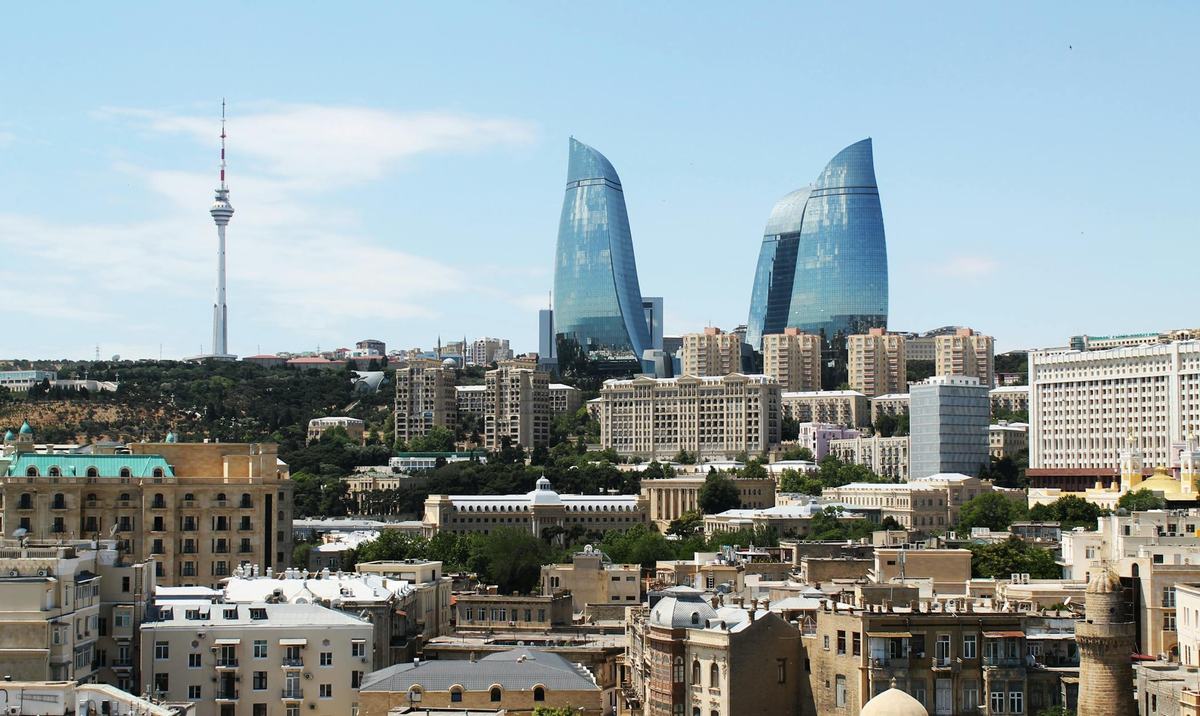
The Flame Towers Were Designed to Mimic Fire - But the Shape Has Deeper Symbolism
Completed in 2012, the three Flame Towers rise to 182 meters and are clad in approximately 10,000 LED panels capable of projecting animated fire across the Baku skyline. The design by HOK architects directly references Azerbaijan's ancient identity as the "Land of Fire," rooted in naturally occurring surface gas combustion that drew Zoroastrian pilgrims for centuries. The tallest tower houses a hotel; the others contain residences and offices - a deliberate fusion of symbolism and commercial function.
Icherisheher: A Walled Medieval City That Still Functions as a Living Neighborhood
Unlike many preserved medieval districts converted entirely into tourist zones, Icherisheher (Old City) remains a functioning residential neighborhood with around 1,500 permanent residents. Its walls date to the 12th century, and the district covers approximately 22 hectares. Residents navigate streets too narrow for modern vehicles daily, living inside a UNESCO boundary that also hosts boutique hotels, working artisans, and active mosques.
Baku Below Sea Level: A Capital City With a Unique Physical Position
Baku Sits 28 Meters Below Sea Level, Making It the Lowest National Capital on Earth
At approximately −28 meters relative to the world ocean level, Baku holds a distinction no other national capital shares. This puts it below Amsterdam (roughly −2 meters on average) and situates it in a geological category typically associated with remote basins rather than major cities.
Comparing Baku's Elevation to Amsterdam, Death Valley, and the Dead Sea Region
Death Valley's Badwater Basin sits at −86 meters; the Dead Sea coastline at approximately −430 meters. Baku at −28 meters falls between European low-lying cities and extreme geological depressions - unusual enough to matter climatically and infrastructurally.
How the Below-Sea-Level Position Affects Baku's Wind Patterns and Urban Planning
The Caspian basin geography channels powerful winds into Baku - locally called khazri (north wind) and gilavar (south wind). The khazri regularly exceeds 35 km/h, directly influencing building orientation and coastal infrastructure design across the city.
Baku as an Unlikely Cultural and Sporting Capital
Baku Hosted the First European Games in 2015, Outpacing Bids From Established Sports Nations
The inaugural European Games drew 6,000 athletes from 50 nations to Baku in June 2015. Azerbaijan invested over $1 billion in infrastructure, including the purpose-built Baku Olympic Stadium with a 68,700-seat capacity.
The Formula 1 Baku City Circuit Passes Through Streets Older Than the Sport Itself
The Azerbaijan Grand Prix circuit runs 6.003 kilometers through central Baku, including a section alongside Icherisheher's 12th-century walls. The narrow passage near the Old City - approximately 7.6 meters wide - ranks among the tightest corners in contemporary Formula 1.
How Baku's Eurovision 2012 Victory Reshaped the City's Global Image
When Eldar and Nigar won Eurovision 2011 with "Running Scared," Azerbaijan hosted the 2012 contest in Baku's purpose-built Crystal Hall, attracting an estimated 600 million television viewers. The event accelerated international hotel development and positioned Baku as a viable luxury tourism destination almost overnight.
Little-Known Facts About the Azerbaijani Language and Ethnic Diversity
The Azerbaijani Language and Its Surprising Reach
More Azerbaijani Speakers Live in Iran Than in Azerbaijan Itself
Azerbaijan's population stands at roughly 10 million, yet an estimated 15–20 million ethnic Azerbaijanis live across the border in northwestern Iran, concentrated in provinces like East and West Azerbaijan and Ardabil. This diaspora predates modern borders entirely, making Iranian Azerbaijan a linguistic and cultural heartland that the Republic of Azerbaijan sometimes overshadows in global perception. These speakers have preserved the language under significant assimilationist pressure, with no official status granted to Azerbaijani in the Iranian educational system.
Azerbaijani Changed Its Alphabet Three Times in the 20th Century - Cyrillic, Arabic, and Latin
Few languages have been as politically weaponized through orthography as Azerbaijani. The Arabic script was standard until 1929, when Soviet authorities replaced it with a Latin-based alphabet to sever ties with Islamic culture. In 1939, Stalin mandated a switch to Cyrillic to deepen Soviet integration and complicate cross-border communication with Iranian Azerbaijanis. After independence in 1991, Azerbaijan officially returned to a modified Latin script, now fully standardized by 1992. Each shift created generational literacy gaps, effectively partitioning the written heritage of its own people into three incompatible archives.
How Azerbaijani Mutual Intelligibility With Turkish Compares to Spanish and Portuguese
Azerbaijani and Turkish share approximately 60–70% lexical similarity, placing their mutual intelligibility roughly on par with Spanish and Portuguese - functional but imperfect. Both belong to the Oghuz branch of Turkic languages and diverged significantly after the 11th century. Key differences include phonology, loanword composition (Azerbaijani absorbed more Persian and Russian), and certain grammatical constructions. A Turkish speaker can follow an Azerbaijani news broadcast with moderate comprehension, though colloquial speech and regional dialects widen the gap considerably.
Azerbaijan's Ethnic Minorities That Most People Have Never Heard Of
The Udins: A Living Link to the Ancient Albanian Church That Predates Christianity in Rome
The Udins number fewer than 4,000 in Azerbaijan, primarily in the village of Nij in Qabala district. They speak a Northeast Caucasian language and are direct descendants of the Caucasian Albanians - a civilization entirely distinct from Balkan Albanians. Their church tradition predates the Roman adoption of Christianity and preserves liturgical texts in the extinct Caucasian Albanian script, only partially decoded in the 20th century.
The Talysh People and Their Language Closer to Old Persian Than Modern Farsi
The Talysh, numbering 100,000–200,000 in southern Azerbaijan, speak an Iranian language more archaic in structure than contemporary Farsi, retaining grammatical features that modern Persian shed centuries ago.
Khinalug Language: Spoken by Fewer Than 2,000 People and Unrelated to Any Other Tongue
Khinalug, spoken in a single remote village in the Greater Caucasus, constitutes its own independent language family. It shares no proven genealogical connection with any other language on Earth, making it one of the most linguistically isolated tongues in existence.
Fun and Counterintuitive Facts About Azerbaijan Worth Sharing
Azerbaijan Has One of the World's Oldest Chess Cultures
Baku Produced More Chess Grandmasters Per Capita During the Soviet Era Than Anywhere Else
Azerbaijan's chess tradition predates the Soviet period, with historical references to the game appearing in medieval Azerbaijani poetry, including works by Nizami Ganjavi in the 12th century. During the Soviet era, however, Baku became a genuine powerhouse. The city produced Garry Kasparov, who dominated world chess for two decades and held the world number-one ranking for a cumulative 255 months. Vugar Gashimov, Shakhriyar Mamedyarov, and Teimour Radjabov followed, giving Azerbaijan a concentration of elite players extraordinary for a country of roughly 10 million people.
How Azerbaijan's Chess Culture Compares to Russia, Armenia, and Georgia
Russia and Armenia have stronger aggregate records, but Azerbaijan's output per capita remains competitive. The country currently maintains several players in the FIDE top 100, and its national federation has invested systematically in youth training since independence in 1991. Armenia remains its closest regional rival in chess density, but Azerbaijan's recent tournament results at Olympiad level have been consistently strong.
Longevity Legends: Azerbaijan's Reputation for Extraordinary Old Age
Soviet-Era Claims of Azerbaijanis Living Past 150 and the Scientific Debate They Sparked
During the 1970s, Soviet propaganda highlighted communities in Azerbaijan's mountain regions, particularly around Lerik and Talysh, where residents allegedly lived to 150 or beyond. Shirali Muslimov was the most famous case, reportedly dying in 1973 at age 168. Scientists, including gerontologist Zhores Medvedev, later concluded that poor birth documentation and incentives to exaggerate age under Soviet collectivization made these figures unreliable. Birth records simply did not exist to verify the claims.
The Diet and Lifestyle Factors Scientists Actually Found in Long-Lived Caucasian Communities
What researchers did find was noteworthy: low-calorie diets rich in fresh vegetables, herbs, fermented dairy, and walnuts; high levels of physical activity well into old age; strong multigenerational social structures; and low rates of smoking among women. These factors align with established longevity research, even if the extreme age claims were inflated.
Comparing Azerbaijani Longevity Claims to Blue Zones in Sardinia and Okinawa
Dan Buettner's verified Blue Zones use rigorous documentation. Sardinian and Okinawan longevity data is supported by birth records and census validation. The Caucasian cases lack this foundation, but the lifestyle parallels are genuine enough that researchers continue studying the region for insights into healthy aging, separating verifiable biology from Cold War mythology.
Azerbaijan's Space and Aviation Contributions Almost Nobody Knows About
The First Muslim Cosmonaut Was Azerbaijani: Musa Manarov's Record-Breaking Space Mission
Musa Manarov, born in Baku in 1951, spent 365 days aboard the Mir space station during his 1987–1988 mission, setting a world record for the longest spaceflight at that time. He is widely recognized as the first Muslim cosmonaut, a distinction rarely mentioned outside specialist aerospace history.
How Baku's Aviation Infrastructure During WWII Influenced Soviet Air Strategy
Baku's oil fields supplied roughly 80 percent of Soviet aviation fuel during World War II, making the city a strategic priority that shaped Luftwaffe targeting decisions, including the rationale behind the German push toward the Caucasus in 1942. The city's refinery infrastructure directly enabled Soviet air operations on the Eastern Front, a logistical fact that often gets overshadowed by the more dramatic ground battles of the period.