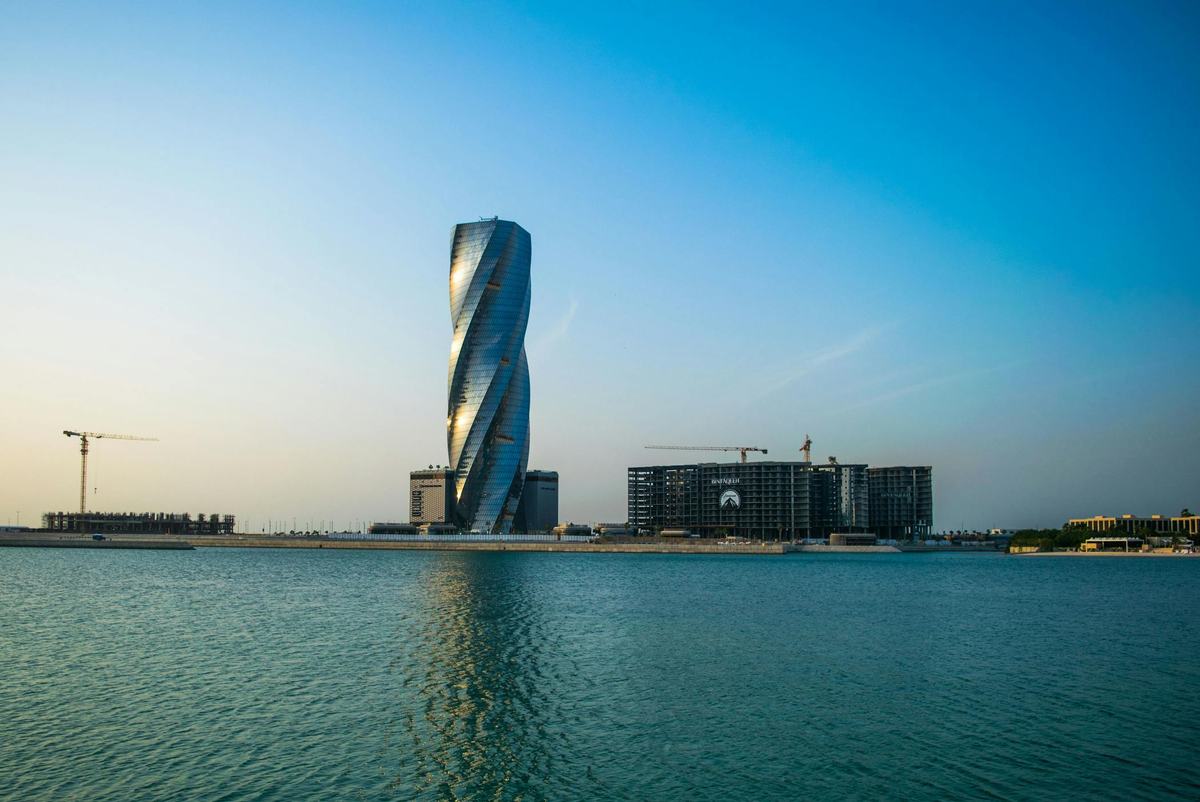
Why Bahrain Is Not Just Another Gulf State: The Facts That Set It Apart
Bahrain Is an Archipelago of 33 Islands - But That Number Keeps Growing
Bahrain's official island count stands at 33, but that figure is increasingly a moving target. Decades of aggressive land reclamation have added measurable territory to the archipelago, with projects like the Durrat Al Bahrain development and the expansion around Muharraq adding hundreds of square kilometers to the country's footprint. Since the 1970s, Bahrain has expanded its total land area from roughly 590 km² to over 780 km² - a territorial increase of more than 30% achieved entirely through engineering.
How Land Reclamation Has Physically Expanded Bahrain's Territory
The most significant reclamation project is Durrat Al Bahrain, a southern development comprising six atolls and five fish-shaped islands built entirely on shallow seabed. The northern coast near Manama has also been systematically extended, pushing the coastline further into the Gulf. This isn't merely cosmetic - reclaimed land now hosts critical infrastructure, residential districts, and financial hubs. The Formula 1 Bahrain International Circuit, opened in 2004, sits on reclaimed desert terrain near Sakhir, illustrating how land engineering has directly enabled economic development.
Comparing Bahrain's Size to Other Island Nations: Smaller Than Singapore, Yet Uniquely Positioned
Bahrain's total land area of approximately 780 km² makes it smaller than Singapore (728 km² of core territory, expanding similarly through reclamation to over 730 km²). Yet Bahrain's strategic position at the center of the Gulf - equidistant from major Saudi, Qatari, and Kuwaiti population centers - gives it an outsized logistical and financial role relative to its physical size.
The Only Arab Gulf Nation With Virtually No Oil Dependency in Its Modern Economy
Oil and gas now account for less than 20% of Bahrain's GDP, a figure that stands in stark contrast to Qatar (over 60%) and Kuwait (roughly 50%). Financial services, manufacturing, and tourism collectively drive the majority of Bahrain's economic output, making it structurally the most diversified economy among the six GCC states.
How Bahrain Became the Gulf's First Post-Oil Economy
Necessity drove the transformation. With reserves dwindling by the 1970s, Bahrain strategically positioned itself as the Gulf's financial services hub, establishing the Bahrain Monetary Agency (now Central Bank of Bahrain) in 1973. Today, over 400 financial institutions are licensed in Bahrain, including a dominant Islamic finance sector that manages assets exceeding $100 billion.
Bahrain vs. Qatar and Kuwait: A Comparison of Economic Diversification Strategies
Qatar has leveraged LNG revenues to fund diversification into education, aviation, and real estate - but oil and gas remain the revenue foundation. Kuwait has made slower progress, with hydrocarbons still underpinning over 80% of government revenues. Bahrain, lacking that cushion, built genuine private-sector depth and a liberalized business environment decades earlier, including being the first Gulf state to sign a Free Trade Agreement with the United States in 2006.
Bahrain Was the First Gulf State to Discover Oil - and Among the First to Run Low
The 1932 Oil Discovery and What It Meant for the Entire Middle East
On May 31, 1932, the Bahrain Petroleum Company struck oil at Jebel Dukhan - the first commercial oil discovery on the Arabian side of the Gulf. This event directly triggered exploration across Saudi Arabia, leading to the massive 1938 Dammam discovery. Bahrain's find was the geological and commercial proof of concept that reshaped the 20th century's energy map.
How Early Oil Depletion Forced Bahrain to Innovate Decades Before Its Neighbors
Peak production hit approximately 75,000 barrels per day in the 1970s; current output from the mature Bahrain Field sits below 45,000 bpd. That decline curve gave Bahrain a 20-year head start on diversification compared to neighbors still managing peak-era revenues. The constraint became competitive advantage - Bahrain built regulatory frameworks, financial infrastructure, and human capital while Qatar and Kuwait were still maximizing extraction.
Surprising Facts About Bahrain's Ancient and Layered History
Bahrain May Be the Real Location of the Garden of Eden According to Some Scholars
The Dilmun Civilization: A Trade Empire That Predates Babylon
Long before Babylon rose to power, the ancient civilization of Dilmun flourished on what is now Bahrain. Sumerian cuneiform tablets dating back to roughly 3000 BCE describe Dilmun as a sacred, paradisiacal land - "pure," "clean," and "bright" - where death and disease did not exist. Mesopotamian texts explicitly reference Dilmun as the place where the gods granted immortality to Utnapishtim, the flood survivor whose story directly parallels Noah's. This civilization operated as a sophisticated commercial hub, connecting Mesopotamia with the Indus Valley and facilitating trade in copper, timber, and luxury goods across thousands of miles.
Archaeological Evidence That Links Bahrain to the World's Oldest Creation Myths
The physical evidence is compelling. Bahrain sits atop extraordinary freshwater springs - rare in the Gulf region - which ancient peoples considered miraculous. The Sumerian creation myth features Enki, the god of wisdom, dwelling in a freshwater abyss called the Abzu, believed to reside beneath Dilmun. Excavations at Qal'at al-Bahrain have uncovered continuous occupation stretching back 4,000 years, lending credibility to Bahrain's claim as the mythological paradise described in the world's earliest written literature.
Bahrain Has One of the Largest Prehistoric Burial Sites on Earth
Over 170,000 Ancient Burial Mounds: More Than the Entire Population of Bahrain for Centuries
Bahrain contains an estimated 170,000 ancient burial mounds concentrated primarily in the island's northern and western regions. This number is staggering given that Bahrain covers just 780 square kilometers. Archaeologists believe many mounds were built between 2200 and 1800 BCE, suggesting Bahrain served as a burial destination for people across the wider Gulf region - essentially functioning as a sacred necropolis for multiple civilizations.
Comparing the A'ali Burial Mounds to Egypt's Valley of the Kings in Scale and Mystery
The A'ali mounds, among the largest in Bahrain, reach heights of 15 meters - modest compared to Egyptian pyramids but remarkable for earthen construction. Unlike Egypt's Valley of the Kings, which served exclusively royalty, Bahrain's mounds appear to span social classes, offering an unusually democratic window into ancient burial practices. Many remain unexcavated, meaning Bahrain's archaeological story is far from complete.
The Portuguese Built a Fort in Bahrain in 1521 - Long Before the British Arrived
Qal'at al-Bahrain: A UNESCO World Heritage Site With Layers of Seven Civilizations
Qal'at al-Bahrain, designated a UNESCO World Heritage Site in 2005, is essentially an archaeological layer cake - excavations have revealed seven distinct civilizations stacked upon one another, spanning from the Dilmun period through Portuguese occupation. The Portuguese seized Bahrain in 1521 as part of their aggressive expansion into Gulf trade routes, constructing a formidable coastal fortification that still dominates the northern shoreline.
How Bahrain Became a Contested Prize Between Persian, Portuguese, and Arab Powers
Bahrain's strategic position made it perpetually contested. After the Portuguese, Safavid Persia seized control in 1602. The Al Khalifa family, originally from the Arabian Peninsula, ultimately took Bahrain in 1783 - establishing the dynasty that rules today. British influence formalized through a series of treaties beginning in 1820, but British boots followed Portuguese ones by nearly three centuries.
Bahrain Was a Major Pearl Diving Capital for Over 4,000 Years
How Bahraini Pearls Reached the Courts of Rome, India, and China
Bahraini pearls were among the most prized luxury commodities of the ancient world. Roman writers, including Pliny the Elder, specifically praised Gulf pearls as superior to all others. Indian Mughal emperors coveted them; Chinese imperial courts imported them. At its peak in the early 20th century, Bahrain's pearl industry employed over 30,000 divers annually - a workforce representing the majority of the adult male population - generating the island's primary economic income.
The Japanese Cultured Pearl Industry and How It Almost Destroyed Bahrain's Economy Overnight
When Mikimoto Kōkichi perfected cultured pearl production in Japan during the 1920s, the economic consequences for Bahrain were catastrophic. By the 1930s, Japanese cultured pearls had flooded global markets at a fraction of natural pearl prices, collapsing Bahrain's pearl export revenues almost entirely. The timing was devastating - and historically fortunate. Oil was discovered in Bahrain in 1932, making it the first Gulf state to find commercial petroleum deposits, providing an economic lifeline precisely when the pearl industry disintegrated.
Unusual Facts About Bahrain's Geography and Natural Environment
Bahrain Has Freshwater Springs That Bubble Up From the Floor of the Persian Gulf
How Ancient Sailors Used Underwater Springs as Drinking Water Sources
Long before desalination plants became Bahrain's lifeline, sailors and pearl divers exploited one of the Gulf's most remarkable anomalies: submarine freshwater springs that push directly through the seabed. Historical accounts from Arab geographers as far back as the 10th century describe divers plunging 12 to 18 meters to collect fresh water by pressing goatskin bags against the seafloor openings. These springs, known locally as ayn, were reliable enough that Bahrain's name itself may derive from the Arabic term for "two seas" - a reference to the coexistence of salt and fresh water in the same body.
The Hydrogeology Behind Bahrain's Freshwater Phenomenon Compared to Other Desert Nations
The mechanism is geological rather than miraculous. Rainwater falling on the limestone escarpments of Saudi Arabia's Eastern Province infiltrates underground aquifers - primarily the Dammam and Umm er Radhuma formations - and travels under hydrostatic pressure beneath the Gulf floor, eventually venting through fractures near Bahrain. This confined aquifer system, built over millions of years, delivers water that tests at relatively low salinity despite traveling hundreds of kilometers underwater. By contrast, neighboring Qatar and the UAE sit atop far less productive aquifer systems, making Bahrain's submarine springs genuinely exceptional among Gulf states. Overextraction on the Saudi mainland has measurably reduced spring flow in recent decades, a cautionary data point for regional water planners.
The Tree of Life: A 400-Year-Old Mesquite Tree Thriving in the Middle of the Desert With No Visible Water Source
Scientific Theories and Local Legends About the Tree's Survival
Standing roughly 9.75 meters tall in an otherwise barren stretch of desert 2 kilometers from Jebel Dukhan, Bahrain's highest point at just 134 meters, the Tree of Life (Prosopis cineraria) has survived without any surface water for an estimated 400 years. Botanists point to the species' exceptionally deep root system - documented in similar specimens to exceed 50 meters - which likely taps residual moisture from deep geological layers. Local tradition holds that the site marks the original Garden of Eden, lending the tree near-mythical status among Bahraini residents and the roughly 50,000 tourists who visit annually.
Comparing the Tree of Life to Other Unexplained Natural Phenomena in Arid Regions
Similar botanical outliers exist - Namibia's Welwitschia mirabilis survives millennia in the Namib Desert through fog absorption, while California's ancient bristlecone pines exploit deep root networks - but none combine the Prosopis species' limited native resilience with such an apparently waterless environment.
Bahrain Experiences a Phenomenon Called the 'Haboob' - Sandstorms That Can Reduce Visibility to Zero
How Bahrain's Flat Terrain Makes It More Vulnerable to Dust Storms Than Mountainous Gulf Neighbors
Haboobs - from the Arabic habb, meaning wind - typically hit Bahrain between March and June, driven by Shamal winds crossing the flat Arabian Peninsula. With maximum elevation barely exceeding 130 meters, Bahrain offers no topographic barrier, allowing dust walls reaching 1,500 meters in height to arrive with minimal dissipation. Oman and the UAE's Hajar Mountains deflect comparable events in those countries.
The Environmental and Health Impact of Seasonal Sandstorms on Urban Life
Particulate matter during peak haboob events regularly exceeds WHO safe limits by factors of 10 to 20, spiking respiratory emergency admissions across Bahrain's hospitals. Infrastructure costs accumulate through HVAC filter replacements, reduced solar panel efficiency, and aviation disruptions at Bahrain International Airport, where visibility drops below 200 meters during severe events - a measurable economic burden on one of the Gulf's most aviation-dependent economies.
Interesting Facts About Bahrain's Culture and Society
Bahrain Has the Highest Ratio of Migrant Workers to Citizens in the World
How Expatriates Outnumber Bahraini Nationals by Nearly 2 to 1
Bahrain's population structure is among the most striking demographic anomalies on the planet. As of recent estimates, expatriates account for approximately 55–60% of the total population of around 1.5 million, meaning Bahraini nationals are a minority in their own country. The construction, hospitality, and domestic service sectors are almost entirely dependent on migrant labor, predominantly from South Asia - India, Bangladesh, Pakistan, and the Philippines collectively supply the largest shares.
Comparing Bahrain's Migrant Workforce Demographics to the UAE and Qatar
While the UAE (where migrants represent roughly 88% of the population) and Qatar (around 85%) technically have higher expatriate ratios, Bahrain's case is distinctive because its labor migration is older, more deeply embedded in the economy, and tied historically to its pearl-diving and oil industries dating back to the early 20th century. Unlike Qatar's more recent labor boom driven by hydrocarbon wealth and infrastructure projects, Bahrain's dependency on foreign workers predates the modern Gulf economy.
Bahrain Was the First Gulf Country to Grant Women the Right to Vote and Stand in Elections
The 2002 Constitutional Reform and Its Impact on Women's Political Participation
Following the 2002 constitutional reform under King Hamad bin Isa Al Khalifa, Bahraini women gained full political rights - the first in the Gulf Cooperation Council (GCC) to do so. Women could vote and run as candidates in both parliamentary and municipal elections. In the 2018 parliamentary elections, women won six seats in the Council of Representatives, and Fawzia Zainal became the first female Speaker of a parliament in the Arab world in 2022 - a landmark that received surprisingly little international attention.
Bahrain's Gender Progress Compared to Other GCC Nations: A Factual Overview
Saudi Arabia didn't grant women the right to vote until 2015. Kuwait followed in 2005. Oman has had limited electoral participation since 2003. Bahrain's 2002 reform was genuinely ahead of the regional curve, even if implementation and broader gender equality metrics remain a work in progress by international standards.
Bahrain Is One of the Few Gulf States Where Alcohol Is Legally Available to Non-Muslims
How This Policy Shapes Bahrain's Tourism Industry Compared to Saudi Arabia and Kuwait
Alcohol has been legally available to non-Muslims in licensed venues in Bahrain since the 1950s - a policy that predates similar provisions in Dubai. Saudi Arabia maintains a complete prohibition, as does Kuwait. This regulatory difference has made Bahrain a consistent weekend destination for Saudi nationals crossing the King Fahd Causeway, which opened in 1986. Tourism data suggests that Saudi visitors account for a substantial portion of weekend and holiday hospitality revenue.
The Social and Economic Rationale Behind Bahrain's More Liberal Regulatory Environment
Bahrain's approach reflects a pragmatic economic calculation: with fewer hydrocarbon reserves than its neighbors, the country has aggressively developed its financial services, tourism, and entertainment sectors. A more permissive social environment is partly a deliberate competitive strategy to attract expatriate professionals and regional tourists who might otherwise choose Dubai or Beirut.
Bahraini Arabic Dialect Contains Loanwords From Portuguese, Farsi, and Swahili
How Centuries of Trade and Colonization Left Linguistic Fingerprints on Everyday Speech
Bahrain's position as a trading hub in the Arabian Gulf for over two millennia has left measurable traces in its spoken dialect. Portuguese influence arrived during the 16th century, when Portugal controlled Bahrain from 1521 to 1602. Words related to architecture, tools, and fishing equipment bear phonetic resemblances to Portuguese originals. Farsi influence is deeper and older, reflecting centuries of Persian cultural and political dominance across the Gulf. Swahili loanwords entered through the East African trade routes that connected Bahrain's pearl merchants to Zanzibar and the Swahili Coast.
Unique Phrases in Bahraini Arabic That Don't Exist in Standard Modern Arabic
Linguists note that Bahraini Arabic contains vocabulary that Standard Modern Arabic (Fusha) simply doesn't replicate. Terms used in fishing, pearl diving, and domestic life often have no MSA equivalent and exist solely in the Gulf dialect continuum. The dialect also varies internally - the Arabic spoken by Bahraini Shia communities (Baharna) differs noticeably from that spoken by Sunni tribes, with distinct vocabulary sets reflecting different historical migration and trade patterns.
Bahrain Has a Unique Form of Folk Music Called Fidjeri That Was Sung by Pearl Divers
The Rhythmic and Spiritual Function of Fidjeri During Long Diving Expeditions
Fidjeri (sometimes spelled Fijiri) is a genre of vocal and percussion music developed specifically by Bahraini and Kuwaiti pearl divers to endure the psychological and physical demands of months-long diving seasons. The music served a functional purpose: coordinating the rhythm of hauling nets, maintaining collective morale during dangerous deep dives, and providing a form of communal meditation during the exhausting weeks at sea. Performances were led by a nahham - a specialized singer whose role was as much psychological sustainer as entertainer.
How UNESCO Recognized Bahrain's Maritime Musical Heritage and Why It Matters
UNESCO inscribed Bahraini Fidjeri on its Representative List of the Intangible Cultural Heritage of Humanity in 2011. The recognition matters beyond symbolism: Bahrain's pearl diving industry, once the economic backbone of the archipelago before oil, collapsed after the Japanese cultured pearl industry devastated global pearl prices in the 1930s. Fidjeri is one of the most direct living connections to that pre-oil economy, and its preservation represents an effort to anchor national identity to something older and more textured than petroleum wealth.
Fun Facts About Bahrain's Records, Firsts, and Unexpected Achievements
Bahrain Hosts the Only Formula 1 Race That Is Run Entirely Under Floodlights
The Engineering Marvel Behind the Bahrain International Circuit's Night Race
The Bahrain International Circuit in Sakhir became the world's first Formula 1 venue to host a fully floodlit Grand Prix when it debuted the night race format in 2014. The installation required over 3,600 individual floodlights producing approximately 1,500 lux of illumination across the entire 5.412-kilometer track - roughly equivalent to the light intensity of an overcast day. The system consumes around 6 megawatts of power per race night, with the lighting infrastructure engineered specifically to eliminate shadows in corners where driver visibility is critical at speeds exceeding 300 km/h.
How the Night Race Compares to the Singapore Grand Prix in Terms of Logistics and Atmosphere
Singapore's Marina Bay Street Circuit, which began its night race in 2008, predates Bahrain's floodlit event but operates on a temporary street layout requiring full dismantlement after each race. Bahrain's permanent circuit allows for a more stable lighting infrastructure with year-round calibration. Atmospheric temperatures in Bahrain drop to approximately 25–28°C during the evening race window, versus Singapore's persistent humidity above 70%, making Bahrain logistically less demanding on machinery cooling systems.
Bahrain Was the First Country in the Middle East to Have a Commercial Radio Station
Radio Bahrain's Launch in 1940 and Its Role in Regional Communication
Radio Bahrain launched in 1940, predating most regional broadcasters by over a decade. Originally established to serve the British administrative and oil industry communities centered around the Bahrain Petroleum Company (BAPCO), it quickly expanded its Arabic-language programming to reach broader Gulf audiences. The station served as a critical information channel during World War II, broadcasting news and civil updates across a region largely without reliable telecommunications infrastructure.
Comparing Media Firsts: Bahrain, Egypt, and Lebanon in Early Broadcasting History
Egypt's Radio Cairo, established in 1934, holds the distinction of being the Arab world's first official radio broadcaster. Lebanon followed in 1938. Bahrain's 1940 launch, while not the absolute regional first, was nonetheless pioneering for the Gulf specifically - a subregion that wouldn't see comparable broadcasting infrastructure elsewhere until the 1950s and 1960s.
The Bahrain World Trade Center Was the First Skyscraper in the World to Integrate Wind Turbines Into Its Design
How the Twin Tower Design Channels Sea Breezes to Generate Electricity
Completed in 2008, the Bahrain World Trade Center features three 29-meter horizontal-axis wind turbines suspended between its two 240-meter towers. The sail-shaped towers are architecturally oriented to funnel prevailing northwesterly sea breezes directly into the turbines, which collectively generate an estimated 1,100–1,300 MWh of electricity annually - covering roughly 11–15% of the towers' energy needs.
Comparing Bahrain's Green Architecture Milestone to Dubai's Sustainable Tower Projects
Dubai's Burj Al Arab and subsequent sustainable projects post-date Bahrain's integration milestone. The BWTC remains architecturally distinct because its turbines are structural and load-bearing elements, not aesthetic additions - a design approach that engineers at Atkins Global specifically developed to maximize aerodynamic efficiency.
Bahrain Has One of the World's Oldest Continuously Operating Aluminum Smelters
Alba: How Bahrain Built a Global Aluminum Empire Using Cheap Energy
Aluminium Bahrain (Alba) began production in 1971, making it one of the longest continuously operating smelters globally. The facility leverages subsidized natural gas - aluminum smelting is extraordinarily energy-intensive, requiring roughly 14–15 MWh per metric ton - to maintain competitive production costs. Alba's Line 6 expansion, completed in 2019, pushed annual capacity to approximately 1.56 million metric tons, ranking it among the world's largest single-site smelters.
Bahrain's Aluminum Production vs. Global Giants Like China and Canada
China dominates global aluminum output at over 40 million metric tons annually. Canada produces roughly 3 million metric tons. Alba's 1.56 million metric ton capacity is modest by comparison but remarkable given Bahrain's size of just 780 square kilometers - making its per-capita aluminum output among the highest on Earth.
Facts About Bahrain's Economy That Most People Don't Know
Bahrain Is the Financial Hub of the Gulf - Not Dubai
Most people instinctively associate Gulf finance with Dubai. The reality is more nuanced - and historically, Bahrain has the stronger claim.
How Bahrain Established Islamic Banking Regulations That the Entire World Now Uses
Bahrain established its first Islamic bank in 1979 and has been refining the regulatory framework ever since. The Central Bank of Bahrain (CBB) introduced the world's first comprehensive rulebook for Islamic financial institutions, a framework that regulators in Malaysia, the UK, and across the GCC have since modeled their own standards on. Today, Bahrain hosts over 400 financial institutions, including more than 30 Islamic banks. The Accounting and Auditing Organization for Islamic Financial Institutions (AAOIFI) - the global standard-setter for Islamic finance - is headquartered in Manama, not Dubai.
Comparing Bahrain's Financial Sector Depth to Dubai's and Abu Dhabi's in Terms of Regulation and History
Bahrain's financial services sector contributes roughly 17% of GDP, comparable to what banking contributes in Singapore. Dubai's financial sector, while larger in absolute terms, is a more recent construction - the DIFC was established in 2004, whereas Bahrain's financial regulatory infrastructure dates to the 1970s. For institutions requiring deep Islamic finance expertise, multilateral licensing options, or cost-efficient back-office operations, Bahrain remains the preferred base.
Bahrain Has a Causeway Connecting It to Saudi Arabia That Handles Over 12 Million Crossings Per Year
The King Fahd Causeway: Engineering Facts and Economic Impact Since 1986
Opened in November 1986, the King Fahd Causeway stretches 25 kilometers across the Gulf, linking Bahrain's main island to Saudi Arabia's Eastern Province. Construction cost approximately $1.2 billion, funded jointly by both governments. The causeway includes two travel lanes in each direction, customs and immigration facilities on an artificial island midway, and handles an average of 12–16 million vehicle crossings annually. It remains one of the longest causeways in the world built over open sea.
How the Causeway Transformed Bahrain Into Saudi Arabia's Weekend Destination
The economic effect was immediate and structural. Saudi nationals - particularly from Dammam, Khobar, and Riyadh - began crossing into Bahrain for leisure, dining, and entertainment options unavailable at home. Today, Saudi visitors account for the majority of Bahrain's tourism revenue. The hospitality, retail, and food and beverage sectors are directly sized around this weekend influx, making the causeway not just infrastructure but the backbone of Bahrain's consumer economy.
Bahrain's Cost of Living Is Significantly Lower Than Neighboring UAE Despite Similar Income Levels
A Factual Cost Comparison: Bahrain vs. Dubai vs. Doha for Residents and Expats
According to Numbeo's 2024 data, consumer prices in Bahrain run approximately 20–25% lower than in Dubai. A mid-range two-bedroom apartment in Manama averages $800–$1,100 per month; comparable units in Dubai's mid-market areas start at $2,000–$2,500. There is no personal income tax in Bahrain, VAT is capped at 10%, and healthcare costs for expats are measurably lower than in the UAE.
Why Bahrain Remains an Underrated Destination for Business Relocation
Bahrain's Economic Development Board has actively targeted SMEs and fintech startups with streamlined licensing - company formation can be completed in under 24 hours through the Sijilaat platform. Combined with lower operating costs and direct access to Saudi Arabia's 35-million-person market via the causeway, Bahrain offers a compelling case that most relocation advisors consistently undervalue.
Little-Known Facts About Bahrain's Religion, Architecture, and Heritage Sites
Bahrain's religious and architectural landscape defies the Gulf's monolithic image, layering pre-Islamic civilizations, sectarian complexity, and medieval Islamic heritage into a remarkably compact geography.
Bahrain Has Both Sunni and Shia Muslim Populations With One of the Most Complex Sectarian Demographics in the Gulf
How Bahrain's Shia Majority and Sunni Ruling Family Have Coexisted for Centuries
Bahrain presents one of the Arab world's most intricate sectarian configurations. Shia Muslims constitute an estimated 60–70% of the citizen population, yet political authority has rested with the Sunni Al Khalifa dynasty since 1783. This arrangement has produced centuries of negotiated coexistence punctuated by periodic tension, most visibly during the 2011 Arab Spring protests, when predominantly Shia demonstrators filled the Pearl Roundabout before a Saudi-led GCC force helped restore order. Despite political friction, Shia and Sunni communities share commercial districts, intermarry in some cases, and worship at mosques separated by mere streets in Manama's older quarters.
Comparing Bahrain's Sectarian Dynamic to Lebanon's Confessional System
Lebanon institutionalized its sectarian balance through the 1943 National Pact, formally distributing executive offices along religious lines. Bahrain never adopted comparable constitutional power-sharing; instead, the Al Khalifa government has relied on economic co-optation and appointed advisory bodies. The result is structurally less formalized than Lebanon's confessionalism but arguably more volatile because Shia political representation remains constitutionally constrained. Where Lebanon distributes power explicitly, Bahrain manages it informally-making both systems fragile but in distinctly different ways.
There Is an Ancient Buddhist Temple Site in Bahrain Dating Back to the 3rd Century
Evidence of Buddhist Traders and Monks Along the Ancient Maritime Silk Road
Excavations on Bahrain's northeastern coast, particularly near the village of Samahij, uncovered structural remains and artifacts consistent with a Buddhist monastic presence dating to approximately the 3rd–4th centuries CE. The Indian Ocean maritime trade network that connected the Indus Valley, the Persian Gulf, and Mesopotamia made Bahrain-then known as Tylos and later Awal-a logical waypoint. Buddhist traders and possibly monks traveling between India and Sasanian Persia brought not only goods but religious practice with them.
What the Monastery Ruins at Samahij Tell Us About Bahrain's Religious Diversity in Antiquity
The Samahij site yielded architectural fragments consistent with vihara-style construction alongside pre-Islamic Arabian artifacts. This physical coexistence of material cultures indicates that Bahrain functioned as a genuine crossroads rather than a culturally homogenous territory. The discovery overturns assumptions that the Gulf was uniformly animist or Nestorian Christian before Islam's arrival in the 7th century.
Bahrain's Al-Khamis Mosque Is One of the Oldest Mosques in the World Still Standing
Built in the 7th Century: What Makes Al-Khamis Architecturally Distinct From Later Islamic Structures
Al-Khamis Mosque, located south of Manama, is traditionally dated to 692 CE during the Umayyad Caliphate, making it one of the earliest purpose-built mosques outside the Arabian Peninsula's core. Its twin minarets-added during later renovations-sit atop an early hypostyle hall plan that predates the ornamental elaboration characteristic of Abbasid and Fatimid architecture.
Comparing Al-Khamis to the Great Mosque of Kairouan in Terms of Historical Significance
The Great Mosque of Kairouan in Tunisia, founded around 670 CE, is widely cited as Islam's fourth holiest site and a benchmark of early Islamic construction. Al-Khamis, though less internationally recognized, represents comparable antiquity within the Gulf context and offers archaeologists a relatively uninterrupted stratigraphic record. Where Kairouan became a theological center of gravity for North African Islam, Al-Khamis remained a localized but continuous site of worship-its significance measured in durability rather than regional influence.