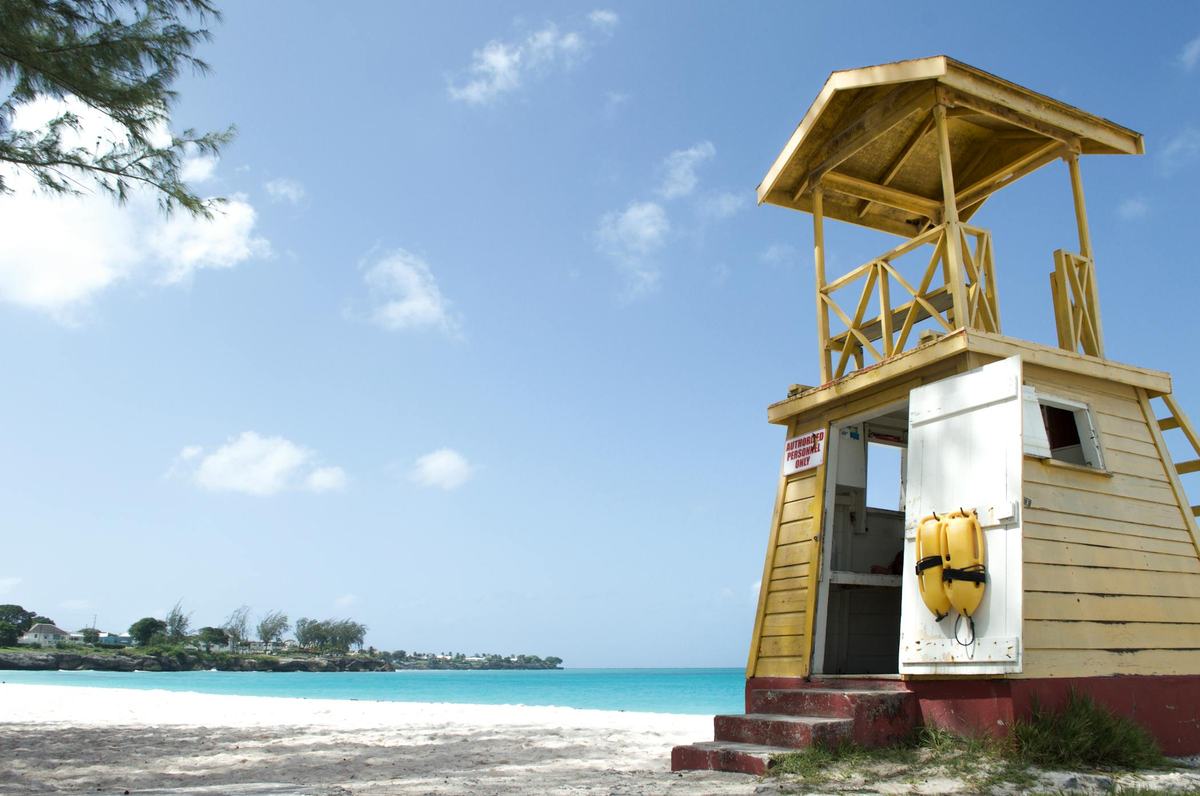
Why Barbados Stands Apart: Surprising Geographic and Geological Facts
Barbados Is Not Technically a Caribbean Island in the Geological Sense
How Barbados Rose from the Ocean Floor Unlike Its Neighbors
Most Caribbean islands owe their existence to volcanic activity along the Lesser Antilles arc. Barbados is a geological outlier. The island formed primarily through the uplift of an accretionary prism - sediment and oceanic crust scraped off the Atlantic plate as it subducts beneath the Caribbean plate. This process pushed material upward over millions of years, eventually breaching the ocean surface. The island sits atop what geologists classify as a subduction-related accretionary wedge, making it fundamentally different in origin from volcanic neighbors like St. Lucia or St. Vincent.
The Coral Limestone Cap That Makes Barbados Unique Among Atlantic Islands
Overlying that accreted base is a thick cap of coral limestone, deposited as ancient reef systems grew atop the rising landmass. This limestone layer reaches depths of roughly 90 meters in some areas. The result is a layered island: oceanic sediment below, coral rock above. No significant igneous rock outcrops exist on Barbados, which is why you won't find the dramatic volcanic calderas or black sand beaches common elsewhere in the eastern Caribbean.
Barbados Sits Outside the Main Caribbean Island Arc
Why Barbados Experiences Far Fewer Hurricanes Than Other Caribbean Nations
Barbados lies approximately 160 kilometers east of the main Lesser Antilles island chain, positioning it further into the open Atlantic. This placement means most hurricanes tracking westward either make landfall on islands to the north or curve before reaching Barbados. The island sits at roughly 13°N latitude, where storm systems are still intensifying rather than at peak strength. Statistically, Barbados experiences a direct hurricane hit roughly once every 26 years on average - a remarkably low frequency by regional standards.
Comparing Barbados's Hurricane Risk to Jamaica and Puerto Rico
Jamaica, positioned in the northwestern Caribbean, faces a direct hit probability approximately three times higher than Barbados over any given decade. Puerto Rico recorded five major hurricane landfalls in the 20th century alone. Barbados's last catastrophic hurricane strike was Janet in 1955, which caused widespread destruction - but that singular event stands out precisely because direct impacts are so rare. For travelers and residents alike, this translates into a meaningfully lower risk profile than much of the region.
The Underground Cave Systems Few Tourists Ever See
Harrison's Cave vs. the Dozens of Unexplored Caverns Beneath the Island
Harrison's Cave attracts around 100,000 visitors annually and represents the island's most commercialized geological attraction. What most visitors don't realize is that it represents a fraction of Barbados's subterranean network. Geological surveys have identified dozens of additional cave systems across the island, many unmapped and inaccessible to the public. The coral limestone geology creates ideal conditions for speleogenesis - the process by which acidic groundwater dissolves rock over millennia to form caverns.
How the Coral Geology Creates a Natural Freshwater Filtering System
The porous limestone acts as a natural aquifer and filtration system. Rainwater percolates through the coral rock, which strips out many contaminants before the water reaches underground reserves. Barbados draws a significant portion of its freshwater supply from these aquifers, reducing dependence on desalination compared to lower-elevation or volcanic islands. This geological quirk has given the island a relative degree of water security that many Caribbean neighbors simply don't have.
Overlooked Historical Facts About Barbados That Rewrote the Atlantic World
Barbados Was the Birthplace of the British Colonial Sugar Economy
By the 1650s, Barbados had become the wealthiest English colony in the Americas, generating more revenue than all other English settlements combined. The shift from tobacco to sugarcane cultivation after 1640, largely driven by Dutch merchants who brought Brazilian cultivation techniques and financing, transformed the island's economic structure within a single generation.
How Barbados's Sugar Model Was Exported to Jamaica, Carolina, and Beyond
The Barbadian plantation template - enslaved labor at scale, monoculture production, and absentee ownership - was deliberately transferred outward. When England seized Jamaica from Spain in 1655, Barbadian planters were among the first settlers to arrive and establish sugar operations. More significantly, the founding of Carolina in 1663 was directly financed and populated by Barbadian elites. The colony's original Fundamental Constitutions were partly drafted with Barbadian land interests in mind, and Carolina's early rice economy inherited the Barbadian labor system almost intact.
The Barbados Slave Code of 1661 and Its Disturbing Legacy Across the Americas
The 1661 Barbados Slave Code was the first comprehensive statute in English colonial law to define enslaved Africans as property rather than persons. It established the legal framework that Virginia, South Carolina, and eventually most of British North America adopted with minimal modification. The code authorized brutal punishments, stripped enslaved people of any legal standing, and created a racial classification system that would underpin Atlantic slavery for two centuries. Legal historians trace direct textual connections between the 1661 code and South Carolina's 1696 slave laws.
George Washington's Only International Trip Was to Barbados
In 1751, a 19-year-old George Washington accompanied his ailing half-brother Lawrence to Barbados, hoping the tropical climate might cure Lawrence's tuberculosis. It was the only time Washington ever left North American soil.
What Washington Observed in Barbados That Shaped His Later Military Thinking
During his seven-week stay, Washington kept a detailed journal noting British military fortifications, troop deployments, and the island's defensive infrastructure. He attended a theatrical performance - possibly his first - and contracted smallpox, which left him permanently immune. That immunity proved strategically significant: during the Revolutionary War, Washington's decision to inoculate the Continental Army against smallpox in 1777 is partly attributed to his firsthand understanding of the disease's devastation.
Comparing Washington's Barbados Visit to Other Founding Fathers' International Experiences
Unlike Franklin, Jefferson, or Adams - all of whom traveled extensively in Europe - Washington's sole international experience was a Caribbean colonial outpost. This distinction shaped his notably cautious, continental worldview and his deep skepticism toward foreign entanglements.
Barbados Was One of the Most Densely Populated Places on Earth in the 17th Century
By 1680, Barbados held roughly 60,000 people within 166 square miles, producing a population density of approximately 360 people per square mile - comparable to densely settled parts of the Netherlands and far exceeding England's average of around 80 per square mile at the same period.
Population Density of Colonial Barbados vs. England at the Same Period
England's total population in 1680 sat near 5 million across roughly 50,000 square miles. Barbados, a single small island, was absorbing settlers, enslaved Africans, and indentured laborers simultaneously, creating demographic pressure with few historical parallels in the colonial world.
Why Overcrowding in Barbados Triggered Mass Migration to the American Colonies
Land consolidation by sugar planters squeezed out small farmers rapidly. Between 1645 and 1667, the number of landholders in Barbados dropped from approximately 11,200 to under 750 as large plantations absorbed smaller plots. Displaced settlers, many of them formerly indentured Europeans, migrated in significant numbers to Carolina, Virginia, and the Leeward Islands, carrying Barbadian agricultural practices and social hierarchies with them.
The Little-Known Irish and Scottish Presence in Barbadian History
European settlement in Barbados was never exclusively English. Beginning in the 1640s and accelerating after Cromwell's campaigns in Ireland, thousands of Irish Catholics were forcibly transported to Barbados as political prisoners and indentured laborers - a practice contemporary sources sometimes called "Barbadosed."
How Thousands of Irish Political Prisoners Were Transported to Barbados
Following the 1649 Siege of Drogheda and subsequent Irish uprisings, Cromwellian authorities transported an estimated 12,000 to 50,000 Irish men, women, and children to Caribbean plantations, with Barbados receiving a substantial share. Scottish prisoners from the Battle of Worcester (1651) faced similar transportation. These individuals served under indenture contracts, but their conditions often differed little from chattel slavery in practice.
The Term 'Redlegs': Barbados's Forgotten Poor White Descendent Community
Descendants of these transported Irish and Scottish laborers, unable to compete economically with large plantation owners and socially excluded from both the white planter class and the Black majority, formed an impoverished community historically called "Redlegs" - a term likely derived from sunburn on exposed legs in the tropical climate. Concentrated today in the Scotland District of St. Andrew parish, this community represents one of the Atlantic world's most overlooked demographic survivals, numbering only in the hundreds by the 21st century.
Facts About Barbados Culture That Defy Common Stereotypes
Barbados Has One of the Highest Literacy Rates in the Western Hemisphere
Barbados Literacy Rate Compared to the United States and United Kingdom
Barbados maintains a literacy rate of approximately 99.6%, placing it consistently among the top five nations globally and ahead of both the United States (99%) and the United Kingdom (99%). This is not a recent achievement manufactured for tourism branding - it reflects decades of sustained educational investment that predates independence in 1966.
How the Island Achieved Near-Universal Literacy Before Many Developed Nations
Barbados established its first free school in 1818, nearly two decades before Britain passed the Elementary Education Act of 1870 mandating compulsory schooling. The island's commitment to public education accelerated after emancipation in 1834, driven partly by church-funded institutions and later by a colonial administration that recognized an educated workforce as an economic necessity. By the mid-20th century, Barbados had a functioning secondary school system accessible to non-elite families - a rarity in the Caribbean at the time.
Barbadian Dialect Is a Distinct Creole Language, Not Simply 'Accented English'
The African, English, and Portuguese Linguistic Roots of Bajan Creole
Bajan Creole is a fully structured linguistic system with its own phonology, syntax, and vocabulary. While its lexical base is primarily English, it incorporates significant grammatical structures from West African languages - particularly those of the Akan and Igbo groups - alongside vocabulary borrowings rooted in Portuguese, a legacy of early Atlantic trade networks. The word "lagniappe" and certain fish names in Barbadian usage trace directly to Iberian maritime contact.
How Bajan Creole Compares Structurally to Other Caribbean Creole Languages
Unlike Haitian Creole, which draws its base vocabulary from French, or Papiamento, which blends Spanish, Portuguese, and Dutch, Bajan Creole operates closer to an English-lexified creole continuum. Linguists categorize it alongside Jamaican Patois and Guyanese Creole, though Bajan sits notably closer to standard English on the creole continuum - called the "acrolect" - making it more mutually intelligible with metropolitan English than most Caribbean creoles while still maintaining distinct syntactic rules that mark it as a separate system.
Crop Over: One of the Oldest and Most Misunderstood Festivals in the Americas
The 17th-Century Slave Harvest Origins of Crop Over
Crop Over dates to the 1650s, originating as a planter-sanctioned celebration marking the end of sugar cane harvest season. Enslaved workers were granted brief, controlled periods of festivity - music, dancing, and symbolic ceremonies including the burning of an effigy called Mr. Harding, representing the plantation overseer or a figure of oppression. The festival declined with the sugar industry in the 19th century and was formally revived by the Barbadian government in 1974 as a cultural preservation initiative.
How Crop Over Differs From Trinidad Carnival Despite Superficial Similarities
The visual similarities - costumed parades, soca music, revelry - lead many observers to conflate Crop Over with Trinidad Carnival. The distinctions are substantive. Trinidad Carnival is rooted in pre-Lenten Catholic tradition adapted by freed enslaved people post-emancipation; Crop Over is explicitly tied to agricultural labor cycles and harvest ritual. The centerpiece of Crop Over, Kadooment Day, features decorated "bands" competing on aesthetic grounds, but the cultural register references land, labor, and survival rather than pre-Christian European festivity.
Barbadian Food Culture Contains Surprising Culinary Intersections
Why Flying Fish Became the National Dish Despite Being a Deep-Ocean Species
Flying fish (Hirundichthys affinis) are not reef dwellers - they inhabit open Atlantic waters and migrate seasonally through Barbadian waters between December and June. Their abundance during this window made them the most accessible protein source for working-class Barbadians for centuries. Paired with cou-cou - a polenta-like preparation of cornmeal and okra - the dish reflects practical necessity elevated to cultural identity, a pattern common across post-plantation food traditions.
The Unexpected Portuguese and West African Roots of Bajan Seasoning Traditions
The herb-forward, vinegar-based marinades central to Bajan cooking reflect two distinct culinary lineages. The West African practice of seasoning proteins with fresh herbs, hot peppers, and aromatics before cooking arrived with enslaved people from present-day Ghana and Nigeria. The use of lime juice and vinegar as both preservatives and flavor agents reflects Portuguese escabeche techniques, introduced through the Atlantic trade network Barbados sat within from the 16th century onward.
The Unique Role of the Chattel House in Barbadian Cultural Identity
Why Barbadian Workers Built Homes Designed to Be Disassembled and Moved
Following emancipation in 1834, formerly enslaved Barbadians faced a specific legal condition: plantation owners retained ownership of the land while workers could own structures placed upon it. Because tenancy was precarious and could be revoked, workers built small timber homes - chattel houses - designed for complete disassembly and relocation. The word "chattel" is legally precise here, referring to movable personal property rather than real estate.
Chattel Houses Compared to Plantation Worker Housing in Other Caribbean Islands
In Jamaica and Trinidad, post-emancipation workers more frequently occupied fixed masonry structures tied to plantation infrastructure. The portable chattel house is largely specific to Barbados, a product of the island's particular land tenure laws and the high density of plantation ownership relative to the island's small size (431 square kilometers). Today, restored chattel houses function as boutique retail spaces and cultural landmarks, with the Barbados National Trust maintaining several as heritage properties - a direct architectural continuity from labor exploitation to national identity.
Fun Facts About Barbados That Even Frequent Visitors Don't Know
Barbados Has a Single Natural Spring Despite Being Surrounded by Ocean
How the Island's Coral Limestone Aquifer System Works
Barbados sits atop a coral limestone cap that acts as a massive natural filter. Rainwater percolates through this porous rock, getting purified before collecting in underground aquifers. The island receives roughly 1,400mm of rainfall annually, and this filtration system has historically supplied most of the island's freshwater. The one confirmed natural spring - located in the Scotland District on the eastern side of the island - emerges where the limestone meets impermeable oceanic rock beneath. The Barbados Water Authority now supplements this with desalination, but the aquifer system remains the backbone of supply.
Comparing Barbados's Freshwater Situation to Other Small Island Nations
Barbados has one of the highest population densities in the world at approximately 660 people per square kilometer, making per capita freshwater availability a genuine challenge. By comparison, Malta relies almost entirely on desalination and groundwater, while Maldives collects rainwater at the household level. Barbados is unusual in that its coral geology provides relatively reliable groundwater access - a luxury that islands like Antigua, which faces chronic water shortages, do not enjoy.
The Green Monkey of Barbados Is Found Nowhere Else in the Western Hemisphere in the Wild
How African Vervet Monkeys Were Introduced to Barbados Over 350 Years Ago
West African vervet monkeys (Chlorocebus sabaeus) arrived in Barbados between 1650 and 1680, almost certainly aboard slave trade vessels from Senegal and Gambia. They established feral populations in the island's woodland and agricultural areas and have remained genetically isolated ever since - making the Barbadian population a distinct sub-group studied extensively by behavioral scientists.
The Current Population of Green Monkeys vs. the Human Population of Barbados
Barbados has a human population of approximately 281,000. Estimates place the green monkey population between 5,000 and 10,000 individuals, though agricultural damage has kept numbers contested. Farmers regard them as pests - they raid sugar cane and fruit crops - and culling programs have operated periodically. The Barbados Primate Research Centre has used this isolated population for biomedical research, particularly on alcohol metabolism and social behavior.
Barbados Drives on the Left Despite Never Being Legally Mandated to Do So
The Historical Reason Left-Hand Traffic Persisted After Independence
No formal law ever required Barbadians to drive on the left. The practice carried over organically from British colonial convention and simply never changed after independence in 1966. Traffic regulations codified the behavior retroactively rather than establishing it.
How Barbados Compares to Other Former British Colonies That Switched Sides
Several former British territories made deliberate switches - Ghana switched to the right in 1974, Nigeria in 1972, and Sweden (never a British colony, but a notable case) switched in 1967. Barbados never faced serious political pressure to switch, partly because it imports vehicles from both left- and right-hand-drive markets and infrastructure changes would be prohibitively expensive for a small island economy.
The World's Oldest Rum Distillery Is in Barbados
Mount Gay Distillery: Operating Continuously Since at Least 1703
A deed dated 1703 references equipment at the Mount Gay estate on Barbados's northwest coast - making it the oldest documented rum production site in the world. The distillery has operated continuously since then, surviving hurricanes, economic downturns, and two world wars. Barbados itself is widely credited as the birthplace of rum, with records of "kill-devil" spirits distilled from molasses appearing as early as 1647.
How Barbadian Rum Production Methods Differ From Jamaican and Cuban Traditions
Barbadian rum typically uses a blend of pot still and column still distillation, producing a cleaner, lighter spirit than the heavy, ester-rich pot-still-dominant rums of Jamaica. Cuban tradition, shaped by Bacardi's industrial approach, favors continuous column distillation for a very light profile designed for mixing. Barbados sits in the middle - retaining more character than Cuban styles while remaining more approachable than Jamaican overproof expressions.
Barbados Once Had a Railway That Was Considered an Engineering Marvel
The Barbados Railway and Its Steep Terrain Challenges Compared to Island Railways Worldwide
The Barbados Government Railway opened in 1881, running 38 kilometers from Bridgetown to Belleplaine on the island's northeastern coast. Its engineering challenge was extraordinary: the line had to climb from sea level through the rugged Scotland District, requiring gradients that rivaled mountain railways in Switzerland. Narrow-gauge construction (914mm) kept costs manageable, but the terrain demanded engineering ingenuity that impressed contemporary observers.
Why the Railway Was Dismantled and What Replaced It
By the 1930s, the railway was hemorrhaging money. Motor buses offered cheaper, more flexible service across the same routes, and the colonial government closed the line in 1937. The trackbed was never converted to a heritage route - a missed opportunity that tourism advocates still occasionally raise. Today, the Transport Board's bus network, combined with privately operated minibuses and ZR vans, covers most of the island, though rural northeastern communities remain comparatively underserved.
Facts About Barbados Economy and Innovation That Challenge Its Tourist Image
Barbados Has One of the Most Stable Economies in the Caribbean Despite Zero Oil Reserves
Unlike Trinidad and Tobago, which leverages petroleum exports, or Guyana, whose economy has been turbocharged by offshore oil discoveries since 2015, Barbados has built economic stability on services, financial intermediation, and tourism - with no hydrocarbons to fall back on.
How Barbados Maintains Its Fixed Exchange Rate and What That Signals About Governance
The Barbadian dollar has been pegged to the US dollar at a rate of 2:1 since 1975 - nearly five decades of monetary stability. Maintaining a hard peg without oil revenues requires disciplined fiscal management, sufficient foreign exchange reserves, and credible institutions. When Barbados underwent an IMF-supported restructuring program beginning in 2018 under the Mia Mottley administration, it did so while protecting the peg, signaling that monetary credibility was non-negotiable. That program successfully reduced the debt-to-GDP ratio from over 175% in 2018 toward a target of 60% by 2035. Few Caribbean nations have executed a sovereign debt restructuring while maintaining exchange rate stability - that combination reflects genuine institutional capacity.
Comparing Barbados's GDP Per Capita to Trinidad, Jamaica, and Guyana
Barbados consistently posts a GDP per capita around $17,000–$18,000 USD (nominal), placing it above Jamaica (approximately $6,000) and competitive with Trinidad and Tobago (roughly $15,000–$16,000), despite Trinidad's energy wealth. Guyana's per capita figures have surged recently due to oil production scaling up, but Barbados achieved its income level through human capital and services - a more replicable model for resource-poor small states.
Barbados Became a Republic in 2021 Without a Single Shot Fired or Vote Cast by the Public
On November 30, 2021 - the 55th anniversary of independence - Barbados removed Queen Elizabeth II as head of state and inaugurated Dame Sandra Mason as its first President. The transition was peaceful, deliberate, and notably uncontested in the streets.
The Constitutional Mechanics Behind the Transition From Commonwealth Realm to Republic
Barbados used a parliamentary mechanism rather than a public referendum. The Parliament amended the Constitution under Section 49, which required a two-thirds majority in both the Senate and House of Assembly. This threshold was met with broad cross-party support. The President's role is largely ceremonial, mirroring the Governor-General position it replaced - Barbados adopted a republic model closer to India or Trinidad than to the executive presidency seen in the United States.
How Barbados's Path to Republic Status Compares to Trinidad and Guyana
Trinidad and Tobago became a republic in 1976; Guyana in 1970 - both earlier than Barbados, and both also through parliamentary processes without referendums. What distinguished Barbados was timing and optics: doing so while remaining within the Commonwealth and framing the move explicitly as completing decolonization rather than rejecting Britain.
Barbados Is a Pioneering Nation in Renewable Energy Policy for Small Island States
The Barbados Sustainable Energy Framework and Its Global Recognition
The Barbados Sustainable Energy Framework, launched with targets to achieve 100% renewable electricity and 100% penetration of electric vehicles by 2030, drew international attention when Prime Minister Mottley championed the Bridgetown Initiative at COP27 in 2022 - a proposal to reform multilateral development bank financing for climate-vulnerable nations. The initiative gained traction with major economies and repositioned a nation of 285,000 people as a credible voice in global climate finance negotiations.
Solar Water Heating Adoption in Barbados vs. Other Caribbean Nations
Barbados has one of the highest per capita rates of solar water heater adoption globally - a result of government incentives introduced as far back as the 1970s following the oil crisis. Estimates place adoption above 50% of households, compared to single-digit penetration across most other Caribbean islands. This practical, decades-long policy consistency distinguishes Barbados from neighbors that announce renewable targets without the sustained implementation infrastructure to meet them.
Interesting Facts About Barbados and Famous People Connected to the Island
Rihanna Is Not the Only Global Superstar With Deep Barbadian Roots
Robyn Rihanna Fenty, born in Saint Michael parish in 1988, became Barbados's first billionaire and was officially designated a National Hero in 2021 - one of only eleven people ever granted that status. Her global profile overshadows a surprisingly deep bench of Barbadian achievers.
Lesser-Known Barbadian Achievers Who Shaped Science, Law, and Literature
Sir Grantley Adams, born in 1898, became the first Premier of Barbados and later the only Prime Minister of the short-lived West Indies Federation. Paule Marshall, daughter of Barbadian immigrants, produced Brown Girl, Brownstones (1959), a novel now considered foundational to Caribbean-American literature and taught widely in university curricula. In science, Sir Harold Connell distinguished himself in regional medicine, while Keith Hunte served as both historian and university president, shaping intellectual institutions across the Eastern Caribbean. These figures operated in fields - constitutional law, literature, academic governance - where small island nations rarely produce internationally recognized names.
How Barbados Produces Disproportionate Numbers of High Achievers Relative to Its Population Size
Barbados has a population of roughly 281,000, making it one of the most densely populated countries on earth at approximately 660 people per square kilometer. Despite that, its literacy rate consistently sits at 99.6%, among the highest globally. The country spends approximately 6.6% of GDP on education, a figure that exceeds the OECD average. The University of the West Indies Cave Hill Campus, established in Barbados in 1963, anchors professional training across seventeen contributing territories. These structural investments explain the outsized output of lawyers, diplomats, and academics relative to population - a pattern researchers in development economics sometimes call the "Barbados effect" when modeling small-state human capital development.
Sir Garfield Sobers: Why Cricket Historians Consider Him the Greatest All-Rounder Ever Born
No cricketer in the sport's recorded history has matched Garfield Sobers across all measurable dimensions simultaneously. Born in Bridgetown in 1936, Sobers played 93 Test matches for the West Indies between 1954 and 1974.
Sobers's Records That Still Stand Decades After Retirement
His Test batting average of 57.78 across 8,032 runs remains exceptional for someone who also bowled over 21,000 deliveries at the Test level. In 1958, he set the then-world record Test score of 365 not out against Pakistan - a record that stood for 36 years until Brian Lara broke it in 1994. In 1968, playing for Nottinghamshire against Glamorgan, Sobers hit six sixes off a single over from Malcolm Nash, the first player ever to achieve this in first-class cricket.
Comparing Sobers's Impact on Barbados to Pelé's Cultural Impact on Brazil
The parallel to Pelé is structurally accurate but demographically more striking. Pelé emerged from Brazil, a nation of over 90 million in the 1960s. Sobers came from an island with fewer than 230,000 people at that time. Barbados knighted him in 1975, and his image appears on the Barbadian $5 note - the clearest institutional signal a country can give that an athlete has transcended sport and entered national identity.
Environmental and Scientific Facts About Barbados Worth Knowing
Barbados Is One of the Most Easterly Islands in the Caribbean and Faces Direct Atlantic Swells
Why the East and West Coasts of Barbados Feel Like Two Different Worlds
Barbados sits roughly 100 miles east of the nearest Windward Island chain, making it geographically isolated and fully exposed to the open Atlantic on its eastern shore. The west and south coasts, sheltered by the island's mass, offer calm, reef-protected waters averaging 0.3–0.6 metre swells - conditions that make them popular for swimming and sailing. The east coast operates under entirely different physics. Unobstructed Atlantic fetch spanning thousands of kilometres generates swells regularly exceeding 2–3 metres, with winter months pushing that higher. The result is that two coastlines separated by less than 25 kilometres can feel climatically unrelated.
Comparing Wave Energy on the East Coast of Barbados to Portugal's Nazaré
Nazaré is famous for hosting swells exceeding 20 metres due to an underwater canyon that focuses and amplifies wave energy. Barbados lacks that geological amplifier, but its east coast - particularly Bathsheba - receives consistent, powerful North Atlantic groundswells that the professional surf community actively monitors. The Soup Bowl at Bathsheba is considered one of the finest natural reef breaks in the Atlantic Basin and has hosted elite-level surfing competitions. Wave energy here is consistent rather than record-breaking, making it scientifically valuable for renewable energy research. The Caribbean Renewable Energy Development Programme has identified Barbados's east coast as a viable site for wave energy conversion study.
Barbados Receives Saharan Dust Clouds That Affect Air Quality and Marine Life
How Saharan Dust Travels Over 4,000 Miles to Reach Barbados
Each year, particularly between June and August, massive plumes of mineral dust from the Sahara Desert are lofted into the atmosphere and carried westward by trade winds. The Barbados Atmospheric Chemistry Observatory, operated continuously since the 1950s and affiliated with NOAA and various research institutions, has been measuring this dust for decades - making it one of the longest continuous atmospheric monitoring datasets in the tropics. Dust concentrations during peak events can reduce visibility significantly and push air quality into ranges that affect respiratory health, particularly for asthma sufferers.
The Documented Impact of Saharan Dust on Coral Reefs
Research published in scientific literature has linked Saharan dust deposition to increased nutrient loading in Caribbean waters. Iron and phosphorus carried in dust particles can stimulate algal growth, which competes directly with coral. Studies involving Barbadian reef systems suggest that years with intense dust events correlate with elevated stress indicators in shallow coral communities. This adds a transoceanic variable to reef management that local conservation efforts cannot directly control.
The Sea Turtle Nesting Grounds of Barbados Are Among the Most Important in the Atlantic
Leatherback and Hawksbill Turtle Activity in Barbados vs. Costa Rica and Florida
Barbados supports nesting populations of hawksbill, leatherback, and green sea turtles. While Costa Rica's Tortuguero and Florida's Archie Carr refuge handle significantly larger nesting volumes - Tortuguero alone sees tens of thousands of green turtle nests annually - Barbados holds disproportionate regional importance for hawksbills, a critically endangered species. The island's beaches record hundreds of hawksbill nests per season, meaningful numbers given the species' global scarcity.
Conservation Programs That Have Reversed Turtle Population Decline in Barbados
The Barbados Sea Turtle Project, operating since 1987 through the University of the West Indies, has tagged and monitored thousands of individuals. Nest protection, beach lighting regulations, and public education initiatives contributed to measurable population stabilisation. Nesting activity data collected over more than three decades provides one of the Caribbean's most robust long-term sea turtle datasets, informing regional conservation policy beyond Barbados's own shoreline.