Why Belgium Is More Extraordinary Than Most People Realize
The Country That Invented the Modern State of Neutrality - And Then Abandoned It
Belgium's neutrality wasn't a passive choice - it was engineered by European great powers. The 1839 Treaty of London formally guaranteed Belgian neutrality, making it one of the first codified examples of a neutral state in modern international law. That guarantee famously collapsed in 1914 when Germany invaded, triggering Britain's entry into World War I. Today, Belgium is a founding NATO member and hosts the alliance's headquarters in Brussels - a striking reversal for a nation once legally barred from taking sides.
How a Nation Smaller Than West Virginia Shapes Global Politics
Belgium covers just 30,528 square kilometers, yet its capital functions as the de facto capital of the European Union. Brussels hosts the European Commission, the European Council, and the bulk of NATO's command infrastructure. Roughly 1,000 international organizations operate within the country, and Brussels alone employs an estimated 70,000 EU officials, lobbyists, and diplomats - more than Washington D.C. by some counts. Belgium also punches above its weight in trade: as of recent data, it consistently ranks among the top 15 global export economies, with exports exceeding 300% of GDP, driven largely by pharmaceuticals, chemicals, and logistics through the Port of Antwerp, Europe's second-largest port by cargo volume.
Belgium's Paradox: One of the World's Most Globalized Yet Least Understood Nations
Despite this outsized global footprint, Belgium remains remarkably opaque to outside observers. Part of this stems from its internal complexity - three official languages (Dutch, French, and German), three regions, and three linguistic communities create a constitutional structure that even political scientists describe as among the most complicated in the world. Belgium holds the record for the longest period without a functioning federal government: 541 days between 2010 and 2011. Yet during that entire period, the economy continued operating and international commitments remained intact - suggesting a resilience built on decentralized governance rather than centralized authority.
This combination of institutional fragility and global relevance makes Belgium genuinely paradoxical: a country easy to overlook on a map but nearly impossible to remove from the architecture of the modern world.
Astonishing Political and Governance Facts About Belgium
Belgium Went 589 Days Without a Government - And the Economy Improved
Between 2010 and 2011, Belgium set a world record by operating without a fully formed federal government for 589 days following inconclusive elections. Paradoxically, GDP growth held steady at approximately 1.8% during this period, prompting economists to question how essential central governance actually is to daily economic function.
The Country Has Six Governments Simultaneously Ruling One Small Territory
Belgium's federal structure is extraordinarily complex for a nation of 11.6 million people. It operates with six distinct governments: the federal government, three community governments (Flemish, French, and German-speaking), and two regional governments (Wallonia and Brussels-Capital). This layered system reflects deep linguistic and cultural divisions, particularly between Dutch-speaking Flanders and French-speaking Wallonia - divisions that have repeatedly brought the country to the brink of political paralysis.
Voting Is Legally Mandatory in Belgium: What Happens If You Refuse
Belgium introduced compulsory voting in 1893, making it one of the few democracies where abstaining is technically illegal. Eligible citizens who skip elections without a valid justification face fines ranging from €10 to €50 for a first offense, escalating to €125 for repeat non-compliance. Chronic abstainers can theoretically be struck from electoral rolls for ten years, limiting access to certain public sector positions. In practice, prosecutions are rare, but turnout consistently exceeds 88% - significantly higher than most Western democracies where voting remains optional.
Belgium as the De Facto Capital of the European Union: More Than Just a Coincidence
Brussels hosts the headquarters of the European Commission, the Council of the EU, and the European Parliament's primary administrative operations - though the Parliament formally sits in Strasbourg. The city accommodates roughly 1,000 EU meetings per year and houses over 40,000 EU officials and lobbyists. Belgium's central geographic position within Western Europe, combined with its multilingual population and neutral political reputation during post-war negotiations, made Brussels a pragmatic choice in 1958. Today, the EU and NATO together contribute an estimated €6.7 billion annually to the Brussels regional economy.
Surprising Facts About Belgium's Languages and Linguistic Divisions
Belgium's linguistic architecture is one of the most intricate in the world - a system where language isn't just communication, but the foundation of political identity, territorial rights, and institutional structure.
Three Official Languages, Four Language Communities, and One Deep Identity Crisis
Belgium recognizes three official languages: Dutch (spoken by approximately 60% of the population), French (40%), and German (less than 1%). These map onto four constitutionally recognized communities: the Flemish Community, the French Community (officially rebranded in 2011 as the "Federation Wallonia-Brussels"), the German-speaking Community, and the Common Community Commission in Brussels. Each community holds legislative powers over culture, education, and welfare - meaning Belgium essentially operates multiple parallel governance systems based purely on language. This arrangement has repeatedly pushed the country toward political paralysis; in 2010–2011, Belgium went 541 days without a federal government, a world record at the time.
Brussels: A Francophone Island Inside a Dutch-Speaking Region
Brussels is geographically surrounded by the Flemish Region, yet approximately 85–90% of its residents are French-speaking. This creates a constitutionally awkward enclave: the Brussels Capital Region functions as a bilingual territory with full parallel French and Dutch administrative services, even though Dutch speakers represent a small minority there. Road signs, official documents, and public services must appear in both languages regardless of practical demand - a costly but legally mandated accommodation.
The German-Speaking Community of Belgium That Almost Nobody Knows Exists
Tucked into the eastern Ardennes near the German border, Belgium's German-speaking Community numbers roughly 78,000 people across nine municipalities, centered around Eupen. Absorbed into Belgium after World War I through the Treaty of Versailles in 1919, this community has its own parliament, government, and minister-president. Despite its tiny size, it wields the same constitutional standing as the much larger Flemish and French communities.
How Belgian Sign Language Differs Between French and Flemish Communities
Belgium has not one but two distinct sign languages: French Belgian Sign Language (LSFB) and Flemish Sign Language (VGT). The two are mutually unintelligible, having developed independently within each linguistic community. LSFB gained official recognition in the French Community in 2003, while VGT received formal recognition in Flanders in 2006 - reflecting how deeply Belgium's linguistic divide penetrates even non-spoken communication systems.
Little-Known Facts About Belgium's Culture and Society
Belgium Has More Comic Strip Artists Per Square Kilometer Than Any Other Country
Belgium produces roughly 30 new comic album titles per day, and the country holds the highest density of professional comic strip artists globally. The ninth art, as Belgians call it, generated an estimated €1.2 billion in annual revenue. Brussels alone features over 50 outdoor comic strip murals forming the famous Comic Strip Route. Hergé, creator of Tintin, and Peyo, who invented the Smurfs, emerged from this remarkably concentrated creative ecosystem.
The Surprising Origin of the Saxophone: A Belgian Invention That Changed World Music
Adolphe Sax, born in Dinant, Belgium in 1814, patented the saxophone in Paris on June 28, 1846. The instrument fundamentally restructured military band arrangements, jazz orchestration, and eventually popular music worldwide. Sax designed the instrument specifically to bridge the tonal gap between brass and woodwind families. Despite its global cultural penetration, the saxophone remains classified as a woodwind instrument, a technical detail many musicians still debate.
Belgium's Unique Surrealist Art Tradition: Why Magritte Was More Radical Than You Think
René Magritte wasn't simply producing dreamlike imagery - he was systematically dismantling the representational contract between viewer and image. His 1929 work The Treachery of Images anticipated semiotics and poststructuralist theory by decades. Belgian Surrealism diverged from its French counterpart by rejecting Freudian automatism, focusing instead on precise, photorealistic technique deployed in service of conceptual disruption. Paul Delvaux extended this tradition through decades of rigorous architectural dreamscapes.
The Brussels Manneken Pis Has Over 1,000 Official Costumes - A Detailed Cultural Tradition
The Manneken Pis, standing just 61 centimeters tall, possesses a wardrobe exceeding 1,000 documented official costumes maintained in the GardeRobe MannekenPis museum. Organizations, foreign governments, and institutions formally donate outfits following a strict protocol established by the City of Brussels. The statue dresses in costume approximately 130 times annually according to an official calendar.
Belgium's Role in the Global Fashion Industry Far Beyond What's Commonly Known
The Antwerp Six - graduates of the Royal Academy of Fine Arts class of 1981 - collectively redefined avant-garde fashion. Designers including Ann Demeulemeester, Dries Van Noten, and Martin Margiela built internationally recognized brands from Antwerp, establishing the city as a legitimate rival to Paris and Milan in conceptual fashion.
Facts About Belgium's Culinary World That Go Beyond Chocolate and Waffles
Belgium's culinary identity extends far beyond its famous chocolate and waffles, and the evidence is both historically rich and statistically compelling.
French Fries Are Actually Belgian: The Evidence Behind This Contested Claim
The Belgian claim to French fries is well-documented. A 1781 manuscript discovered in the family archives of the Krieger family describes villagers in the Meuse Valley frying potatoes - decades before French culinary records mention the dish. The "French" label likely emerged during World War I, when Allied soldiers encountered the snack and assumed they were in France, since Belgian soldiers spoke French. Belgium takes the distinction seriously enough that its frituur (fry shop) culture is being considered for UNESCO intangible heritage status.
Belgium Has Over 400 Distinct Beer Styles - More Variety Than Germany or the Czech Republic
Germany's Reinheitsgebot tradition produces perhaps 40–50 recognized styles. Belgium, with no such purity law constraining brewers, has developed over 400 catalogued styles, including Lambic, Gueuze, Trappist, Saison, and Flemish red ale. Six of the world's eleven authentic Trappist breweries producing beer are located in Belgium. The country has approximately 300 active breweries for a population of 11 million - a per-capita density few nations match.
Belgian Chocolate Is Regulated by Law: What Qualifies and What Doesn't
Under Belgian Royal Decree, chocolate labeled "Belgian" must be produced in Belgium using a minimum cocoa butter content of 35%, with no vegetable fat substitutes permitted. This standard exceeds EU baseline requirements. The law protects the designation from misuse and underpins an industry that exports over €2.5 billion worth of chocolate annually.
The Two Types of Belgian Waffles and Why Most of the World Gets Them Wrong
Belgium has two distinct waffles: the Brussels waffle, which is rectangular, light, and traditionally served plain or with toppings; and the Liège waffle, which is denser, rounder, and embedded with pearl sugar that caramelizes during cooking. Most international versions marketed as "Belgian waffles" approximate the Brussels style but are typically sweeter and heavier than the authentic product.
Belgian Cuisine's Michelin Star Density Compared to France and Spain
Belgium holds roughly 130 Michelin-starred restaurants. Adjusted for population, this gives it one of the highest star-per-capita ratios in Europe - comparable to France and exceeding Spain - a fact largely overlooked in mainstream food tourism narratives.
Remarkable Economic and Industrial Facts About Belgium
Belgium Is Among the World's Top Diamond Trading Hubs: Antwerp's Hidden Empire
Antwerp handles roughly 86% of the world's rough diamonds and approximately 50% of all cut diamonds, making it the undisputed global center of the diamond trade. The Antwerp World Diamond Centre processes diamonds worth an estimated $42 billion annually. Around 1,700 diamond companies operate within a few square blocks of the city, supported by specialized banks, insurance firms, and courier services built entirely around the industry.
How Belgium Became the World's First Country With an Extensive Railway Network
In 1835, Belgium opened the first railway line on the European continent, connecting Brussels to Mechelen. Within decades, the government pursued a deliberate strategy of dense rail coverage, making Belgium the first country to build a truly national railway network proportional to its territory. By the late 19th century, Belgium had one of the highest rail densities per square kilometer in the world - a deliberate policy to accelerate industrial goods movement and bind a young, politically fragile nation together.
Belgium's Port of Antwerp: The Second Largest in Europe and Why It Matters Globally
The Port of Antwerp-Bruges, formed by a 2022 merger, ranks as Europe's second-largest port by cargo volume, handling over 289 million tons of freight annually. It is the primary gateway for chemical and petrochemical products entering Europe, housing the largest integrated chemical cluster on the continent. The port directly and indirectly supports approximately 163,000 jobs and contributes around €21 billion to the Belgian economy each year. Its strategic position 80 kilometers inland via the Scheldt River gives it unique logistical advantages over coastal competitors.
The Dark History of Belgian Industrialization and the Congo Free State's Economic Legacy
Belgium's industrial wealth cannot be fully understood without acknowledging King Leopold II's Congo Free State (1885–1908), a privately controlled territory where forced labor extracted rubber and ivory. Historians estimate between 1 and 10 million Congolese died through violence, starvation, and disease. The extracted wealth directly funded Belgian infrastructure, including public buildings in Brussels and Tervuren still standing today. This economic foundation remains one of history's most brutal examples of colonial extraction subsidizing European industrial development.
Unusual Historical Facts About Belgium Most Textbooks Skip
Belgium Was the Battlefield of Europe: More Major Conflicts Per Square Mile Than Anywhere Else
Few countries have absorbed as much military violence as Belgium. From Julius Caesar's campaigns against the Belgae tribes in 57 BC through to the liberation of 1944, Belgian soil has hosted over 200 significant military engagements. The flat, accessible terrain of the Low Countries created a natural invasion corridor between France and Germany, making the region strategically irresistible to every major European power for two millennia.
The Battle of Waterloo Happened in Belgium - Not France: Why This Matters
Napoleon's final defeat on June 18, 1815 occurred near the village of Waterloo, roughly 15 kilometers south of Brussels. The common association with France stems from Napoleon's French identity, not geography. The battle involved approximately 200,000 soldiers across three armies - French, Anglo-allied, and Prussian - and resulted in around 50,000 casualties in a single day. Belgium now maintains the battlefield site, including the artificial Lion's Mound, constructed by the Dutch using soil taken directly from the battle site itself.
Belgium's Extraordinary Role in World War I That Goes Far Beyond Trench Warfare
Belgium's refusal to grant Germany passage rights in August 1914 - honoring an 1839 neutrality treaty - triggered British entry into WWI and fundamentally altered the war's trajectory. King Albert I personally commanded Belgian forces throughout the entire conflict, one of very few monarchs to do so. The town of Ypres became the epicenter of chemical warfare, where Germany deployed chlorine gas on April 22, 1915 - the first large-scale use of chemical weapons in modern warfare, affecting roughly 6,000 Allied soldiers within minutes.
How Belgium Was Artificially Created in 1830 By European Powers as a Political Compromise
Belgium didn't exist before 1830. The Belgian Revolution separated the predominantly Catholic southern provinces from the Protestant-dominated Kingdom of the Netherlands, which had been artificially unified in 1815 at the Congress of Vienna. European powers - particularly Britain and France - backed Belgian independence primarily to prevent any single dominant power from controlling the strategically critical Scheldt estuary and Antwerp's port. Leopold of Saxe-Coburg, chosen as king in 1831, was a German prince with no prior connection to Belgium whatsoever.
Facts About Belgium's Geography and Urban Quirks
Belgium Has One of the Highest Road Density Rates in the World
Belgium's road network is extraordinarily dense for its size. With approximately 78,000 kilometers of roads covering a country of just 30,528 square kilometers, Belgium achieves a road density of roughly 6.5 meters of road per person - among the highest ratios globally. This infrastructure legacy stems from Belgium's early industrialization and its role as a European trade hub, where connecting factories, ports, and cities was an economic necessity rather than a luxury.
The Belgian Village of Baarle-Hertog: A Town Where the Border Runs Through Houses
Few geographic anomalies on Earth rival Baarle-Hertog. This Belgian municipality exists as 22 separate enclaves embedded within Dutch territory, while the Dutch municipality of Baarle-Nassau simultaneously contains several counter-enclaves within Belgian soil. The border cuts through buildings, restaurants, and private homes so precisely that residents sometimes legally sleep in one country while their kitchen sits in another. Front door location historically determined nationality for tax and legal purposes. Markings on pavements and building facades indicate exactly where one country ends and the other begins.
Why Belgium's Light Pollution Makes It the Most Visible Country From Space at Night in Europe
Belgium holds a striking distinction: it is consistently the brightest country visible from space at night within Europe. The primary driver is its motorway lighting system - Belgium was one of the few countries that illuminated its entire highway network overnight, creating a glowing grid visible from orbit. Satellite imagery from NASA repeatedly identified Belgium as a luminous hotspot surrounded by comparatively darker neighbors. While energy-reduction efforts have gradually dimmed some motorway lighting since 2010, Belgium's urban density and industrial zones still generate exceptional light output relative to its surface area.
Belgium's Coastline Is Only 67 Kilometers Long - One of the Shortest in the World
Despite being a maritime nation with a major global port at Zeebrugge, Belgium's North Sea coastline stretches just 67 kilometers - making it one of the shortest national coastlines on Earth. Every kilometer of this narrow strip is heavily developed, featuring an almost unbroken chain of seaside resorts, promenades, and tram infrastructure. Belgium's coastal tram, the Kusttram, runs the entire 67-kilometer length, making it one of the longest tram lines in the world by single-route distance.
Fascinating Facts About Belgium's Science and Innovation Legacy
Few countries of Belgium's modest size have contributed so disproportionately to humanity's understanding of science and technology. From cosmology to semiconductors, the evidence is striking.
The Big Bang Theory Was Proposed by a Belgian Catholic Priest: Georges Lemaître's Overlooked Genius
Georges Lemaître, a Jesuit-trained priest and physicist from Charleroi, first proposed the expanding universe hypothesis in 1927 - two years before Edwin Hubble published his famous observations. In 1931, Lemaître went further, introducing what he called the "hypothesis of the primeval atom," now recognized as the foundational concept of the Big Bang Theory. Einstein initially dismissed his mathematics, but later acknowledged the physics were sound. Despite this, Hubble received the lion's share of historical credit. The International Astronomical Union formally recognized Lemaître's priority in 2018, renaming the Hubble Law the Hubble–Lemaître Law - a long-overdue correction to the scientific record.
Belgium's Contribution to Internet Infrastructure and Early Computing
Belgium played a quietly significant role in early internet infrastructure. The country was among the first in continental Europe to establish an academic network, with BELNET launching in 1993 to connect research institutions nationwide. Today, BELNET serves over 800 organizations. On the computing side, Belgium's contributions include work at the Catholic University of Leuven (KU Leuven), consistently ranked among Europe's top research universities and a major contributor to cryptographic standards, including foundational work on the AES encryption algorithm - the global standard securing most digital communications today.
How Belgium Leads in Nanotechnology and Microchip Research Through IMEC
IMEC, founded in Leuven in 1984, is arguably the world's most important independent semiconductor research center. With an annual revenue exceeding €1 billion and a staff of over 5,500 researchers from 95 nationalities, IMEC collaborates directly with Intel, TSMC, Samsung, and ASML to develop next-generation chip technologies. The institute operates at process nodes below 2 nanometers - technology that will define the next decade of computing. IMEC's research into EUV lithography has been central to keeping Moore's Law alive. For a country of 11 million people, this level of influence over global chip development is extraordinary by any measure.
Surprising Facts About Belgian Culture Compared to Its Neighbors
How Belgian Humor Differs Fundamentally From Dutch and French Comedy Traditions
Belgian humor resists the sharp wit of French comedy and the direct, often blunt irony of Dutch grappigheid. Instead, it operates through indirection, self-deprecation, and a particular fondness for the absurd. Belgian comedians like Raymond Devos built entire careers on philosophical wordplay and logical nonsense - a style that puzzled Parisian audiences but resonated deeply at home. Where French comedy punches outward at society, Belgian comedy frequently turns inward, mocking Belgium's own contradictions with affectionate bewilderment.
Belgium vs. the Netherlands: Why Two Similar Countries Have Such Different Identities
Despite sharing a language in Flanders, Belgium and the Netherlands developed strikingly divergent national characters. The split dates to 1830, when Belgium's independence separated a predominantly Catholic, more hierarchical south from the Protestant, mercantile north. The Netherlands urbanized early around a strong mercantile identity; Belgium industrialized heavily in Wallonia and developed a layered, compromise-driven political culture. Today, Belgium holds the world record for the longest period without a formal government - 541 days in 2010–2011 - a fact Belgians recount with something between pride and resignation, illustrating how deeply political stalemate is baked into national identity.
The Belgian Concept of 'Zwanze': A Form of Deadpan Absurdist Culture Unique to Brussels
Zwanze is a Brussels dialect term with no precise translation. It describes a particular mode of dry, surreal humor that refuses obvious punchlines and often leaves outsiders uncertain whether a joke was made at all. Rooted in working-class Brussels neighborhoods, zwanze has been formalized in the annual Zwansedag festival and is inseparable from the figure of Manneken Pis, a 17th-century bronze statue of a urinating boy that Brussels dresses in hundreds of costumes with complete ceremonial seriousness. The statue owns over 1,000 documented outfits - a statistic that is itself a perfect example of zwanze logic.
How Belgium's Architecture Reflects Its Divided Identity: Art Nouveau in Brussels vs. Gothic Bruges
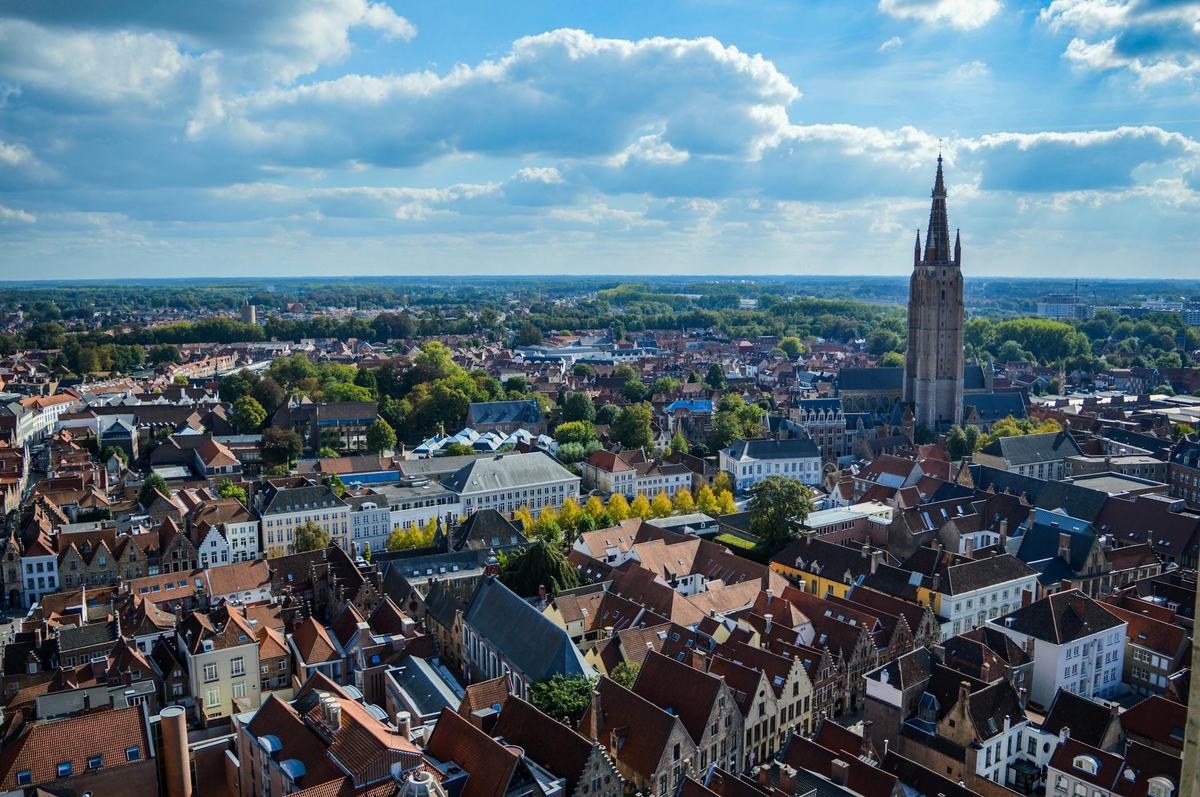
Brussels contains more than 1,000 classified Art Nouveau buildings, more than any other city globally, largely driven by Victor Horta's radical work in the 1890s. Bruges, meanwhile, preserved its medieval Gothic streetscape so completely that UNESCO designated it a World Heritage Site in 2000. These aren't merely aesthetic differences - they map directly onto the economic and cultural trajectories of Wallonia's industrial cosmopolitanism versus Flanders' deliberate heritage preservation.