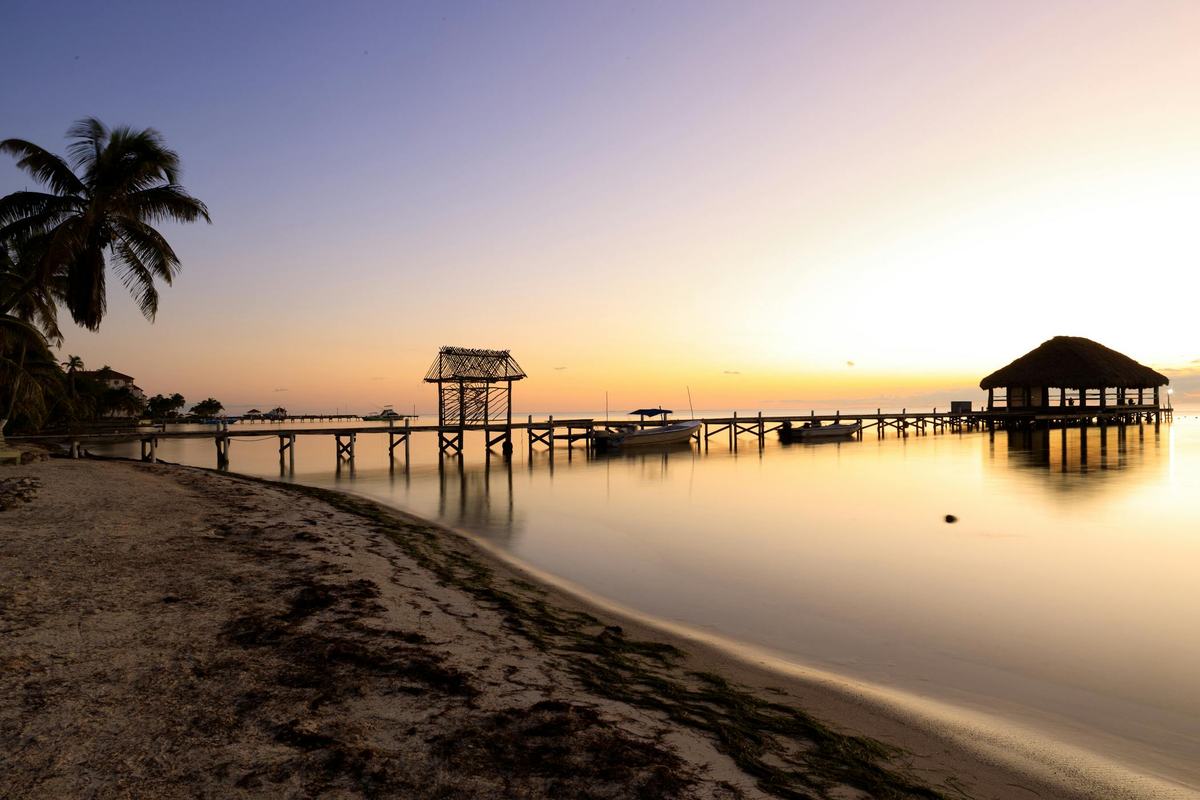
Why Belize Defies Everything You Think You Know About Central America
The Only Country in Central America Where English Is the Official Language
How British Colonial History Shaped Belize's Unique Linguistic Identity
While every other Central American nation conducts official business in Spanish, Belize operates in English - a direct consequence of British colonial control that began in the 17th century. British settlers, primarily logwood cutters and later mahogany extractors, established a foothold in the region as early as 1638. Britain formally declared the territory a Crown Colony in 1862 under the name British Honduras, embedding English into government, education, and law for over a century before independence.
This colonial legacy explains why Belize aligns more naturally with Caribbean nations like Jamaica and Barbados than with its Spanish-speaking neighbors Guatemala and Mexico. The legal system follows English common law, the education curriculum historically mirrored British standards, and official documentation remains exclusively in English today.
Kriol: The Unofficial Language That Unites Belizeans Across Ethnicities
English may be official, but Kriol is what most Belizeans actually speak day-to-day. An English-based creole language, Kriol developed among the descendants of enslaved Africans and British settlers and is now spoken by roughly 75% of the population as either a first or second language. It functions as a cultural bridge across Belize's remarkably diverse ethnic landscape, which includes Garifuna, Maya, Mestizo, and Mennonite communities - each with their own distinct languages.
Belize Is Smaller Than You Think - and That Makes It More Remarkable
How Belize Compares in Size to Massachusetts and Wales
Belize covers just 22,966 square kilometers - roughly the size of Massachusetts or Wales. It is the least populated country in Central America, with approximately 441,000 people as of recent estimates, giving it a population density of fewer than 20 people per square kilometer. For context, neighboring Guatemala packs around 167 people into every square kilometer.
Why Low Population Density Creates One of the World's Most Biodiverse Nations
That sparse population has had a profound conservation effect. More than 40% of Belize's total land area is protected under national parks, wildlife reserves, and marine protected areas - one of the highest proportions anywhere in the Western Hemisphere. The country contains over 500 species of birds, nearly 150 species of mammals, and the largest jaguar sanctuary on Earth, the Cockscomb Basin Wildlife Sanctuary. Low human pressure on the land is not coincidental; it is measurably responsible.
Belize Changed Its Name Just 40 Years Ago
From British Honduras to Belize: The 1981 Independence Story Most People Miss
Belize achieved independence on September 21, 1981, making it one of the youngest nations in the Western Hemisphere. The name change from British Honduras was deliberate - "Belize" likely derives from the Mayan word belix ("muddy water") or possibly from the Spanish pronunciation of early settler Peter Wallace's name.
Why Guatemala Still Claimed Belize's Territory for Decades After Independence
Independence didn't resolve everything. Guatemala refused to recognize Belize as a sovereign nation until 1991, claiming historical rights to the entire territory based on an 1859 treaty dispute with Britain. The territorial claim wasn't fully submitted to international arbitration until a 2019 referendum - meaning Belize spent nearly four decades as a recognized country while its largest neighbor questioned its right to exist.
Stunning Natural Facts About Belize That Rival Much Larger Countries
The Great Blue Hole: A Geological Wonder That Took 10,000 Years to Form
Sitting approximately 70 kilometers off the coast of Belize City, the Great Blue Hole measures 300 meters across and plunges 125 meters deep. It formed during the last Ice Age as a limestone cave system that collapsed when rising sea levels flooded the region roughly 10,000 years ago, creating one of the most recognizable geological formations on the planet.
What Jacques Cousteau Discovered That Made This Site World-Famous
In 1971, French oceanographer Jacques Cousteau sailed his research vessel Calypso to the site and declared it one of the top five scuba diving locations in the world. His expedition documented stalactites hanging at angles inside the hole - physical proof that the cavern formed above water before submersion. That endorsement transformed a remote Belizean feature into a global diving destination and contributed directly to Belize's emergence as an ecotourism economy. Today, dive operators run daily trips and the site anchors Belize's entire coastal tourism identity.
How the Great Blue Hole Compares to Other Marine Sinkholes Globally
The Great Blue Hole is the largest known marine sinkhole on Earth by diameter. By comparison, Dean's Blue Hole in the Bahamas is deeper at roughly 202 meters but measures only about 25 meters across at its surface. Belize's version is part of the Lighthouse Reef Atoll and is protected as a UNESCO World Heritage Site as part of the broader Belize Barrier Reef Reserve System, designated in 1996.
Belize Hosts the Second Largest Barrier Reef on Earth
The Mesoamerican Barrier Reef stretches approximately 1,000 kilometers from Mexico's Yucatán Peninsula to Honduras, with Belize hosting the largest and most ecologically intact section - roughly 300 kilometers of that system. It is the second longest barrier reef in the world, after Australia's Great Barrier Reef.
How the Belize Barrier Reef Compares to the Great Barrier Reef in Australia
Australia's Great Barrier Reef spans over 2,300 kilometers and covers approximately 344,400 square kilometers. Belize's portion is dramatically smaller in raw scale but punches well above its weight in biodiversity density. The Belize system contains three of the four coral atoll types found in the Western Hemisphere, over 500 fish species, and more than 100 coral species. In terms of reef health and management effectiveness relative to size, Belize's system regularly draws favorable comparisons from marine biologists.
Why UNESCO Listed It as Endangered and Then Removed It From the Danger List
UNESCO added the Belize Barrier Reef Reserve System to its List of World Heritage in Danger in 2009, citing coastal development, mangrove clearing, and inadequate legal protections for the marine environment. Belize responded by passing legislation in 2018 that banned offshore oil exploration within its maritime territory, expanded protected zones, and strengthened mangrove protection laws. UNESCO removed it from the danger list in 2018 - one of the rare instances globally where a threatened heritage site recovered through direct government policy action.
Over 60 Percent of Belize Is Covered by Protected Forests and Nature Reserves
Belize protects approximately 37 percent of its total land area through formal government-designated reserves, national parks, and wildlife sanctuaries. When private conservation lands and community-managed territories are included, estimates place total protected or sustainably managed land above 60 percent - an extraordinary figure for a country with a developing economy.
How Belize's Conservation Rate Compares to Costa Rica and Panama
Costa Rica, widely regarded as the gold standard of tropical conservation, formally protects around 26 percent of its land. Panama protects approximately 38 percent. Belize's numbers are comparable to Panama when government reserves alone are counted, and substantially higher when private conservation lands enter the calculation. What makes Belize's achievement more striking is that it maintains this coverage with a GDP per capita significantly lower than either Costa Rica or Panama, demonstrating that conservation investment does not require a wealthy economy.
The Role of Private Conservation Trusts in Protecting Belizean Biodiversity
Organizations including the Programme for Belize and the Belize Foundation for Research and Environmental Education (BFREE) manage significant private reserves totaling tens of thousands of acres. The Rio Bravo Conservation and Management Area alone covers over 260,000 acres in northwestern Belize, managed by Programme for Belize since 1988. These trusts operate through carbon credit sales, eco-tourism revenues, and international donor support - creating financially self-sustaining conservation models that some development economists cite as replicable frameworks for other small tropical nations.
Belize Has More Jaguar Sanctuaries Per Square Mile Than Any Other Country
Jaguars (Panthera onca) are found throughout Central and South America, but Belize has made their protection a national priority to a degree unmatched by any comparable nation. The country hosts multiple dedicated jaguar corridors and protected zones relative to its 22,966 square kilometers of total land area.
Cockscomb Basin: The World's First Jaguar Preserve and Its Surprising Origins
Established in 1986, the Cockscomb Basin Wildlife Sanctuary became the world's first protected area created specifically for jaguar conservation. Its origins trace to zoologist Alan Rabinowitz, who spent years in Belize studying jaguar behavior and mortality causes. He found that local hunters killed jaguars primarily to protect livestock, not for sport. Working with Belize's government and the Wildlife Conservation Society, Rabinowitz negotiated the creation of the reserve from a former logging concession spanning approximately 150 square miles. The Cockscomb population has since grown and serves as a benchmark study site for jaguar population dynamics globally.
Why Jaguars Are Sacred in Belizean Culture and Ancient Maya Cosmology
For the ancient Maya, the jaguar represented the ruler of the underworld and was synonymous with nocturnal power, warfare, and shamanic authority. Maya rulers wore jaguar pelts and took jaguar names to legitimize their power. The word balam in Yucatec Maya means both jaguar and a class of divine protector spirits. In contemporary Belize, where Maya communities including the Yucatec, Mopan, and Q'eqchi' Maya remain culturally active, this reverence persists. It has contributed meaningfully to community-level support for conservation efforts - an alignment of cultural values and ecological policy that conservation planners rarely achieve so organically.
The Caves of Belize Hold Maya Artifacts That Were Sealed for Over 1,000 Years
Belize's karst limestone terrain contains hundreds of cave systems, many of which the ancient Maya used not for habitation but for ritual sacrifice and communication with the underworld. Because the caves remained sealed and largely undisturbed for over a millennium, the artifacts found inside - ceramics, human remains, obsidian blades - are remarkably well preserved.
ATM Cave: Why National Geographic Called It One of the World's Top Sacred Sites
Actun Tunichil Muknal, known as ATM Cave, sits within the Tapir Mountain Nature Reserve in the Cayo District. National Geographic designated it one of the top sacred sites in the world, citing the extraordinary density of ritual artifacts inside its chambers. Explorers enter by swimming through an underground river. Inside, archaeologists have documented over 14 human skeletons and thousands of ceramic vessels, many intentionally "killed" - broken during ritual use - by Maya priests between approximately 250 and 900 CE.
Crystal Maiden: The Calcified Skeleton That Still Baffles Archaeologists
Among the ATM Cave's human remains, one skeleton stands out dramatically: a young woman, estimated to have been between 18 and 20 years old at death, whose bones have calcified over centuries into a sparkling crystalline surface caused by mineral-rich water dripping over them. Known as the Crystal Maiden, she lies fully exposed on a cave floor ledge. The cause and context of her death remain debated - some archaeologists interpret the deposit as a sacrificial offering during a drought period, while others argue the evidence supports ritual death associated with Maya astronomical cycles. No consensus has emerged, making her one of the most analytically unresolved figures in Mesoamerican archaeology.
Remarkable Facts About Belize Culture That Most Tourists Never Learn
Belize Is Home to One of the Last Surviving Garifuna Communities on Earth
Who the Garifuna People Are and How They Ended Up on the Caribbean Coast
The Garifuna are descendants of Arawak, Island Carib, and West African people who formed on St. Vincent after escaped and shipwrecked enslaved Africans merged with the indigenous Caribs in the 17th century. When the British exiled approximately 5,000 Garifuna from St. Vincent in 1797 following the Black Carib Wars, they were deposited on the Honduran island of Roatán. From there, they dispersed along the Central American coastline, establishing communities in Honduras, Guatemala, Nicaragua, and British Honduras - modern-day Belize.
Today, roughly 600,000 Garifuna people exist worldwide, making them one of the smallest distinct ethnic groups with recognized cultural status. Belize holds one of the most intact Garifuna populations, concentrated in towns like Dangriga, Hopkins, Seine Bight, and Punta Gorda. UNESCO recognized the Garifuna language, dance, and music as an Intangible Cultural Heritage of Humanity in 2001 - one of only 90 such designations globally at the time.
Garifuna Settlement Day: A National Holiday Unlike Any Other in the Americas
On November 19, 1832, Thomas Vincent Ramos led a group of Garifuna from Honduras and landed at the mouth of the Stann Creek River in what is now Dangriga. Belize commemorates this arrival annually as Garifuna Settlement Day, a national public holiday. The celebration involves drumming processions, traditional dügü spiritual ceremonies, the preparation of hudut (fish stew with mashed plantains), and re-enactments of the original landing by boat.
What makes the holiday remarkable is that it celebrates an ethnic group's survival rather than a political or military event - unusual by any standard in the Western Hemisphere.
The Maya Civilization Never Disappeared From Belize
How Yucatec, Mopan, and Q'eqchi' Maya Communities Still Live in Belize Today
Three distinct Maya groups currently live in Belize: the Yucatec Maya in the north near Orange Walk and Corozal, the Mopan Maya in the Toledo and Cayo districts, and the Q'eqchi' Maya primarily in Toledo. Combined, they represent approximately 11% of Belize's total population of around 450,000 people.
These are not reconstructed or revivalist communities. Mopan and Q'eqchi' speakers maintain living languages, traditional agricultural practices including milpa (slash-and-burn) farming, and governance structures predating European contact. The Toledo district alone contains over 30 indigenous Maya villages, many accessible only by unpaved roads.
Why Belize Has More Maya Archaeological Sites Per Square Kilometer Than Mexico
Belize covers just 22,966 square kilometers, yet contains over 600 documented Maya archaeological sites. That density - roughly one site per 38 square kilometers - rivals or exceeds that of much larger Maya territories in Mexico and Guatemala. Caracol, in the Chiquibul Forest Reserve, was a city of an estimated 150,000 people at its peak around 650 CE, larger than any contemporary European city at the time.
Crucially, archaeologists believe fewer than 10% of Belize's Maya sites have been excavated, meaning the country's archaeological significance is still largely unmeasured.
Belize Has One of the Most Ethnically Diverse Populations in the Western Hemisphere
Mestizo, Creole, Garifuna, Maya, Mennonite, and East Indian: How They Coexist
According to the 2010 Belize census - the most granular available - Mestizo people constitute approximately 52.9% of the population, Creoles 25.9%, Maya 11.3%, Garifuna 6.1%, and smaller groups including Mennonites (3.6%), East Indians, Chinese, and Lebanese making up the remainder. That is at least six ethnically and linguistically distinct communities in a country smaller than New Hampshire.
The coexistence is functional rather than utopian. Belize has no history of ethnic civil war, which is genuinely unusual in Central America. The political system distributes representation across regions, and cultural practices - food, music, religious festivals - regularly cross ethnic lines. A Creole family in Belize City will likely eat tamales at Christmas (Mestizo tradition) and may attend a Garifuna drumming event without it being considered appropriation.
Why Belizeans Celebrate Multiple New Year Traditions From Different Cultures
Belize informally observes multiple new year celebrations. The Gregorian New Year on January 1 is universal, but Chinese New Year is publicly celebrated in Belize City due to a Chinese-Belizean community that has been present since the 19th century. East Indian communities observe Diwali with public events. The Maya celebrate the Maya New Year according to the Haab' calendar. None of these are government-mandated holidays, but all are socially recognized - a practical reflection of how cultural plurality operates at street level.
Mennonite Communities in Belize Produce a Surprising Share of the Country's Food Supply
How German-Speaking Mennonites Became Belize's Most Productive Farmers
Mennonites began arriving in Belize in 1958, primarily from Mexico and Canada, after negotiating land rights and religious exemptions directly with the British colonial government. The agreement allowed them to maintain pacifist beliefs, educate children privately, and avoid military service in exchange for developing agricultural land. They settled primarily in Spanish Lookout (Cayo District) and Shipyard (Orange Walk District).
The results were economically transformative. Mennonite farmers, numbering roughly 16,000 people or about 3.6% of the population, produce an estimated 70% of Belize's poultry, significant shares of its dairy, eggs, corn, and beans, and are among the country's largest exporters of agricultural products. Spanish Lookout functions as a self-contained agricultural hub with its own hardware stores, fuel stations, and credit cooperatives.
The Paradox of Technology-Rejecting Communities Feeding a Modern Nation
The technology question within Belize's Mennonite communities is more nuanced than the stereotype suggests. Mennonites in Belize are not monolithic. Progressive communities in Spanish Lookout use tractors, trucks, and modern irrigation - indistinguishable from conventional commercial farms. Conservative communities in Shipyard still use horse-drawn plows and restrict electricity. Both are economically productive; the difference lies in which technologies each community permits through its own internal governance.
The practical paradox is real: communities ideologically committed to separation from modern society have become structurally indispensable to it. Belize cannot feed itself without Mennonite agriculture - a dependency the government has quietly acknowledged by maintaining favorable land and tax arrangements with these communities for over six decades.
Belize Is the Only Country in Central America With a Significant Creole Culture
How Afro-Caribbean Heritage Shaped Belizean Music, Food, and Spirituality
Belizean Creoles descend primarily from enslaved Africans brought to British Honduras to work in the logwood and mahogany industries from the 17th century onward, and from the British and Scottish settlers who enslaved them. Unlike plantation economies in the Caribbean, Belize's timber extraction economy created a different labor dynamic - enslaved people worked in small mobile crews in the forest, developing a degree of practical autonomy unusual for the era.
That history shaped a distinct Creole culture. Belizean Creole cuisine centers on rice and beans cooked in coconut milk (distinct from the Mestizo red bean preparation), boil-up (a one-pot fish and root vegetable dish), and sere (fish soup). The Creole language - an English-based creole with West African syntactic features - is spoken by an estimated 75% of Belizeans as either a first or second language, making it the true lingua franca of the country despite English holding official status.
Spiritually, Obeah - an Afro-Caribbean belief system involving herbalism, spirit communication, and protective rituals - persists in Creole communities, operating quietly alongside Christianity. It remains technically illegal under laws inherited from British colonial statutes, a legal holdover that has never been enforced in modern Belize.
Brukdown Music: The Forgotten Belizean Genre That Predates Reggae
Brukdown is a Belizean musical
Surprising Historical Facts About Belize Most Encyclopedias Skip
The First European Settlement in Belize Was Built by Pirates and Shipwrecked Sailors
How Logwood Cutters and Baymen Created a Colony England Barely Acknowledged
The origins of European Belize owe nothing to organized colonial ambition. The first permanent settlers were a mix of Scottish buccaneer Peter Wallace (from whom "Belize" may derive its name), shipwrecked English sailors from 1638, and logwood cutters who recognized that the region's dense stands of Haematoxylum campechianum were worth more than any gold. Logwood produced a purple-black dye that European textile mills desperately needed before synthetic alternatives existed, commanding prices as high as £100 per ton in the 17th century.
These settlers-called Baymen-operated outside any formal colonial framework. Britain signed the Treaty of Paris in 1763 and the Convention of London in 1786, both of which acknowledged British rights to cut logwood but explicitly prohibited permanent settlement or fortification. The Baymen ignored this. They established governance through a rough system of elected magistrates and public meetings, effectively self-administering a territory Britain officially didn't want to claim.
The Battle of St. George's Caye: Why September 10 Is Belize's Most Celebrated Date
On September 10, 1798, a Spanish fleet of 32 vessels attempted to expel the Baymen from the settlement. The defenders-a small force of Baymen, their enslaved workers, and a single British naval sloop, HMS Merlin-repelled the attack in roughly two hours off the coast of St. George's Caye. Spain never attempted another assault. The battle wasn't militarily significant by global standards, but it permanently settled the question of who controlled the territory. Belize now commemorates September 10 as a national holiday, ranking equally with Independence Day in public celebration.
Belize Was Never Officially Colonized in the Traditional Sense
Why Britain Avoided Making Belize a Crown Colony for Over 200 Years
Britain maintained deliberate legal ambiguity about Belize for more than two centuries. The territory wasn't formally declared a Crown Colony until 1862-and even then it was designated a "colony subordinate to Jamaica" rather than a standalone entity. It didn't become British Honduras as a fully independent Crown Colony until 1884. This hesitation stemmed partly from treaty obligations with Spain and partly from Britain's reluctance to provoke conflict over territory it wasn't certain was worth defending.
How This Legal Ambiguity Affected Land Rights That Still Persist Today
The consequences of this ambiguous status proved lasting. Because formal land surveying and title systems arrived late, land grants made to Baymen families in the 18th century concentrated enormous tracts in few hands. By the early 20th century, the Belize Estate and Produce Company alone controlled roughly half of all private land. That concentration shaped inequality patterns still visible in modern land disputes, particularly those involving Maya communities in the south whose ancestral claims lack formal colonial-era documentation-a situation the Caribbean Court of Justice has been actively adjudicating since 2015.
Ancient Maya in Belize Built Cities That Were Larger Than Any in Medieval Europe
Caracol: The Maya Megacity That Once Had a Population Greater Than Modern Belize City
At its Classic Period peak around 650 CE, Caracol housed an estimated 150,000 to 200,000 people across approximately 177 square kilometers of urban and suburban development. Modern Belize City, by contrast, holds roughly 70,000 residents. Caracol's central acropolis, Caana ("Sky Palace"), rises 43 meters-still the tallest man-made structure in Belize today. The city sustained its population through an intricate network of agricultural terraces and reservoirs, evidence of hydraulic engineering that allowed dense settlement in a landscape that floods seasonally.
How Caracol Compares in Scale to Tikal and Other Regional Powerhouses
Caracol wasn't merely large-it was politically dominant. Around 562 CE, Caracol allied with Calakmul to defeat Tikal, one of the most powerful Maya cities, and maintained regional hegemony for over a century. Tikal's population estimates range from 60,000 to 90,000, making Caracol substantially larger at its height. For context, 7th-century London held perhaps 10,000–12,000 people. Paris reached 200,000 only by the 13th century. Maya urban planning in Belize was operating at scales Europe wouldn't match for another 600 years.
Belize Relocated Its Capital City in 1970 After a Hurricane Destroyed the Old One
Why Belmopan Was Built Inland and How It Compares to Other Planned Capital Cities
Hurricane Hattie struck Belize City on October 31, 1961, killing an estimated 262 people and destroying 75% of the city's structures. The storm exposed a fundamental vulnerability: Belize City sits barely 0.5 meters above sea level at the mouth of the Belize River. The government's response was Belmopan, purpose-built 80 kilometers inland at an elevation of 76 meters. Construction began in 1967, and the capital officially transferred in 1970 with a population of roughly 5,000 people. Today it holds approximately 20,000-making it one of the smallest national capitals in the Western Hemisphere.
Belmopan vs Naypyidaw and Brasilia: Planned Capitals That Struggled to Attract Residents
Belmopan shares its awkward adolescence with other planned capitals. Brasilia, inaugurated in 1960, had a target population of 500,000 by 1975 but struggled with what urban planners called "monumental emptiness"-grand civic spaces without organic street life. Myanmar's Naypyidaw, built from 2002 onward, remains so underpopulated that its 20-lane highways are nearly empty. Belmopan's case is arguably more understandable: Belize City residents simply refused to leave, keeping commerce, culture, and population anchored on the coast. The result is a country whose commercial capital and official capital are two entirely different cities-a split that creates real administrative friction to this day.
Unexpected Economic and Political Facts About Belize
Belize Has Defaulted on Its National Debt More Times Than Almost Any Country Its Size
Belize holds a dubious distinction in sovereign debt history: it has restructured its national debt five times since 2006, making it one of the most frequent defaulters among small nations globally. With a GDP hovering around $2.7 billion USD, the country's debt-to-GDP ratio has repeatedly breached 90%, creating a cycle of borrowing, default, and renegotiation that has defined its fiscal identity for nearly two decades.
The 'Superbond' That Restructured Belize's Debt and What It Means for Citizens
In 2007, Belize consolidated multiple external debts into a single instrument known as the "Superbond," valued at approximately $547 million USD. The instrument was restructured again in 2012, 2013, 2017, and most recently in 2021, when the government negotiated what became internationally recognized as one of the first "blue bonds" - a debt swap tied explicitly to marine conservation commitments. The Nature Conservancy facilitated the deal, allowing Belize to retire $553 million in debt at a discount in exchange for legally binding protections covering 30% of its ocean territory. For citizens, this means reduced debt servicing costs but sustained fiscal austerity, with social spending remaining constrained relative to regional peers.
How Belize's Economy Compares to Other Caribbean and Central American Nations
Belize's GDP per capita sits around $6,000–$7,000 USD, placing it above Guatemala and Honduras but below Costa Rica ($12,000+) and Panama ($15,000+). Its economy remains heavily dependent on three pillars: tourism, agriculture (particularly sugar, citrus, and marine products), and remittances, which account for roughly 5–6% of GDP. Unemployment consistently runs between 7–10%, and poverty affects approximately 52% of the population according to recent household surveys.
Tourism Surpassed Sugar as Belize's Top Industry Only in the 1990s
For most of its post-independence history, Belize's economy ran on sugar. The industry, concentrated in the Corozal and Orange Walk districts, was the country's primary foreign exchange earner well into the late 1980s.
How Belize Transformed From a Logging and Agriculture Economy to Eco-Tourism
British Honduras was initially exploited for logwood and mahogany, commodities that drove its colonial economy for centuries. Agriculture replaced logging post-independence in 1981, but by the mid-1990s, strategic investment in eco-tourism infrastructure - protected reserves covering nearly 40% of Belize's landmass, the Mesoamerican Barrier Reef, and Mayan archaeological sites - repositioned tourism as the dominant sector. Today, tourism contributes approximately 40% of GDP directly and indirectly.
Why Belize Attracts Fewer Tourists Than Neighboring Mexico but Earns More Per Visitor
Mexico's Cancún corridor receives tens of millions of visitors annually. Belize draws roughly 500,000–600,000 overnight visitors per year - a fraction of that volume. However, Belize's deliberate low-volume, high-value tourism model targets affluent eco-tourists and divers. Average spend per visitor exceeds $1,000 USD, outperforming many Caribbean destinations on a per-visitor revenue basis.
Belize Is One of the Few Countries in the World Still Using the British Privy Council as Its Final Court
Belize retains the Judicial Committee of the Privy Council (JCPC) in London as its apex court - a constitutional arrangement shared by only a handful of Caribbean nations including Jamaica, Barbados (until 2005), and Trinidad and Tobago (until 2023).
What This Means for Belizean Citizens Seeking Justice at the Highest Level
In practical terms, appealing to the JCPC requires resources most Belizeans don't have. Legal representation in London is expensive, creating a de facto barrier that limits this avenue of justice to high-stakes commercial disputes, constitutional challenges, and death penalty cases. The Council has, however, issued landmark rulings affecting Belizean law, including decisions on indigenous land rights that forced the government to recognize Maya customary land tenure.
Comparing Belize's Judicial System to Other Former British Caribbean Territories
The Caribbean Court of Justice (CCJ), established in 2005, was designed specifically to replace the JCPC for Caribbean nations. Barbados, Guyana, and Belize's neighbor Dominica have all made the switch. Belize has not, primarily due to political resistance and public ambivalence. Critics argue the JCPC's geographic and cultural distance undermines judicial sovereignty; supporters contend it provides impartiality insulated from domestic political pressure.
Belize Legalized Cannabis Before Many U.S. States Did
In 2017, Belize decriminalized possession of up to 10 grams of cannabis for personal use - predating legalization in several U.S. states and most of Central America.
The 2017 Decriminalization Law and Its Effects on Belizean Society
The Misuse of Drugs (Amendment) Act 2017 removed criminal penalties for adults possessing small quantities in private. The law also allowed for consumption on private property, a notably liberal provision by regional standards. Practically, the reform reduced low-level drug arrests but did not establish a regulated commercial market, leaving supply chains tied to informal networks.
How Belize's Drug Policy Compares to Its Caribbean and Central American Neighbors
Within Central America, Belize's approach remains progressive. Guatemala, Honduras, El Salvador, and Nicaragua maintain strict prohibition. Among Caribbean nations, Jamaica's 2015 decriminalization is the most comparable reform. What distinguishes Belize is the explicit private-use provision, which goes further than Jamaica's framework in some respects, though neither country has moved toward full commercial legalization as seen in Uruguay or Canada.
Little-Known Fun Facts About Belize That Make Great Conversation Starters
Belize Is the Only Country in the World Where Tapirs Are the National Animal
Why the Baird's Tapir Called 'Mountain Cow' Is Both Protected and Misunderstood
Belize stands alone globally in designating a tapir as its national animal. The Baird's tapir (Tapirus bairdii), locally called the "mountain cow," can weigh up to 880 pounds and stands roughly four feet tall at the shoulder, making it the largest land mammal in Central America. Despite legal protection under Belize's Wildlife Protection Act, subsistence hunting persists in rural communities where the animal is still viewed primarily as a food source rather than a conservation symbol. The nickname "mountain cow" itself reflects this utilitarian perception - generations of Belizeans regarded tapirs as protein, not patrimony. Road collisions present a growing secondary threat as infrastructure expands through previously isolated habitat corridors.
How Tapir Conservation in Belize Compares to Efforts in Brazil and Colombia
Belize hosts an estimated 700 to 1,000 Baird's tapirs within its borders, a small population but relatively stable compared to catastrophic declines elsewhere. Brazil's lowland tapir (Tapirus terrestris) population, once numbering in the hundreds of thousands, has contracted sharply due to deforestation in the Amazon and Cerrado. Colombia faces similar pressures, with tapirs classified as vulnerable by the IUCN across most range countries. What distinguishes Belize is the Cockscomb Basin Wildlife Sanctuary, which provides dedicated protected habitat and supports active monitoring programs. The Tapir Specialist Group of the IUCN rates Baird's tapir as endangered, making Belize's intact forest reserves disproportionately important to the species' regional survival.
The Cashew Festival in Crooked Tree Is One of the Strangest Food Celebrations on Earth
How Belizeans Use Every Part of the Cashew Fruit Including Making Wine From It
Most people outside Belize know only the kidney-shaped nut sold in supermarkets globally. In Crooked Tree village, the cashew apple - the swollen, fleshy pseudofruit attached above the true nut - is the main event. Held annually in late April or early May, the Cashew Festival showcases cashew wine, cashew jam, cashew juice, and roasted nuts processed by hand over open fires. The cashew apple ferments rapidly, within 24 hours of falling, which is why this processing culture developed locally rather than commercially. Villagers have refined a low-tech wine-making method producing a dry, slightly tannic beverage with roughly 4 to 6 percent alcohol content.
Comparing Belize's Cashew Culture to India and Vietnam's Global Cashew Industries
India and Vietnam together account for over 50 percent of global processed cashew exports, yet neither country has developed the cashew apple into a significant food product at scale. Vietnam processes approximately 3.6 billion pounds of raw cashew nuts annually, almost entirely discarding the apple as agricultural waste. India produces some cashew apple juice commercially in Goa, but it remains niche. Belize's Crooked Tree approach - treating the apple as the primary product and the nut as secondary - inverts the global commercial logic entirely, preserving a food tradition that larger industries have industrialized out of existence.
Belize Has No McDonald's, Starbucks, or Major American Fast Food Chains
Why International Franchises Have Largely Failed to Enter the Belizean Market
Belize's population of approximately 441,000 people presents an immediate challenge for franchise economics. McDonald's typically requires a minimum market population and per-capita income threshold that Belize's small urban centers - Belize City holds roughly 70,000 residents - cannot reliably meet. Import costs for standardized ingredients, franchise fees, and the logistical complexity of supply chains into a small Central American nation with limited port infrastructure make unit economics unfavorable. A single franchise operator would face cost structures nearly identical to larger markets while capturing a fraction of the customer volume.
What Belizeans Eat Instead and How Local Food Culture Has Stayed Remarkably Intact
The absence of international chains has preserved a genuinely distinct food culture. Rice and beans cooked in coconut milk, stew chicken, tamales wrapped in banana leaves, and garnaches - fried tortillas topped with beans and cheese - anchor everyday Belizean eating. Street food vendors and small family-operated restaurants called "cookshops" dominate urban food service. The food reflects Belize's ethnic complexity: Garifuna hudut, a coconut fish stew, sits alongside Mennonite dairy products, Chinese-Belizean rice dishes, and Maya-influenced corn preparations. This isn't a curated "authentic experience" for tourists - it's simply what the market produced without displacement by standardized global brands.
Belize Drives on the Right Side of the Road Despite Being a Former British Colony
How and When Belize Switched From Left to Right-Hand Traffic
British Honduras, as Belize was known before independence in 1981, switched from left-hand to right-hand traffic in 1961. The practical rationale was cross-border commerce with Mexico and Guatemala, both right-hand traffic countries that share Belize's only land borders. Continuing left-hand traffic would have created a logistical anomaly at every border crossing, complicating vehicle imports, road freight, and eventually tourism. The switch occurred before significant private car ownership had developed in the country, reducing the domestic disruption that similar transitions cause in more motorized societies.
Comparing Belize's Transition to Similar Switches in Sweden and Ghana
Sweden's 1967 switch - called Dagen H or "Dagen Dagen" - is the most documented right-hand traffic transition in history, involving 360,000 road signs, massive public education campaigns, and a country with millions of drivers. Ghana switched in 1974 under military government directive with considerably less preparation, resulting in notable accident spikes. Belize's 1961 transition was quieter than either, partly because vehicle density was low enough that enforcement was manageable and partly because the colonial administration implemented it without requiring democratic consensus. The result is a Commonwealth nation that drives like its Latin American neighbors rather than like Britain, Jamaica, or Australia.
The Belize Dollar Has Been Pegged to the U.S. Dollar at Exactly 2:1 Since 1978
Why This Fixed Exchange Rate Has Survived Decades of Economic Turbulence
The 2:1 peg - two Belize dollars equal one U.S. dollar - has remained unchanged for over 45 years, surviving hurricanes, political transitions, debt restructurings in 2006, 2012, and 2017, and the economic collapse triggered by the COVID-19 pandemic. The Central Bank of Belize maintains the peg through foreign exchange reserves and strict controls on capital flows. Stability matters enormously in an economy where tourism generates roughly 40 percent of GDP and most transactions in the sector are priced in U.S. dollars. Abandoning the peg would introduce exchange rate risk that could destabilize both tourism pricing and the substantial remittance flows Belizeans abroad send home.
How the Belize Dollar Peg Compares to Panama's Use of the U.S. Dollar Outright
Panama went further than Belize in 1904, adopting the U.S. dollar as its de facto currency while maintaining the balboa as a nominal unit at 1:1 parity. Panama issues no paper currency of its own, which eliminates currency risk entirely but also surrenders all monetary policy autonomy to the U.S. Federal Reserve. Belize retains the ability to print its own currency and theoretically adjust policy - a theoretical flexibility that comes with the permanent risk of a peg break. Panama's approach has supported one of the more stable economies in Central America, while Belize's peg has required periodic debt restructuring to defend, suggesting the Belizean model demands more active management without offering substantially greater monetary independence in practice.
Fascinating Facts About Belize's Wildlife That Scientists Are Still Studying
Belize Has More Bird Species Per Square Mile Than the Entire United States
Belize supports over 600 recorded bird species across a landmass of roughly 8,867 square miles-a density that dwarfs the United States, which records approximately 900 species across 3.8 million square miles. That ratio makes Belize one of the most ornithologically rich territories in the Western Hemisphere relative to size.
Why the Keel-Billed Toucan as National Bird Represents More Than Just Tourism
The keel-billed toucan (Ramphastos sulfuratus) isn't merely a photogenic symbol. Its presence as a keystone frugivore indicates intact forest canopy and functioning seed-dispersal networks. Researchers studying forest regeneration in the Mountain Pine Ridge and Chiquibul Forest Reserve use toucan population stability as a proxy for broader ecosystem health. When toucan numbers decline in a given zone, it typically signals canopy fragmentation before satellite imagery catches it.
How Belize's Position on the Maya Bird Route Makes It a Global Ornithology Hotspot
Belize sits along the Mesoamerican Biological Corridor, a critical flyway linking North and South American bird populations. The country's mosaic of coastal wetlands, tropical forest, and savanna creates layered habitat that supports both year-round residents and migratory species. The Crooked Tree Wildlife Sanctuary alone hosts over 285 species, including the jabiru stork-the largest flying bird in the Americas, with a wingspan reaching 12 feet. Cornell Lab of Ornithology has partnered with local researchers here specifically because migration data collected in Belize fills gaps that U.S.-based monitoring cannot.
The Belize Barrier Reef System Contains Species Found Nowhere Else on Earth
The Mesoamerican Barrier Reef-stretching 190 miles along Belize's coast-is the second-largest coral reef system on Earth. It was designated a UNESCO World Heritage Site in 1996, though it landed on the endangered list in 2009 before being removed in 2018 following government protections against offshore drilling.
Endemic Marine Species of the Belize Reef That Are Only Now Being Catalogued
Deep-water surveys within the last decade have identified previously undocumented goby and blenny species in Belize's atolls, particularly around Lighthouse Reef. Marine biologists estimate that species inventories for reef zones below 100 feet remain less than 60% complete. The Belize Barrier Reef Reserve System protects seven distinct marine sites, each with distinct species assemblages that continue to yield new data.
How Climate Change Is Affecting Belize's Reefs Differently From the Great Barrier Reef
Unlike Australia's Great Barrier Reef, which experienced back-to-back mass bleaching events in 2016 and 2017, Belize's reef system benefits from upwelling cold-water currents from the deep Cayman Trench. These thermal buffers have moderated bleaching severity, though 2023 sea surface temperatures pushed parts of the southern reef into stress thresholds not previously recorded.
Crocodiles and Manatees Share Waterways in Belize in Unusual Proximity
Why the Southern River Near Dangriga Is One of the World's Best Manatee Habitats
The Southern Lagoon and North River systems near Dangriga provide seagrass beds, low boat traffic, and brackish mixing zones that Antillean manatees (Trichechus manatus manatus) actively prefer. Belize holds an estimated 1,000 manatees-one of the largest remaining populations of this subspecies globally.
Comparing Belize's Manatee Population to Florida's and What Threatens Both
Florida's West Indian manatee population recovered to approximately 8,500 individuals by 2023, but faces seagrass collapse driven by algal blooms. Belize's population faces different but compounding pressures: boat strikes in tourist corridors and coastal development reducing seagrass coverage. Both populations share the same subspecies vulnerability-slow reproduction rates of one calf every two to five years mean recovery from decline is generationally slow, making current protections critical rather than precautionary.