Bolivia's Extraordinary Geography: A Land of Extremes and Records
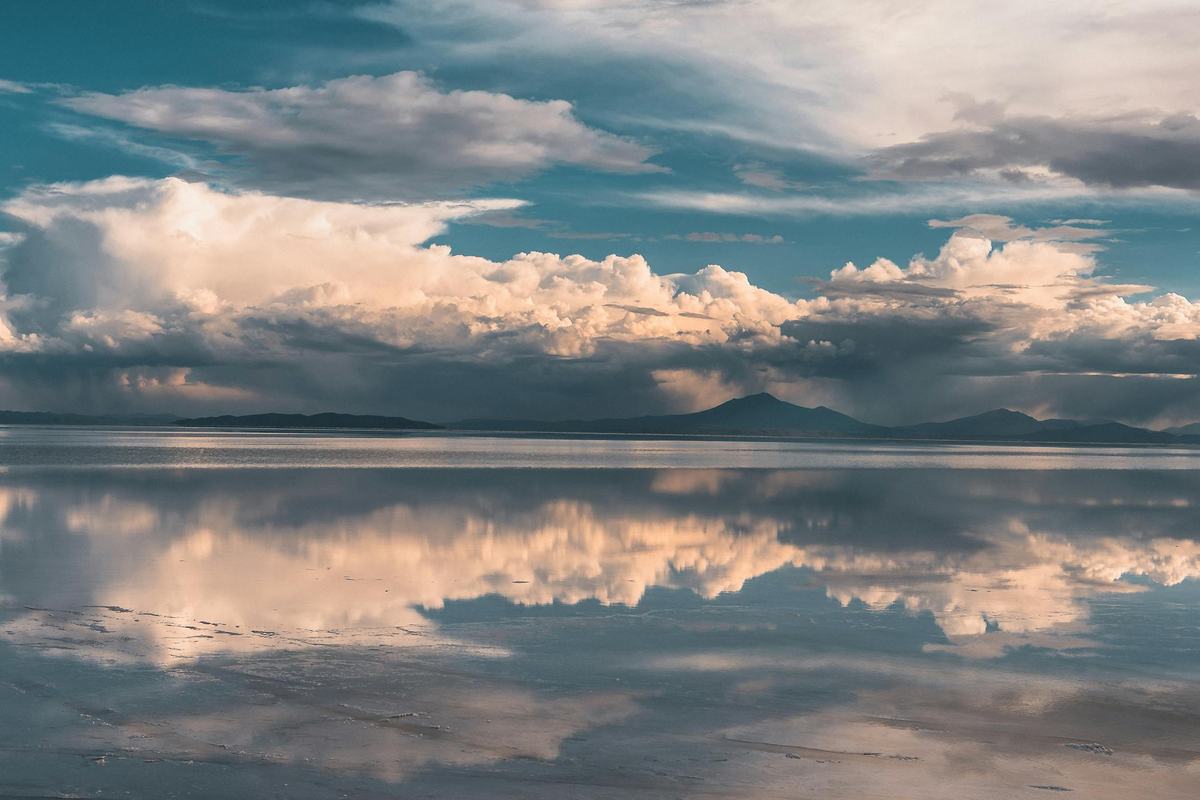
The World's Largest Salt Flat: Salar de Uyuni and Its Hidden Secrets
Stretching across 10,582 square kilometers in southwestern Bolivia, Salar de Uyuni dwarfs every other salt flat on Earth - the Bonneville Salt Flats in Utah, by comparison, cover a mere 46 square kilometers.
How Salar de Uyuni Contains Half the World's Lithium Reserves
Beneath the crystalline crust lies one of the most strategically valuable mineral deposits on the planet. Bolivia's salt flats hold an estimated 21 million metric tons of lithium - roughly 43% of global known reserves according to the U.S. Geological Survey's 2023 data. As electric vehicle demand accelerates worldwide, this concentration has made Bolivia a focal point for geopolitical negotiations with China, the EU, and the United States.
Why NASA Uses the Salt Flat as a Satellite Calibration Tool
The flat's extraordinary reflectivity and geometric consistency make it uniquely useful for remote sensing. The surface varies in elevation by less than one meter across its entire expanse, and its high albedo provides a reliable reference point for calibrating the altimeters aboard Earth-observing satellites, including instruments on NASA's ICESat-2 mission. No artificial surface can replicate this combination of scale and uniformity.
The Underground Salt Hotels That Tourists Actually Sleep In
Several hotels constructed almost entirely from salt blocks - walls, floors, furniture, and decorative features - operate on the flat's edge. The original Palacio de Sal near Colchani opened in 1995 and was later relocated for environmental reasons. Guests sleep on salt-block beds topped with mattresses, a genuinely functional use of the region's only abundant building material.
Bolivia's Dual Capital System: A Constitutional Quirk No Other Country Shares
Sucre vs. La Paz: The 19th-Century Civil War That Split the Capital
Bolivia's unusual arrangement stems from the Federal Revolution of 1899, in which liberal forces from La Paz defeated conservative factions based in Sucre. Rather than formally transferring all governmental functions, the victors established La Paz as the seat of the executive and legislative branches while Sucre retained constitutional capital status.
Why the Supreme Court Still Operates in Sucre While Government Sits in La Paz
Bolivia's Tribunal Supremo de Justicia remains headquartered in Sucre - the only branch of the national government to do so - making Bolivia's capital situation legally distinct from other nations with split governmental functions like South Africa's three-capital arrangement.
Lake Titicaca: The World's Highest Navigable Lake and Its Surprising Naval Base
Sitting at 3,812 meters above sea level and covering 8,372 square kilometers, Lake Titicaca exceeds the total land area of Puerto Rico (9,104 sq km) by a surprisingly thin margin.
Bolivia's Landlocked Navy: A Fleet Without Ocean Access
Bolivia lost its Pacific coastline to Chile in the War of the Pacific (1879–1884). Despite having no ocean access, it maintains the Fuerza Naval Boliviana - a force of approximately 5,000 personnel and dozens of vessels operating exclusively on inland waterways and Lake Titicaca.
The Floating Reed Islands of the Uros People and Their Ancient Engineering
The Uros construct self-sustaining islands from totora reeds, layering fresh material continuously as the base decomposes. Individual islands require fresh reed additions every three months and can be relocated by repositioning anchor ropes.
The World's Most Dangerous Road: Bolivia's Yungas Road in Perspective
Statistical Comparison: Death Toll Per Kilometer vs. Other Famous Dangerous Roads
The North Yungas Road, descending 3,600 meters over 69 kilometers from La Paz toward Coroico, recorded an estimated 200–300 fatalities annually through the 1990s - approximately 3 deaths per kilometer per year. Improved road infrastructure and reduced freight traffic have lowered current death tolls significantly.
How the Road Became a Paradoxical Tourist Cycling Destination
Following completion of a safer bypass in 2006, commercial cycling operators recognized the original road's dramatic scenery and controlled traffic as ideal downhill mountain bike terrain. The route now attracts roughly 25,000 cyclists annually, transforming one of the world's most lethal roads into a revenue-generating adventure tourism asset - a striking example of risk rebranding.
Remarkable Facts About Bolivia's Culture That Defy Expectations
The Cholita Phenomenon: Indigenous Women Who Became Unlikely Wrestling Stars
How Cholita Wrestling Evolved from Mockery to Cultural Pride
In El Alto, the sprawling city above La Paz, Aymara women in layered pollera skirts and bowler hats body-slam opponents in sold-out arenas every Sunday. What began in the early 2000s as a sideshow designed to humiliate Indigenous women - promoters initially cast them as comic foils for male wrestlers - transformed within a decade into one of Bolivia's most photographed cultural exports. Today, cholita wrestlers command appearance fees, international documentary coverage, and genuine athletic respect. The shift reflects a broader reclamation of Indigenous identity that accelerated after Evo Morales's 2006 election, the first Indigenous president in Bolivia's history.
The Traditional Bowler Hat Custom and Its Surprising British Railway Origin
The iconic bowler hat worn by cholitas has an unexpectedly colonial origin story. In the 1920s, a British railway company imported a shipment of bowler hats sized for European workers. When the hats arrived too small for their intended recipients, traders sold the surplus to Aymara and Quechua women, marketing them as fashionable European imports. The style stuck, becoming so embedded in Indigenous female identity that the hat now signals marital status and regional origin through precise positioning - worn tilted to one side indicates a woman is single; centered means married.
Bolivia's 36 Official Languages: More Than Any Other Country in the Americas
Bolivia's 2009 constitution codified 36 official languages, surpassing every other nation in the Western Hemisphere. Spanish coexists legally with Aymara, Quechua, Guaraní, and 32 additional Indigenous languages.
Aymara's Unique Concept of Time: The Only Language Where the Past Is Ahead of You
Aymara encodes a cognitive framework found nowhere else among well-documented languages: the past is spatially positioned in front of the speaker, because it is known and visible, while the future lies behind, unseen. Researchers at the University of California confirmed this spatial-temporal mapping through gesture studies, finding Aymara speakers gesture forward when discussing ancestors and backward when discussing tomorrow - the precise opposite of English and most other languages.
Quechua's Global Speaker Count Compared to Languages Like Dutch and Greek
Quechua, shared across Bolivia, Peru, Ecuador, and five other Andean nations, has approximately 8 to 10 million speakers globally. That figure exceeds the number of native Dutch speakers (around 23 million when including Flemish speakers, though native Netherlandic Dutch sits near 15 million) - though Quechua surpasses Greek's native speaker count of roughly 13 million in some estimates when diaspora populations are excluded. Despite this scale, Quechua holds no official status in any international institution.
The Día de los Ñatitas: Bolivia's Skull Festival That Has No Equivalent Anywhere
How Human Skulls Become Revered Household Protectors
Every November 8th, Bolivian families retrieve human skulls - called ñatitas, meaning "pug-nosed ones" - from their homes and bring them to La Paz's General Cemetery for an annual blessing. These are not replicas or folk art objects. They are real human skulls, typically acquired from ossuaries, that families keep year-round on home altars. Owners dress them in knitted hats and sunglasses, place cigarettes between their teeth, and treat them as protective spiritual companions capable of granting favors: job security, safe travel, protection from illness.
The practice operates entirely outside the Catholic calendar despite Bolivia's nominally Catholic majority. Families maintain deep personal relationships with their ñatitas, speaking to them daily and offering coca leaves, alcohol, and flowers in exchange for ongoing protection.
The Annual Blessing Ceremony at La Paz Cemetery and Its Pre-Colonial Roots
On November 8th, priests - operating in a fascinating theological compromise - bless the skulls at the cemetery while shamans conduct simultaneous Aymara rituals nearby. Archaeological evidence from Tiwanaku civilization sites, which predate the Inca Empire by centuries, shows skull veneration practices consistent with modern ñatita customs, placing this tradition's roots at least 1,000 years before Spanish colonization.
Bolivia's Carnival of Oruro: A UNESCO Masterpiece Built Around a Criminal Legend
UNESCO designated Oruro Carnival an Intangible Cultural Heritage of Humanity in 2001. Approximately 28,000 dancers and 10,000 musicians participate in the main procession, which runs for roughly 20 consecutive hours.
The Robin Hood Bandit Chiru-Chiru Who Inspired the Festival's Central Myth
The carnival's mythological center is Chiru-Chiru (also called Nina-Nina), a colonial-era bandit who reportedly stole from the Spanish mining elite and redistributed wealth to Uru Indigenous communities. According to legend, he died in a cave where the Virgin Mary appeared and blessed him - a story that fused pre-Columbian earth goddess Pachamama worship with Catholic iconography. The central La Diablada dance, featuring elaborate devil costumes confronted by the Archangel Michael, dramatizes this syncretism directly.
How Oruro Carnival Compares to Rio de Janeiro Carnival in Participant Scale
Rio's Sambadrome parade involves roughly 70,000 performers across all samba schools combined over two nights. Oruro, serving a city of approximately 265,000 people compared to Rio's 6.7 million, achieves a participation-to-population ratio that dwarfs its Brazilian counterpart. Proportionally, Oruro Carnival represents one of the highest per-capita participatory festival events on Earth.
Coca Leaf Culture: Bolivia's Sacred Plant That Predates the Inca Empire
Coca cultivation in the Bolivian Yungas region dates back at least 4,000 years, predating the Inca Empire by roughly 2,500 years. Chewing coca leaves suppresses altitude sickness, reduces hunger, and provides mild stimulation - properties that made the plant indispensable across Andean civilizations long before cocaine alkaloid extraction was developed in the 19th century.
Legal Coca Chewing vs. Global Cocaine Prohibition: Bolivia's Unique Legal Position
Bolivia maintains a legal domestic market for coca leaf chewing, coca tea, and coca-based food products while simultaneously criminalizing cocaine production and trafficking. The distinction rests on processing: the raw leaf contains approximately 0.5–1% cocaine alkaloid by weight, far below pharmacologically significant doses when chewed traditionally. This legal framework puts Bolivia in direct conflict with the 1961 UN Single Convention on Narcotic Drugs, which listed coca leaf as a Schedule I controlled substance alongside cocaine itself.
How Bolivia Withdrew from the UN Drug Convention to Protect Coca Tradition
In 2011, Bolivia took the legally unprecedented step of formally withdrawing from the 1961 UN Single Convention - the only country ever to do so - specifically to renegotiate its terms regarding coca leaf. Bolivia rejoined in 2013 with a formal reservation protecting traditional coca use within its borders. Fifteen countries, including the United States, formally objected to the reservation, but insufficient opposition existed to block reaccession. The maneuver established Bolivia as the only UN member state with a treaty-recognized exemption for an otherwise internationally controlled substance.
Surprising Political and Historical Facts About Bolivia
Bolivia Holds the World Record for Most Coups D'état in a Single Nation
More Than 190 Coups Since Independence: A Statistical Breakdown by Century
Since gaining independence from Spain in 1825, Bolivia has experienced approximately 190 successful coups d'état - a figure that exceeds any other nation in recorded history. The 19th century alone accounted for roughly 60 forcible government changes, averaging nearly one per year. The 20th century added another 100-plus, with the period between 1964 and 1982 particularly volatile: Bolivia cycled through 11 different heads of state in under two decades. The most recent internationally recognized coup occurred in 2019, when President Evo Morales resigned under military pressure following disputed election results.
How Bolivia's Political Instability Compares to Other Latin American Nations
For context, neighboring Argentina - itself no stranger to military intervention - recorded 24 coups in the 20th century. Venezuela logged roughly 12. Bolivia's rate is not merely high; it is categorically different. Political scientists attribute this to a combination of fragmented regional identities, extreme resource inequality, and a military tradition deeply embedded in civic governance. The tin and silver mining economies created oligarchic structures that incentivized violent power seizures rather than institutional transitions.
The War of the Pacific: How Bolivia Lost Its Ocean Access and Never Forgot It
Bolivia's Annual Day of the Sea: Celebrating a Coast Lost in 1884
Every March 23, Bolivia observes Día del Mar (Day of the Sea), a national holiday commemorating the 1879–1884 War of the Pacific, in which Bolivia and Peru were defeated by Chile. Under the 1884 Treaty of Valparaíso, Bolivia surrendered its entire coastal province of Antofagasta - approximately 400 kilometers of Pacific coastline. The loss is treated as an open wound in Bolivian national identity. Military parades, school ceremonies, and political speeches consistently frame coastal reintegration as a national imperative, not a historical footnote.
The Ongoing Legal Battle at the International Court of Justice for Sea Access
Bolivia formally filed a case at the International Court of Justice (ICJ) in 2013, demanding that Chile negotiate sovereign sea access in good faith. In 2018, the ICJ ruled 12–3 that Chile held no legal obligation to negotiate, dealing Bolivia a significant diplomatic defeat. Bolivia has not abandoned the claim and continues pursuing bilateral and multilateral pressure.
Economic Impact Comparison: Bolivia's GDP vs. Coastal Neighbor Chile
The economic consequences of landlocked status are measurable. Bolivia's 2023 GDP stood at approximately $44 billion. Chile's reached $344 billion - nearly eight times larger, partly enabled by its copper-export infrastructure anchored in ports Bolivia once controlled. Bolivia pays an estimated $300 million annually in additional transit costs due to landlocked logistics.
Che Guevara's Final Days in Bolivia: The Untold Strategic Details
Why Bolivia's Peasants Refused to Support Guevara's Revolution
Guevara arrived in Bolivia in 1966 operating on a flawed assumption: that rural peasants would organically join an armed vanguard. They didn't. Bolivian agrarian reform under the 1952 National Revolution had already redistributed land to campesinos, eliminating the primary grievance Guevara intended to exploit. Peasants were neither hostile nor sympathetic - they were indifferent, and several actively reported guerrilla movements to authorities.
The CIA's Role and the Bolivian Ranger Battalion Trained Specifically to Capture Him
The CIA deployed agent Félix Rodríguez to Bolivia specifically to track Guevara. Working alongside a 650-man Bolivian Ranger battalion trained by U.S. Special Forces at La Esperanza, the operation located Guevara's column in the Ñancahuazú region. Captured on October 8, 1967, in La Higuera, Guevara was executed the following day on orders from the Bolivian government. Rodríguez photographed the body and relayed confirmation to Washington.
Bolivia's First Indigenous President: Evo Morales and the Constitutional Rewrite
How Bolivia Renamed Itself the Plurinational State in 2009
When Evo Morales - an Aymara coca grower and union leader - was elected in 2005 with 54% of the vote, it marked the first time in Bolivian history that an indigenous person had won the presidency outright. In 2009, a new constitution passed by referendum (61% approval) renamed the country the Estado Plurinacional de Bolivia, formally recognizing 36 indigenous nations and granting them autonomous governance rights, legal systems, and official language status.
The Radical Land Reform That Redistributed Over 30 Million Acres
Between 2006 and 2013, the Morales government redistributed more than 30 million acres (approximately 12 million hectares) of land to indigenous communities and smallholder farmers - the largest land redistribution in Bolivian history since the 1953 agrarian reform. The program targeted idle large estates and land held without productive use. Combined with nationalization of the natural gas sector in 2006, these policies reduced Bolivia's extreme poverty rate from 38% in 2005 to approximately 17% by 2018, according to World Bank data.
Little-Known Facts About Bolivia's Economy and Natural Resources
Potosí: The Silver Mountain That Funded the Entire Spanish Empire for 200 Years
Discovered in 1545, Cerro Rico ("Rich Mountain") in present-day Bolivia became the single most important source of wealth in the colonial world. At its peak in the late 16th century, Potosí was one of the largest cities on earth, with a population exceeding 160,000-larger than London or Paris at the time.
Cerro Rico's Silver Output Compared to All Other Global Silver Production of Its Era
Between 1556 and 1783, Cerro Rico produced approximately 45,000 metric tons of silver. Historians estimate this represented roughly 80 percent of all silver circulating in the global economy during the 16th and 17th centuries. The mountain's output directly financed Spanish military campaigns across Europe, funded the construction of colonial infrastructure throughout Latin America, and accelerated the monetization of Asian trade routes.
The Staggering Human Cost: Eight Million Lives Lost in the Mines
The mita system-a forced labor draft imposed on indigenous populations-funneled millions of Andean people into the mines under lethal conditions. Exposure to mercury (used in silver extraction), silica dust, cave-ins, and exhaustion killed workers at catastrophic rates. Eduardo Galeano's Open Veins of Latin America conservatively estimates eight million deaths over the colonial period, leading to the grim Andean saying that the silver road to Spain was paved with indigenous bones.
Why the Spanish Expression 'Vale un Potosí' Still Means Priceless Wealth
The phrase vale un Potosí-"worth a Potosí"-entered the Spanish language as a synonym for incalculable value, appearing in Cervantes' Don Quixote. It remains in use today, a linguistic fossil preserving the mountain's economic mythology centuries after the silver veins were largely exhausted.
Bolivia Controls Over 21 Million Tons of Lithium: The New Oil of the Electric Age
The Salar de Uyuni, the world's largest salt flat, sits atop the planet's most significant lithium deposit. Bolivia's measured lithium reserves stand at approximately 21 million metric tons, representing roughly 23 percent of total global reserves, according to the U.S. Geological Survey's 2023 estimates.
How Bolivia's Lithium Reserves Compare to Australia, Chile, and Argentina
The so-called "Lithium Triangle"-Bolivia, Chile, and Argentina-collectively holds over 50 percent of global reserves. Chile currently leads in production at approximately 39,000 metric tons annually, while Australia dominates exports at roughly 86,000 metric tons per year. Bolivia, despite holding the largest single national deposit, produces a fraction of this volume due to deliberate policy choices and extraction challenges posed by the high magnesium-to-lithium ratio in Uyuni's brine.
The Nationalization Strategy That Keeps Foreign Companies at a Distance
Bolivia's 2008 nationalization framework requires that any lithium extraction involve majority state ownership through Yacimientos de Litio Bolivianos (YLB). Foreign partnerships-including agreements with Chinese firm CATL and Russian company Uranium One-must operate under strict joint-venture terms. This protectionist stance has slowed development but reflects lessons drawn from the Potosí experience, where colonial extraction generated no lasting domestic wealth.
Electric Vehicle Demand Projections and Bolivia's Future Economic Position
Global lithium demand is projected to reach 2.4 million metric tons by 2030, driven almost entirely by electric vehicle battery production. If Bolivia successfully scales extraction infrastructure, conservative revenue models suggest annual earnings could exceed $1.5 billion-potentially transforming an economy where GDP per capita currently sits around $3,500.
Bolivia's Quinoa Paradox: Exporting a Superfood While Citizens Go Hungry
Quinoa has been cultivated in the Bolivian altiplano for over 5,000 years, serving as a dietary cornerstone for Andean populations. Its explosion into Western health markets after 2006 created an economic paradox with measurable human consequences.
How Western Quinoa Demand Raised Prices Beyond What Bolivians Could Afford
Between 2006 and 2013, international quinoa prices tripled, reaching over $3,000 per metric ton at peak demand. For rural Bolivian families who traditionally consumed quinoa as a staple protein source, prices became prohibitive. Studies published in Food Policy and by the Food and Agriculture Organization documented a measurable decline in quinoa consumption among producing communities during this period, replaced by cheaper imported processed foods with inferior nutritional profiles.
Quinoa Production Statistics: Bolivia vs. Peru in Global Market Share
Bolivia and Peru together account for approximately 92 percent of global quinoa production. Bolivia historically dominated with around 55 percent of world output, but Peru has aggressively expanded cultivation and now rivals-and in some years surpasses-Bolivian production. By 2022, Peru's export volume reached approximately 44,000 metric tons annually compared to Bolivia's 25,000 metric tons, a competitive shift driven partly by Peru's coastal farming expansion into non-traditional quinoa zones.
The Informal Economy That Accounts for Over 60 Percent of Bolivia's Workforce
Bolivia's informal sector is not a peripheral footnote-it is the operational backbone of the national economy. The International Labour Organization estimates that over 60 percent of Bolivian workers operate outside formal employment structures, one of the highest rates on the continent.
How Bolivia's Black Market Economy Compares to Other South American Nations
By comparison, Brazil's informal workforce represents approximately 40 percent of employment, and Colombia's sits near 58 percent. Bolivia's figure reflects structural factors: persistent rural-to-urban migration, limited formal sector absorption capacity, and historically weak labor market institutions. Contraband trade-particularly electronics, clothing, and fuel smuggled from neighboring countries-constitutes a significant portion of commercial activity in border cities like Desaguadero and Cobija.
The Witches' Market of La Paz as a Functioning Economic Ecosystem
La Paz's Mercado de las Brujas (Witches' Market) is frequently treated as a tourist curiosity, but it functions as a genuine commercial ecosystem employing hundreds of yatiris (traditional healers), vendors, and suppliers. Products range from dried llama fetuses-buried in foundations as offerings to Pachamama-to herbal medicines and amulets. Transactions operate entirely in cash, outside tax registration, and the market generates meaningful income for predominantly Aymara women vendors who have controlled these stalls across multiple generations.
Bolivia's Biodiversity: One of the Most Species-Rich Nations on Earth
Few countries compress as much ecological complexity into a single territory as Bolivia. Straddling the Andes, the Amazon basin, and the southern cone, it functions less like a single nation and more like a continental sampler of South American life.
Bolivia Contains 40 Percent of All Neotropical Bird Species in the Western Hemisphere
Bolivia hosts over 1,400 bird species - roughly 14 percent of all bird species on Earth - despite covering only 1.1 percent of the planet's land surface. That ratio is staggering by any comparative measure.
The Madidi National Park: Density Comparison With Amazon Basin Reserves in Brazil
Madidi National Park, spanning approximately 1.9 million hectares in northwestern Bolivia, has recorded more than 1,000 bird species within a single protected area. For context, the Tijuca National Park in Rio de Janeiro - itself considered species-rich - hosts around 260. Even the vast Jaú National Park in the Brazilian Amazon, covering over 2.2 million hectares, records roughly 450 bird species. Madidi's density advantage stems from its position at the collision point between Andean highlands and Amazonian lowlands, producing layered habitats no flat-terrain reserve can replicate.
Species Discovered Per Decade: Bolivia's Rate vs. Global Average
Bolivia consistently produces new-to-science discoveries at rates that outpace global norms. Between 2000 and 2010 alone, researchers documented dozens of previously unknown vertebrate species within Bolivian territory. The global average for new mammal species described per year hovers around 25 to 30 worldwide; Bolivia contributes disproportionately to that figure relative to its size, particularly in amphibians and freshwater fish.
The Gran Chaco: Bolivia's Forgotten Ecosystem Larger Than California
The Bolivian Gran Chaco occupies roughly 130,000 square kilometers of the country's southeastern lowlands - an area exceeding California's 105,000 square kilometers - yet receives a fraction of the conservation attention directed at the Amazon.
How the Chaco War of 1932 Was Fought Over Suspected Oil Fields That Barely Existed
Bolivia and Paraguay fought the Chaco War from 1932 to 1935 largely based on geological speculation that the region concealed massive petroleum reserves comparable to those discovered in the Andean foothills. Standard Oil and Shell both lobbied their respective governments with optimistic projections. The actual oil found in the disputed territory was negligible. Bolivia lost approximately 100,000 lives and ceded around 270,000 square kilometers of territory for resources that never materialized at scale.
Deforestation Rates in the Bolivian Chaco vs. the Brazilian Amazon
The Bolivian Chaco now loses forest at rates that rival, and in some years exceed, proportional deforestation in the Brazilian Amazon. Global Forest Watch data from the early 2020s placed Bolivia among the top five countries globally for absolute forest cover loss, with the Chaco and the agricultural frontier around Santa Cruz driving much of that figure.
Bolivia's Unique Vertical Climate Zones: Five Ecosystems Within 100 Kilometers
Bolivia's topography creates one of the densest climate-zone gradients on Earth.
From Glaciers to Tropical Jungle: The Altitudinal Gradient That Creates Microclimates
Traveling east from the Cordillera Real near La Paz, elevations drop from over 6,000 meters to below 300 meters within roughly 100 linear kilometers. That descent crosses permanent glaciers, high-altitude puna grasslands, cloud forests, montane valleys, and Amazonian lowland jungle - five climatically distinct ecosystems compressed into a distance shorter than Los Angeles to San Diego.
How Bolivia's Climate Zones Compare to the Entire Continent of Africa in Diversity
Ecologists frequently note that Bolivia's 37 distinct life zones - classified using the Holdridge system - approach the total life-zone diversity found across the entire African continent, which covers 54 countries and over 30 million square kilometers. Bolivia achieves comparable ecological range in 1.1 million square kilometers, making it one of the highest life-zone densities per unit area anywhere on Earth.
Astonishing Facts About Bolivia's Architecture and Ancient Civilizations
Tiwanaku: The Pre-Inca Civilization That Built Structures Aligned to Astronomical Events
The Monolithic Gateway of the Sun and Its Solar Calendar Precision
Tiwanaku, located on the Bolivian altiplano at 3,850 meters above sea level, predates the Inca Empire by nearly a millennium. At its peak between 500–900 CE, it supported an estimated population of 10,000–20,000 within the urban core and potentially 365,000–1,000,000 in surrounding territories. The Gateway of the Sun - carved from a single andesite block weighing approximately 10 tons - functions as a precise solar calendar. During the spring and autumn equinoxes, sunlight passes directly through the gateway's central notch, aligning with astronomical precision that modern surveyors have confirmed required advanced geometric knowledge and long-term celestial observation.
Why Tiwanaku Collapsed: Climate Change Theories Backed by Modern Research
Tiwanaku's collapse around 1000 CE is now strongly linked to prolonged drought. Paleoclimatological studies analyzing lake sediment cores from Lake Titicaca confirm a severe reduction in rainfall between 950–1150 CE. This disrupted the civilization's sophisticated raised-field agriculture system (suka kollus), which had allowed farming at altitudes normally too cold for sustained cultivation. When the hydrological system failed, the agricultural base collapsed, triggering societal fragmentation.
Tiwanaku's Construction Scale Compared to Contemporaneous Ancient Egypt
The Akapana pyramid at Tiwanaku originally rose to approximately 18 meters across a 200-meter base, constructed using sandstone and andesite blocks transported from quarries 40–90 km away - without wheeled vehicles or draft animals larger than llamas. While modest compared to the Great Pyramid of Giza, the logistical challenge at high altitude with thinner oxygen makes the engineering feat comparably demanding per unit of output.
The Jesuit Missions of Chiquitos: Baroque Music in the Amazon That Baffles Historians
How Remote Jungle Communities Developed Concert-Level Baroque Music Traditions
Between 1691 and 1760, Jesuit missionaries established ten reducciones (mission towns) in Bolivia's Chiquitania lowlands. Indigenous Chiquitano communities, with no prior European musical training, became accomplished performers and composers of full Baroque orchestral and choral music within two generations. The missions developed their own instrument-making workshops, music schools, and an original repertoire. After the Jesuit expulsion in 1767, communities maintained these traditions independently for over 200 years - a phenomenon with virtually no parallel in colonial history.
UNESCO Status and Comparison to the Jesuit Missions of Paraguay
Bolivia's Jesuit Missions of Chiquitos received UNESCO World Heritage designation in 1990. Unlike the better-publicized Paraguayan missions - which were largely destroyed - Bolivia's six surviving mission churches retain original architecture, art, and living musical traditions, making them arguably the most intact example of Jesuit colonial cultural transmission anywhere in the Americas.
La Paz: The World's Highest Administrative Capital and Its Aerial Cable Car Network
Mi Teleférico: The Largest and Highest Urban Cable Car System on Earth
La Paz's Mi Teleférico, inaugurated in 2014 and expanded progressively through 2019, operates across 11 lines spanning roughly 30 kilometers of track at altitudes between 3,200 and 4,100 meters. It transports over 200,000 passengers daily, making it the world's longest and highest urban cable car network - surpassing comparable systems in Medellín, Colombia, by significant margin in both scale and elevation.
How La Paz's Altitude Affects Athletic Performance Compared to Sea-Level Cities
At 3,600 meters, atmospheric oxygen in La Paz is approximately 32% lower than at sea level. Visiting athletes competing in La Paz show measurable VO₂ max reductions of 15–25%, a documented disadvantage that prompted FIFA to temporarily ban international football matches above 2,500 meters in 2007 - a rule Bolivia successfully challenged and reversed in 2008.
The Bowl-Shaped Topography That Makes La Paz Visible From Above as a Glowing Crater
La Paz occupies a dramatic canyon carved by the Choqueyapu River, sitting below the flat altiplano rim where El Alto (population 1.2 million) spreads at 4,150 meters. Viewed from above - or captured by satellite imagery at night - the city appears as a luminous bowl embedded in the plateau, with densely packed lights descending steeply across canyon walls that drop nearly 600 meters from rim to city center.
Unusual and Fun Facts About Bolivia That Rarely Appear in Travel Guides
Bolivia Has a Prison Where Inmates Run Their Own Micro-Economy and Families Live Inside
San Pedro Prison in La Paz: Self-Governing Inmate Society With Restaurants and Markets
San Pedro Prison in central La Paz operates on a model that defies almost every conventional principle of incarceration. Inmates purchase or rent their own cells, with prices historically ranging from a few hundred dollars for a basic space to several thousand for a larger unit with amenities. Inside the walls, a functioning micro-economy includes restaurants, barbershops, and small markets - all operated by prisoners.
Families, including children, have lived inside San Pedro alongside incarcerated relatives, a practice that drew international attention in the early 2000s when backpackers were reportedly paying inmates for unofficial tours. Journalist Rusty Young documented the phenomenon extensively in Marching Powder, following inmate Thomas McFadden, a British national who became an informal guide. Bolivian authorities have since tightened outside access, but the internal self-governance structure remains largely intact.
How San Pedro Compares to Conventional Prison Models in Neighboring Countries
Peru, Brazil, and Argentina operate under centralized state-controlled prison systems where the government provides food, assigns cells, and regulates inmate movement. San Pedro's model effectively outsources daily administration to an elected inmate government that resolves disputes, allocates resources, and maintains internal order. Critics argue this creates entrenched inequality behind bars; inmates without money or family support face significantly harsher conditions than wealthier counterparts.
Bolivia's Clock That Runs Counterclockwise on the National Congress Building
The Political Statement Behind the Reversed Clock Installed in 2014
In 2014, Bolivia's Foreign Affairs Minister David Choquehuanca oversaw the installation of a counterclockwise-running clock on the facade of the National Congress building in Sucre. The clock, officially called Reloj del Sur (Clock of the South), was a deliberate political act framed around decolonization - a rejection of northern hemisphere-centric systems and a reassertion of indigenous Bolivian identity under President Evo Morales.
How Southern Hemisphere Sundial Logic Was Used to Justify the Reversal
The scientific rationale offered was straightforward: in the Southern Hemisphere, sundial shadows rotate in the opposite direction to those in the north. Clockwise convention was standardized based on northern hemisphere sundial behavior. Bolivia's government used this legitimate astronomical fact to argue that their reversed clock was, from a Southern Hemisphere perspective, the more logical design. Whether that argument holds functionally is debatable, but symbolically it landed precisely as intended.
Bolivia Produces One of the World's Most Potent Singani Spirits From High-Altitude Grapes
Singani vs. Pisco: The Legal Designation Battle Between Bolivia and Peru
Singani is a grape brandy produced exclusively in Bolivia, and its rivalry with Peruvian pisco is a genuine geopolitical dispute. Both are distilled from Muscat grapes, both claim South American heritage, and both countries have sought legal geographic designation protections. Bolivia achieved a significant milestone when singani received legal recognition as a distinct designation of origin, though international recognition still lags behind pisco's global marketing reach.
How Altitude Above 5,250 Feet Is a Legal Requirement for Authentic Singani Production
Bolivian law mandates that authentic singani must be produced from grapes grown above 1,600 meters (approximately 5,250 feet). The altitude - with intense UV radiation, dramatic temperature swings, and low oxygen - creates concentrated sugars and distinctive aromatic compounds in the Muscat Alexandria grape, the only variety legally permitted. Production centers around Tarija, where elevations regularly exceed 6,000 feet, yielding a spirit with pronounced floral notes that distinguishes it cleanly from lowland grape brandies.
The World's Highest Golf Course, Football Stadium, and Ski Slope Are All in Bolivia
How Altitude Affects Ball Physics: A Golf Ball Flies 20 Percent Further at La Paz Elevation
La Paz sits at roughly 3,600 meters (11,800 feet) above sea level, and the physics consequences are measurable. Reduced air density means a golf ball experiences approximately 20 percent less aerodynamic drag, translating to significantly longer drives. The La Paz Golf Club, sitting near 3,300 meters, requires players to recalibulate club selection entirely. Similarly, footballs travel faster and curve less predictably, which directly advantages players accustomed to training at altitude.
Visiting Teams' Documented Disadvantage When Playing Bolivia in La Paz Stadiums
Estadio Hernando Siles in La Paz sits at 3,637 meters - high enough that FIFA temporarily banned World Cup qualifying matches there in 2007 due to altitude concerns, a ruling Bolivia successfully contested and reversed. Studies on visiting team performance show measurable drops in VO₂ max output within the first 24 to 48 hours of altitude exposure, reducing endurance capacity by an estimated 10 to 15 percent. Bolivia's home qualifying record at this stadium has historically outperformed their away record substantially, making altitude a legitimate tactical asset.