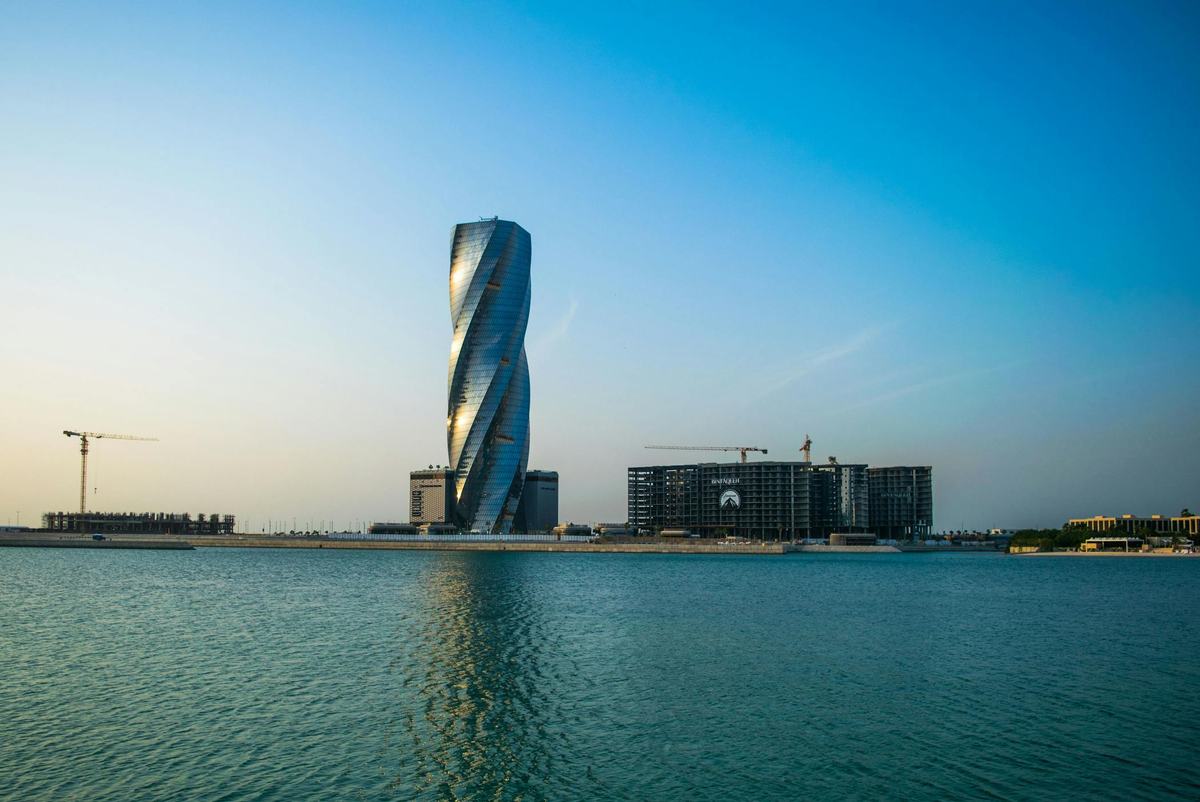
- Capital: Manama, on the main island of Bahrain [1]
- Population: Around 1.57 million, with non-citizens making up more than half [2]
- Area: 786 square kilometers, spread across roughly 33 natural islands and a growing number of artificial ones [1]
- Official language: Arabic, with English widely used in business [1]
- Currency: Bahraini dinar (BHD), one of the highest-valued currencies in the world [3]
- Distinguishing claim: First country in the Arabian Gulf to strike oil, in 1932, on a hill called Jebel Dukhan [4]
I grew up thinking of the Persian Gulf as one big undifferentiated stretch of desert and oil money. Then I started reading about Bahrain and had to sit down for a minute. This is a country smaller than New York City in land area, sitting on a tiny archipelago between Qatar and Saudi Arabia, that has been continuously inhabited for somewhere around 5,000 years. The Sumerians wrote about it. The pearl divers worked it. The British ran it. And now it's a financial center where you can walk past a 4,000-year-old burial mound on your way to a glass tower full of bankers.
That collision between deep history and present-day skyline is most of what makes Bahrain interesting. It's small. It's old. And almost nothing about it is what you'd guess from a satellite photo.
The Land of Dilmun
Long before there was a Bahrain, there was Dilmun. Sumerian texts from around 3000 BCE describe Dilmun as a sacred trading place where the gods went to rest, a sort of Mesopotamian paradise full of fresh water and abundant pearls. Archaeologists now widely identify Dilmun with Bahrain and the surrounding coast [5]. The country is dotted with the physical evidence: the Dilmun Burial Mounds, a UNESCO World Heritage site, are an enormous prehistoric necropolis with tens of thousands of burial chambers spread across the northern part of the main island. At their peak there were several hundred thousand of them, which is one of the highest concentrations of ancient burials anywhere on the planet [6].
The reason Dilmun mattered is the same reason Bahrain still has its own identity in a region of larger neighbors: fresh water. The island sits on top of artesian springs that bubble up from beneath the seabed. Pearl divers used to dive down with skin bottles and fill them with sweet water from springs in the middle of the salty Gulf. The country's name in Arabic means "two seas", and one common reading is that those two seas are the salt water and the fresh water that meet beneath the surface.
Pearls Were the Original Oil
Before petroleum, Bahrain ran on pearls. From the late 1800s until about 1930, the Gulf pearl industry was one of the largest in the world, and Bahrain was its center. Wooden dhows would sail out for months at a time. Divers, working without equipment beyond a nose clip and a weighted rope, made dive after dive into 60 or 80 feet of water, holding their breath for over a minute each time, looking for oysters [7].
It was brutal work and it built the country. Then in the 1920s, a Japanese researcher named Kokichi Mikimoto perfected the cultured pearl, and within a decade the Gulf pearl economy collapsed. The timing was either tragedy or providence depending on how you look at it, because in 1932 the first commercial oil well in the entire Arabian side of the Gulf came in at Jebel Dukhan. Bahrain was the first to find it, ahead of Saudi Arabia, ahead of Kuwait, ahead of all of them [4]. The original well, Well No. 1, is preserved as a small museum site you can still visit.
Smaller Than You Think, Connected More Than You'd Expect
Bahrain is tiny. The whole country is about 50 kilometers from north to south. You can drive across it in an hour. But it doesn't feel isolated, because of the King Fahd Causeway, a 25-kilometer combined bridge and causeway that links Bahrain to Saudi Arabia. Opened in 1986, the causeway carries something like 25 million crossings a year and turns Bahrain into a weekend destination for Saudis looking for a different pace of life [8]. Movie theaters, restaurants that serve alcohol, and a more relaxed dress code on weekends pull traffic across by the thousand on Thursday afternoons.
The country has also been growing physically. Land reclamation has expanded Bahrain's surface area by something like 11 percent since the 1970s. Manama itself sits partly on land that didn't exist a generation ago. Driving along the new financial harbor district, you're literally driving on what used to be the sea floor.
A Place That Punches Above Its Weight
Despite its size, Bahrain hosts the United States Navy's Fifth Fleet, runs one of the major Formula 1 races on the calendar at the Bahrain International Circuit, and hangs onto the title of the first Arab Gulf state to allow women to vote, which it did in 2002. The country has a population that is more than 50 percent non-citizens, drawn there to work, and a citizen population that is itself a mix of Sunni and Shia Muslims, with a small but historically rooted Christian and Jewish community. The Manama synagogue is one of the only functioning ones on the Arabian peninsula.
There's also the Tree of Life, a single mesquite tree growing alone in the desert, around 9.7 meters tall and over 400 years old, with no obvious water source. It just stands there. Nobody can fully explain it. Tourists drive out to see it the way people back home in Montana drive out to see a single bristlecone pine, half because it's strange and half because something about a lone tree in the middle of nothing has always pulled at human beings.
Frequently Asked Questions
Is Bahrain a country or part of Saudi Arabia?
Bahrain is an independent country. It's a sovereign island kingdom in the Persian Gulf, connected to Saudi Arabia by the 25-kilometer King Fahd Causeway but politically separate. Bahrain gained full independence from Britain in 1971 and has been ruled by the Al Khalifa family since the late 1700s.
What is Bahrain famous for?
Bahrain is famous for being the first country in the Arabian Gulf to discover oil, in 1932, and for a long history as the center of the Gulf pearl trade. Today it's known as a regional financial hub, the host of a Formula 1 race, and home to the ancient Dilmun civilization sites.
What language do they speak in Bahrain?
The official language is Arabic, specifically the Bahrani and Gulf dialects. English is very widely spoken in business, government, and most service industries because of the country's role as a financial center and its large expatriate population. Many road signs and government documents are bilingual.
Is Bahrain expensive to visit?
Bahrain is moderately expensive but generally cheaper than the United Arab Emirates or Qatar. Hotels, taxis, and restaurants are reasonable by Gulf standards, and visa-on-arrival is available for many nationalities including Americans. The Bahraini dinar is one of the strongest currencies in the world, so prices in BHD can look small but add up quickly.
Is Bahrain safe for tourists?
Bahrain is generally safe for tourists, with low rates of violent crime and a stable tourism infrastructure. Standard travel precautions apply, and visitors should be respectful of local customs around dress and public behavior, especially during Ramadan. The U.S. State Department typically rates it at a low to moderate advisory level.
Sources
- The World Factbook: Bahrain (CIA)
- Bahrain Population and Housing Census (Information and eGovernment Authority)
- Central Bank of Bahrain: Currency
- Bapco: History of Oil in Bahrain
- Dilmun: Encyclopaedia Britannica
- Dilmun Burial Mounds (UNESCO World Heritage Centre)
- Pearling, Testimony of an Island Economy (UNESCO World Heritage Centre)
- King Fahd Causeway Authority: Statistics