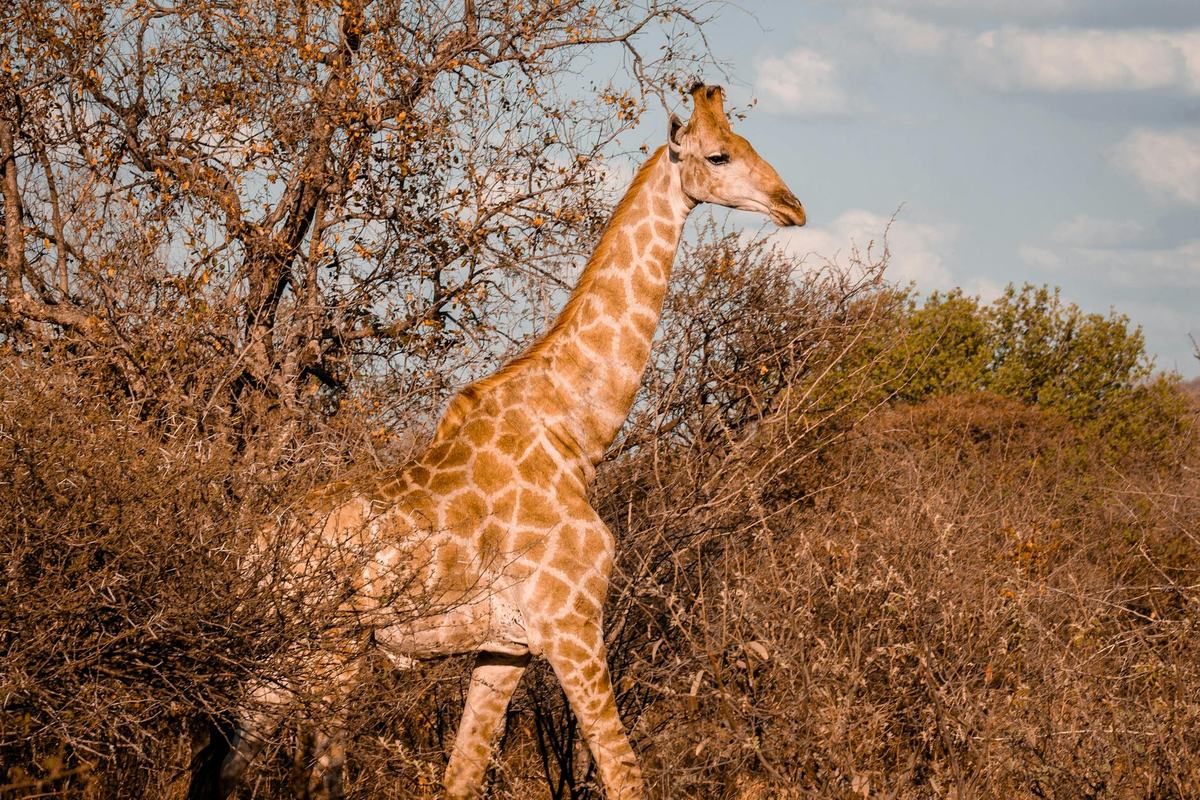
- Capital: Gaborone [1]
- Population: about 2.45 million (2023) [2]
- Area: 581,730 square kilometers (224,610 square miles) [1]
- Official languages: English (official) and Setswana (national) [1]
- Currency: Pula (BWP), a word that also means "rain" [3]
- Home to the Okavango Delta, the largest inland delta on Earth, and roughly a third of all African elephants [4]
I grew up in Montana thinking a river was a river. Water comes down off the mountains, finds the lowest line, and runs to the sea. That was the rule. Then I read about the Okavango, and the rule broke. The Okavango River pours out of the highlands of Angola, runs hundreds of miles south, and then, instead of finding the sea, it spreads its fingers into the sand of the Kalahari and disappears. The water sinks, evaporates, gets drunk by elephants, and never reaches an ocean. The whole country of Botswana sits next to that quiet miracle, and most of the world has barely heard of it.
The Delta That Flows Into the Desert
The Okavango is what hydrologists call an endorheic delta, which is a fancy way of saying water that has nowhere to go. About 11 cubic kilometers of water flood the basin every year, and almost all of it is lost to evaporation and transpiration before it can find a sea [4]. The flood pulse arrives in the dry months, between June and August, which is the opposite of what you would expect. The rain falls up in Angola in the wet season, then it takes about four to five months for the water to crawl down the river system into Botswana. So the delta floods when the rest of the country is parched. That single piece of timing is why the wildlife congregates there. Lions, leopards, hippos, fish eagles, sitatunga antelope, and the largest population of African elephants anywhere on the continent come to the delta when everything else is drying up.
UNESCO named the Okavango Delta its 1000th World Heritage site in 2014, which is a quietly perfect number for a place that feels like a final entry on a list of wonders [4].
More Elephants Than Anywhere Else
Botswana is home to roughly 130,000 African savanna elephants, which is more than any other country and somewhere around a third of the entire continental population [5]. They are not penned in. They move between Botswana, Namibia, Zimbabwe, Angola, and Zambia through one of the largest protected wildlife corridors on Earth, the Kavango-Zambezi Transfrontier Conservation Area, known as KAZA. The corridor is bigger than France. Standing in Chobe National Park at sunset and watching herds come down to the river is the kind of thing that makes you understand why people used to think the world was inexhaustible.
The size of the herd is also a problem. Crops get trampled. Villages get raided. The country has wrestled for years with how to balance conservation against the people who actually live alongside the animals, and the answer changes from one election to the next.
A Currency Named After Rain
The pula is the official currency. The word "pula" means rain in Setswana. In a country where roughly 70 percent of the land is the Kalahari Desert, naming your money after the thing you most need is not a marketing decision, it is a confession [3]. People say "pula" as a toast, as a greeting, as a blessing. Coins are called "thebe", which means shield. A shield of rain. Try designing better symbolism than that.
Diamonds and a Different Kind of Story
Here is the thing about Botswana that most people miss. At independence in 1966, Botswana was one of the poorest countries on the planet. There were about eight miles of paved road in the entire country [1]. Then, in 1967, a year after independence, geologists found diamonds at Orapa. By the 1970s the country was sitting on some of the richest diamond deposits in the world.
A lot of African nations found minerals in their soil and ended up worse for it. Botswana did the opposite. It negotiated a fifty-fifty partnership with De Beers, banked a chunk of the revenue in a sovereign wealth fund, and spent the rest on schools, clinics, and roads [6]. The country went from one of the poorest in the world to upper-middle-income in roughly two generations. Economists still use it as the textbook example of resource management done right. Nobody talks about this, but the reason it worked is mostly that the leadership decided to share the wealth and not steal it. That sounds simple. It is not.
The Kalahari Is Not What You Think
I had a picture in my head of the Kalahari. Bone-dry sand, no shade, nothing alive. That picture is wrong. The Kalahari is technically a semi-arid savanna, not a true desert, and after the summer rains parts of it turn green and bloom. Hundreds of species live there, including meerkats, oryx, brown hyenas, and the San people, whose ancestors have lived in southern Africa for tens of thousands of years [7]. The San language uses click consonants, and linguists studying it have suggested some of the oldest human languages on Earth may have sounded something like it.
Makgadikgadi, in the heart of the Kalahari, is one of the largest salt pans in the world. It used to be a giant inland lake, bigger than Switzerland, until the climate shifted thousands of years ago and the lake dried up. What is left is a flat white expanse of crystallized salt that turns into a shallow mirror when the rare rains come, drawing flamingos by the hundreds of thousands.
A Quiet Democracy
Botswana has held continuous multi-party elections since independence in 1966, with no coups, no civil wars, and a steady record that puts it consistently among the highest-ranked democracies in Africa [8]. Whatever else you want to say about the country, it has spent the last six decades doing the slow, undramatic work of governing itself, while neighbors tore themselves apart. Which, if you think about it, is the kind of fact that should be on the front page once in a while.
Frequently Asked Questions
What is Botswana famous for?
Botswana is famous for the Okavango Delta, the world's largest inland delta, and for having more African elephants than any other country, around 130,000. It is also known as one of Africa's most stable democracies and a leading global producer of diamonds by value.
What is the capital of Botswana?
The capital of Botswana is Gaborone, located in the southeast of the country near the South African border. The city grew rapidly after being chosen as the capital at independence in 1966 and is now home to roughly 250,000 people.
What language do they speak in Botswana?
English is the official language and is used in government and business. Setswana is the national language and is spoken by the majority of the population at home. Several other languages, including Kalanga and the San click languages, are also spoken by smaller communities.
Why is Botswana's currency called the pula?
The pula is named after the Setswana word for rain. In a country that is mostly Kalahari Desert, rain is the most valuable thing imaginable, and the name reflects how central water is to daily life. People also use "pula" as a greeting and toast.
Is Botswana safe to visit?
Botswana is generally considered one of the safer destinations in Africa for travelers. It has a stable government, low rates of violent crime against tourists, and a well-developed safari industry. Most visitors come for wildlife in the Okavango Delta, Chobe, and the Kalahari without incident.
Sources
- The World Factbook: Botswana - CIA
- Botswana Population - World Bank Data
- Bank of Botswana: About the Pula
- Okavango Delta - UNESCO World Heritage Centre
- African Elephant Status Report - IUCN
- Botswana: A Diamond in the Rough - IMF Working Paper
- The San People of Southern Africa - Smithsonian
- Freedom in the World: Botswana - Freedom House