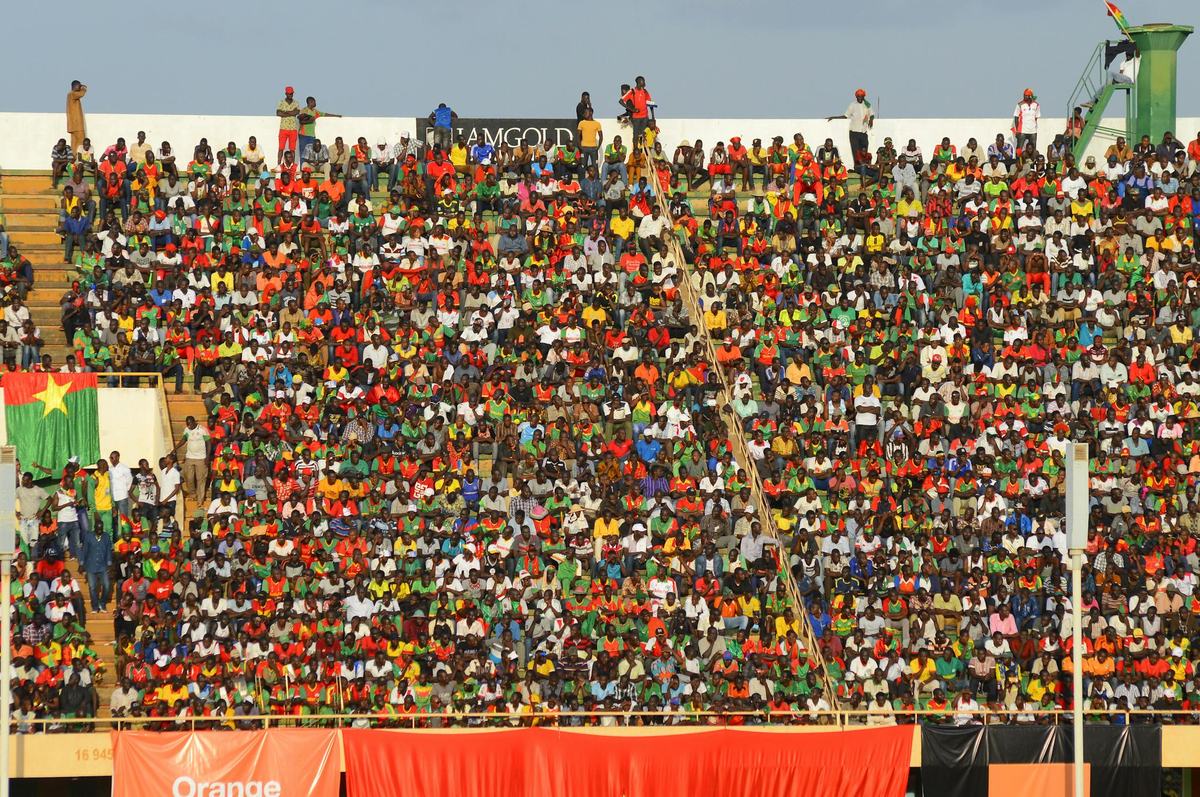
- Capital: Ouagadougou, a name most Americans cannot pronounce on the first try and a city of around 2.7 million [1]
- Population: roughly 23 million, with a median age of about 17, one of the youngest in the world [2]
- Area: 274,200 square kilometers, a little larger than Colorado
- Official language: French, with about 60 indigenous languages spoken at home, Mooré being the most common [3]
- Currency: West African CFA franc (XOF), shared with seven other countries in the region
- Distinguishing claim: the country's name literally translates as "Land of Upright People", chosen in 1984 to replace the colonial name Upper Volta [4]
Most countries inherit their names. Burkina Faso picked its own. In 1984, a young revolutionary president named Thomas Sankara stood up and said the colonial name Upper Volta had to go. He blended two languages from the country itself, Mooré and Dioula, to make a name that meant something to the people who lived there. "Burkina" means upright or honest in Mooré. "Faso" means homeland in Dioula. Land of Upright People. I had to look this up twice the first time I read it, because countries don't usually rename themselves into a moral promise. This one did.
A Name That Means Something
Sankara was 33 when he became president, an army captain with a guitar and a habit of riding a bicycle to government meetings. He sold off the official Mercedes fleet and made the cheap Renault 5 the official state car. He cut his own salary, made all government ministers do the same, and banned first-class flights for officials. Whatever you think of the rest of his record, the rebrand stuck. Forty years on, the name still does what he wanted it to do, which is remind everybody, every time it's spoken, what the place is supposed to be.
The people are called Burkinabé, which uses a suffix from yet a third language, Fulfulde, so the demonym itself is a small act of national unity. Three languages, one identity. Try doing that with the United States and see how far you get.
FESPACO and the African Cinema Capital
Every two years, Ouagadougou hosts the largest film festival on the African continent. It's called FESPACO, the Pan-African Film and Television Festival of Ouagadougou, and it's been running since 1969 [5]. Filmmakers from across Africa and the diaspora bring their work, the streets fill with crews and actors, and a giant bronze statue of a filmmaker holding a camera presides over the city center.
Burkina Faso is not what most people picture when they think "global film hub". That's part of why it matters. The country produces its own movies, supports a small but serious local industry, and has done more for African cinema than countries with twenty times the budget. Idrissa Ouédraogo, who won at Cannes in 1990 for "Tilaï", is from here. So is Gaston Kaboré, whose film "Buud Yam" took the FESPACO grand prize and then traveled the world.
Mud Mosques That Outlast Concrete
In the southwest, in a Lobi village called Bobo-Dioulasso, and across the Sahel more broadly, there are mosques built entirely of mud. Sun-dried earth, wooden beams sticking out of the walls in regular rows, towers shaped like termite mounds. The Grand Mosque of Bobo-Dioulasso has stood since 1880, and the Sankoré-style design behind it goes back centuries further. Once a year, the whole community climbs up the wooden beams, which double as scaffolding, and replasters the building by hand. The maintenance is the architecture. The mosque is alive only because people keep putting their hands on it.
It feels backwards to a kid from Montana, where things are built once out of concrete and then mostly forgotten. Here, a building survives because the community recommits to it every season. The walls are softer than American walls, but they have lasted longer.
The Music You've Heard Without Knowing
If you've ever listened to Talking Heads, you've probably heard the balafon, even if you didn't know its name. It's a wooden xylophone with gourd resonators underneath, and the Sambla and Tusia people of western Burkina Faso play a version that some musicologists trace back at least 800 years. UNESCO recognized the cultural practices around the balafon as part of the intangible heritage of humanity in 2012 [6].
The instrument crossed the Atlantic with the slave trade and shows up, in mutated form, in everything from Caribbean music to Mississippi blues. Which, if you think about it, means a piece of Burkina Faso has been playing in American living rooms for a very long time. We just didn't know whose hands made it first.
The Sahel and the Sahara at Your Door
The country sits where the Sahel grasslands meet the Sahara, and that border is moving. Climate change is pushing the desert south at a measurable rate, and Burkina Faso is one of the countries most exposed to it. Farmers who used to plant in May now wait until July, hoping the rains come. They sometimes don't.
In response, communities across the Sahel, including in northern Burkina Faso, have been part of an effort called the Great Green Wall, an initiative to plant a 4,800-mile band of trees across the continent from Senegal to Djibouti [7]. Progress has been uneven and slower than promised, but in pockets of Burkina Faso the trees are coming up. Sorghum yields are recovering on land that was bare a decade ago. People are using a half-forgotten technique called zaï, where you dig small pits, fill them with manure, and let termites do half the work of restoring the soil. The country with the moral name is also trying, in a literal sense, to hold the desert back with its bare hands.
Frequently Asked Questions
What does Burkina Faso mean?
Burkina Faso translates as "Land of Upright People" or "Land of Honest People". The name combines "Burkina", meaning upright or honest in the Mooré language, with "Faso", meaning homeland in Dioula. President Thomas Sankara renamed the country in 1984, replacing the colonial name Upper Volta.
What language is spoken in Burkina Faso?
The official language is French, a legacy of colonial rule. At home, most Burkinabé speak one of about 60 indigenous languages, with Mooré, Dioula, and Fulfulde being the most widely used. Around 50 percent of the population speaks Mooré as a first or second language.
Is Burkina Faso a poor country?
Burkina Faso is one of the lowest-income countries in the world by GDP per capita, but it has a strong cultural heritage and significant gold and cotton exports. The economy depends heavily on agriculture, with about 80 percent of the workforce involved in farming or livestock.
What is FESPACO?
FESPACO is the Pan-African Film and Television Festival of Ouagadougou, the largest film festival on the African continent. Held every two years in Burkina Faso's capital since 1969, it showcases African and diaspora cinema and awards a grand prize called the Étalon de Yennenga.
Is Burkina Faso safe to visit?
Travel to Burkina Faso currently carries significant security risks due to ongoing armed conflict in the north and east. Most Western governments advise against non-essential travel. Travelers who do visit typically stay in Ouagadougou and follow guidance from local authorities and embassies.
Sources
- Ouagadougou City Population - UN World Urbanization Prospects
- Burkina Faso Country Data - World Bank
- Languages of Burkina Faso - Ethnologue
- Thomas Sankara and the Renaming of Upper Volta - Britannica
- FESPACO Film Festival - UNESCO Diversity of Cultural Expressions
- Cultural Practices and Expressions Linked to the Balafon - UNESCO Intangible Heritage
- Great Green Wall Initiative - UN Convention to Combat Desertification