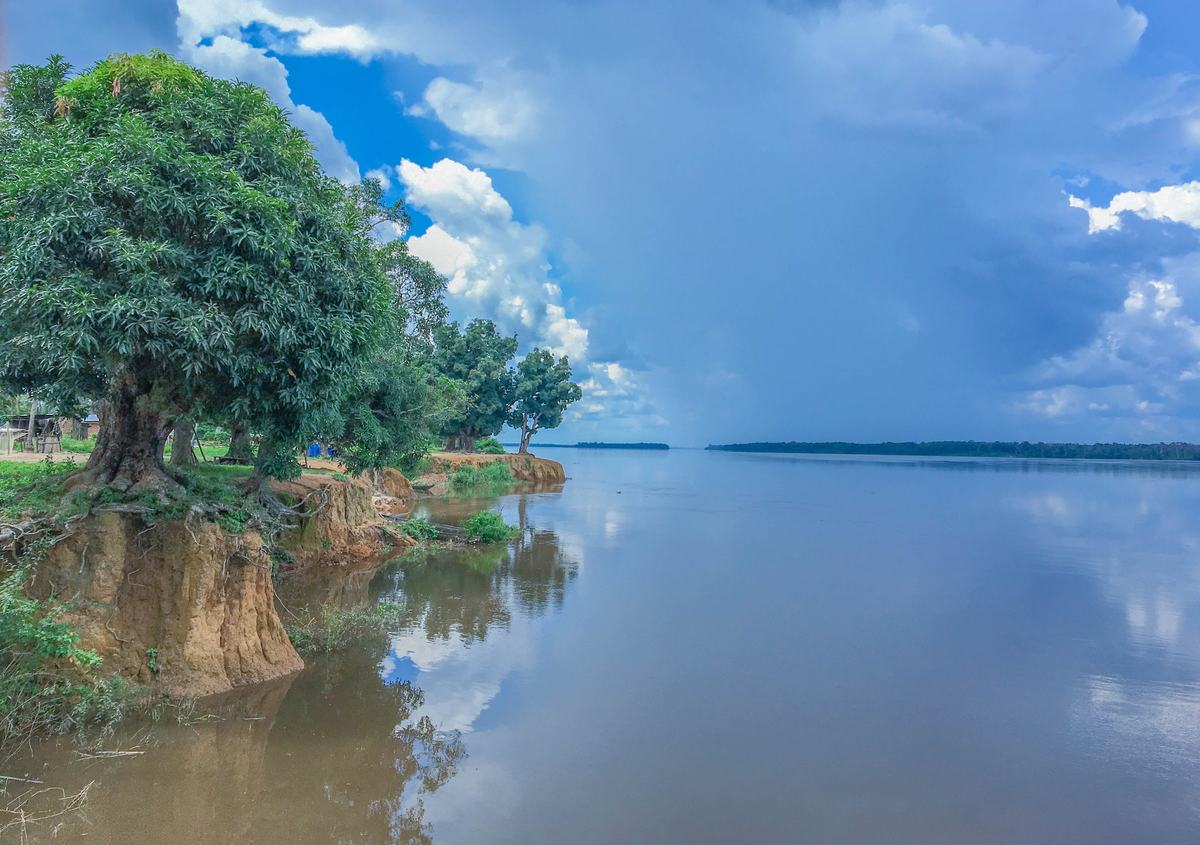
- Capital: Brazzaville, perched right on the Congo River [1]
- Population: roughly 6 million [2]
- Area: about 342,000 square kilometers, slightly larger than Montana [1]
- Official language: French [1]
- Currency: Central African CFA franc (XAF), shared with five neighbors [3]
- Distinguishing claim: more than half the country is covered by tropical rainforest, part of the second largest rainforest on Earth [4]
Most people hear the word "Congo" and picture one country, somewhere green, somewhere big, somewhere they couldn't quite point to on a map. Here's the thing. There are two Congos, and they sit on opposite banks of the same river, staring at each other. The bigger one is the Democratic Republic of the Congo. The smaller one, the one this article is about, is the Republic of the Congo, sometimes called Congo-Brazzaville to keep things straight. It's smaller, quieter, and almost nobody talks about it. Which is exactly the kind of country I find myself reading about until two in the morning.
A Country Cut by Its Own River
The Congo River is the second longest river in Africa and one of the deepest rivers in the world, in places more than 200 meters deep [5]. It also draws the border between the two Congos for a long stretch, including a remarkable spot where the capitals of both countries face each other across the water. Brazzaville, on the Republic of the Congo side, and Kinshasa, on the DRC side, are the closest pair of capital cities on the planet outside Vatican City and Rome [1]. You can stand on a riverbank in one country and watch traffic move in another.
The river shapes everything. It's the highway, the larder, and the boundary. Cargo barges work it the way trucks work an interstate back home. Fishermen run pirogues out of riverside villages that have done the same thing for generations. When the rainy season swells the water, whole stretches of forest go under, and the people who live along it just shift their lives a little higher up the bank.
A Country That Is Mostly Forest
Roughly 65 percent of the Republic of the Congo is covered by tropical rainforest [4]. That makes it part of the Congo Basin, a green expanse that absorbs more carbon than it emits and is sometimes called the planet's second lung after the Amazon [4]. Walk into Odzala-Kokoua National Park or Nouabalé-Ndoki and you're in a place that feels untouched in a way most of the world no longer is. Forest elephants move through the clearings. Western lowland gorillas, an endangered species, live there in some of the highest densities anywhere [6]. So do chimpanzees, bongos, and forest buffalo.
I had to look this up twice. There's a wetland in the north of the country, the Cuvette Centrale, that contains the largest tropical peatland complex on Earth, holding an estimated 30 billion tonnes of carbon underground [7]. That single bog system stores roughly the same amount of carbon as three years of total US fossil-fuel emissions. Most Americans have no idea it exists.
A History Shaped by France and the River
The country was a French colony from the late 1800s until 1960, part of what was called French Equatorial Africa, with Brazzaville as its administrative capital [1]. During World War II, when France fell to Germany, Brazzaville became the symbolic capital of Free France, and Charles de Gaulle gave one of his most important wartime speeches there [8]. For a few years, a small city on the Congo River was effectively the seat of the French government in exile.
Independence came in 1960. The decades after were rough - one-party rule, a turn toward Marxism-Leninism in the 1970s, a return to multiparty politics in 1992, and a civil war that flared in the late 1990s. The current president, Denis Sassou-Nguesso, has held power for most of the period since 1979, with one break in the 1990s [1]. Stability and freedom are not the same thing, and the country wrestles with the difference.
Music, Style, and the Sapeurs
If there's one cultural export from Congo-Brazzaville that punches far above the country's weight, it's music. Congolese rumba, born along both banks of the river in the 1940s and 1950s, became one of the most influential popular music styles in all of Africa [9]. UNESCO added it to the Representative List of the Intangible Cultural Heritage of Humanity in 2021. Rumba did for African pop what the blues did for American pop - quietly built the foundation everything else stands on.
There's also La Sape, short for Société des Ambianceurs et des Personnes Élégantes. The Sapeurs are men, mostly working class, who dress in immaculate designer suits, perfectly matched ties, polished shoes, and walk through Brazzaville's streets with theatrical poise [10]. It started as a kind of dignified pushback against colonialism and poverty, and it has become one of the most photographed subcultures in Africa. Whole neighborhoods have a tailor everyone agrees is the best one, and a Sunday-afternoon parade you don't want to miss.
The Economy in One Sentence
Congo-Brazzaville is heavily dependent on oil, which makes up the majority of exports and government revenue, and the country is working slowly toward diversifying into forestry, agriculture, and ecotourism [3].
Frequently Asked Questions
What is the difference between Congo and the Democratic Republic of the Congo?
They are two separate countries that share a border along the Congo River. The Republic of the Congo, also called Congo-Brazzaville, has its capital at Brazzaville. The Democratic Republic of the Congo, sometimes called DRC or Congo-Kinshasa, is much larger, with its capital at Kinshasa.
What language do they speak in the Republic of the Congo?
The official language is French, used in government, schools, and business. Most people also speak Lingala or Kituba in daily life, both of which are widely shared regional languages used across central Africa, especially along the Congo River trade routes.
Is the Republic of the Congo safe to visit?
The Republic of the Congo is generally calm but has limited tourism infrastructure outside Brazzaville and the national parks. Most visitors come for gorilla tracking and rainforest tours. Standard travel precautions apply, and travelers should check current government advisories before booking.
What is the Republic of the Congo famous for?
The Republic of the Congo is best known for its vast rainforest, lowland gorillas, and the Congo River. It is also famous for Congolese rumba music and the Sapeurs, an elegant subculture of sharply dressed men in Brazzaville.
Sources
- The World Factbook: Republic of the Congo
- World Bank: Congo, Rep. Country Data
- International Monetary Fund: Republic of Congo
- Central African Forest Initiative: Republic of the Congo
- Encyclopaedia Britannica: Congo River
- Wildlife Conservation Society: Republic of Congo
- Nature: Age, extent and carbon storage of the central Congo Basin peatland complex
- Charles de Gaulle Foundation: Brazzaville Speech 1944
- UNESCO: Congolese Rumba
- Smithsonian Magazine: The Sapeurs of Brazzaville