- Capital: San José [1]
- Population: about 5.2 million [2]
- Area: 51,100 square kilometers (around 19,730 square miles), roughly the size of West Virginia [1]
- Official language: Spanish [1]
- Currency: Costa Rican colón (CRC) [3]
- Distinguishing claim: One of the only countries in the world without a standing army, abolished by constitutional reform in 1948 [4]
I grew up thinking every country had an army. It seemed like one of those default settings, like having a flag or a national anthem. Then I read about Costa Rica, and the first fact hit me sideways. They got rid of theirs in 1948. Not paused it. Not shrunk it. Wrote it out of the constitution and put the money into schools and hospitals instead. That one decision, made in a small Central American country most Americans couldn't pinpoint on a map, has shaped pretty much everything about how the place feels today.
A Country That Abolished Its Army
In December 1948, after a short and brutal civil war, the new president José Figueres Ferrer took a sledgehammer to a wall at the Bella Vista military barracks in San José. It was symbolic, but the constitution that came the next year made it real. Article 12 banned a permanent army [4]. Costa Rica still has police and a coast guard, and they take border security seriously, but the institution of a standing military just is not there.
Here's the thing about that decision. The money that would have gone to tanks and uniforms went somewhere else. Costa Rica spends a striking share of its GDP on public education and health, and life expectancy is now around 81 years, comparable to or higher than the United States [2]. There's a direct line you can trace from the sledgehammer to the doctor's office. I had to look this up twice.
The Pura Vida Mindset
If you spend more than a day in Costa Rica, you'll hear "pura vida" so many times you start saying it back without thinking. It literally means "pure life", but Ticos (the friendly nickname Costa Ricans use for themselves) use it for everything. Hello. Goodbye. Thank you. How are you. I'm doing great. The food is good. Don't worry about it.
It's not just slang. It's a worldview. The phrase came into popular use in the mid-twentieth century, partly through a 1956 Mexican film of the same name, and Ticos basically adopted it as their unofficial national motto. When you compare the pace of life there to, say, a Tuesday morning in Manhattan, the philosophy makes more sense. Things happen when they happen. The bus comes when it comes. Which, if you think about it, takes a certain confidence in life to pull off.
Roughly 5% of the World's Biodiversity
Costa Rica covers about 0.03% of the planet's surface but contains an estimated 5% to 6% of its known species [5]. That number is wild when you let it sit for a second. You could fit Costa Rica inside Lake Michigan and still have water left over, and yet it has more bird species than the entire United States and Canada combined.
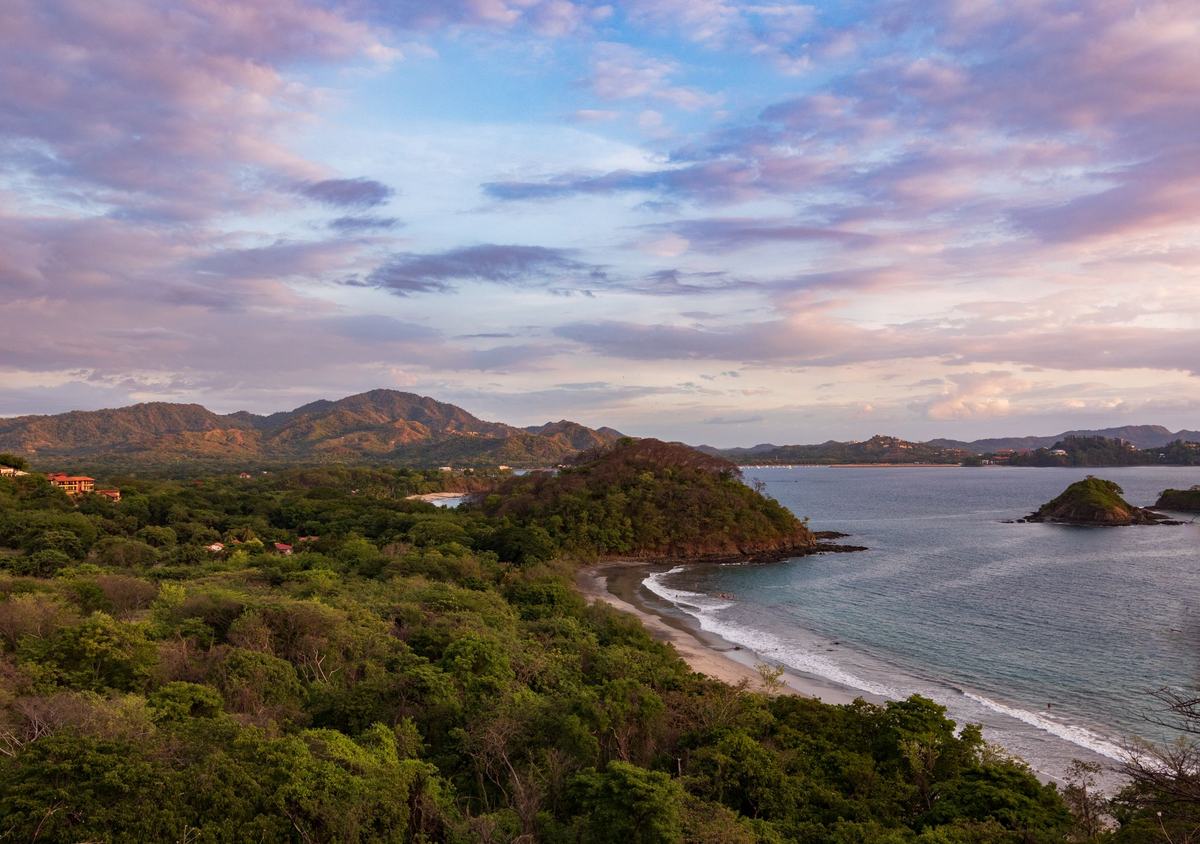
Most of this comes from geography. The country sits at a narrow point between two oceans, with mountains running down the middle. Cloud forests in the highlands, dry forests on the Pacific side, lowland rainforests in the south, mangroves along the coasts. You can drive from a beach to a volcano to a cloud forest in a single day. Back home in Montana, "ecosystem variety" means switching from sagebrush to lodgepole pine. Here it means a parrot, a sloth, and a glass frog before lunch.
Around 25% of Costa Rica's land is officially protected as national parks, reserves, or wildlife refuges [5]. That's a higher percentage than almost any other country. Manuel Antonio, Corcovado, Tortuguero, Monteverde - these names carry serious weight in conservation circles.
Volcanoes, Coffee, and the Land Itself
Costa Rica sits on the Pacific Ring of Fire, which means volcanoes. Around 200 identifiable volcanic formations dot the country, with five currently considered active [5]. Arenal was the showstopper for decades, throwing lava and ash on a regular schedule, until it went quiet in 2010. Poás has one of the largest active craters in the world. You can drive up, park, and walk to the rim.
All those volcanoes did something useful long before tourism: they made the soil. Volcanic ash breaks down into mineral-rich earth that grows ridiculously good coffee. By the early 1800s, coffee had become Costa Rica's main export and stayed that way for over a century. Costa Rican coffee is still considered some of the best in the world, with the Tarrazú region near the top of any specialty coffee list [3]. Turns out, the same fire that builds the mountains also brews the morning cup.
Almost All Renewable Electricity
For multiple recent years running, Costa Rica has generated roughly 98% to 99% of its electricity from renewable sources [6]. Most of it is hydropower, with geothermal, wind, and solar filling in the rest. In 2017, the country ran on 100% renewable electricity for 300 consecutive days. That's not a press release. That's the actual grid.
There's a caveat worth being honest about: this is electricity, not total energy. Costa Rican cars still mostly run on imported gasoline, and the transportation sector is the country's biggest emissions challenge. But the electricity grid alone is one of the cleanest on Earth, and the country has set a goal to be carbon-neutral. They're not all the way there. But they're closer than most.
Two Coasts, Two Cultures
Costa Rica has a Pacific coast and a Caribbean coast, and the two feel like different countries. The Pacific side gets most of the tourism: surf towns, beach resorts, dry forests, all-inclusive everything. The Caribbean side, especially the province of Limón, has a much stronger Afro-Caribbean influence. English-based Creole is widely spoken there, the music is reggae and calypso more than salsa, and the food leans toward rice and beans cooked in coconut milk, jerk seasoning, and patties.
A lot of that culture came with workers from Jamaica and other Caribbean islands who arrived in the late 1800s to build the railroad to the coast and to work on banana plantations. For most of the early twentieth century, there were actually legal restrictions that kept Afro-Caribbean Costa Ricans from moving freely into the central highlands. Those laws were lifted in 1949 [4]. Today the Limón coast is one of the most distinct cultural regions in Central America, and you do not need to leave the country to feel like you've crossed a border.
Frequently Asked Questions
What language do they speak in Costa Rica?
Spanish is the official language and is spoken by virtually everyone. On the Caribbean coast, especially in Limón Province, an English-based Creole called Mekatelyu is also spoken alongside Spanish, reflecting the region's strong Afro-Caribbean heritage. Several Indigenous languages, including Bribri and Cabécar, survive in smaller communities.
Why doesn't Costa Rica have an army?
Costa Rica abolished its standing army in 1948 after a brief civil war, and the 1949 constitution permanently banned the military as an institution. The savings were redirected toward education and healthcare. The country still maintains a national police force and a coast guard for security and border control.
Is Costa Rica safe for tourists?
Costa Rica is generally one of the safer countries in Latin America for tourists, with a long history of political stability and no army. Petty theft, especially in tourist areas and on public buses, is the most common issue. Standard precautions, like watching your belongings and avoiding isolated areas at night, go a long way.
What is Costa Rica famous for?
Costa Rica is best known for its biodiversity, rainforests, volcanoes, beaches on two oceans, and the "pura vida" lifestyle. It's also famous for abolishing its army in 1948 and for running its electricity grid on nearly 100% renewable energy. Coffee and ecotourism are major parts of its global identity.
What is the best time to visit Costa Rica?
The dry season, roughly mid-December through April, is the most popular time to visit, with sunny days and easier road travel. The green season, May through November, brings afternoon rain but also fewer crowds, lower prices, and lush landscapes. Wildlife viewing is excellent year-round.