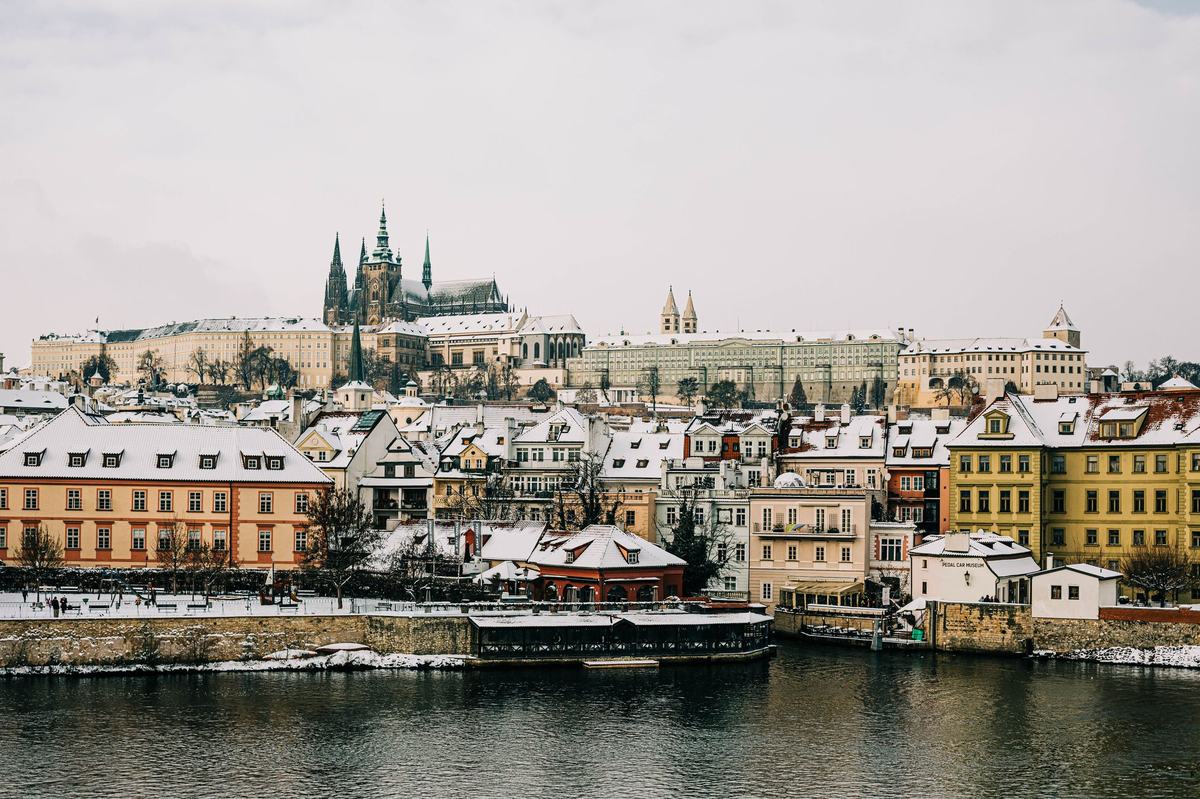
- Capital: Prague (population about 1.38 million) [1]
- Total population: roughly 10.9 million [1]
- Area: 78,871 square kilometers (about the size of South Carolina) [1]
- Official language: Czech
- Currency: Czech koruna (CZK)
- Per-capita beer consumption: the highest in the world, around 128 liters per person per year [2]
I had to look this up twice. The country I always called the Czech Republic officially asked the world to start calling it Czechia back in 2016, and most of us missed the memo. It is on the UN's official country list, on Google Maps, on national soccer jerseys. And yet half my friends still say "Czech Republic" the way people back home in Montana still say "the new Walmart" about a store that opened in 2003. Names take time to settle. This one is still settling.
Why Czechia, and Why Now
Here's the thing about country names. The "Czech Republic" was always the formal political title, the same way the United States of America is the formal version of America. What was missing was a short, geographic name. The Czech word for it, Česko, has existed for centuries, but English never had a clean equivalent. So in 2016, the government registered "Czechia" with the UN as the official short-form English name [3]. It is not a rebrand. It is a country finally giving itself a nickname that fits on a jersey.
The transition has been slow. The foreign ministry uses Czechia. Athletes wear it. The European Union uses it in databases. But ordinary speakers, including ordinary Czechs speaking English, still drift back to "Czech Republic". Which, if you think about it, is a perfectly normal thing for language to do.
A Country Built on Beer
Czechs drink more beer per person than anyone else on Earth, and they have held that title for over thirty straight years. The numbers are not close. We are talking about roughly 128 liters per person per year, which works out to nearly 350 milliliters every single day for every man, woman, and child in the country [2]. Obviously the kids are not pulling their weight, which means the adults are picking up serious slack.
This is not a recent thing. The town of Plzeň gave the world Pilsner in 1842, the golden lager that almost every mass-market beer you have ever drunk is descended from. Budweiser Budvar, the original Budweiser, comes from České Budějovice and has been in a trademark fight with the American Budweiser for over a century. Czech beer halls are not bars in the American sense. They are dining rooms. People go after work, sit at long shared tables, and order half-liters that arrive without anyone asking. The first one is usually on the table before you finish hanging up your coat.
More Castles Than Anywhere Else
Czechia has more than 2,000 castles, chateaux, and castle ruins, which is the highest density of castles in the world [4]. You cannot drive an hour in any direction without passing one. Some are immaculate Baroque palaces with mirrored ballrooms. Others are mossy stone husks on hilltops where wolves used to be the only neighbors.
The most famous is Prague Castle, and it holds a quiet record of its own. According to the Guinness Book of World Records, it is the largest ancient castle complex in the world, covering nearly 70,000 square meters [5]. Czech presidents still work there. Imagine the White House, but a thousand years older and with a Gothic cathedral attached.
Then there is Karlštejn, built by Holy Roman Emperor Charles IV in the 14th century to safeguard the imperial crown jewels. And Český Krumlov, a tiny town wrapped around a riverbend, with a castle that has its own working Baroque theater, complete with original stage machinery from 1766. You crank a wooden wheel and clouds move across the painted sky. They still put on plays there.
Prague Was Never Bombed
This one stopped me when I first read it. Most major European capitals were heavily damaged during World War II. London, Berlin, Warsaw, Dresden. Warsaw was practically erased. Prague, somehow, came through with its medieval and Baroque core almost entirely intact [6]. There were a few bombings, including a tragic American raid in 1945 that mistook Prague for Dresden in poor weather. But compared to what happened elsewhere, Prague was spared. That is why walking across the Charles Bridge today feels like walking through a city that forgot to update itself for six hundred years. The cobblestones, the saints lining the bridge, the astronomical clock in the Old Town Square that still does its little hourly puppet show. It is all real. It is all original.
The Astronomical Clock That Almost Worked
Speaking of that clock. The Prague astronomical clock, or Orloj, was installed in 1410, which makes it the oldest astronomical clock still in operation anywhere in the world [7]. There is a legend that the city blinded the clockmaker after he finished it so he could never build another one for a rival town. Probably not true. But it is the kind of story that sticks.
The clock does more than tell time. It tracks the position of the sun and moon, the zodiac, and old Bohemian time. Every hour on the hour, twelve apostles parade through small windows above the dial while a skeleton rings a bell. Tourists pack the square waiting for it. And then the show happens, lasts about forty seconds, and everyone says "that was it?" and goes to find lunch. This is also true.
Small Country, Long Reach
For a nation of 10.9 million people, Czechia has put a lot into the world. Pilsner, obviously. The word "robot" was coined here, in a 1920 play called R.U.R. by Czech writer Karel Čapek. It comes from the Czech word "robota", which means forced labor [8]. So every time you say robot, you are using a Czech loanword.
Soft contact lenses were invented in Prague by chemist Otto Wichterle in the 1950s, using a kit he built out of his kid's Erector set. Sugar cubes were invented here too, in 1843, in the town of Dačice. A factory manager's wife asked for a way to break sugar without injuring her hands. Her husband invented the cube. There's a tiny monument to it in town.
The Bohemian Glass Tradition
Bohemia, the western half of the country, has been making glass since the 13th century, and Czech crystal is still considered some of the finest in the world [4]. The trade survived the Habsburg Empire, two world wars, communism, and the global shift to cheap imports. The glassblowers in towns like Nový Bor are still doing it by hand, the same way their great grandfathers did. If you ever pick up a heavy, perfectly clear wine glass at a fancy restaurant and feel that satisfying weight, there is a real chance it came from a workshop somewhere in northern Bohemia.
Frequently Asked Questions
Is Czechia the same as the Czech Republic?
Yes. Czechia is the official short-form English name of the Czech Republic, registered with the UN in 2016. The Czech Republic remains the formal political name, while Czechia is the geographic name, similar to how France is short for the French Republic.
What is Czechia famous for?
Czechia is famous for its beer (the highest per-capita consumption in the world), Prague's medieval old town, more than 2,000 castles, Bohemian crystal, and inventing the word "robot". It is also the birthplace of Pilsner lager and modern soft contact lenses.
What language do they speak in Czechia?
Czech is the sole official language, spoken by virtually all of the roughly 10.9 million inhabitants. It is a West Slavic language closely related to Slovak and Polish. English is widely spoken by younger people in Prague and other tourist cities, while German is common near the Austrian and German borders.
Is Czechia safe for tourists?
Yes. Czechia consistently ranks among the safer countries in Europe, with low rates of violent crime. Pickpocketing in crowded tourist areas of Prague is the main practical concern, especially around the Charles Bridge, Old Town Square, and on busy trams.
What currency does Czechia use?
Czechia uses the Czech koruna (CZK), not the euro. The country joined the European Union in 2004 but has kept its own currency. Most shops, restaurants, and hotels accept cards, but small bakeries, public transport ticket machines, and rural areas often run on cash.
Sources
- Czech Statistical Office: Population
- Kirin Beer University Report: Global Beer Consumption
- UN Group of Experts on Geographical Names: Czechia
- Czech Tourism: Castles and Chateaux
- Guinness World Records: Largest Ancient Castle
- Britannica: History of Prague
- Prague City Tourism: The Astronomical Clock
- Oxford English Dictionary: Etymology of Robot