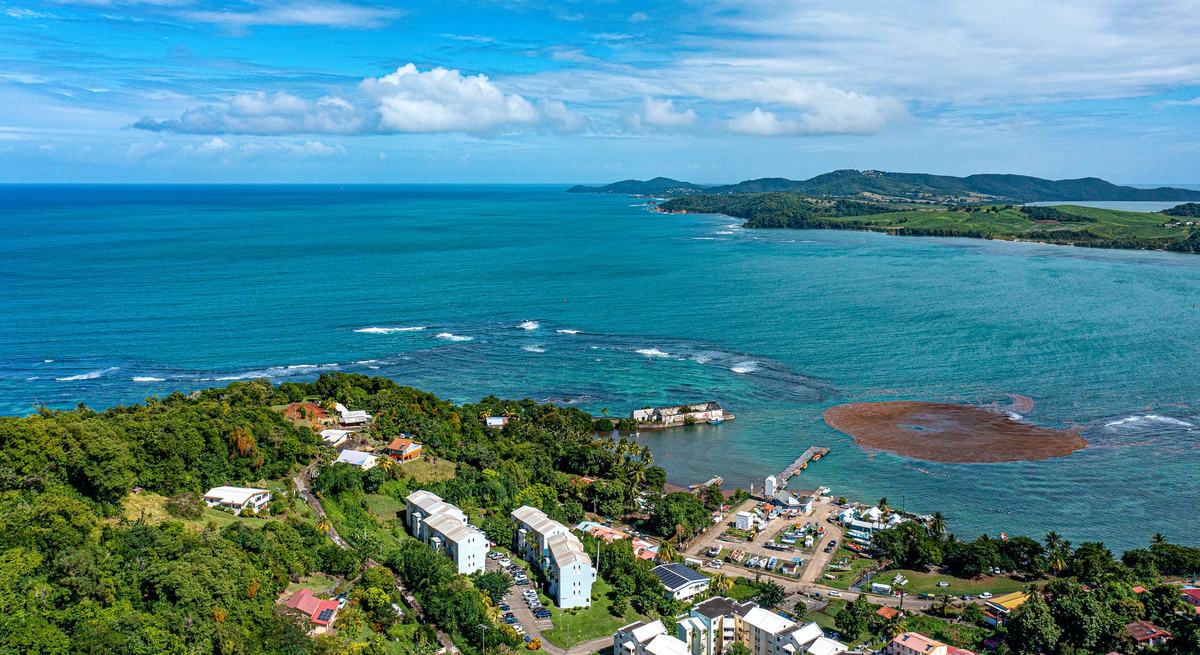
- Capital: Roseau [1]
- Population: about 66,000 [1]
- Area: 750 square kilometers (290 square miles) [1]
- Official language: English; Dominican Creole French (Kwéyòl) widely spoken [1]
- Currency: Eastern Caribbean dollar (XCD) [2]
- Distinguishing claim: home to the world's second-largest hot spring, the Boiling Lake, and the only remaining pre-Columbian population in the eastern Caribbean [3][4]
Most people picture the Caribbean and they see white sand and a blender drink. Dominica is not that. It's the green one. The rainy one. The one where the cruise ships stop for a day and most passengers come back drenched, smiling, talking about a waterfall they didn't expect.
I had to look this up twice when I first read it: Dominica claims 365 rivers - one for every day of the year. Whether the count is exact or just islander pride, the practical truth holds. You cannot drive across this island without crossing water, again and again, in a way that feels less like geography and more like the place is showing off.
Not to Be Confused with the Other One
First thing worth clearing up. Dominica is not the Dominican Republic. They sit in the same general region of the Caribbean, they share Christopher Columbus as a chapter in their colonial story, and that's where the resemblance ends. Dominica is small, English-speaking, and tucked between the French islands of Guadeloupe and Martinique in the Lesser Antilles [1]. The Dominican Republic is large, Spanish-speaking, and shares the island of Hispaniola with Haiti.
Locals here pronounce it "dom-in-EE-ka", with the stress on the second-to-last syllable, which is itself a small act of insistence on identity. Get it wrong and someone will gently correct you, and you'll deserve it.
The Nature Island, and It Means That Literally
Dominica markets itself as "The Nature Island of the Caribbean", and for once the marketing is on the level. Roughly two-thirds of the island is forested, and a sizable chunk of that forest is protected [3]. The Morne Trois Pitons National Park, named for a triple-peaked volcano, became a UNESCO World Heritage Site in 1997 - the first natural site in the eastern Caribbean to get that designation [3].
Inside the park you'll find tropical rainforest, sulfur springs, freshwater lakes, and the headline attraction: Boiling Lake, the second-largest actively boiling lake in the world. The water genuinely boils, fed by a flooded fumarole - a crack in the earth venting volcanic gases. The hike to reach it takes about three hours each way, and the trail goes through a place called the Valley of Desolation, which is exactly as cheerful as it sounds. Steaming vents, gray mud, sulfur in the air. Then you crest a ridge and there's a lake of churning gray water 200 feet across [3]. It's the kind of place that makes you remember the Caribbean is a volcanic chain, not just a beach destination.
The island has nine potentially active volcanoes packed into 750 square kilometers, which is one of the highest densities anywhere on Earth [3]. You feel it. The hot springs in Wotten Waven aren't a spa concept. They're just the ground being itself.
The Kalinago Are Still Here
Here's the thing nobody talks about: in the entire eastern Caribbean, Dominica is the only country where the Indigenous population was never wiped out [4]. The Kalinago - whom Europeans called Caribs, and from whom the entire Caribbean Sea takes its name - still live on the island, in a 3,700-acre territory on the rugged east coast that they govern themselves [4].
The territory was formally established in 1903, and today around 3,000 Kalinago people live there [4]. They have an elected chief, their own council, and a long history of being almost impossible to subdue. The mountainous interior of Dominica - the same terrain that makes the island so beautiful - made colonization brutally difficult. The French and the British traded the island back and forth for over a century, and through all of it the Kalinago held on.
Walking through the territory feels different from anywhere else in the country. Houses on stilts, traditional canoe-building, basketry made from larouma reed in patterns that go back centuries. Compare it to back home - we have plenty of places that mark Indigenous history with a plaque and a parking lot. This is a living community that never had to be reconstructed because it never went away.
Independence, Hurricanes, and Stubbornness
Dominica became independent from Britain on November 3, 1978 [1]. That date matters because Columbus first sighted the island on a Sunday - "domingo" in Spanish - in 1493, which is where the name comes from [1]. So the country took its independence on a Sunday in November, neatly bracketing nearly five centuries of colonial naming with a return to self-rule.
The country is a parliamentary republic, one of the few Commonwealth Caribbean states that opted not to keep the British monarch as head of state [1]. They elect their own president, indirectly, through parliament.
And then there's the weather. Dominica sits squarely in the hurricane belt, and the island has been hammered repeatedly. Hurricane David in 1979, Maria in 2017. Maria was a Category 5 that made landfall directly on the island and stripped the forest canopy bare; the prime minister addressed the United Nations a few weeks later and said the country was on the front line of climate change. They've spent the years since rebuilding with that in mind, aiming to become the world's first "climate-resilient nation".
A Few Things People Always Ask
It's a small place. But spend a week here and you start to understand why people who visit Dominica tend to come back. It's not curated. The waterfalls aren't roped off. The rainforest hasn't been turned into a theme. You hike, you swim, you eat callaloo and saltfish, you talk to people who actually live where they live. The Caribbean has plenty of resorts. Dominica is the part that still feels like itself.
Frequently Asked Questions
Is Dominica the same as the Dominican Republic?
No. Dominica is a small English-speaking island nation in the eastern Caribbean, part of the Lesser Antilles. The Dominican Republic is a separate, much larger Spanish-speaking country that shares the island of Hispaniola with Haiti, hundreds of miles away.
What is Dominica known for?
Dominica is known as the Nature Island of the Caribbean. It is famous for the Boiling Lake, Morne Trois Pitons National Park (a UNESCO World Heritage Site), and being the only Caribbean country with a surviving Indigenous Kalinago territory. The terrain is rainforest and volcanoes, not beach resorts.
Does Dominica have beaches?
Yes, but they're mostly black or dark-sand beaches because the island is volcanic. Champagne Beach is famous for underwater geothermal vents that release bubbles like champagne. White-sand beaches are rare here. Visitors come for rainforest hiking, diving, and waterfalls more than for the typical Caribbean beach experience.
What language is spoken in Dominica?
English is the official language. Most Dominicans also speak Dominican Creole French, known locally as Kwéyòl, a legacy of the island's French colonial period. You'll hear Kwéyòl in markets, music, and everyday conversation, especially among older generations and in rural areas.
How do you get to Dominica?
Dominica has two airports, Douglas-Charles in the north and Canefield near Roseau, but no major international hub. Most travelers connect through Antigua, Barbados, or San Juan. Cruise ships also dock in Roseau, the capital, particularly during the December-to-April season.