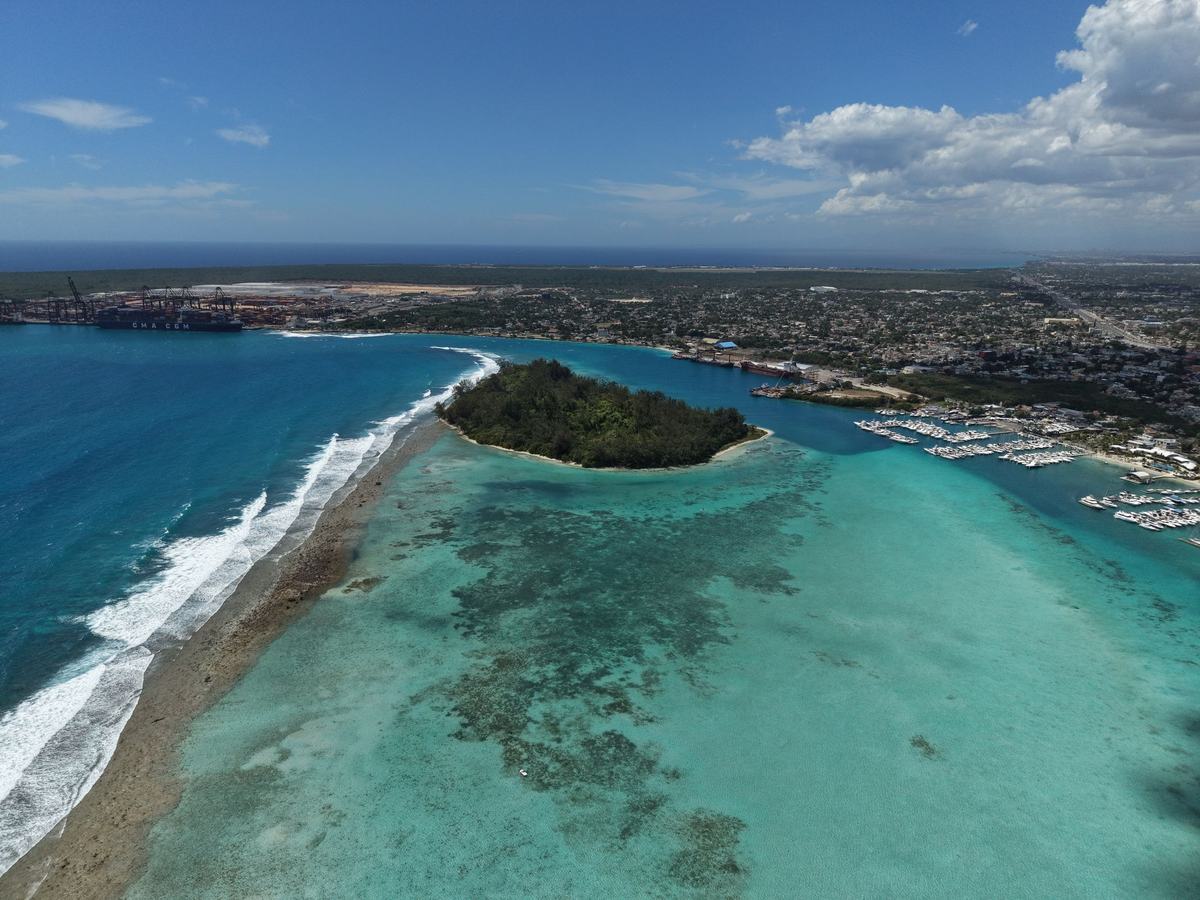
- Capital: Santo Domingo, the oldest continuously inhabited European-founded city in the Americas, settled in 1496 [1]
- Population: Around 11.4 million people [2]
- Area: 48,671 square kilometers, occupying roughly two-thirds of the island of Hispaniola [1]
- Official language: Spanish [1]
- Currency: Dominican peso (DOP)
- Distinguishing claim: Home to Pico Duarte (3,098 m), the highest peak in the entire Caribbean [3]
Most people picture the Dominican Republic and see one thing: white sand and turquoise water. Punta Cana, all-inclusive resorts, the kind of vacation you book when you need to stop thinking. That picture is real, but it's maybe two percent of the actual country. The rest is mountains, baseball diamonds, merengue blasting from passing cars, and a layered colonial history that started before any European had set foot on what would later be called North America. I had to look this up twice to be sure of the dates. Santo Domingo predates Jamestown by 111 years.
A Country That Shares an Island
The Dominican Republic occupies the eastern two-thirds of Hispaniola. Haiti gets the western third. Same island, two completely different countries, two languages, two currencies, two histories that diverged hard around 1804. The border runs about 376 kilometers north to south, and you can drive from one capital to the other in roughly eight hours if the road is cooperating.
This is one of only two Caribbean nations that shares an island with another sovereign country. The other is Saint Martin, which is split between France and the Netherlands, but that island is tiny by comparison. Hispaniola is the second-largest island in the Caribbean, after Cuba, and the dynamic between the two countries that share it has shaped Dominican identity for centuries. The relationship is complicated, often tense, and woven into everything from food to politics to which side of a town you grew up on.
Santo Domingo: The Oldest of a Lot of Things
Christopher Columbus's brother Bartholomew founded Santo Domingo in 1496. Within a generation, the city had the first cathedral in the Americas, the first university, the first hospital, and the first paved street with a name [1]. The Zona Colonial - the old quarter - is a UNESCO World Heritage Site, and walking through it feels less like a museum and more like a neighborhood that just happens to be 500 years old.
The Catedral Primada de América was finished in 1540. Diego Columbus, son of Christopher, lived in a stone palace called the Alcázar de Colón that's still standing on a bluff over the Ozama River. Here's the thing about Santo Domingo: every conqueror, pirate, hurricane, and revolution that ever passed through the New World left a mark on this city. And it kept going. Modern Santo Domingo is loud, packed, beachy on the edges, and home to about 3.5 million people in the metro area.
The Baseball Country
Back home in Montana, sports loyalty was football and rodeo. In the Dominican Republic, it's baseball, full stop. The country has produced more Major League Baseball players than any nation outside the United States. Towns like San Pedro de Macorís have sent so many players to the majors that the place is sometimes called "the cradle of shortstops". Pedro Martínez, David Ortiz, Albert Pujols, Juan Marichal, Sammy Sosa - all Dominican.
The Dominican winter league - LIDOM - is one of the best leagues outside MLB, and games feel more like festivals than sporting events. Bands play in the stands. Fans don't sit. Kids in every small town play with whatever gloves and bats they can find, and the dream of going pro is as alive there as basketball is on a Brooklyn playground. Which, if you think about it, makes a country of 11 million people one of the most disproportionate baseball factories on Earth.
Merengue, Bachata, and the Sound of Everything
Merengue is the official music of the Dominican Republic, and it's so embedded in daily life that you almost stop hearing it the way fish stop noticing water. Two-step rhythm, accordion, tambora drum, güira scraper - that's the basic recipe, and it has powered weddings, political rallies, and grocery store playlists for over a century. UNESCO added Dominican merengue to its Intangible Cultural Heritage list in 2016 [4].
Bachata is the country's other musical export, born in the rural countryside in the early 20th century and considered too risqué to play on national radio for decades. Now it fills stadiums worldwide. Artists like Juan Luis Guerra and Romeo Santos took the form mainstream. The original guitar-driven bachata still plays in Dominican neighborhoods at volumes that would make a small-town Montana sheriff write three citations before lunch.
The Geography Most People Miss
The Dominican Republic has the highest mountain in the Caribbean, Pico Duarte, at 3,098 meters [3]. There's also a lake that sits below sea level - Lago Enriquillo, the lowest point in the entire Caribbean at 46 meters below sea level, and saltier than the ocean. American crocodiles live there. So do flamingos. So do iguanas the size of housecats.
Drive 90 minutes inland from the coast and you'll find pine forests, cool mountain towns, and coffee plantations. The country has actual seasons in the highlands - real cold mornings, fog, the works. Constanza and Jarabacoa are mountain towns where Dominicans go to escape the summer heat, and they look more like the Adirondacks than anyone's mental image of a Caribbean vacation. The landscape includes deserts, mangroves, rainforests, and over 1,500 kilometers of coastline. It's a country that punches way above its size in terms of biome variety.
Food, Family, and the Long Sunday Lunch
The Dominican plate is built on rice, beans, and meat - what locals call "la bandera", the flag. The trinity of Dominican comfort food. Mangú is mashed green plantains, usually served at breakfast with fried cheese, salami, and eggs - "los tres golpes", the three hits. Sancocho is a meat-and-root-vegetable stew that gets its own holidays. Family lunches stretch for hours. The phrase "vamos a comer algo" - "let's go grab something to eat" - usually means three hours, four generations, and at least one debate about politics or baseball.
Coffee is taken short, sweet, and strong. The country grows it on those mountain slopes I mentioned, and the tradition of the cafecito - a small cup of intensely sweet coffee offered to anyone who walks through your door - is non-negotiable. Refusing one is borderline rude.
Frequently Asked Questions
What is the Dominican Republic famous for?
The Dominican Republic is famous for sharing the island of Hispaniola with Haiti, producing more MLB players than any country outside the US, and inventing merengue and bachata music. Santo Domingo, its capital, is the oldest continuously inhabited European-founded city in the Americas, settled in 1496.
Is the Dominican Republic safe to visit?
Tourist areas like Punta Cana, Puerto Plata, and the colonial zone of Santo Domingo are generally considered safe for visitors. Travelers should follow standard precautions in urban areas at night and stick to licensed transportation. The US State Department issues regularly updated advisories worth checking before any trip.
What language do they speak in the Dominican Republic?
Spanish is the official and dominant language, spoken by virtually all Dominicans. The Dominican dialect has its own rhythm and slang, and English is widely spoken in resort areas and major tourist zones. French and Haitian Creole are common near the Haitian border.
What is the best time to visit the Dominican Republic?
The best time to visit is December through April, when the weather is dry, warm, and least humid. Hurricane season runs from June through November, with peak risk in August and September. Crowds and prices are highest during the December and February holiday windows.
Is the Dominican Republic the same as Puerto Rico?
No. The Dominican Republic and Puerto Rico are two separate Caribbean nations. The Dominican Republic shares Hispaniola with Haiti and is an independent country. Puerto Rico is a US territory located on its own island, about 130 kilometers east of the Dominican Republic.