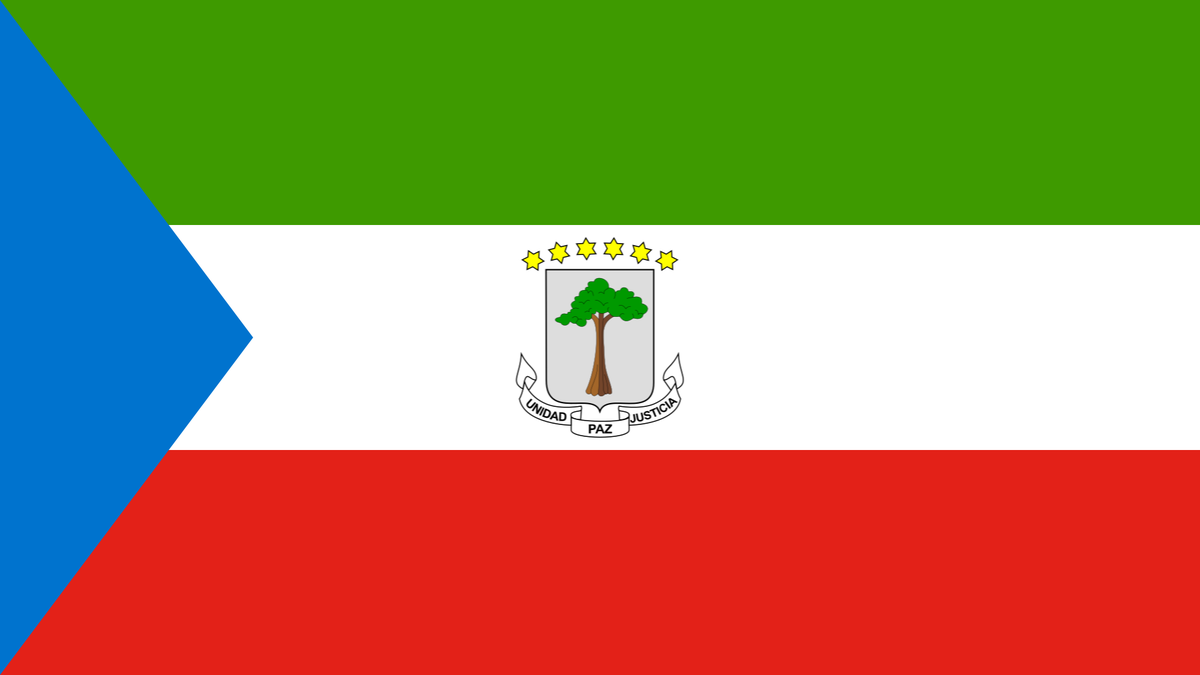
- Capital: Malabo (on Bioko Island) [1]
- Population: roughly 1.7 million [2]
- Area: 28,051 sq km, smaller than the U.S. state of Maryland [1]
- Official languages: Spanish, French, and Portuguese [1]
- Currency: Central African CFA franc (XAF) [3]
- One of the few African nations whose capital sits offshore on a volcanic island [1]
Most people couldn't find Equatorial Guinea on a map. I had to look this up twice myself the first time I came across it, because the country breaks almost every assumption you'd make about West and Central Africa. The capital isn't on the mainland. The official language isn't English or French - it's Spanish. And the whole country is smaller than the state I grew up next to. Turns out, Equatorial Guinea is one of the strangest, most overlooked spots on the African map, and once you start pulling the thread, it doesn't stop.
The Only Spanish-Speaking Country in Africa
Here's the thing nobody talks about: Spanish is an official language of an African country. Equatorial Guinea was a Spanish colony from the late 18th century until 1968, and when it got independence, it held on to Spanish as the official tongue [1]. That makes it the only sovereign nation in Africa where Spanish is official, and one of the very few Spanish-speaking countries outside of Latin America and Spain itself.
French was added as a co-official language in 1998 when the country joined the Francophone economic bloc that uses the CFA franc, and Portuguese followed in 2010 [3]. So today you've got an African country with three European official languages stacked on top of indigenous ones like Fang and Bubi. The Spanish you'll hear there has its own rhythm, with influences from local languages and a long stretch of isolation from the rest of the Spanish-speaking world.
A Capital on an Island, and a Second Capital in the Jungle
Malabo, the capital, sits on Bioko Island, about 25 miles off the coast of Cameroon - not on the mainland at all [1]. That's already unusual. Imagine if Washington D.C. were on Martha's Vineyard. Most of the country's population, government, and oil money is on Bioko, while the bulk of the land sits on the mainland piece called Río Muni.
Then there's the second capital. The government has been building an entirely new administrative city, Ciudad de la Paz (formerly called Oyala), deep in the rainforest of Río Muni, with the plan to eventually move the seat of government there [4]. It's a wild project - paved highways punching through the jungle, government buildings rising out of nowhere, an empty city waiting to be filled. The official reasoning is security and development. Whatever the reason, Equatorial Guinea is one of the few countries actively constructing a new capital from scratch in the 21st century.
A Country Split Between an Island and the Mainland
Geographically, Equatorial Guinea is two different worlds. The mainland chunk, Río Muni, is tucked between Cameroon to the north and Gabon to the south and east, with a short Atlantic coastline [1]. It's rainforest, rivers, and villages - the largest part of the country by area and by population.
Then you've got the islands. Bioko is the big one, volcanic, with peaks rising over 3,000 meters and a climate that gets so much rain it makes the Pacific Northwest look dry [1]. Far to the south, almost down at the equator itself, sits Annobón - a tiny volcanic island closer to São Tomé than to its own country. And a handful of smaller islands fill in between. Which, if you think about it, means a citizen of Equatorial Guinea could live a thousand miles from another citizen and still be at home.
Oil Wealth and the Gap It Didn't Close
In the mid-1990s, large offshore oil reserves were discovered, and Equatorial Guinea suddenly became one of the wealthiest countries in Africa by GDP per capita [5]. Crude oil and natural gas now dominate the economy, and for a stretch the country had one of the fastest-growing GDPs in the world.
The catch is that the wealth didn't spread. Most people still live on a fraction of that headline number, and basic indicators like child mortality and clean water access lag well behind what the per-capita figure would suggest [2]. It's one of the starkest gaps between national income and lived experience anywhere on the continent. And nobody talks about this, but it's part of why the country stays largely off the tourism radar - the oil money built hotels and highways for officials, not visitors.
Culture That Pulls From Everywhere
The cultural mix is something else. You've got the Fang people, who make up the majority and dominate the mainland, alongside the Bubi on Bioko, the Annobonese on the southern island, the Bisio, the Ndowe along the coast, and small communities of Igbo and others [1]. Each group has its own language, music, and traditions, layered under a Spanish colonial inheritance and a contemporary mainland African identity.
Food leans on plantains, cassava, fish from the Atlantic, and stews built on peanuts and palm oil. Music ranges from traditional drumming to a national obsession with Cuban and Latin American styles, a leftover thread from the Spanish-speaking world that runs through everything here. Catholicism is the dominant religion, but indigenous beliefs and practices stay woven into daily life [1].
Frequently Asked Questions
What is the capital of Equatorial Guinea?
The capital is Malabo, located on Bioko Island roughly 25 miles off the coast of Cameroon, not on the mainland. A new administrative capital called Ciudad de la Paz is being built in the mainland rainforest and is intended to eventually take over government functions.
What language do people speak in Equatorial Guinea?
Spanish is the main official language, making Equatorial Guinea the only Spanish-speaking country in Africa. French and Portuguese are also official languages, and indigenous languages like Fang and Bubi are widely spoken in daily life.
Is Equatorial Guinea a rich country?
By GDP per capita, Equatorial Guinea ranks among the highest in Africa thanks to offshore oil and gas. In practice, that wealth is concentrated, and most residents face poverty, limited healthcare, and uneven access to basic services.
Where is Equatorial Guinea located?
Equatorial Guinea sits in Central Africa, with a mainland section called Río Muni between Cameroon and Gabon, plus several islands in the Gulf of Guinea, including Bioko (which holds the capital) and Annobón to the south.
Is Equatorial Guinea safe for tourists?
Tourism is very small, and visa rules can be strict. The country is generally calm but politically tightly controlled, with travel often easier for business or oil-sector visitors than for casual tourists. Check current entry requirements before planning a trip.