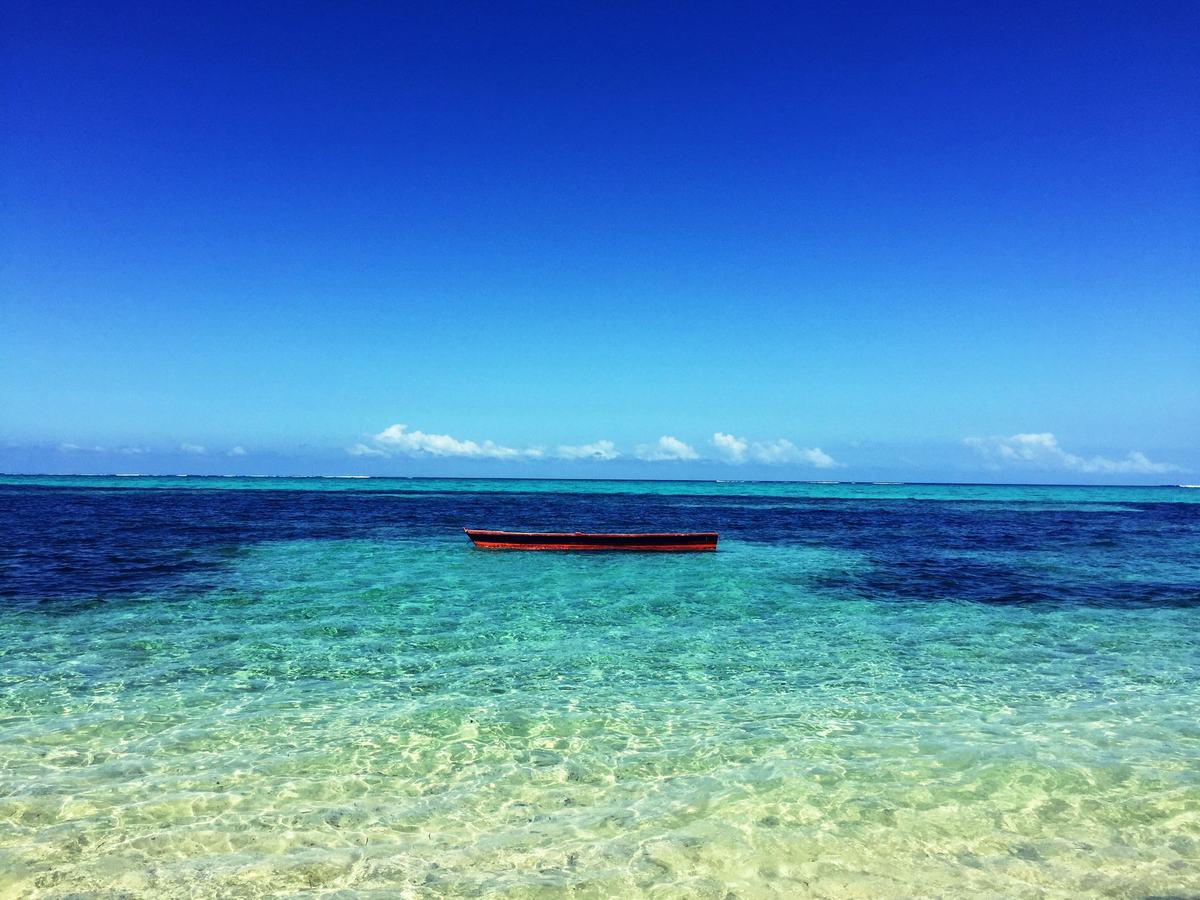
- Capital: Suva, on the southeast coast of Viti Levu, the largest island [1]
- Population: about 930,000 people across the inhabited islands [2]
- Area: roughly 18,300 square kilometers of land scattered over 1.3 million square kilometers of ocean [1]
- Official languages: English, Fijian (iTaukei), and Fiji Hindi [1]
- Currency: Fijian dollar (FJD)
- One claim to fame: the international date line was officially bent eastward so that all of Fiji's islands could share the same date [3]
Here's something that'll ruin the next geography quiz you take: the international date line, which most maps draw as a clean straight line down the Pacific, actually makes a sharp zigzag around Fiji. The line bends east so that all 333 of Fiji's islands sit on the same calendar day. Imagine someone redrawing time itself to keep your country together. Turns out, that's exactly what happened.
I grew up thinking Pacific islands were basically interchangeable. Palm trees, beaches, water that looks Photoshopped. Then I started reading about Fiji and realized this place has a culture, a politics, and a history that don't sit anywhere on the postcard. It's an archipelago with two official indigenous traditions, a national obsession with rugby that borders on a religion, and a drink made from a root that makes your mouth go numb in the best possible way.
333 Islands, About 110 With People
Fiji isn't one place. It's 333 islands, give or take a few coral cays the tide reveals. Only about 110 of them have permanent residents. The two big ones, Viti Levu and Vanua Levu, hold most of the population between them. Viti Levu alone accounts for around 87 percent of all Fijians.
The rest of the islands range from tiny dots you can walk around in twenty minutes to forested chunks of volcanic rock with their own waterfalls and microclimates. The Mamanuca and Yasawa groups, off the western coast of Viti Levu, are where most of the tourism photos come from. The Lau group, way out to the east, is so remote that some islands still get supplies by traditional boat.
What gets me is the scale of the ocean compared to the scale of the land. Fiji's total land area is smaller than New Jersey. But the territory it sits inside, the exclusive economic zone, is roughly the size of California, Oregon, and Washington combined. Most of Fiji is water.
The Date Line Bends for Them
The international date line was created in 1884 as part of the global agreement that gave the world standard time zones. The line was meant to run straight down the 180th meridian. Trouble is, the 180th meridian runs right through Fiji. That would have put some of Fiji's islands on Monday while others were still on Sunday. Which, if you think about it, would be a small administrative nightmare for a country.
So the line was officially bent eastward, around the entire Fijian archipelago, and around several other Pacific nations like Kiribati and Tonga, so that each country could keep its own day. The kink in the line is still visible on any world map. Fiji is one of the first places on Earth to see the sunrise of each new day, which the tourism board has not been shy about marketing.
Kava, the Drink That Numbs Your Mouth
Kava is made from the ground roots of the yaqona plant. The roots get pounded into a powder, mixed with cold water in a wooden bowl called a tanoa, and strained through cloth. The result is a brown liquid that looks a lot like dishwater and tastes, on a good day, like dirt.
But the effect is worth the taste. Kava produces a mild, calming sensation, slightly numbing the lips and tongue, while leaving your mind clear. It's not alcohol. It's not a drug in any familiar sense. It's something culturally specific to the Pacific, and in Fiji it sits at the absolute center of social life.
The kava ceremony, called a sevusevu, is the traditional way to greet a village or open a gathering. You sit cross-legged on a mat, clap once before drinking, drain the half-coconut shell in one go, then clap three times. Visitors who skip the ceremony in a Fijian village are missing the entire point of the visit. I had to look this up twice, but kava bars are now popping up everywhere from Brooklyn to Berlin, basically as a non-alcoholic alternative to beer with friends.
Rugby Is Not a Sport Here. It's a Sport.
Fijians take rugby the way Texans take high school football and crank it up another two notches. The country of roughly 930,000 people is one of the world's top rugby sevens nations, and has been for decades. They won Olympic gold in rugby sevens at Rio in 2016, the first Olympic gold in Fiji's history, and then won it again at Tokyo in 2021.
When the gold medal came home in 2016, the government declared a national holiday. The team flew in on a chartered plane, the players got plots of land, and the entire country basically shut down to celebrate. The prime minister cried on television. For perspective, imagine if the United States stopped functioning for a day because the men's volleyball team won.
The reason Fiji is so good at rugby comes down to size, speed, and a national obsession that starts in primary school. Kids play barefoot on grass fields with rugby balls that have seen better decades. By the time they're teenagers, the talent pipeline funnels them into clubs, into the national academy, and often into professional contracts in Europe, Japan, or Australia. Rugby is one of Fiji's biggest cultural exports and one of the largest sources of pride.
Two Cultures Sharing One Country
Fiji's population is split between two main groups. iTaukei Fijians, the indigenous Melanesian population, make up about 57 percent of the country. The other major group is the Indo-Fijian community, descendants of indentured laborers brought from India by the British in the late 19th and early 20th centuries to work the sugarcane plantations. Indo-Fijians make up around 38 percent of the population today.
That history left Fiji with a layered culture. You can have a Methodist church on one side of the road and a Hindu temple on the other. Diwali is a national holiday. So is Christmas. So is the Prophet Muhammad's birthday. Fijian curry restaurants sit next to traditional iTaukei lovo restaurants, where food is slow-cooked in an earth oven. Fiji Hindi, distinct from any Indian Hindi dialect, is its own evolved language with English and Fijian loanwords baked in.
Race relations in Fiji have not always been smooth. Several military coups since 1987 have been driven, at least in part, by tensions between the two communities over land rights, political representation, and economic power. But day to day, in the markets and on the rugby pitch, the two cultures coexist in a way that genuinely works.
Frequently Asked Questions
Where is Fiji located?
Fiji is an archipelago in the South Pacific Ocean, about 1,300 miles northeast of New Zealand and 2,000 miles east of Australia. It sits in the region called Melanesia, near the international date line. The country includes 333 islands spread across roughly 1.3 million square kilometers of ocean.
Is Fiji safe to visit?
Fiji is generally a safe destination for tourists, with low rates of violent crime in the main resort areas and friendly local communities. Standard precautions apply, particularly in Suva and Nadi after dark. Cyclones are a seasonal risk between November and April, so checking weather advisories before travel is wise.
What is the main religion in Fiji?
Christianity is the largest religion in Fiji, practiced by around 65 percent of the population, mostly Methodist. Hinduism is the second largest, with about 28 percent of Fijians following it, primarily within the Indo-Fijian community. Islam, Sikhism, and traditional iTaukei beliefs are also present.
What food is Fiji known for?
Fiji is known for kokoda, a raw fish dish marinated in lime juice and coconut milk, similar to ceviche. Lovo is a feast cooked in an underground oven using hot stones and banana leaves. Indo-Fijian curries, roti, and dhal are equally central to everyday Fijian cuisine because of the country's mixed cultural heritage.
What is kava and is it legal?
Kava is a traditional Pacific drink made from the root of the yaqona plant, used in social and ceremonial settings across Fiji. It produces a mild calming effect and slightly numbs the mouth. Kava is legal in Fiji and most countries, including the United States, and is increasingly sold in specialty bars worldwide.