- Capital: Helsinki [1]
- Population: about 5.6 million [1]
- Area: 338,455 square kilometers (130,678 square miles) [1]
- Official languages: Finnish and Swedish [1]
- Currency: Euro (EUR) [1]
- Ranked the world's happiest country for eight years running by the World Happiness Report [2]
I grew up in a small Montana town where winter meant the propane truck couldn't always make it up the road, and I thought that was a hard season. Then I started reading about Finland, where the sun doesn't rise for weeks above the Arctic Circle, and the entire country just shrugs and goes to the sauna. Turns out the Finns figured out something the rest of us are still working on: you don't fight the dark. You build a small wood-paneled room, heat it to 80 degrees Celsius, and invite a friend.
That's the thing about Finland. Quiet country. About five and a half million people, which is less than the population of metro Atlanta, scattered across a landmass roughly the size of Montana. And yet for eight years in a row, the World Happiness Report has put it at number one. Not the United States. Not Switzerland. Finland.
A Sauna for Every Household
I had to look this up twice. There are an estimated three million saunas in Finland, in a country of about five and a half million people. That's not a typo. The sauna is so embedded in Finnish life that the word itself is the only Finnish word to make it into common English [3]. Parliament has a sauna. Companies have saunas. Apartments have saunas. People schedule meetings around them.
The tradition goes back at least two thousand years, and it's not really about heat. It's about a particular kind of stillness. You sweat, you cool off in a lake, you sit there. No phones. No talking, sometimes, for long stretches. Finns will tell you the sauna is where you go to think, to grieve, to celebrate, and historically, to give birth. There's a folk saying that in the sauna you should behave as you would in church. I don't think Montana ever quite landed on a tradition that combines worship and nudity, but it works for them.
Lakes Almost Past Counting
Finland calls itself the Land of a Thousand Lakes, which turns out to be a serious undercount. The official number is around 188,000 [4]. That's not artistic license. Someone actually went out and counted bodies of water larger than 500 square meters. From the air, large parts of southern and central Finland look less like land with water in it than water with bits of land floating on top.
The lakes shape everything. Summer cottages, called mökit, are central to Finnish life - more than half a million of them, mostly without indoor plumbing on purpose. Families spend weeks at the cottage every summer, swimming, fishing, sweating in the sauna, and then plunging into the lake at midnight under a sun that won't actually set. There's a Finnish word, sisu, that doesn't translate cleanly. It means something like stubborn quiet endurance. Sitting in a 90-degree sauna and then walking into a 60-degree lake is essentially sisu in physical form.
The Happiest Country, Eight Years Running
Here's where Finland keeps surprising people. The World Happiness Report, run out of Oxford and based on Gallup survey data, has ranked Finland the world's happiest country every year from 2018 through 2025 [2]. Which, if you think about it, is strange. Finns are famously reserved. They have a reputation for not making small talk with strangers. There's a meme of "Finnish personal space", with stick figures standing three meters apart at a bus stop, that Finnish people themselves circulate without irony.
But the report doesn't measure smiles. It measures things like trust in institutions, perceived freedom, social safety nets, generosity, and how supported people feel by their community. And on those metrics, Finland keeps coming out on top. They trust their government. They trust each other. If you drop your wallet in Helsinki, the odds it makes it back to you are better than almost anywhere else on Earth. Healthcare and education are essentially free. Inequality is low. Nobody talks about this, but happiness in the Finnish sense isn't joy. It's the absence of the low-grade dread that runs underneath a lot of American daily life.
Santa's Official Address
This one charmed me. Santa Claus has an official address in Finland: Rovaniemi, in Finnish Lapland, about five miles south of the Arctic Circle. Rovaniemi is the official hometown of Santa, recognized by the Finnish government, and a Santa Claus Village just outside the city receives hundreds of thousands of visitors a year [5]. Children mail letters there from every country on Earth, and the post office actually answers them.
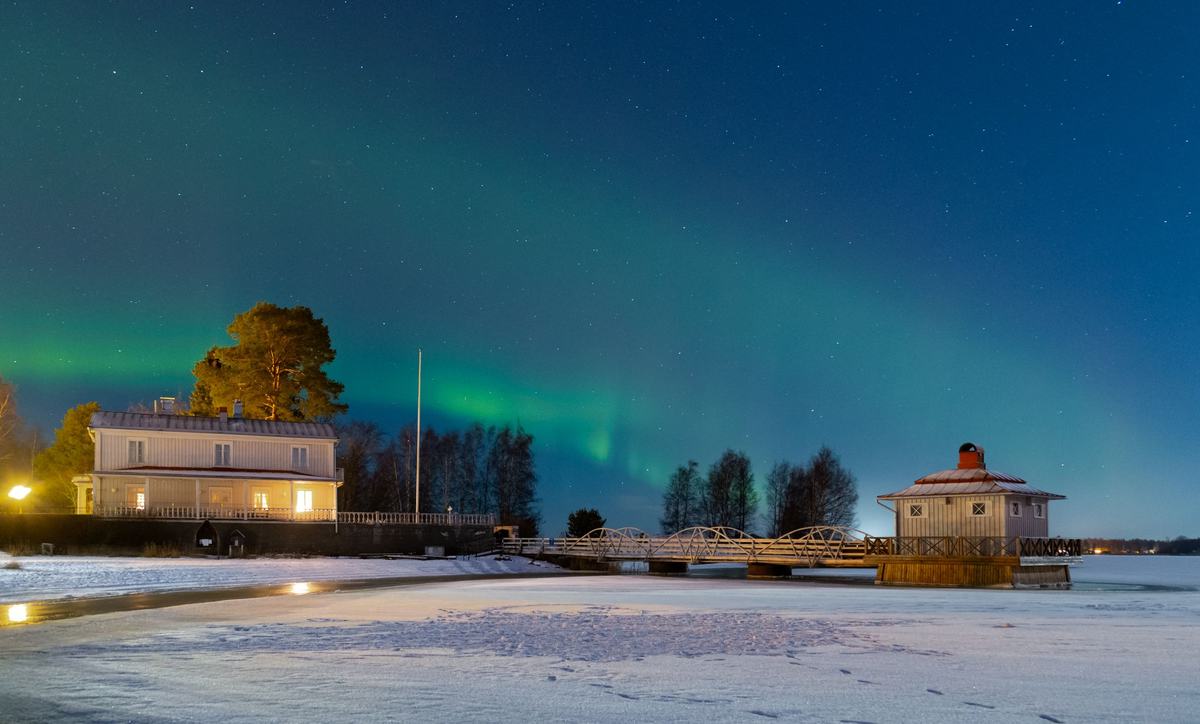
It started as a 1980s tourism move and turned into the real thing. There's a marked Arctic Circle line you can step across. A massive log-cabin post office. Reindeer rides. The whole thing should feel cheesy, and somehow doesn't, because the Finns commit to it completely. Rovaniemi also happens to be a great place to see the northern lights, which appear on about two hundred nights a year in the northern part of the country. I haven't been yet. It's on the list.
Education That Works Almost in Reverse
Finland's school system gets studied by educators worldwide because it does almost everything the opposite of how the US does it. Kids don't start formal schooling until age seven. There's very little standardized testing. Homework is light. Recess is frequent and long, even in the dark of winter. Teachers are highly paid, highly trained, and treated like doctors or lawyers in terms of professional respect.
And the results are some of the best in the world. Finnish students consistently score near the top in international assessments like PISA, particularly in reading and science. The system trusts kids to be kids, trusts teachers to teach, and somehow produces adults who are literate, numerate, and apparently quite content. Back home in Montana, I remember timed math drills in second grade. The Finnish approach feels almost suspicious until you look at the data.
Frequently Asked Questions
Why is Finland considered the happiest country?
Finland has ranked first in the World Happiness Report every year from 2018 through 2025. The ranking is based on trust in institutions, social safety nets, perceived freedom, generosity, and community support. Finns score high on all of these, even though they don't smile at strangers much.
What is the capital of Finland?
The capital of Finland is Helsinki, located on the southern coast along the Gulf of Finland. It's the country's largest city and economic center, home to about 650,000 people in the city proper and roughly 1.5 million in the wider metro area.
Is Finland part of Scandinavia?
Not technically. Scandinavia refers to Sweden, Norway, and Denmark. Finland is part of the Nordic countries, which is the broader group that also includes Iceland. The Finnish language is also unrelated to Swedish and Norwegian, belonging to the Uralic family.
How many saunas are there in Finland?
Finland has about three million saunas for a population of roughly 5.6 million people, meaning roughly one sauna per two people. They appear in homes, apartments, offices, summer cottages, and even the Finnish Parliament building. The sauna is central to Finnish daily life and identity.
Where does Santa Claus officially live in Finland?
Santa's official hometown is Rovaniemi, a city in Finnish Lapland just south of the Arctic Circle. The Santa Claus Village there receives hundreds of thousands of visitors yearly and handles letters mailed to Santa from all over the world.