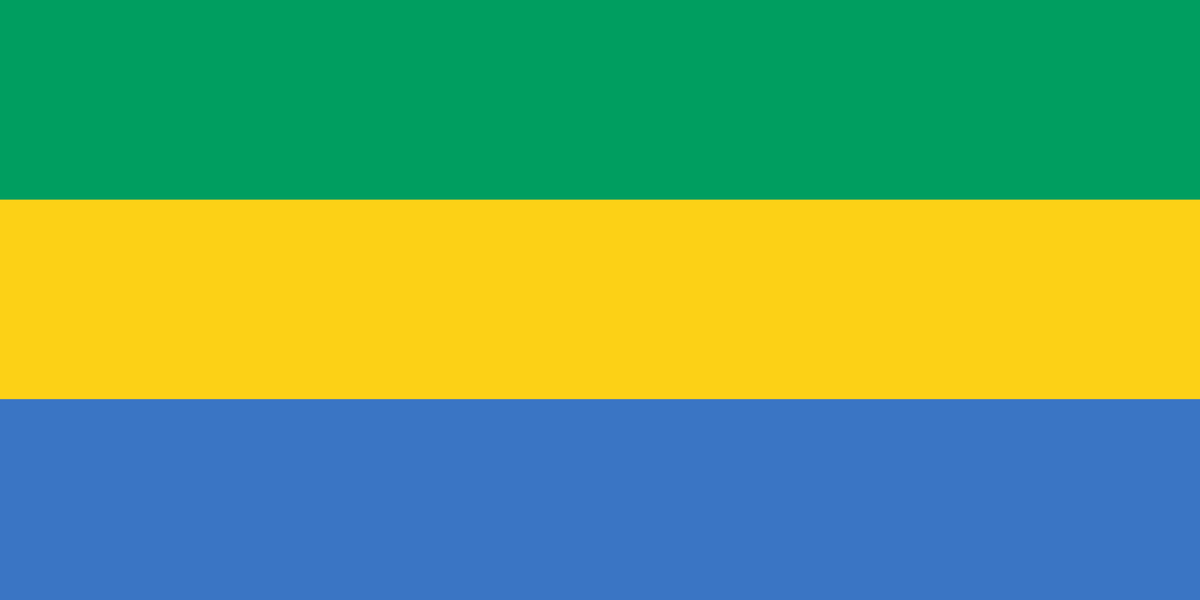
- Capital: Libreville [1]
- Population: about 2.5 million [2]
- Area: 267,667 square kilometers [1]
- Official language: French [1]
- Currency: Central African CFA franc (XAF)
- Distinguishing claim: nearly 88% of the country is covered in rainforest, and 11% of the land is protected as national parks [3]
Here's the thing about Gabon. Most countries with this much rainforest end up clearing it. Gabon looked at the same forest and did the opposite. In 2002 the president went on national TV and announced that 13 huge chunks of the country were now national parks, effective immediately. Conservation groups had been quietly mapping the land for years. Nobody outside the room saw it coming.
I had to look this up twice because it sounded too clean. A sitting African head of state, in one announcement, locking up an area roughly the size of Belgium. But that's what happened. And the country has spent the two decades since trying to make it stick.
A Country That Is Mostly Forest
Gabon sits on the Atlantic coast of Central Africa, right on the equator. It's smaller than Texas but bigger than the United Kingdom, and almost the entire interior is rainforest [3]. The numbers are wild. About 88% forest cover. Roughly 2.5 million people total, with most of them living in the capital, Libreville, or along the coast [2]. Step inland and the country empties out fast.
That low population density is part of why the forest is still there. Back home in Montana you can drive for an hour and not see another car, and that always felt like a lot of empty. Gabon has whole regions you couldn't walk through in a week. The interior is roadless, riverine, and full of things that bite. It is one of the last places on the continent where forest elephants still move in any real number.
Forest Elephants, Gorillas, and the Loango Beach Hippos
Loango National Park, on the coast, is the place that got me reading about Gabon in the first place. It's the only place on Earth where you can reliably see hippos in the ocean surf [4]. Not in a swamp. In the actual Atlantic. They wander down through the forest, cross the beach, and swim. Buffalo do it too. Elephants walk the beach. There's video of all of it and it looks photoshopped, but it isn't.
Inland, Lopé National Park is a UNESCO site that combines rainforest with patches of savanna, the only place in the country where you get that mix [5]. It also holds some of the oldest evidence of human habitation in the region, with rock art going back thousands of years. The forests across Gabon hold western lowland gorillas, central chimpanzees, mandrills (the giant ones with the painted faces), and forest elephants which are a separate species from the savanna elephants people usually picture.
Oil Money and the Pivot to Trees
Gabon has been a significant oil producer since the 1970s, and for a long time oil was basically the entire economy. The country joined OPEC, left, and rejoined. Per capita income is high by regional standards, but the wealth has not spread evenly, and the oil fields are aging.
Which, if you think about it, makes the conservation bet less idealistic and more strategic than it first appears. The forests are a hedge. Carbon credits, ecotourism, sustainable timber that gets processed inside the country instead of shipped out as raw logs. Gabon banned the export of unprocessed timber in 2010, forcing companies to build sawmills locally [6]. It was a real economic risk and it pushed thousands of jobs into the country that used to live elsewhere.
The Culture Underneath the Forest
There are more than 40 ethnic groups in Gabon, with the Fang being the largest. French is the official language because of the colonial history, but most people grow up speaking a local language at home and French at school and work. Music is huge. Pierre Akendengué, who came up in the 1970s, blended traditional Gabonese rhythms with French chanson and became one of the most influential African musicians of his generation.
Bwiti is the spiritual tradition you'll see referenced most often in writing about Gabon. It is a religious practice rooted in the Babongo and Mitsogo peoples, centered on the iboga plant, and it has been a recognized national religion. It also intersects in complicated ways with Western interest in ibogaine as an experimental treatment for addiction, which has put Gabon at the center of a global conversation it didn't ask for.
Frequently Asked Questions
What is Gabon famous for?
Gabon is famous for its rainforest, which covers nearly 88% of the country, and for its 13 national parks created in 2002. It is also known for Loango National Park, where forest elephants and hippos walk on Atlantic beaches.
What language do they speak in Gabon?
French is the official language of Gabon, used in government, schools, and business. Most Gabonese also speak one of more than 40 indigenous languages at home, with Fang, Punu, and Nzebi among the most widely spoken.
Is Gabon a rich country?
Gabon has one of the higher per capita incomes in sub-Saharan Africa, mostly due to oil and manganese exports. However, wealth distribution is uneven, and the government has been working to diversify into forestry, ecotourism, and processed timber to reduce dependence on oil.
Can tourists visit Gabon's national parks?
Yes, but tourism infrastructure is limited compared to East African safari destinations. Loango and Lopé are the most accessible parks. Visitors typically arrange trips through specialist operators because internal travel involves small planes, boats, and 4x4 transport.