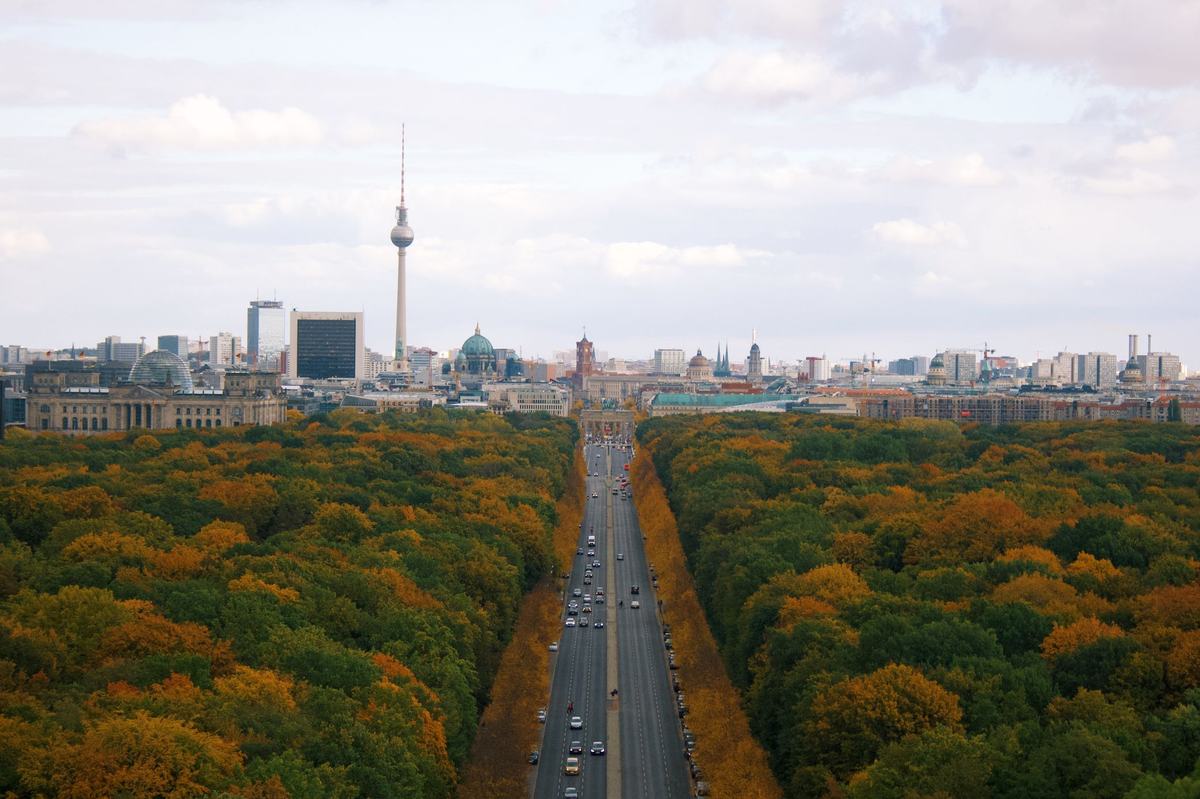
- Capital: Berlin [1]
- Population: about 84.5 million (2024) [1]
- Area: 357,592 square kilometers [1]
- Official language: German [1]
- Currency: Euro (EUR)
- Distinguishing claim: home to more than 1,500 officially recognized sausage varieties and over 3,000 types of bread [2][3]
I had to look this up twice. Germany has more than 3,000 officially recognized types of bread. Three thousand. The German Bread Institute keeps a register of them, and UNESCO added German bread culture to its Intangible Cultural Heritage list in 2014. Back home in Montana, the bakery aisle at our one grocery store had maybe six options if you counted hot dog buns. So when I first walked into a German bakery and saw a wall of loaves with names I couldn't pronounce, all baked that morning, I felt like I'd stumbled into a parallel universe where carbohydrates had a constitution.
That's the thing about Germany. The country has been rebuilt, rewritten, redrawn, and reunified more times than feels reasonable for one nation-state, and yet it still has the patience to register every single rye blend its bakers come up with.
A Country That Keeps Reinventing Itself
Modern Germany is younger than your grandparents. The country only unified as a single nation in 1871, which is wild when you consider how much weight the word "German" carries in European history. Before that, the territory was a patchwork of kingdoms, duchies, free cities, and bishoprics - hundreds of them at one point. The Holy Roman Empire, which technically included most of what is now Germany, was famously described by Voltaire as neither holy, nor Roman, nor an empire.
Then came the 20th century, which broke Germany apart and put it back together twice. Two world wars, a 40-year split into East and West, the Berlin Wall, and the reunification in 1990. The Wall fell on November 9, 1989, and within a year the two Germanys had become one again. The official Day of German Unity is October 3, a national holiday that feels less like a celebration of conquest and more like a quiet exhale.
If you visit Berlin today, you can still see the scar where the Wall ran. A double line of cobblestones traces its path through the city, past parks and government buildings and ordinary apartment blocks. It's not a monument exactly. More like a long, polite reminder.
The Autobahn and the Myth of No Speed Limit
People love to talk about the Autobahn like it's a national racetrack. The truth is more interesting. Germany's federal highway system stretches over 13,000 kilometers, and only about 70 percent of it has no general speed limit. The rest is either capped or has variable limits based on weather, traffic, and construction.
Even on the unrestricted sections, there's a recommended speed of 130 km/h (about 81 mph), and if you crash going faster, your insurance can argue you were partly at fault. So the freedom comes with German fine print, which feels exactly right for the country that gave us the word Schadenfreude.
The Autobahn started under the Weimar Republic in the 1920s, expanded heavily in the 1930s, and became the model for highway systems worldwide. The US Interstate system, which I've driven huge stretches of, was directly inspired by it. Eisenhower had seen the Autobahn during the war and wanted something like it back home.
Castles, Forests, and Fairy Tales
Germany has somewhere around 20,000 castles, palaces, and fortress ruins, depending on how you count. That works out to roughly one castle for every 18 square miles of the country. The most photographed of them is Neuschwanstein, the white-and-blue Bavarian fantasy that Disney used as inspiration for Sleeping Beauty's castle. King Ludwig II built it in the 1860s and 70s, went broke and slightly mad doing it, and died under mysterious circumstances in a lake before it was finished. The castle was opened to the public seven weeks after his death and has been paying for itself ever since.
The forests are the other half of the picture. Around a third of Germany is covered in woodland, and the Brothers Grimm collected most of their fairy tales from villages on the edges of these forests in the early 1800s. Hansel and Gretel, Snow White, Little Red Riding Hood, Rapunzel - all of them grew out of the dark, mossy stretches of central Europe. There's a Fairy Tale Route, the Märchenstraße, that runs about 600 kilometers through the towns connected to the Grimms' lives and stories. I keep telling myself I'll drive it one day.
Bread, Beer, and the Sausage Census
I mentioned the 3,000 breads. The 1,500 sausages are real too, and Germany regulates beer with a 16th-century law called the Reinheitsgebot, the purity decree, which originally allowed only water, barley, and hops in brewing. Yeast was added later, after people figured out what it was. The law dates to 1516 in Bavaria, which makes it one of the oldest food regulations still influencing production today, even though modern German beer law is more flexible than the romantic version suggests.
German beer culture is regional in a way that's hard to overstate. Cologne has Kölsch, served in tall thin glasses that get swapped out the moment you finish one. Düsseldorf, twenty miles away, has Altbier, which is darker and served differently, and there's a friendly rivalry between the two cities that occasionally turns into people refusing to drink each other's beer. Bavaria has wheat beer and the Oktoberfest, which started in 1810 as a royal wedding party and just never stopped.
The bread, though. The bread is where German food culture really shows what it values. Walk into any neighborhood Bäckerei in the morning and you'll see retirees and construction workers and parents with kids, all of them buying a specific kind of bread for a specific kind of meal. Brötchen for breakfast, Vollkornbrot for lunch, Pumpernickel for whatever you eat Pumpernickel with. And nobody talks about this, but the average German eats around 60 kilograms of bread a year, which is one of the highest rates in the world.
German Inventions That Quietly Run Your Life
A short, honest list of things invented in Germany or by Germans, off the top of my head: the printing press with movable type (Johannes Gutenberg, 1440s), the automobile (Karl Benz, 1885), aspirin (Bayer, 1899), the contact lens (Adolf Eugen Fick, 1887), the MP3 audio format (Fraunhofer Institute, 1990s), and the modern Christmas tree tradition as a household centerpiece. Also gummy bears, which Hans Riegel invented in 1922 in Bonn. Riegel's company, Haribo, takes its name from his name plus the city - Hans Riegel Bonn.
Germany still files more patents per capita than almost any country in the world, and roughly a quarter of its economy is built on manufacturing - among the highest shares in the developed world. Cars, machine tools, pharmaceuticals, chemicals. The Mittelstand, the network of mid-sized family-owned companies that quietly dominate niche global markets, is one of those economic phenomena that doesn't translate easily. A factory in a town of 8,000 people that makes the best industrial valve in the world. Hundreds of them. That's Germany.
What German Culture Feels Like Up Close
I'll say this about the cultural reputation. The stereotype of German efficiency and directness has truth in it, but it's not the whole picture. Germans I've met have a particular kind of dark humor, a deep love of nature (the word Waldeinsamkeit means the specific feeling of being peacefully alone in a forest, and yes, there's a word for that), and a habit of taking holidays seriously. The country has 24 to 30 paid vacation days as a legal floor depending on the state, plus public holidays, and Sundays are still mostly shop-closed quiet across the country.
Germans also separate their recycling into categories that would impress a chemistry teacher. There are typically three or four bins per household, sometimes more depending on the region, and putting the wrong thing in the wrong bin is the kind of social misstep that gets remembered.
Which, if you think about it, is what makes Germany work. Detailed rules followed seriously, but inside those rules, an enormous amount of cultural variety, regional pride, and small daily pleasures. Bavarian and Berliner are almost different countries inside the same passport. The bread aisle proves it.
Frequently Asked Questions
What is Germany famous for?
Germany is famous for its cars (BMW, Mercedes-Benz, Audi, Porsche, Volkswagen), its beer and bread culture, the Autobahn, Oktoberfest, fairy-tale castles like Neuschwanstein, and its role as Europe's largest economy. It is also the birthplace of the printing press, the automobile, and aspirin.
Is Germany part of the European Union?
Yes. Germany is a founding member of what is now the European Union, going back to the 1957 Treaty of Rome. It uses the euro as its currency, sits at the political center of the bloc, and is the EU's largest member state by population and economy.
What language do Germans speak?
The official language is German, spoken by virtually the entire population. Several regional dialects exist, including Bavarian, Swabian, and Low German, which can differ significantly from standard High German. English is widely taught in schools and commonly spoken in cities, especially among younger people.
When did Germany reunify?
East and West Germany officially reunified on October 3, 1990, less than a year after the Berlin Wall fell on November 9, 1989. October 3 is now the national holiday called the Day of German Unity. The two countries had been politically separated since 1949.
Why does Germany have so many castles?
For most of its history, Germany was not one country but hundreds of small kingdoms, principalities, and free cities, each with its own rulers, defenses, and palaces. That fragmentation left behind around 20,000 castles, palaces, and fortress ruins, one of the densest concentrations in the world.