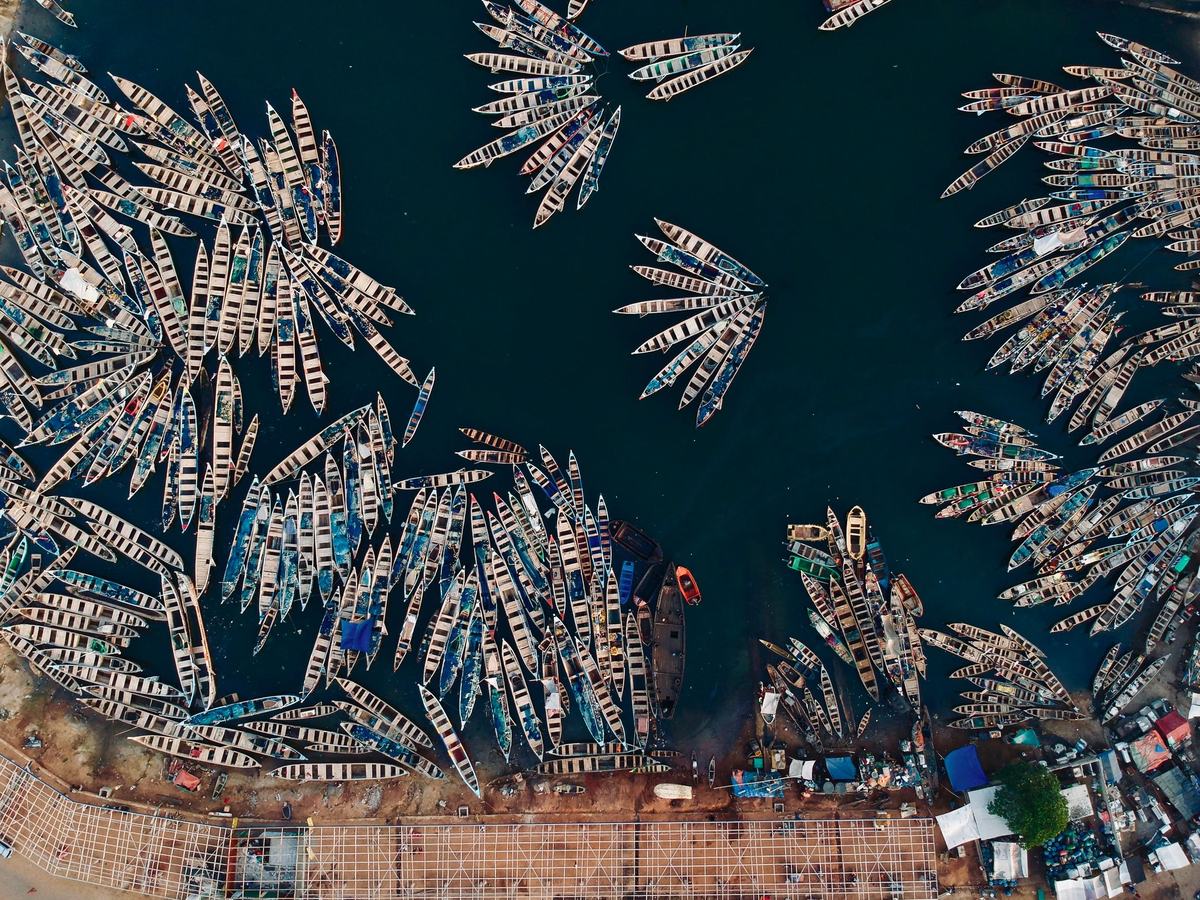
- Capital: Accra [1]
- Population: approximately 34 million (2024 estimate) [2]
- Area: 238,533 square kilometers (92,098 square miles) [1]
- Official language: English, with Akan, Ewe, Ga, Dagbani and others widely spoken [1]
- Currency: Ghanaian cedi (GHS) [1]
- Claim to fame: the first sub-Saharan African country to gain independence from colonial rule, in 1957 [3]
Here's something that'll ruin the next geography quiz you take: the country we call Ghana today has nothing to do, geographically, with the ancient Ghana Empire it's named after. The old empire sat hundreds of miles to the northwest, in what's now Mali and Mauritania. When this place won its independence in 1957 and needed a name that wasn't "Gold Coast", the founders reached back across centuries and borrowed one. It's the kind of move that tells you everything about how Ghana sees itself. Rooted in something older than colonialism, and confident enough to claim it.
The Country That Started a Continent's Independence
On March 6, 1957, Ghana became the first sub-Saharan African country to gain independence from European rule [3]. Kwame Nkrumah stood at the Old Polo Grounds in Accra at midnight and said the country was "free forever". Within a decade, more than thirty African countries followed.
I had to look this up twice, because I'd been taught a vague version where independence movements just sort of happened across Africa in the 60s. But Ghana was first. Nkrumah's vision of pan-Africanism, of a continent that could govern itself, set the tone for everything that came after. The country still leans into that legacy. Independence Day on March 6 is the biggest holiday on the calendar, bigger than Christmas in some neighborhoods.
What's wild is how peaceful it was. No long war, no scorched colonial retreat. Just decades of organizing, strikes, boycotts, and political pressure, and then a flag change at midnight. The Union Jack came down. The red, gold, and green went up, with a black star in the middle for African freedom. That star is everywhere now. On the flag, on the soccer team's jersey, on a square in Accra.
Lake Volta Is Bigger Than You Think
Back home in Montana we have Fort Peck Lake, which feels enormous when you're standing on the shore. Lake Volta is roughly three times the surface area of Fort Peck, and it's man-made. Created by the Akosombo Dam in 1965, it stretches about 400 kilometers north from the dam, covering around 8,500 square kilometers, which makes it one of the largest artificial lakes on Earth by surface area [4].
The dam was Nkrumah's big bet. Hydroelectric power to industrialize the country, aluminum smelters, the works. The lake that resulted reshaped Ghana's interior. Villages were relocated. Fish species changed. A whole inland fishing economy grew up around it. Today the lake provides a huge share of Ghana's electricity, though droughts and falling water levels have made that supply less reliable than anyone planned for.
If you fly over central Ghana on a clear day, the lake looks like someone spilled a sky. Long, branching, with islands scattered through it that used to be hilltops.
Kente, Adinkra, and a Cloth That Talks
Kente cloth is the textile most people picture when they think of Ghana, even if they don't know the name. Bright strips of silk and cotton woven on narrow looms, then sewn together into something you'd recognize from graduation stoles and dashikis worldwide. It comes from the Ashanti and Ewe peoples, and every pattern has a name and a meaning [5]. One design might mean wisdom. Another means unity, or sacrifice, or the strength to bear what life hands you.
Then there's adinkra, the symbol system the Akan developed to print on cloth and carve into wood. Each symbol is a tiny philosophy. The "sankofa" bird, looking backward with an egg in its beak, means roughly "go back and get it", as in, you can always return to the past to retrieve what you need for the future. That one has gone global. You'll see it tattooed on people in Brooklyn who've never been to Kumasi.
Which, if you think about it, is a quiet form of soft power. Ghana exported a worldview, and people didn't even realize where it came from.
The Coast of Castles
Ghana's coastline is dotted with old European forts and castles, more of them than anywhere else in West Africa. Roughly forty were built between the 1480s and the 1780s by the Portuguese, Dutch, British, Danish, Swedish, and a few others, competing for control of the gold trade and then the slave trade [6]. Cape Coast Castle and Elmina Castle are the two best known. Both are now UNESCO World Heritage Sites.
You can tour them. People do, in growing numbers. The dungeons are still there, the "Door of No Return" still hangs open onto the Atlantic. Standing in those rooms is not a tourist experience in any normal sense. It's heavier than that. Ghana made a national decision years ago to keep these sites preserved and accessible rather than letting them quietly fall apart, because forgetting was a worse option than remembering.
The 2019 "Year of Return" marked 400 years since the first enslaved Africans arrived in Virginia, and Ghana invited descendants of the diaspora to come home. Hundreds of thousands did. Some stayed. There's a small but real movement of Black Americans who've relocated to Accra and are now Ghanaian citizens.
The Food, the Music, the "Akwaaba"
Walk off a plane in Accra and the first word you'll see is "akwaaba". Welcome. It's a Twi word that's become a kind of national greeting across language groups, painted on airport walls, hotel lobbies, restaurant doors.
The food rewards you immediately. Jollof rice is the dish Ghanaians will fight Nigerians about, a tomato and pepper rice cooked until the bottom of the pot goes slightly crusty. Banku, a fermented corn and cassava dough, gets paired with okra stew or grilled tilapia. Waakye is rice and beans cooked with sorghum leaves that turn it a deep reddish brown. Kelewele is fried plantain cubes with ginger and chili, sold on street corners after dark.
The music side of Ghana shaped global pop more than people realize. Highlife was born here in the early 20th century, a fusion of Akan rhythms and brass band music that spread through West Africa and influenced everything from Nigerian Afrobeat to modern Afropop. Today, artists like Sarkodie, Stonebwoy, and Burna Boy collaborators are putting Accra on the global charts. And nobody talks about this, but the late Kofi Annan, who was United Nations Secretary-General from 1997 to 2006, grew up in Kumasi listening to a lot of that music. He stayed proudly Ghanaian his whole career [7].
A Word About Gold
The Portuguese called it the Gold Coast for a reason. Ghana has been a major gold producer for over a thousand years. The Ashanti Empire built its wealth on it. The British fought multiple wars to control it. Today Ghana is the largest gold producer in Africa, having overtaken South Africa in 2019, and ranks among the top producers worldwide [8]. The gold is still there, still pulled out of the ground by industrial mines and by small-scale "galamsey" miners working with shovels and mercury in conditions that are, by all honest accounts, brutal.
That tension, between the country's mineral wealth and the people who live above it, is one of the defining questions of modern Ghana. Cocoa is the other half of the export story. Ghana grows roughly 15 to 20 percent of the world's cocoa beans depending on the year, and your chocolate bar very likely contains some of it.
Frequently Asked Questions
What is Ghana known for?
Ghana is known for being the first sub-Saharan African country to gain independence from colonial rule, in 1957. It is also famous for gold and cocoa production, kente cloth, the coastal forts and castles of the transatlantic slave trade, and as the home of highlife music and former UN Secretary-General Kofi Annan.
What language do they speak in Ghana?
English is the official language of Ghana and is used in government, business, and schools. However, most Ghanaians also speak at least one of the country's many indigenous languages. The most widely spoken are Akan languages (Twi and Fante), followed by Ewe, Ga, Dagbani, and Hausa.
Is Ghana a safe country to visit?
Ghana is generally considered one of the safer countries in West Africa for travelers, with a stable democracy and a strong tourism sector. Petty crime occurs in cities like Accra, and travelers should take normal precautions. Accra, Cape Coast, and Kumasi are the most visited destinations.
What is the capital of Ghana?
The capital of Ghana is Accra, located on the Gulf of Guinea coast. With over 2 million people in the city proper and around 5 million in the greater metropolitan area, it is Ghana's largest city and the political, economic, and cultural center of the country.
Why is Ghana called Ghana?
When the country gained independence from Britain in 1957, leaders chose the name Ghana to honor the medieval Ghana Empire, a powerful West African state that flourished from roughly the 6th to the 13th centuries. The empire was located in modern Mali and Mauritania, not in present-day Ghana, but the name symbolized African heritage and self-determination.
Sources
- CIA World Factbook: Ghana
- World Bank: Ghana Country Overview
- Encyclopedia Britannica: Ghana - Independence
- Encyclopedia Britannica: Lake Volta
- Smithsonian National Museum of African Art: Kente Cloth
- UNESCO World Heritage: Forts and Castles, Volta, Greater Accra, Central and Western Regions
- United Nations: Biography of Kofi Annan
- U.S. Geological Survey: Gold Mineral Commodity Summary