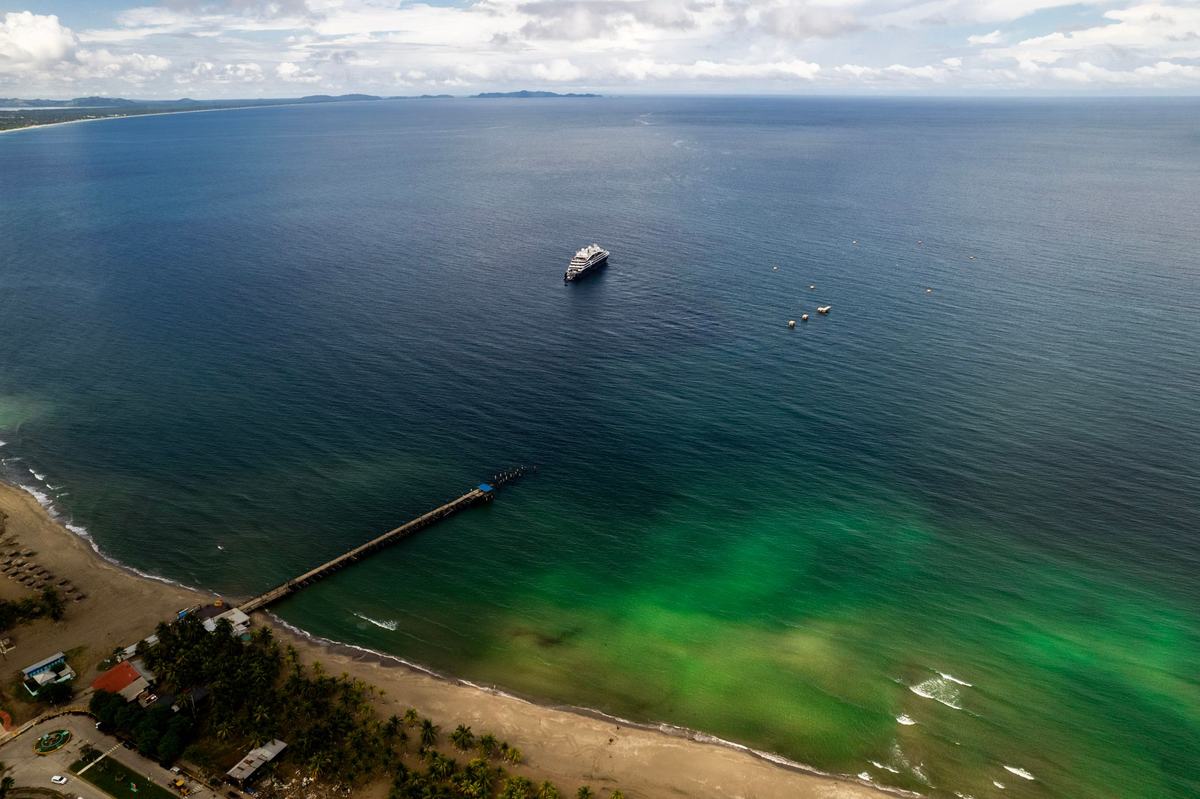
- Capital: Tegucigalpa [1]
- Population: about 10.4 million [2]
- Area: 112,492 square kilometers (a little larger than Tennessee) [1]
- Official language: Spanish [1]
- Currency: Honduran lempira (HNL), named for a 16th-century Indigenous chief who fought the Spanish [3]
- Distinguishing claim: home to Copán, one of the most artistically refined cities of the ancient Maya world [4]
Most people couldn't pick Honduras out of a Central American lineup. They've heard the name on the news, usually attached to something difficult, and that's about it. Turns out the country was named by Christopher Columbus on his fourth and final voyage, when he sailed along the northern coast in 1502 and noted the depth of the water just offshore. "Gracias a Dios que hemos salido de estas honduras", he is said to have muttered when he finally cleared the rough water. Thanks to God we've come out of these depths. Honduras means depths. A whole nation, named for the sea floor.
Copán and a Thousand Years of Maya History
Long before Spanish ships showed up, Honduras was Maya country. The city of Copán, in the western part of the country near the Guatemalan border, was a major political and cultural capital from about the 5th to the 9th century. What sets Copán apart from other Maya sites is the sheer artistry of its stone carving. The stelae - tall standing stones carved with portraits of rulers - are some of the most three-dimensional sculpture the ancient Americas ever produced [4].
There's a staircase at Copán called the Hieroglyphic Stairway. It has more than 2,200 individual glyphs carved into 62 stone steps, making it the longest known Maya text in existence. Scholars are still working out parts of what it says. Imagine the longest book ever written by your ancestors, and now imagine it's a staircase. Copán became a UNESCO World Heritage Site in 1980 [4].
The Lempira: A Currency Named for a Resistance Leader
Honduras is one of the few countries that named its money after the man who fought hardest against its colonization. Lempira was a leader of the Lenca people in the 1530s who organized an uprising against Spanish conquistadors in the western highlands. Spanish accounts say he was killed during a peace negotiation that turned into an ambush, which tells you something about how the negotiation went. He's on the one-lempira coin, and his name is on every price tag in the country [3].
The exchange rate hovers around 25 lempiras to one US dollar, which means a casual coffee in Tegucigalpa costs you somewhere between 30 and 60 lempiras. Locals price things in lempiras the same way Americans price things in dollars - reflexively, by feel. Tourists do the math in their heads for the first few days, then stop.
Two Coasts, Two Worlds
Honduras touches the Caribbean to the north and the Pacific (via the Gulf of Fonseca) to the south. The Caribbean coast is where most of the famous geography lives. The Bay Islands - Roatán, Utila, Guanaja - sit off the northern coast and form part of the Mesoamerican Barrier Reef, the second-largest barrier reef system in the world after Australia's [5]. Utila is one of the cheapest places on Earth to get scuba certified. Roatán has been a cruise ship destination for years, but you can still find empty beaches if you walk far enough.
The interior is mountainous and surprisingly cool. Tegucigalpa, the capital, sits at about 1,000 meters of elevation. The mountain forests in the cloud-cover zones around La Tigra National Park are home to quetzals, jaguars, and tree species that exist almost nowhere else. Honduras has more biodiversity per square kilometer than most countries its size, which gets lost in the headlines.
The Banana Republic, Literally
The phrase "banana republic" was coined by the American writer O. Henry in 1904, in a book of stories he wrote while hiding out in Honduras to dodge an embezzlement charge back in Texas. He called his fictional country Anchuria, but Honduras was clearly the model. American fruit companies, especially United Fruit and Standard Fruit, owned huge tracts of the north coast and effectively ran Honduran politics for the first half of the 20th century. Bananas were the export. The companies were the government [6].
That history left a mark. Modern Honduras is still one of the world's largest banana exporters, but the country has tried, with mixed success, to diversify into coffee, shrimp, palm oil, and textiles. Coffee is now the largest single export, much of it grown by smallholders in the western highlands [6]. The land that drew the fruit companies is still feeding the world.
A Soccer War and a Long Memory
In 1969, Honduras and El Salvador fought a brief war over a series of tensions that boiled over during a World Cup qualifying match. The fighting only lasted about 100 hours, but several thousand people died and the two countries didn't sign a formal peace treaty until 1980. It's remembered as the Football War or Soccer War, which makes it sound trivial. It wasn't. Underneath the soccer were land disputes, migration flows, and old colonial borders that nobody had ever properly settled.
Soccer (called fútbol, naturally) is still close to a national religion. The men's national team has qualified for the World Cup three times. When the team plays, the streets empty out the way American streets empty during the Super Bowl. Maybe more so.
Frequently Asked Questions
What is Honduras famous for?
Honduras is famous for the ancient Maya city of Copán, the Bay Islands along the Mesoamerican Barrier Reef, and being one of the world's largest exporters of coffee and bananas. Christopher Columbus named the country in 1502 for the deep coastal waters he encountered.
What language do they speak in Honduras?
The official language is Spanish, spoken by nearly the entire population. Several Indigenous languages are also spoken in smaller communities, including Garifuna along the Caribbean coast and Lenca and Miskito in rural areas. English is common on the Bay Islands.
Is Honduras safe to visit?
Travel advisories for Honduras have been cautionary for years, mostly because of crime in major urban areas like Tegucigalpa and San Pedro Sula. Tourist zones such as Roatán and Copán Ruinas are generally considered much safer. Travelers should always check their government's current advisory before visiting.
What is the capital of Honduras?
The capital of Honduras is Tegucigalpa, which sits at about 1,000 meters of elevation in the country's central highlands. The name comes from the Nahuatl language and is often translated as "silver hill", referring to colonial-era silver mining in the surrounding mountains.
What currency is used in Honduras?
Honduras uses the lempira, named for a 16th-century Indigenous resistance leader who fought against Spanish colonization. The exchange rate typically sits around 25 lempiras to one US dollar. US dollars are also widely accepted in tourist areas, particularly on the Bay Islands.