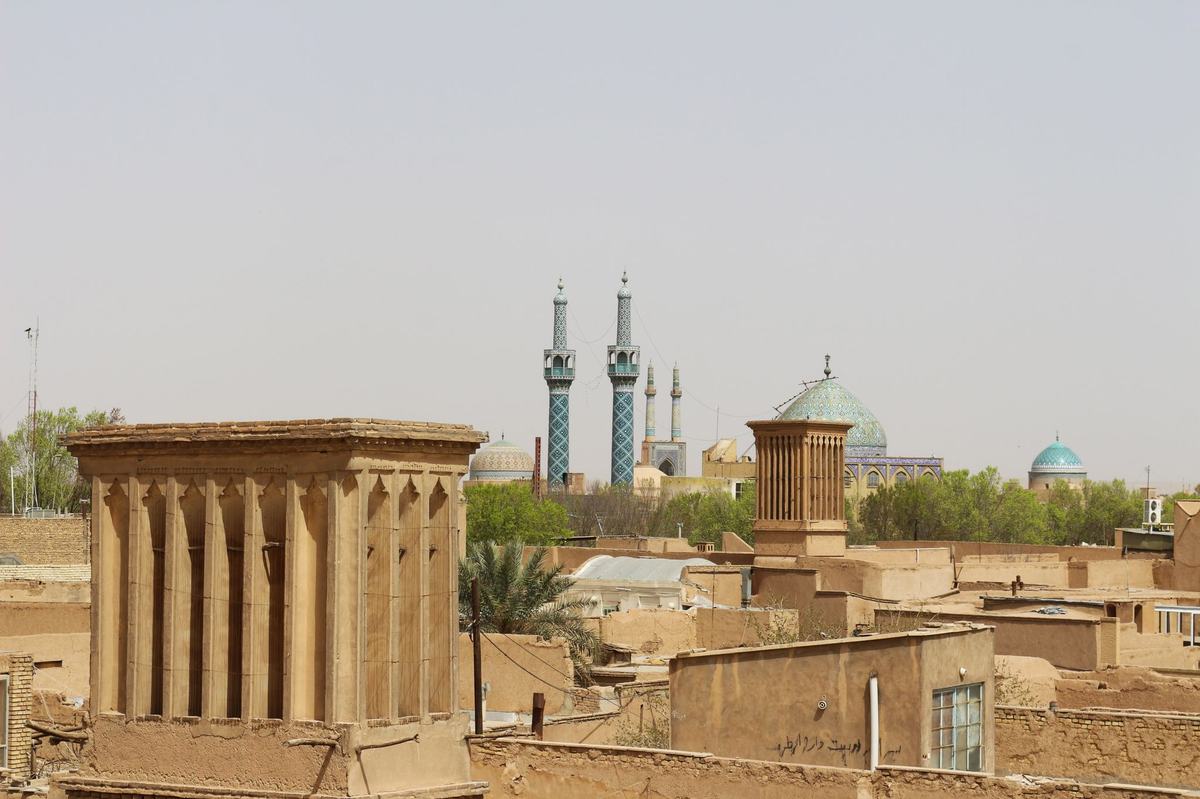
- Capital: Tehran [1]
- Population: roughly 89 million, making it the 17th most populous country in the world [2]
- Area: about 1.65 million square kilometers, the 17th largest country on Earth [1]
- Official language: Persian (Farsi), an Indo-European language with roots going back nearly 3,000 years [3]
- Currency: Iranian rial (IRR)
- Distinguishing claim: home to one of the world's oldest continuous civilizations, with urban settlements dating back more than 7,000 years [4]
I grew up thinking Iran was a country defined by its last fifty years of news headlines. Then I read a translation of Hafez one winter and realized I was looking at a civilization that's been writing poetry longer than English has existed as a language. Persia, as the rest of the world used to call it, has been continuously inhabited and continuously literate for so long that you start to lose the thread of how old "old" actually is.
A Civilization That Predates Most Empires
The land we now call Iran was home to the Elamite civilization more than 5,000 years ago, and it's been a center of political and cultural power almost without interruption ever since [4]. The Achaemenid Empire, founded by Cyrus the Great around 550 BCE, was the largest empire the world had seen up to that point. At its peak, it stretched from the Balkans to the Indus Valley and ruled roughly 40 percent of the world's population.
Cyrus is the guy credited with creating what some historians call the first declaration of human rights. The Cyrus Cylinder, a clay artifact from 539 BCE now housed in the British Museum, contains a proclamation about religious tolerance and the freeing of slaves. A copy sits in the United Nations headquarters in New York. Turns out the idea that people deserve basic rights is older than most of the institutions that claim to have invented it.
The country has been invaded by Greeks, Arabs, Mongols, and Turks over the centuries, and yet Persian culture absorbed every one of them and kept going. The language, the cuisine, the architectural traditions all survived. That's not a small thing. Empires usually disappear when they get conquered.
A Country Built Around Poetry
Here's something that'll ruin the next geography quiz you take: in Iran, the national heroes aren't generals or kings. They're poets [5]. Hafez, Rumi, Saadi, Ferdowsi - these names get treated the way Americans treat Lincoln and Jefferson. The tombs of Hafez and Saadi in Shiraz are pilgrimage sites, packed with families on weekends, with people reading verses aloud over picnics.
Ferdowsi wrote the Shahnameh, an epic poem of about 50,000 verses that took him 33 years to complete. It's longer than the Iliad and Odyssey combined, and it's credited with single-handedly preserving the Persian language during the centuries of Arab influence after the 7th century. Iranians can still read it today without translation, which is roughly like an English speaker picking up Beowulf and following along just fine.
Rumi, the 13th century mystic who's become wildly popular in American bookstores, was born in what is now Afghanistan and wrote in Persian. Translated Rumi outsells almost every poet in the United States, and most readers have no idea his work belongs to a tradition that's still alive and central in Iran today.
Geography That Doesn't Quit
Iran is bigger than France, Germany, and the UK combined, and it contains almost every climate you can name [1]. The country has high mountains, vast deserts, dense forests along the Caspian coast, and tropical zones near the Persian Gulf. You can ski at Dizin, north of Tehran, in the morning and drive a few hours south to a desert by afternoon.
The Alborz mountains run east-west along the northern edge of the country, and Mount Damavand, at over 5,600 meters, is the highest peak in the Middle East. It's a dormant volcano that shows up in Persian mythology as the prison of a tyrannical king. Iranian kids learn the story before they ever see the mountain.
Down south, the Lut Desert holds the record for the hottest surface temperature ever measured on Earth: 80.8 degrees Celsius, or about 178 Fahrenheit, recorded by satellite in 2018 [6]. There are stretches of the Lut so hot and lifeless that even bacteria struggle. Back home in Montana, we complain when it hits 95. The Lut would melt the soles off your boots.
Saffron, Pistachios, and the World's Most Expensive Spice
Iran produces about 90 percent of the world's saffron [7]. The spice comes from the dried stigmas of a particular crocus flower, and it takes about 150,000 flowers, hand-picked at dawn, to produce a single kilogram. That's why the stuff costs more by weight than gold in some markets. The province of Khorasan, in the country's northeast, grows almost all of it.
The country is also one of the world's top producers of pistachios, dates, and pomegranates. The pomegranate is native to Iran, and it shows up in everything - jeweled rice dishes, walnut stews, religious symbolism. The fruit has been cultivated there for at least 4,000 years.
Iranian cuisine doesn't get the international attention it deserves. Kebabs, sure, everyone knows about kebabs. But the slow-cooked stews, the rice with crispy bottoms called tahdig, the herb-and-bean dishes that take a full day to prepare - that's where the real cooking lives. A proper Persian feast can take a week of preparation and feed forty people without breaking a sweat.
Underground Aqueducts Older Than Rome
Iran developed an irrigation technology called the qanat about 3,000 years ago, and it's still in use today [8]. A qanat is essentially a gently sloping underground tunnel that carries water from a mountain aquifer to a village or farm, sometimes for dozens of kilometers. The technology spread from Persia across the Islamic world and eventually to Spain, North Africa, and even China.
What makes qanats remarkable is that they work without pumps, without electricity, and without losing water to evaporation in a country that's mostly desert. UNESCO recognizes the Persian Qanat as a World Heritage Site, and some of the active qanats are over a thousand years old. The engineers who designed them figured out hydraulic gradients before anyone in Europe was thinking about plumbing.
A Tea Country in a Coffee Region
The Middle East gets stereotyped as a coffee region. In Iran, the dominant drink is tea, brewed strong and served in small glasses with sugar cubes you hold between your teeth while sipping [9]. Tea houses have been social institutions for centuries, the place where business gets done, friendships get cemented, and arguments get worked out over endless refills.
Iran also has its own version of the coffeehouse tradition, called qahveh khaneh, but most of them now serve tea. The cultural ritual matters more than the specific beverage. Walking into someone's home, you'll be offered tea before you've taken your coat off. Refusing the first cup is fine, the second cup expected, the third optional. Hospitality is structured.
Frequently Asked Questions
What language do people speak in Iran?
The official language is Persian, called Farsi by its speakers, used by about 80 million people. Several other languages, including Azerbaijani, Kurdish, and Baluchi, are spoken by minority communities. Persian uses a modified Arabic script but is an Indo-European language related to English and Hindi.
How old is Iranian civilization?
Iran is home to one of the world's oldest continuous civilizations, with urban settlements dating back more than 7,000 years. The Elamite civilization developed around 3200 BCE, and the country has been a major center of culture and politics ever since, surviving invasions by Greeks, Arabs, and Mongols.
Is Iran the same as Persia?
Yes. Persia was the name used internationally until 1935, when the government officially requested the world use Iran, which is what Iranians have always called their country. The change reflected the country's broader ethnic identity, not just the Persian heritage of its dominant culture.
What is Iran's most famous export?
Iran produces about 90 percent of the world's saffron, the most expensive spice on Earth by weight. The country is also a top global producer of pistachios, dates, and pomegranates, and historically exported handwoven Persian carpets that remain a major cultural symbol.
What is the capital of Iran?
Tehran is the capital of Iran and the largest city in the country, with about 9 million people in the city proper and roughly 15 million in the greater metropolitan area. It sits at the foot of the Alborz mountains in northern Iran and serves as the political, economic, and cultural center of the country.
Sources
- Iran - The World Factbook (CIA)
- Iran Population - World Bank Data
- Persian Language - Encyclopaedia Iranica
- History of Iran - Encyclopaedia Britannica
- Persian Literature - UNESCO
- Hottest Place on Earth - NASA Earth Observatory
- Iran Saffron Production - FAO
- The Persian Qanat - UNESCO World Heritage
- Iranian Tea Culture - Smithsonian Magazine