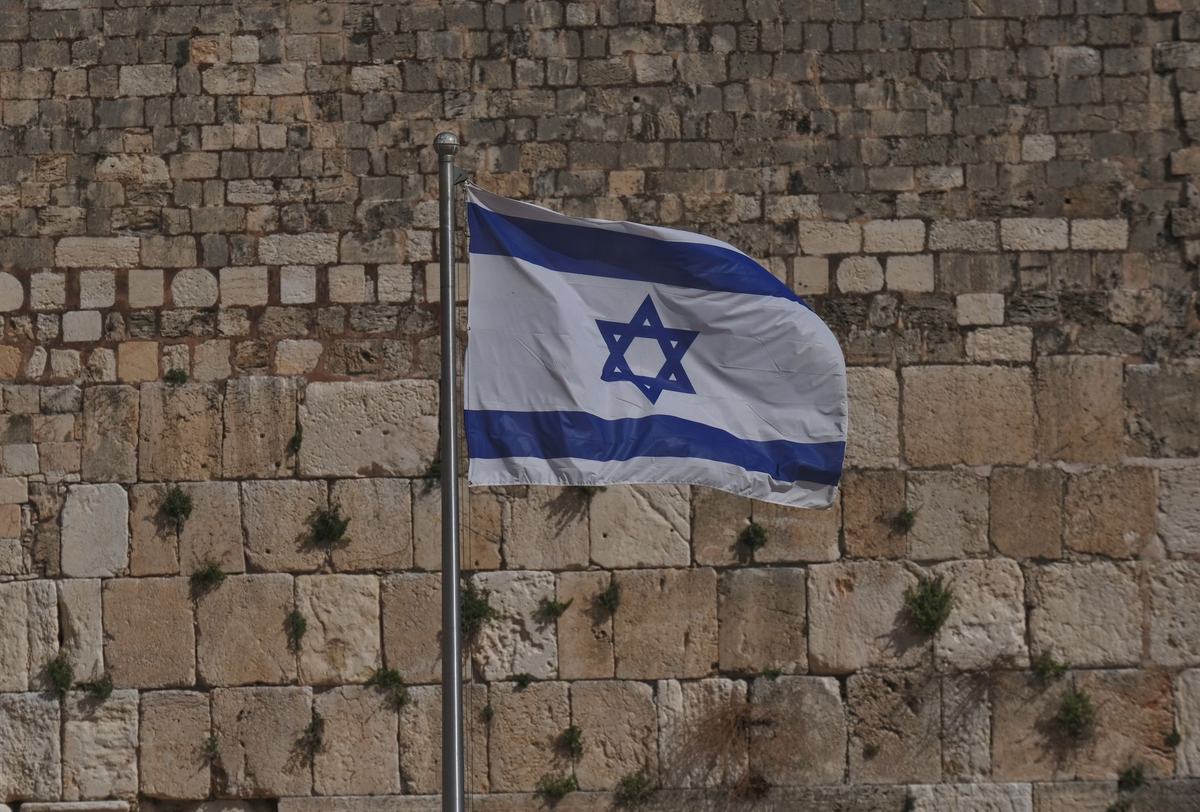
- Capital: Jerusalem (Tel Aviv is recognized as the capital by most countries with embassies there) [1]
- Population: about 9.9 million [2]
- Area: 22,072 square kilometers (8,522 sq mi) - smaller than New Jersey [1]
- Official language: Hebrew (Arabic has special status) [1]
- Currency: New Israeli Shekel (ILS)
- Distinguishing claim: home to the lowest point on Earth's land surface, the Dead Sea shore at about 430 meters below sea level [3]
I grew up thinking small countries were quiet. Then I started reading about Israel and realized you can fit the entire country inside Lake Michigan and still have room left over, and yet almost every news cycle in my lifetime has mentioned it at least once. That ratio of land to attention is one of the strangest things about the place. You can drive from the Lebanese border in the north to Eilat on the Red Sea in about six hours, and in that drive you pass through pine forests, a freshwater lake the Bible calls a sea, the lowest point on Earth, a desert that takes up more than half the country, and finally a coral reef. Back home in Montana, six hours of driving gets you across maybe a third of the state and through one ecosystem.
A Country Smaller Than New Jersey
Israel covers about 22,000 square kilometers. For an American reader, that's smaller than New Jersey and a little bigger than Vermont. The whole country is roughly 470 kilometers long and at its narrowest point only 15 kilometers wide [1]. You can literally stand on a hill near the coast and see, on a clear day, both the Mediterranean Sea and the West Bank.
What makes the size feel even smaller is the density of stuff packed into it. Israel has four distinct climate zones - Mediterranean along the coast, semi-arid in the central hills, true desert in the Negev (which is about 55% of the country's land area), and a small alpine zone around Mount Hermon in the north, where there's a ski resort that operates for maybe three months a year [3]. Turns out you can ski in the morning and float in the Dead Sea by afternoon, which is the kind of sentence that sounds invented until you check the map.
The Dead Sea Keeps Getting Lower
The Dead Sea isn't a sea. It's a hypersaline lake sitting in the Jordan Rift Valley, and its shoreline is the lowest point on any landmass on Earth - around 430 meters below sea level, and dropping by roughly a meter per year because the Jordan River that feeds it has been diverted heavily for agriculture upstream [3]. The salinity is about 34%, nearly ten times saltier than the ocean, which is why nothing lives in it and why people float on the surface like cork.
I had to look this up twice: the sinkholes around the Dead Sea are now numbered in the thousands. As the water recedes, freshwater pockets dissolve the salt layers underneath the dried-out shore, and the ground simply collapses. Whole resorts and roads have been swallowed. It's one of the most quietly catastrophic environmental stories nobody talks about outside the region.
Hebrew Was Revived From the Dead
Here's something that will ruin the next pub-quiz round you sit in on: Hebrew is the only language in human history that was essentially dead as a daily spoken language for nearly two thousand years and was then deliberately brought back into everyday use. From around 200 CE to the late 19th century, Hebrew survived almost entirely as a liturgical and scholarly language. Jewish communities prayed and studied in Hebrew but spoke Yiddish, Ladino, Arabic, or whatever the local language was [4].
Then, starting in the 1880s, a man named Eliezer Ben-Yehuda decided his family would speak only Hebrew at home. His son was the first native Hebrew speaker in modern history. Ben-Yehuda spent decades inventing words for things that hadn't existed when the language was last spoken - "newspaper", "ice cream", "bicycle". Today around nine million people speak modern Hebrew. No other language has ever pulled off the same trick.
Tel Aviv, Jerusalem, and Two Very Different Countries
Tel Aviv and Jerusalem are about 70 kilometers apart, less than the distance from Manhattan to New Haven, and they feel like they're on different planets. Tel Aviv was founded in 1909 on sand dunes north of the ancient port of Jaffa. It's beach culture, startups, late-night cafes, Bauhaus architecture (the city has the largest concentration of Bauhaus buildings in the world, around 4,000 of them, which got it UNESCO World Heritage status in 2003) [5].
Jerusalem is the opposite. It's old in the way few places are old - continuous human habitation for at least 5,000 years, sacred to Judaism, Christianity, and Islam, walled, layered, and politically contested down to the meter. The Old City covers less than one square kilometer and contains the Western Wall, the Church of the Holy Sepulchre, and the Dome of the Rock. Most Israelis I've read about will tell you the two cities are not really comparable. They're two answers to the question of what this country is supposed to be.
A Startup Density Most Countries Can't Match
Israel is sometimes called "Startup Nation", and the numbers behind the nickname are real. The country has more startups per capita than anywhere except Silicon Valley itself, and it leads the world in venture capital investment per capita [6]. Companies like Waze, Wix, Mobileye, and Check Point all came out of Israel. A big chunk of that is downstream of military service - the Israel Defense Forces' technology units, especially Unit 8200, function as a kind of accidental tech bootcamp, and their alumni found companies at a startling rate after discharge.
The flip side: roughly 9% of Israelis work in tech, but that 9% accounts for around 18% of GDP and over half of all exports [6]. Which, if you think about it, is a wildly lopsided economy. It also means Tel Aviv real estate prices are some of the highest in the world relative to local wages, and a lot of younger Israelis I've read interviews with are quietly leaving the country for cheaper places to live.
Food, Coffee, and a Lot of Hummus
Israeli food is essentially a synthesis of Jewish diaspora cuisines - mostly Middle Eastern and North African, with strong Eastern European echoes - layered onto the local Levantine table. Hummus, falafel, shakshuka, sabich, and bourekas are everyday staples. Tel Aviv has been declared the vegan capital of the world more than once because something like 5% of Israelis identify as vegan, the highest share of any country [7].
Coffee culture is taken seriously. Cafe afuch (literally "upside-down coffee", basically a cappuccino) is the default order, and most cafes do not serve drip coffee at all. The food market in the Carmel area of Tel Aviv and the Mahane Yehuda market in Jerusalem are open six days a week and are about as close as you can get to walking through a country's whole pantry in one afternoon.
Frequently Asked Questions
What is the capital of Israel?
Israel's government designates Jerusalem as its capital, and the Knesset (parliament), Supreme Court, and most ministries sit there. Most countries place their embassies in Tel Aviv because of the unresolved status of East Jerusalem under international law. The United States moved its embassy to Jerusalem in 2018.
How big is Israel compared to US states?
Israel is about 22,000 square kilometers (8,500 square miles), which makes it smaller than New Jersey and slightly larger than Vermont. The entire country fits inside Lake Michigan with room left over, and you can drive its full length in roughly six hours.
What language do they speak in Israel?
Hebrew is the official language and the daily language of most Israelis. Arabic has special status and is widely spoken by Israel's Arab citizens. English is taught from elementary school and is the de facto second language for business, tech, and tourism.
Why is the Dead Sea so salty?
The Dead Sea has no outlet, so water flows in from the Jordan River and evaporates in the desert heat, leaving minerals behind. Over thousands of years, that has produced a salinity of about 34%, nearly ten times the ocean. The lake is also dropping in level by roughly a meter per year.
Is Israel really called "Startup Nation"?
Yes, the nickname comes from a 2009 book by Dan Senor and Saul Singer. Israel has the highest density of startups per capita outside Silicon Valley and leads the world in venture capital investment per capita. Tech now accounts for over half of the country's exports.
Sources
- Israel - The World Factbook (CIA)
- Israel Central Bureau of Statistics - Population
- Dead Sea - Encyclopaedia Britannica
- The Revival of Hebrew - Academy of the Hebrew Language
- White City of Tel-Aviv - UNESCO World Heritage Centre
- Israel Innovation Authority - Annual Report
- The Times of Israel - Israel and the Vegan Movement