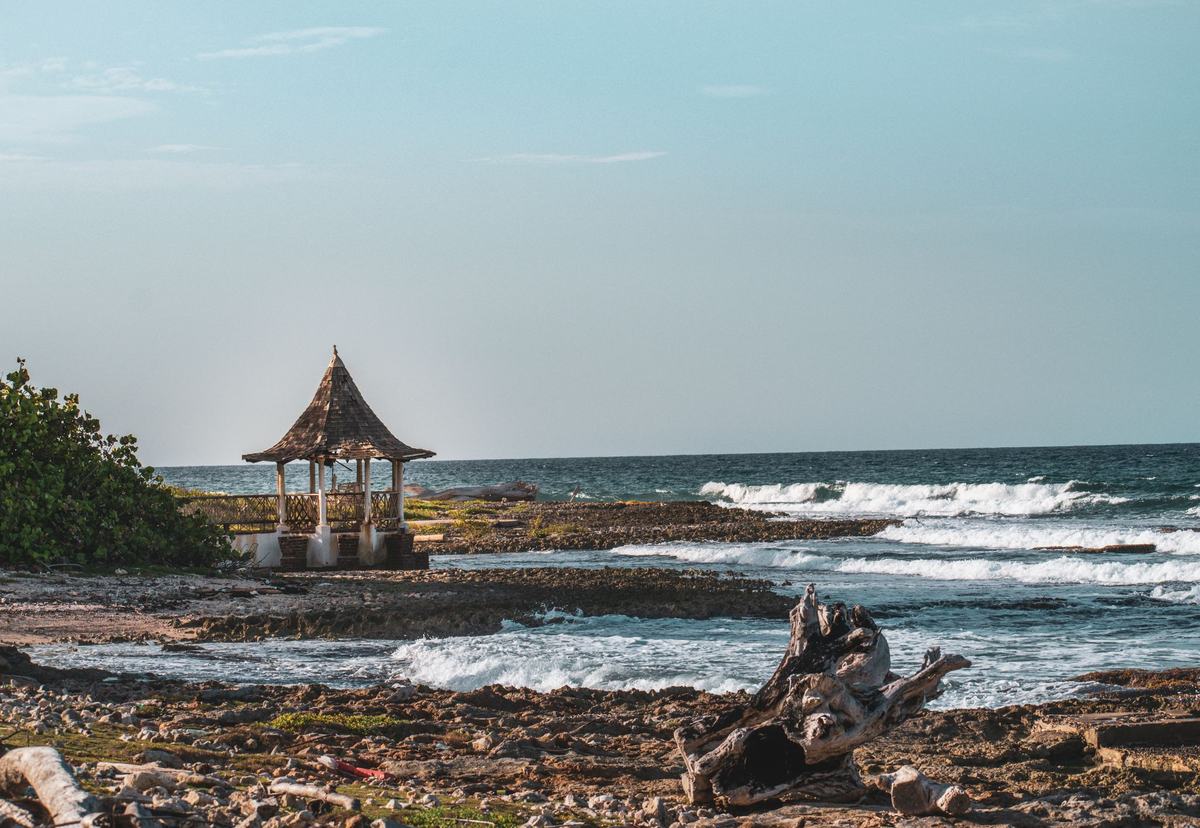
- Capital: Kingston [1]
- Population: about 2.83 million (2023) [2]
- Area: 10,991 square kilometers (4,244 sq mi) [1]
- Official language: English; Jamaican Patois is the everyday spoken language [1]
- Currency: Jamaican dollar (JMD) [1]
- National motto: "Out of Many, One People" [1]
I grew up in Montana, where the closest thing to island culture was the lake in summer and a Bob Marley poster on someone's bedroom wall. So when I started reading about Jamaica for this piece, I realized how much of what I assumed about the island came from that poster, and how little of it actually scratched the surface. Jamaica is smaller than Connecticut. It has fewer people than the city of Chicago. And yet it has produced more world-record sprinters per capita than any country on Earth, invented a genre of music that defined a century, and given the world a coffee so rare that most of it never leaves Japan. Here's the thing about Jamaica - the country is small, but its footprint on global culture is enormous.
A Small Island with Outsized Influence
Jamaica is the third-largest island in the Caribbean, after Cuba and Hispaniola. It sits roughly 90 miles south of Cuba and 119 miles west of Haiti, anchored in the Greater Antilles [1]. From end to end, the country stretches about 146 miles long and 51 miles at its widest point. You could drive across the island in a few hours if the roads cooperated, which they sometimes don't.
What makes the geography surprising is how vertical it is. The Blue Mountains rise to 7,402 feet at Blue Mountain Peak, which is the highest point in the English-speaking Caribbean [1]. I had to look this up twice because I'd always pictured Jamaica as flat beaches and palm trees. Turns out more than half the country sits above 1,000 feet. The interior is rugged, forested, and cool enough at the peaks that hikers sometimes need a jacket at dawn.
The Birthplace of Reggae
You can't write about Jamaica without writing about its music. Reggae was born here in the late 1960s, evolving out of ska and rocksteady, and it didn't just become Jamaica's sound. It became one of the most globally recognized genres ever produced by a single country. In 2018, UNESCO added reggae music to its Representative List of the Intangible Cultural Heritage of Humanity, citing its contribution to "international discourse on issues of injustice, resistance, love and humanity" [3].
Bob Marley is the name everyone knows, and for good reason - his albums are still on Billboard charts decades after his death. But Jamaica's musical lineage runs much deeper. Jimmy Cliff, Toots Hibbert, Lee "Scratch" Perry, Burning Spear, Dennis Brown - the list of artists who shaped global music from this single island is genuinely staggering. Dancehall came later, in the late 1970s and 1980s, and that genre alone has influenced hip-hop, pop, and electronic music across continents.
And nobody talks about this, but Jamaica also gave the world the sound system - the mobile DJ setup with massive speakers that became the foundation for modern club culture. Kingston in the 1950s and 1960s was basically the laboratory where the modern DJ was invented.
The World's Fastest Country
Pound for pound, Jamaica produces the fastest humans on the planet. Usain Bolt, the world record holder in both the 100m and 200m sprints, was born in Trelawny Parish [4]. But Bolt is just the headline. Shelly-Ann Fraser-Pryce, Elaine Thompson-Herah, Yohan Blake, Asafa Powell - Jamaica has more Olympic sprint medalists than countries hundreds of times its size.
Researchers have spent years trying to figure out why. Theories range from a genetic variant common in West African descendants, to the country's strong school athletics program, to the cultural status of track and field as a path to national pride. The annual ISSA Boys' and Girls' Athletics Championships, held in Kingston, is treated less like a high school meet and more like a national festival. Tens of thousands of fans pack the stadium, and the times posted there sometimes rival professional results.
Blue Mountain Coffee and Other Quiet Treasures
If you've never heard of Jamaican Blue Mountain coffee, here's what you need to know: it's one of the most expensive coffees in the world, and roughly 80 percent of it is exported to Japan [5]. The beans grow only in a specific elevation range in the Blue Mountains, between roughly 3,000 and 5,500 feet, where cool temperatures and constant mist slow the maturation of the cherries. The result is a coffee with low bitterness and a smooth, complex flavor that buyers in Tokyo pay a premium for.
Jamaica is also the original home of jerk cooking - meat seasoned with Scotch bonnet peppers, allspice (called pimento here, which is its native habitat), thyme, and scallions, then slow-smoked over pimento wood. The technique traces back to the Maroons, communities of escaped enslaved Africans who lived in the mountainous interior and developed jerk as a way to preserve and cook meat without smoke giving away their location.
Culture, Language, and "Out of Many, One People"
Most Jamaicans speak two languages every day: English for school, government, and business, and Jamaican Patois (Patwa) for everything else. Patois is a creole language with English vocabulary layered onto West African grammar and rhythm, and linguists treat it as a full language in its own right. It's lyrical, fast, full of metaphor, and almost impossible to follow if you're not used to it.
The country's motto, "Out of Many, One People", reflects the layered heritage of the island - West African, British, Spanish, Indian, Chinese, Lebanese, and indigenous Taíno influences all blend into modern Jamaican identity. Which, if you think about it, is how a country smaller than most US states ended up exporting so much culture. You can't make food, music, language, and athletics this distinctive without a long history of mixing.
Frequently Asked Questions
What is Jamaica famous for?
Jamaica is most famous for reggae music, which originated here in the 1960s, and for producing some of the world's fastest sprinters, including Usain Bolt. The island is also known for Blue Mountain coffee, jerk cooking, and its motto "Out of Many, One People", which reflects its diverse cultural heritage.
What language do Jamaicans speak?
The official language of Jamaica is English, used in schools, government, and business. In daily life, most Jamaicans speak Jamaican Patois (Patwa), a creole language that blends English vocabulary with West African grammar and rhythm. Linguists recognize Patois as a language in its own right.
Is Jamaica part of the British Commonwealth?
Yes, Jamaica is a member of the Commonwealth of Nations and a constitutional monarchy with the British monarch as head of state. Jamaica gained independence from the United Kingdom on August 6, 1962, but retained ties to the Commonwealth and continues to share legal and cultural connections.
What is Blue Mountain coffee?
Blue Mountain coffee is a premium coffee grown only in a specific elevation range in Jamaica's Blue Mountains, roughly 3,000 to 5,500 feet. It is prized for its smooth flavor and low bitterness, and roughly 80 percent of the annual harvest is exported to Japan, making it one of the rarest coffees worldwide.