- Capital: Tokyo, population around 14 million in the city proper and roughly 37 million in the greater metro area, making it the largest urban region on the planet [1]
- Total population: about 124 million, with more than a third over the age of 65 [2]
- Area: 377,975 square kilometers spread across 14,125 islands (Japan recounted in 2023 and more than doubled the old number) [3]
- Official language: Japanese, written with three scripts (kanji, hiragana, katakana) often in the same sentence
- Currency: Japanese yen (JPY)
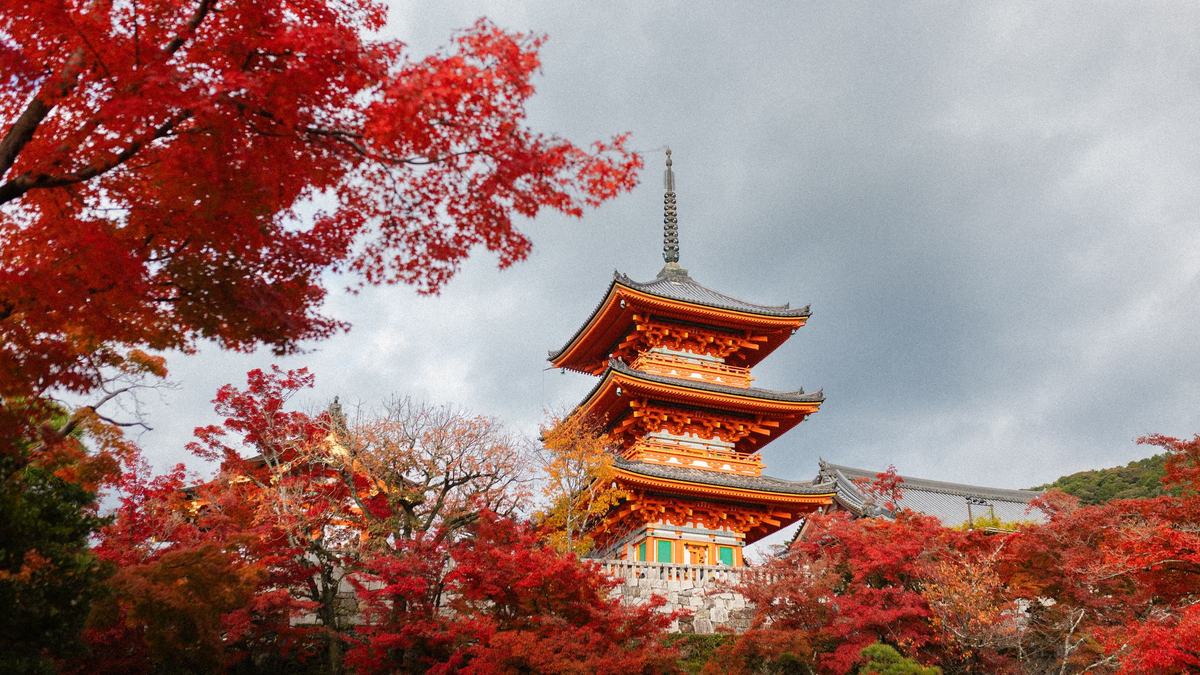
- A 1,400 year old construction company called Kongo Gumi is still in business, building Buddhist temples since the year 578 [4]
I grew up thinking Japan was four islands. Maybe five. The textbook in my Montana high school had a small map and the names Honshu, Hokkaido, Kyushu, and Shikoku, and that felt like the whole story. Then in 2023 Japan recounted its own coastline with modern digital mapping and the official number jumped from 6,852 to 14,125. They didn't grow any new land. They just finally counted everything that qualified as an island, which apparently means anything at least 100 meters of coastline.
I had to look this up twice. A country recounting itself, and doubling.
A Country That Doesn't Quite Sit Still
Japan sits on top of four tectonic plates pushing against each other, which is roughly three more plates than you'd want under your house. The country gets about 1,500 noticeable earthquakes a year, and around 18 percent of all earthquakes on Earth happen on or near these islands [5]. Most are small. The ones that aren't have shaped the entire culture, from building codes to the way kids practice ducking under desks the way I practiced fire drills.
Mount Fuji is the postcard, but it's also an active volcano that last erupted in 1707. Japan has 111 active volcanoes total, more than any country except Indonesia and the United States. The hot springs that come with all that geology are called onsen, and bathing in them is a whole national pastime. Some onsen don't allow guests with tattoos, a holdover from old associations with the yakuza. That rule is slowly relaxing, but slowly is the operative word.
Tokyo Is a System, Not Just a City
Tokyo wasn't even the capital until 1868. For more than a thousand years it was Kyoto, a city built on a grid borrowed from Chinese imperial planning, and Kyoto still feels like the older brother who never had to grow up. Tokyo, by contrast, is a city that rebuilt itself twice in the twentieth century, first after the 1923 earthquake and then after the firebombing of 1945, and it shows in the layout. Districts feel improvised. Streets curve and dead-end. Most of them don't have names. Addresses go by block and building number instead.
And it still works. The Tokyo subway moves around 8.5 million riders a day and runs so close to schedule that operators apologize when a train leaves 20 seconds early. Which, if you think about it, is the kind of stat that sounds made up until you read the actual press release. Tsukuba Express posted a public apology in 2017 for a train that left exactly 20 seconds ahead of time.
Vending Machines, Convenience Stores, and Tiny Conveniences
Japan has roughly one vending machine for every 25 people, around 5 million of them total, the highest density anywhere in the world. You can buy hot coffee, cold beer, fresh eggs, umbrellas, hot ramen in a can, and in a few neighborhoods, used books. The reason there are so many isn't just love of gadgets. Land is expensive, labor is expensive, and crime is low enough that nobody worries about a machine full of cash sitting on a sidewalk overnight.
The convenience stores (called konbini) deserve their own paragraph. A 7-Eleven in Japan has nothing to do with the gas-station version back home. You can pay your taxes there. Mail a package. Pick up concert tickets. Eat an actually good egg sandwich. The bar is so high that when foreign visitors come back from Japan, this is the thing they keep talking about, more than the temples or the bullet trains.
The Bullet Train, on Time Since 1964
Speaking of bullet trains. The Shinkansen opened in October 1964, nine days before the Tokyo Olympics, and over the 60 years since, its average delay per train has been under a minute. That number includes earthquakes and typhoons. Not a single passenger has died in a derailment or collision in the entire history of the service [6].
There are now nine Shinkansen lines, and the newest ones cruise around 320 km/h, which is roughly 200 mph. The interior is calmer than my living room. There are women who push food carts through the aisles and bow to the passengers when they leave the car. The whole thing feels like a polite contract between the engineer and the country.
A Population Doing Something New
Here's the thing about Japan in 2026: it's a country running an experiment nobody else has tried. The population peaked around 2008 and has been shrinking since. More than 29 percent of citizens are over 65, the highest share in the world, and births in 2024 fell below 730,000 for the first time on record [2]. There are towns in the countryside where the school closed because no kids were left to fill it, and the local government has started paying families to move in.
This isn't a crisis the way American headlines sometimes frame it. It's more like a slow renegotiation. Robots take orders at restaurants. Pension reform is a constant political topic. And the small cities that have lost population have, in some cases, become some of the most pleasant places in the country to live, because there's space again. Whether that holds up over the next thirty years is the open question.
Food: Wider Than Sushi
Japanese food in America is mostly sushi, ramen, and maybe tempura. Inside Japan it's a much bigger map. There's okonomiyaki, a savory pancake from Osaka and Hiroshima that you assemble at the table. Takoyaki, octopus dumplings cooked on a special griddle and eaten so hot they burn your mouth. Yakitori, grilled chicken on skewers, with every part of the bird used and labeled. Tonkatsu. Shabu shabu. Curry rice that traces back to British naval recipes and somehow became its own thing.
The country has 27 UNESCO World Heritage sites, but the food culture itself is on a separate UNESCO list called "Intangible Cultural Heritage", recognized in 2013 for washoku, the traditional cuisine [7]. The recognition was specifically about how seasonal and regional Japanese cooking is. Different prefectures have different specialties the way American states have barbecue styles, just with deeper roots and more rules.
Cherry Blossoms and the Calendar
The cherry blossom forecast is on the national news every spring. Meteorologists track the front as it moves north from Kyushu to Hokkaido, predicting when each city's trees will hit peak bloom. Companies plan parties around it. People take days off. The whole country tilts its attention toward a flower for about a week.
What gets less attention abroad is that Japan has five seasons in the popular imagination, not four. There's a rainy season called tsuyu in June, lasting about a month, when the air feels like a wet wool sweater. After that comes summer, hot enough that the trains' air conditioning becomes a topic of weather reports. Then a brief, almost theatrical autumn with the maple leaves doing for fall what cherry blossoms do for spring.
Frequently Asked Questions
How many islands does Japan have?
Japan has 14,125 islands, according to a 2023 recount by the Geospatial Information Authority of Japan. The old figure of 6,852 had been used for nearly 40 years. The new count uses modern digital mapping and includes every landmass with at least 100 meters of coastline.
What is the capital of Japan?
Tokyo is the capital of Japan and has been since 1868. Before that, Kyoto served as the imperial capital for more than 1,000 years. Tokyo has roughly 14 million residents in the city proper and around 37 million in the greater metropolitan area, the largest in the world.
What language do people speak in Japan?
Japanese is the official and dominant language, spoken by virtually the entire population. It uses three writing systems together: kanji (Chinese-derived characters), hiragana, and katakana. English is taught in schools but conversational fluency is not widespread outside major cities and tourist areas.
Is Japan a safe country to visit?
Japan consistently ranks among the safest countries in the world, with very low rates of violent crime and theft. Lost wallets are routinely returned to police stations with cash intact. Standard travel precautions apply, but most visitors find Japan exceptionally easy to navigate, including at night.
What is the currency in Japan?
The currency is the Japanese yen (JPY), abbreviated with the symbol ¥. Japan remains a relatively cash-heavy society compared to other developed economies, though contactless payment and IC transit cards like Suica and Pasmo are widely accepted in cities.
Sources
- Statistics Bureau of Japan: Population of Major Cities
- Ministry of Internal Affairs and Communications, Japan: Population Statistics
- Geospatial Information Authority of Japan: Island Count 2023
- UNESCO: Kongo Gumi and Japanese Temple Carpentry Heritage
- Japan Meteorological Agency: Earthquake Information
- Central Japan Railway Company: Shinkansen Safety Record
- UNESCO Intangible Cultural Heritage: Washoku