- Capital: Tripoli, with a metro population of about 1.1 million [1]
- Population: Roughly 7.2 million people, most clustered along the Mediterranean coast [1]
- Area: 1.76 million square kilometers, the fourth-largest country in Africa [1]
- Official language: Arabic; Berber languages are spoken in the south and west [1]
- Currency: Libyan dinar (LYD), one of the higher-value currencies in North Africa [2]
- Distinguishing claim: Holds the largest proven oil reserves on the African continent [2]
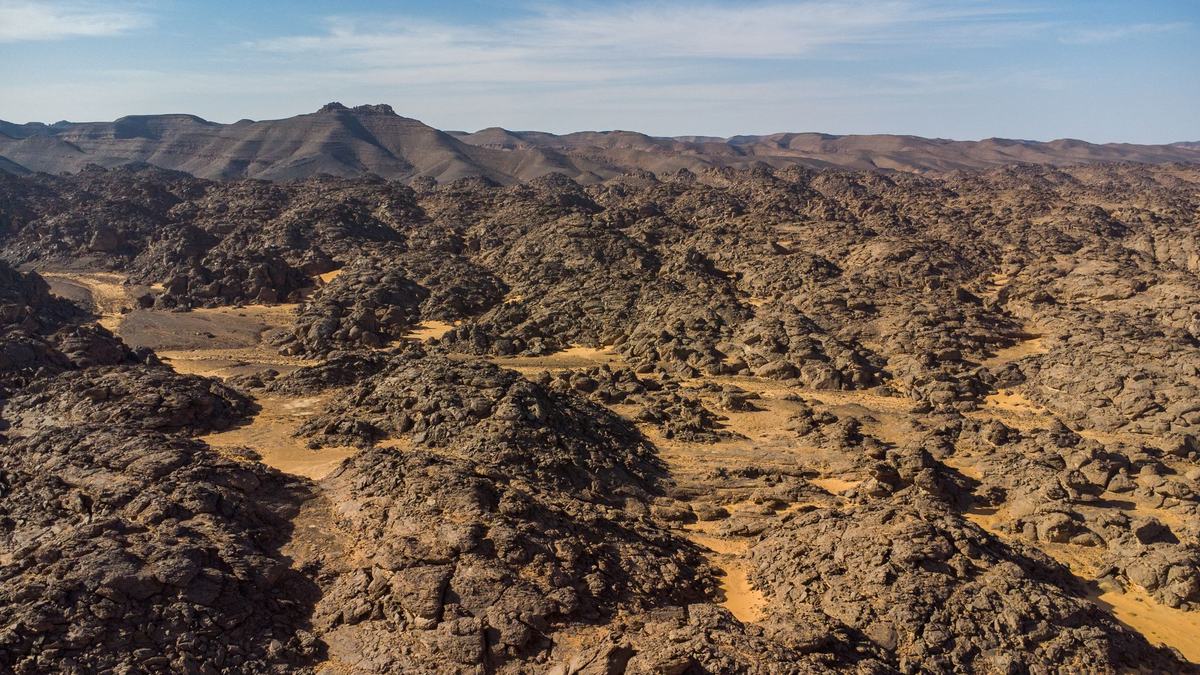
Most Americans couldn't draw Libya on a map if you handed them a pencil. I couldn't either, for a long time. The country sits between Egypt and Tunisia, with a coastline that runs almost 1,100 miles along the Mediterranean. Behind that coast is one of the emptiest places on Earth. The Sahara takes up almost everything south of the shore. About 90 percent of the country is desert, and most of the population lives in a narrow strip near the water.
Here's the thing about Libya. When I started reading about it, every assumption I had broke. I thought it was just sand and oil. Turns out the country is also home to the most complete Roman ruins outside Italy, the world's largest engineering project, and a stretch of coast where Greeks built cities a thousand years before Christ.
Roman Cities Frozen in Time
Leptis Magna is one of those places that makes you stop reading and stare at the pictures for a while. The ancient Roman city, sitting on the coast east of Tripoli, was the hometown of Emperor Septimius Severus. He poured imperial money back into it, and the result was a port city with a forum, basilica, and amphitheater that rival anything in Italy.
The Sahara helped preserve it. Sand drifted over the ruins for centuries and protected the marble columns and mosaics from looters and weather. When archaeologists started serious excavations in the early 1900s, what came out of the ground was astonishing in scale. UNESCO named Leptis Magna a World Heritage Site in 1982 [3]. Sabratha, another Roman port nearby, has a three-tiered theater that still has its full back wall standing.
And then there are the Greek ruins. Cyrene, founded around 630 BC by colonists from the island of Thera, was one of the most important Greek cities in North Africa for centuries. The site sits on a plateau overlooking the Mediterranean, and walking it feels less like visiting a museum and more like trespassing on someone's quiet hillside. Five of Libya's six UNESCO sites are ancient cities. The country is essentially an open-air archaeology museum that doesn't get visitors.
The Sahara Owns the Country
Saying Libya is mostly desert undersells what that means. The Sahara is not a single thing here. In the southwest, the Acacus Mountains hold prehistoric rock art going back 12,000 years - paintings of giraffes, elephants, and cattle from a time when the Sahara was green grassland. You can stand in front of carvings older than the Egyptian pyramids and look out at sand that runs to the horizon in every direction.
The driest, hottest stretches sit in the south and east. The town of El Azizia held the world record for highest air temperature for ninety years, registered at 136 degrees Fahrenheit in 1922, until meteorologists threw out the reading in 2012. The country still gets brutal heat. Summer afternoons in the interior routinely break 115.
Yet the desert isn't empty. The Tuareg and other Berber peoples have lived and traded across these sands for centuries, moving along ancient caravan routes that once carried gold and salt between sub-Saharan Africa and the Mediterranean. The Saharan oases of Ghadames, with its multi-story mud-brick houses, were stops on those routes. Ghadames is also a UNESCO site, sometimes called the pearl of the desert [4].
The Largest Irrigation Project Ever Built
Libya is sitting on something most people don't know about. Beneath the Sahara lies a vast freshwater aquifer system called the Nubian Sandstone Aquifer, one of the biggest underground water reserves in the world. The water has been there for tens of thousands of years, accumulated during a wetter era. Most countries would shrug at the engineering problem. Libya tried to solve it.
The Great Man-Made River, started in 1984, is a network of underground pipes that pulls water from deep desert wells and pipes it nearly 1,800 miles north to the coastal cities. The pipes are over 13 feet in diameter. The project cost something like 25 billion dollars and was paid for entirely without external loans, funded by oil revenue. The Guinness Book of World Records lists it as the largest irrigation project on Earth [5].
The system is fragile. War and infrastructure damage over the past decade have strained the network. But when it works, it delivers most of the drinking water for Tripoli, Benghazi, and the coast. An entire country running on Pleistocene rainwater pumped through the desert.
Oil, Wealth, and Trouble
Libya has the largest proven oil reserves in Africa, and oil makes up almost the entire economy. Before 2011, Libya had one of the highest GDP per capita figures on the continent. The state used oil money to subsidize bread, fuel, electricity, and education. The model worked, in its way, for forty years.
Then the 2011 uprising ended Muammar Gaddafi's four-decade rule, and the country split. Rival governments, militias, and foreign interventions have kept Libya divided ever since. Oil production has bounced between near-collapse and partial recovery. The dinar's value has held up better than many expected, but the daily reality of fuel shortages, blackouts, and currency restrictions has worn people down. The country's wealth and its instability come from the same well.
Frequently Asked Questions
Is Libya safe to visit?
Libya is currently not safe for general tourism. Most Western governments advise against all travel due to ongoing armed conflict, kidnapping risk, and limited consular services. A small number of organized expeditions visit the Roman ruins or the Acacus Mountains with security arrangements, but independent travel is highly discouraged. Check your government's travel advisory before considering any visit.
What is Libya famous for?
Libya is famous for its vast Sahara Desert, ancient Roman cities like Leptis Magna and Sabratha, Greek ruins at Cyrene, and the world's largest irrigation project, the Great Man-Made River. It is also known for holding Africa's biggest proven oil reserves and for its long Mediterranean coastline.
What language do they speak in Libya?
The official language of Libya is Arabic, specifically a Libyan dialect of Maghrebi Arabic. Berber languages, including Tamasheq and Nafusi, are spoken in parts of the south and west and gained official recognition after 2011. English and Italian are sometimes used in business and tourism contexts.
What religion is Libya?
Libya is overwhelmingly Sunni Muslim, with about 97 percent of the population practicing Sunni Islam. Small Christian and other minority communities exist, mostly among foreign residents and migrant workers. Islam is the state religion, and Sharia is one of the sources of law under Libya's interim arrangements.
Why is Libya important?
Libya is important for its strategic Mediterranean location between Europe and sub-Saharan Africa, its enormous oil reserves, and its archaeological heritage spanning Phoenician, Greek, Roman, and Islamic civilizations. The country is also a major route in Mediterranean migration, which has made it central to European and African policy discussions.