- Capital: Antananarivo [1]
- Population: roughly 31 million [2]
- Area: 587,041 square kilometers (226,658 square miles), the world's fourth-largest island [1]
- Official languages: Malagasy and French [1]
- Currency: Malagasy Ariary (MGA)
- About 90 percent of its wildlife exists nowhere else on Earth [3]
I grew up thinking Madagascar was a place from a cartoon. Then I read that it broke off from the African continent around 165 million years ago, drifted alone into the Indian Ocean, and basically ran its own private evolutionary experiment for tens of millions of years. The animals there are not the animals anywhere else. The plants are weird. The people speak a language closer to Indonesian than to anything African. The whole island is like a parallel version of the world that figured out different answers to the same problems. I had to look this up twice before I believed it.
A Mini-Continent in the Indian Ocean
Madagascar is the world's fourth-largest island, behind only Greenland, New Guinea, and Borneo [1]. It sits about 400 kilometers off the southeast coast of Africa, separated from Mozambique by the Mozambique Channel. If you laid it over the United States, it would stretch roughly from Boston to Atlanta. That's bigger than France, bigger than most people picture in their heads when they hear the word "island".
The interesting part is what happened when Madagascar split off from the supercontinent Gondwana. It first broke from Africa about 165 million years ago, then separated from India around 88 million years ago. From that point on, it was on its own. Most of the animals and plants that hitched a ride had to figure out how to survive without contact with the rest of the world. The result is one of the most distinctive ecosystems on the planet.
Lemurs and the Animals That Got the Island to Themselves
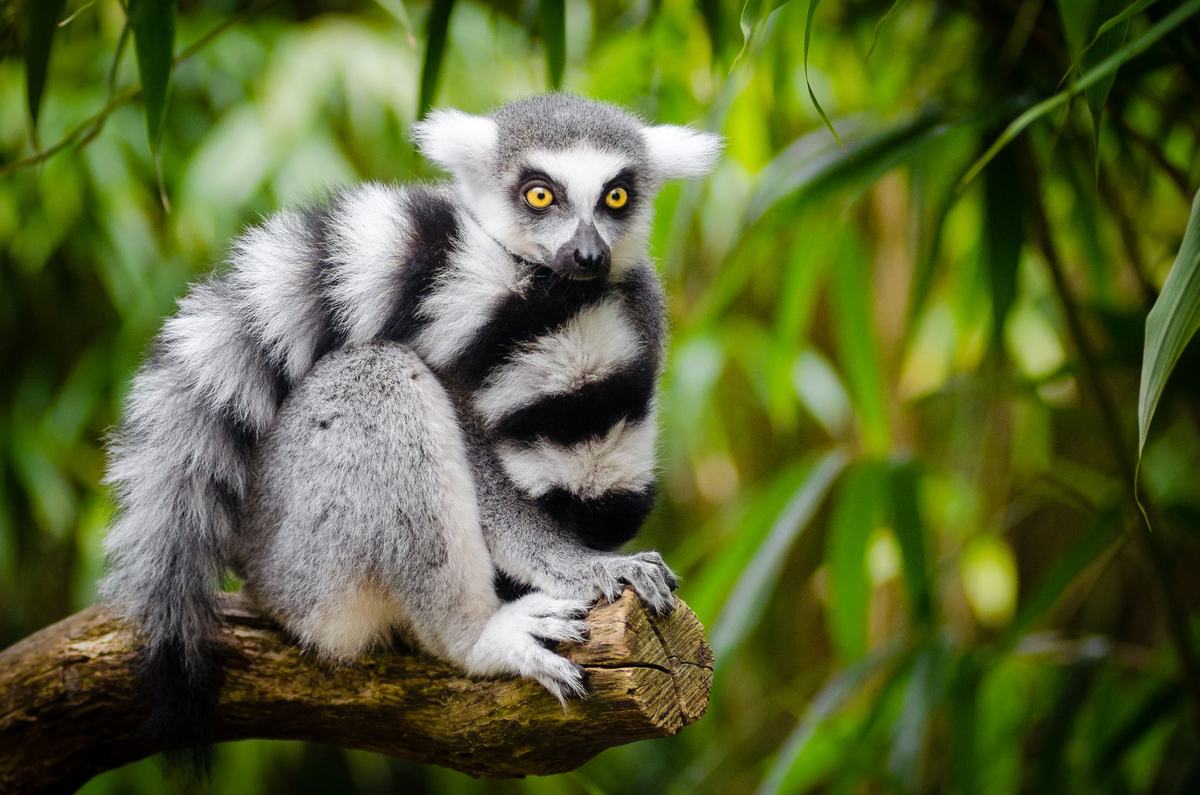
Here's the thing about lemurs. They are not monkeys, they are not apes, they are primates that evolved separately from the line that produced everything else with a tail. They exist in the wild only on Madagascar and a few nearby islands [3]. The story scientists generally tell is that a small population of ancestral primates rafted across the ocean on floating vegetation tens of millions of years ago, washed up on Madagascar, and never had to compete with monkeys because monkeys never arrived. So they radiated into more than 100 different species, from the tiny mouse lemur that fits in a teaspoon to the indri, which calls through the forest like a whale song.
Lemurs are just the headline act. Madagascar has a dozen species of tenrecs, which look like a cross between a hedgehog and a shrew. It has fossa, which look like a cat designed by someone who had only ever heard a cat described. It has chameleons in every direction, including the smallest reptile on Earth, Brookesia nana, which is about the size of a sunflower seed. Roughly 90 percent of Madagascar's wildlife is found nowhere else [3].
A Language That Sailed Across an Ocean
This one still gets me. Malagasy, the language people speak across Madagascar, is not African in origin. It belongs to the Austronesian family, the same family as Indonesian, Tagalog, and Hawaiian [4]. The closest known relative is a language spoken by the Ma'anyan people on the island of Borneo, more than 7,000 kilometers away.
What that means is that the first humans to settle Madagascar came across the Indian Ocean in boats, probably around 1,500 to 2,000 years ago, from Southeast Asia. They eventually mixed with Bantu-speaking peoples arriving from East Africa, and the modern Malagasy population reflects both lineages. Genetic studies back this up. Imagine a culture that traces its language to Borneo, its cattle to the African mainland, and its identity to an island most of the world barely thinks about. Back home in Montana, our local history goes back maybe 150 years. Madagascar carries layered histories that crossed entire oceans.
The Baobab Trees and the Vanilla Coast
The baobab trees in Madagascar look like something a child drew. They have a thick, swollen trunk and a tiny crown of branches that splay out at the top like roots, which is why the local legend says God planted them upside down. Six of the world's eight baobab species grow only in Madagascar [5]. The most famous spot is the Avenue of the Baobabs near Morondava, on the west coast, where ancient trees line a dirt road like temple columns. Some of them are estimated to be over 800 years old.
Madagascar is also the world's largest producer of vanilla, supplying roughly 80 percent of the global market in most years [2]. The vanilla orchid is not native, it came from Mexico in the 1800s, but the climate and the careful hand-pollination work done by farmers in the Sava region in the northeast made Madagascar the center of the industry. When you taste real vanilla in ice cream, there's a very good chance it grew on a vine on a small farm in Madagascar.
Deforestation and the Race to Save What's Left
Not all of this is a good news story. Madagascar has lost a huge share of its original forest cover, by some estimates more than 80 percent, mainly through slash-and-burn agriculture, charcoal production, and illegal logging of rosewood [3]. The loss is brutal for the animals that exist nowhere else, and several lemur species are critically endangered.
Which, if you think about it, is a strange burden for a country with such deep poverty. Madagascar is one of the poorest countries in the world by per-capita income [2], and conservation often comes second to feeding people. International organizations and the Malagasy government have set up protected areas, including national parks like Andasibe-Mantadia and Ranomafana, and ecotourism has become a small but growing source of income. Whether that's enough is one of the open questions of the next few decades.
Tana and the Highlands
The capital, Antananarivo, sits at about 1,280 meters of elevation in the central highlands [1]. Locals call it Tana. It was founded in the 1600s as the seat of the Merina kingdom, which eventually unified most of the island under one rule by the early 1800s. The old royal palace, the Rova, looks down over the city from the highest hill. The architecture in the historic neighborhoods reminds people more of Southeast Asian highland towns than of anywhere on the African mainland. Tile roofs, narrow streets, terraced rice paddies climbing the slopes outside town.
The country was a French colony from 1896 until independence in 1960. French is still an official language alongside Malagasy and shows up on signs and in schools, but you hear Malagasy everywhere. The cuisine reflects all of these layers. Rice three times a day, often with a meat or bean stew, with French baguettes for breakfast and Indonesian-inspired noodle dishes at street stalls.
Frequently Asked Questions
Where is Madagascar located?
Madagascar is an island country in the Indian Ocean, about 400 kilometers off the southeast coast of Africa, separated from Mozambique by the Mozambique Channel [1]. It is the fourth-largest island in the world and is geographically considered part of Africa.
Why are the animals in Madagascar so unique?
Madagascar split from the African continent about 165 million years ago and from India about 88 million years ago, leaving its wildlife to evolve in isolation [3]. Around 90 percent of its species, including all lemurs, are endemic and live nowhere else on Earth.
What language do people speak in Madagascar?
Madagascar has two official languages, Malagasy and French [1]. Malagasy is the everyday language and is closely related to Indonesian languages from Borneo, reflecting the Southeast Asian origins of the first settlers about 1,500 to 2,000 years ago [4].
Is Madagascar safe to visit?
Madagascar is generally welcoming to tourists, with petty crime as the main concern in cities. Most visitors travel to see national parks like Andasibe and the Avenue of the Baobabs near Morondava. Roads can be rough, so internal flights are often used for longer trips.
What is Madagascar famous for?
Madagascar is famous for its lemurs, baobab trees, vanilla, and its status as a biodiversity hotspot where most species exist nowhere else [3]. It is also the world's largest producer of natural vanilla and one of the oldest island ecosystems on the planet [2].