- Capital: Bamako [1]
- Population: about 23.3 million (2024) [2]
- Area: 1,240,192 square kilometers, the eighth-largest country in Africa [1]
- Official language: French; thirteen national languages including Bambara, Fula, and Songhai [1]
- Currency: West African CFA franc (XOF) [3]
- Once home to the wealthiest person in recorded human history: Mansa Musa of the Mali Empire [4]
Here's something that'll ruin the next geography quiz you take: in the 14th century, a single man from Mali was so rich that when he traveled through Cairo on his way to Mecca, he handed out so much gold that the price of gold in Egypt collapsed for over a decade. His name was Mansa Musa, and economists today still estimate his fortune in the hundreds of billions, sometimes higher. The country he ruled is the same country that now sits in West Africa, mostly desert, mostly rural, and almost entirely unknown to people who haven't gone looking for it.
Mali deserves better than that. Way better.
A Country Shaped by the Niger River
Most people couldn't find Mali on a map. That's a shame, because once you know where to look, the shape of it tells you almost everything. Mali is landlocked, sitting where the Sahara starts to fade into the Sahel, and the southern half of the country is held together by the Niger River. The Niger runs through Mali in a long arc, and along that arc you find pretty much everything: the capital, the farmland, the fishing villages, the old trading cities. Without that river, Mali would just be desert.
The river also creates something called the Inner Niger Delta, which is one of the largest wetlands in Africa. During the wet season it floods across an area roughly the size of Belgium. Fishermen from the Bozo people, who have lived along the river for centuries, still pole their wooden pirogues through these waters the way their ancestors did. The fish they catch ends up dried and traded as far as the coast.
Back home in Montana, rivers cut through dry country and you understand right away why the towns sit where they sit. Mali is the same idea on a continental scale.
Timbuktu Was a Real Place, and It Was Astonishing
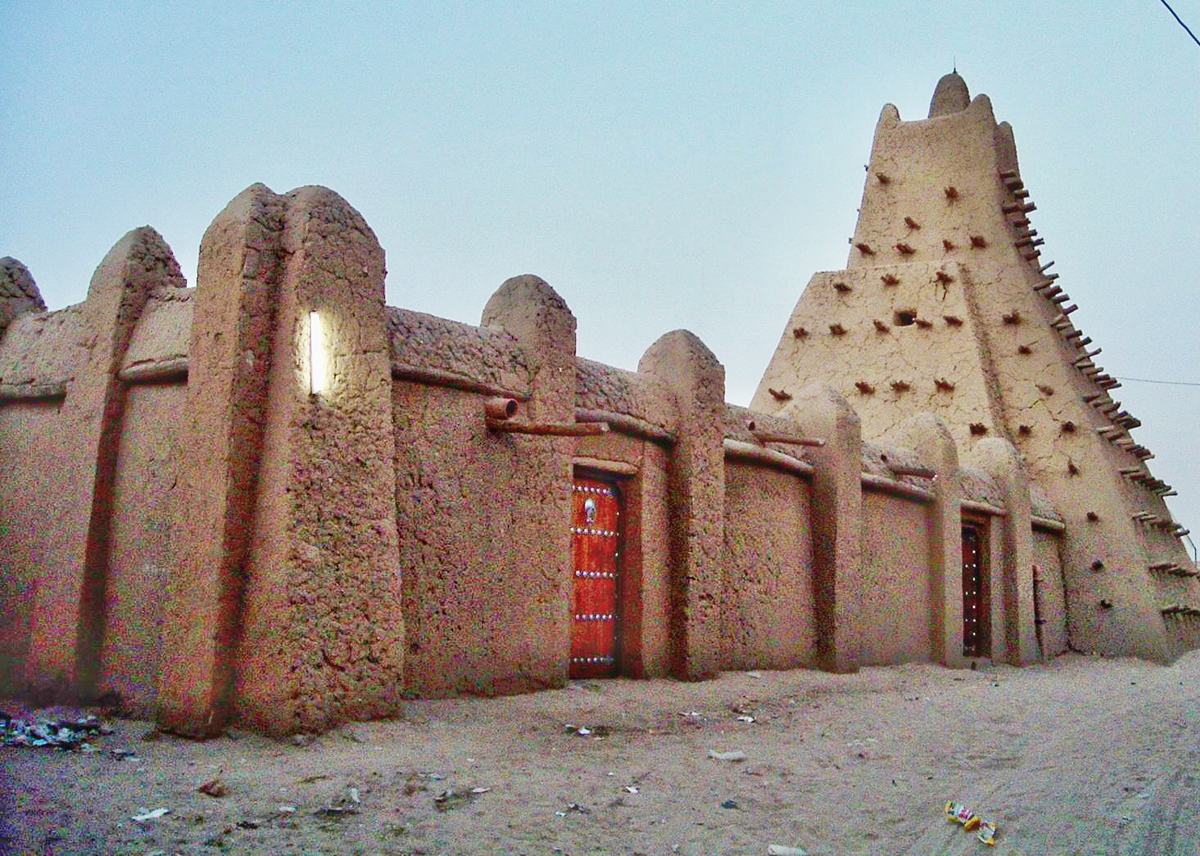
For a lot of Americans, "Timbuktu" is shorthand for somewhere impossibly far away. Turns out it's an actual city in northern Mali, and in the 1300s and 1400s it was one of the great intellectual centers of the world. The University of Sankore, attached to the Sankore Mosque, drew scholars from across the Islamic world. They studied astronomy, mathematics, law, medicine, and Islamic theology, and they wrote and copied tens of thousands of manuscripts that are still being recovered and cataloged today [5].
When jihadist militants occupied Timbuktu in 2012, ordinary residents and librarians smuggled hundreds of thousands of these manuscripts out of the city in trunks and boats to keep them from being destroyed. The operation took months. It worked. Most of the manuscripts survived, and some of them date back to the 13th century.
I had to look this up twice. The idea that a city in the middle of the desert, in a country most of the world overlooks, has a written tradition older than most European universities is the kind of fact that should be in every textbook.
The Mali Empire and Mansa Musa
The medieval Mali Empire, which peaked between roughly 1235 and the 1500s, controlled a huge chunk of West Africa and most of the gold supply for the Mediterranean world. When the empire's ruler Mansa Musa made his hajj to Mecca in 1324, his entourage reportedly included tens of thousands of soldiers, attendants, and enslaved people, plus a caravan of camels carrying gold dust. He gave gold away so freely in Cairo that, according to contemporary Arab historians, the local economy took years to recover [4].
The wealth came from gold mines in the southern parts of the empire and from controlling the trans-Saharan trade routes that carried gold north and salt south. Salt, in those days, was sometimes traded for gold by weight. Pound for pound. Which, if you think about it, is bizarre - until you remember that nobody in the desert could mine salt, and nobody in the savanna could mine gold.
Mud Architecture That Holds Up Better Than You'd Think
The Great Mosque of Djenne, in central Mali, is the largest mud-brick building in the world. The current structure dates to 1907 and is built entirely from sun-baked earth bricks, palm wood, and a plaster of mud mixed with rice husks and shea butter. Every year the entire town turns out for the Crepissage de la Grande Mosquee, a festival where they re-plaster the mosque by hand to repair the damage done by the rainy season. It's been a UNESCO World Heritage Site since 1988 [6].
And nobody talks about this, but the technique works. Mud architecture in this climate is breathable, cool inside, and surprisingly durable. The same building style is used across the old quarters of Djenne and Timbuktu, which are also UNESCO sites.
Music That Travels the World
Mali punches absurdly above its weight in music. Ali Farka Toure, who came from a small village in the north and never had formal training, won multiple Grammy Awards and is widely cited as one of the most important guitarists of the 20th century. His son Vieux Farka Toure carries the tradition. Toumani Diabate played the kora, a 21-string harp, well enough that he collaborated with Bjork, Damon Albarn, and the London Symphony Orchestra. Tinariwen, a Tuareg desert blues band whose members met in Libyan refugee camps in the 1980s, has played Coachella and won a Grammy.
The musical tradition runs through griot families - hereditary musicians and oral historians who have passed songs and stories down for generations, sometimes traceable back to the 13th century. A griot doesn't just sing. A griot is a living archive of the family or village they serve.
Culture, Daily Life, and What Holds the Country Together
Mali's population is mostly young - the median age is around sixteen - and overwhelmingly rural. Most people farm or herd livestock. The country has more than a dozen ethnic groups, with the Bambara being the largest, followed by the Fulani, Sarakole, Senufo, and Dogon, among others.
The Dogon people live along the Bandiagara Escarpment, a long sandstone cliff in central Mali, where they have built villages into the rock face for at least seven hundred years. Their cosmology, which involves detailed knowledge of the star Sirius and its companion, has been the subject of decades of anthropological argument.
Food in Mali centers on rice, millet, and sorghum, often served with peanut or okra sauces. Tea is its own ritual - three rounds, each stronger than the last, prepared slowly over coals. Sharing tea is how people sit together for hours and don't have to fill the silence.
Mali has had a hard decade. Coups, insurgency in the north, droughts, and food insecurity have made daily life genuinely difficult for millions of people. But the country's cultural depth, its history, and its hospitality to strangers - all of that is still there. Once you start reading about Mali, you don't really stop.
Frequently Asked Questions
What is Mali famous for?
Mali is famous for the medieval Mali Empire and its emperor Mansa Musa, often called the wealthiest person in recorded history, as well as the ancient city of Timbuktu, the mud-brick Great Mosque of Djenne, and a globally influential music tradition rooted in griot storytelling and desert blues.
Is Mali a safe country to visit?
Much of Mali, especially the north and center, has faced ongoing armed conflict and insurgency since 2012, and most Western governments advise against travel there. Bamako, the capital, is generally calmer but still requires caution. Always check current travel advisories before planning a trip.
What language do they speak in Mali?
French is the official language of Mali and is used in government, schools, and business. However, Bambara is the most widely spoken local language, used by about 80 percent of the population. Mali also recognizes thirteen national languages, including Fula, Songhai, and Tamasheq.
What is the religion of Mali?
About 95 percent of Mali's population is Muslim, mostly Sunni with strong Sufi traditions. Small communities practice Christianity or traditional African religions. Islam has shaped Malian architecture, education, and music for over a thousand years, especially in cities like Timbuktu and Djenne.
What currency does Mali use?
Mali uses the West African CFA franc (XOF), a currency shared with seven other West African countries and pegged to the euro. The CFA franc is issued by the Central Bank of West African States and is one of the most stable currencies in the region.