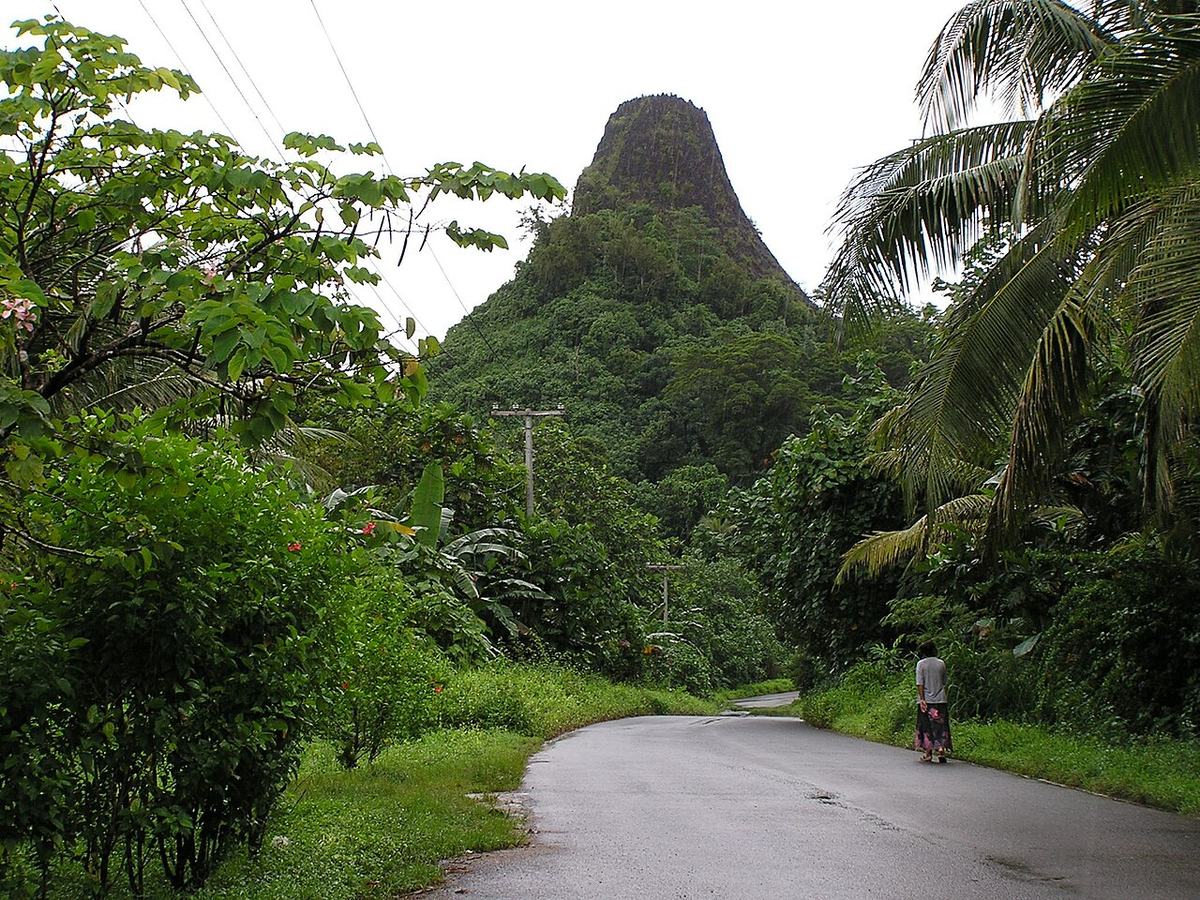
- Capital: Palikir, on the island of Pohnpei [1]
- Population: about 105,000 (2024 estimate) [2]
- Area: roughly 700 square kilometers of land, scattered across about 2.6 million square kilometers of ocean [1]
- Official language: English, with eight recognized local languages including Chuukese, Pohnpeian, Yapese, and Kosraean [1]
- Currency: United States dollar (USD) [1]
- Home to Rai, the famous giant stone money of Yap, still considered legal wealth today [3]
Here's the thing about Micronesia: most Americans have heard the word and have no idea what it means. It sounds like a region, not a country. And technically it is both. The geographic area called Micronesia stretches across thousands of miles of the western Pacific and includes several different nations. But there's also a specific country called the Federated States of Micronesia, made up of four states across more than 600 islands and atolls. That country uses the US dollar, signs its passports in English, and yet feels about as far from American daily life as anywhere you can name. I had to look this up twice before it clicked.
Four States, One Country, A Lot of Water
The Federated States of Micronesia, usually shortened to FSM, is made up of four states: Yap, Chuuk, Pohnpei, and Kosrae. Each one has its own language, its own customs, its own islands, and a strong sense of being a distinct place. The country was cobbled together from a loose chain of cultures that share an ocean but not much else. People from Yap and people from Kosrae are essentially foreigners to each other, even though they carry the same passport.
The total land area is smaller than New York City. The total ocean area the country controls is roughly the size of the entire continental United States east of the Mississippi. It's a country mostly made of water, with a few green dots scattered through it. The capital, Palikir, sits in Pohnpei state and has a population of around 6,000 people. It might be the least crowded national capital you've never heard of.
Stone Money You Can't Actually Carry
On Yap, traditional money comes in the form of giant stone discs called Rai. Some are the size of a dinner plate. Others are eight to twelve feet across and weigh several tons. They're carved from a kind of limestone that doesn't exist on Yap. The Yapese used to sail hundreds of miles to Palau in outrigger canoes, quarry these enormous stones, and ferry them home across open ocean. Many sank on the way back. The ones that made it are still in use [3].
The wild part is that the stones don't move when ownership changes. A Rai sits where it was placed, sometimes for generations, and people just know who owns it. The community keeps track verbally. A famous story tells of one stone that fell off a canoe and sank to the bottom of the lagoon during transport. The owners arrived back home empty handed, but everyone agreed the stone existed, so it kept being used as currency. Economists love this story because it's basically how every modern financial system works. We agree money exists, we agree who has it, and the actual physical thing barely matters. The Yapese figured this out a thousand years ago.
Nan Madol: A City Built on the Sea
On Pohnpei, off the southeastern shore, there's a ruined city called Nan Madol that almost nobody outside the Pacific has heard of. It was built between roughly 1200 and 1500 AD on a series of nearly 100 artificial islets, constructed from massive basalt logs stacked like Lincoln Logs across shallow reef. Some of the columns weigh up to fifty tons. Nobody knows for sure how they were moved into place [4].
It served as the ceremonial and political center of the Saudeleur dynasty, which ruled Pohnpei for several centuries. UNESCO listed Nan Madol as a World Heritage site in 2016. The whole place is half submerged, overgrown with mangroves, and almost entirely undisturbed. Local guides will take you out by small boat, and you can wade between the islets. Back home in Montana, the oldest stone structures I grew up seeing were maybe a hundred years old. Nan Madol predates Columbus by 300 years and is roughly the same age as the cathedrals of Europe, built on a tiny island most maps don't even label.
Chuuk Lagoon and a Sunken Fleet
Chuuk Lagoon, on the western side of the country, holds one of the most famous wreck dives in the world. During World War II, the lagoon was a major Japanese naval base, and in February 1944 the US launched Operation Hailstone, a surprise air attack that sank around 50 ships and destroyed more than 250 aircraft in two days [5].
Most of those ships are still down there. Trucks, tanks, planes, and supplies sit in their cargo holds. The wrecks have been colonized by coral and fish for eighty years. Divers from all over the world come here for the chance to swim through a sunken warehouse of the Pacific war. The Chuukese have asked visitors to treat the sites as graves, which they are. Hundreds of sailors died on those ships and never came back up.
A Culture That Travels by Water
The traditional cultures of Micronesia are tied to the ocean in a way that's hard to overstate. Polynesian and Micronesian navigators developed methods for crossing thousands of miles of open water using wave patterns, star paths, cloud shapes, and the flight lines of seabirds. The Carolinian navigators of Micronesia kept this knowledge alive longer than almost anyone else. By the time European explorers showed up with sextants, Micronesian sailors had been routinely crossing distances that European ships barely attempted.
Today, a master navigator named Mau Piailug from Satawal helped lead a Pacific-wide revival of traditional wayfinding before he died in 2010. His students went on to navigate canoes from Hawaii to Tahiti and around the world, all without instruments. Which, if you think about it, means a Micronesian fisherman in the 1970s knew how to do something most modern ship captains can't.
Frequently Asked Questions
Where is Micronesia?
The Federated States of Micronesia is a country in the western Pacific Ocean, north of the equator and east of the Philippines. It consists of more than 600 islands across four states: Yap, Chuuk, Pohnpei, and Kosrae.
What currency does Micronesia use?
Micronesia uses the United States dollar as its official currency. This dates back to the country's history as part of the Trust Territory of the Pacific Islands, which was administered by the United States after World War II.
Is Micronesia the same as the Marshall Islands or Palau?
No. The Federated States of Micronesia is one country in the larger geographic region also called Micronesia. The Marshall Islands and Palau are separate independent nations in the same region, with their own governments, languages, and histories.
What is stone money in Micronesia?
Stone money, called Rai, is a traditional currency from the island of Yap. The stones are carved limestone discs that can weigh several tons. Ownership changes through community agreement, while the stones themselves stay in place, often for generations.
Do I need a visa to visit Micronesia?
US citizens do not need a visa to enter Micronesia for stays up to 30 days, thanks to the Compact of Free Association between the two countries. Most other nationalities can enter visa-free for short visits with a valid passport.