- Capital: Abuja (Lagos is the largest city, not the capital) [1]
- Population: about 230 million, the most in Africa [2]
- Area: 923,769 square kilometers [1]
- Official language: English, with 500+ indigenous languages spoken [3]
- Currency: Nigerian naira (NGN)
- Nollywood produces more films per year than Hollywood, second only to India's Bollywood by output [4]
I grew up thinking I had a handle on which countries were "big". Then I started reading about Nigeria and realized one in every six Africans lives there. One in six. That's not a country, that's a gravitational pull. And the wild part is that for all the size and noise and influence Nigeria throws across the continent and into the diaspora, most Americans I know couldn't name its capital. (It's Abuja. Not Lagos. We'll get to that.)
A Country of 500 Languages
Here's the thing about Nigeria - calling it "diverse" undersells it by an order of magnitude. There are more than 500 indigenous languages spoken inside its borders [3]. Not dialects. Languages. The three biggest - Hausa in the north, Yoruba in the southwest, and Igbo in the southeast - each have tens of millions of speakers and centuries of literature and music behind them. English is the official language because picking any one of the others would have started a fight nobody wanted to finish.
Back home in Montana, my entire county had maybe one language with a real second-place finisher (Spanish, on the ranches). In Nigeria, a single market in Lagos can hum with five or six at once, and the traders switch between them the way I switch between tabs on a laptop. There's a kind of mental athleticism in that which I find honestly humbling.
Lagos Is Not the Capital (and the Reason Is Interesting)
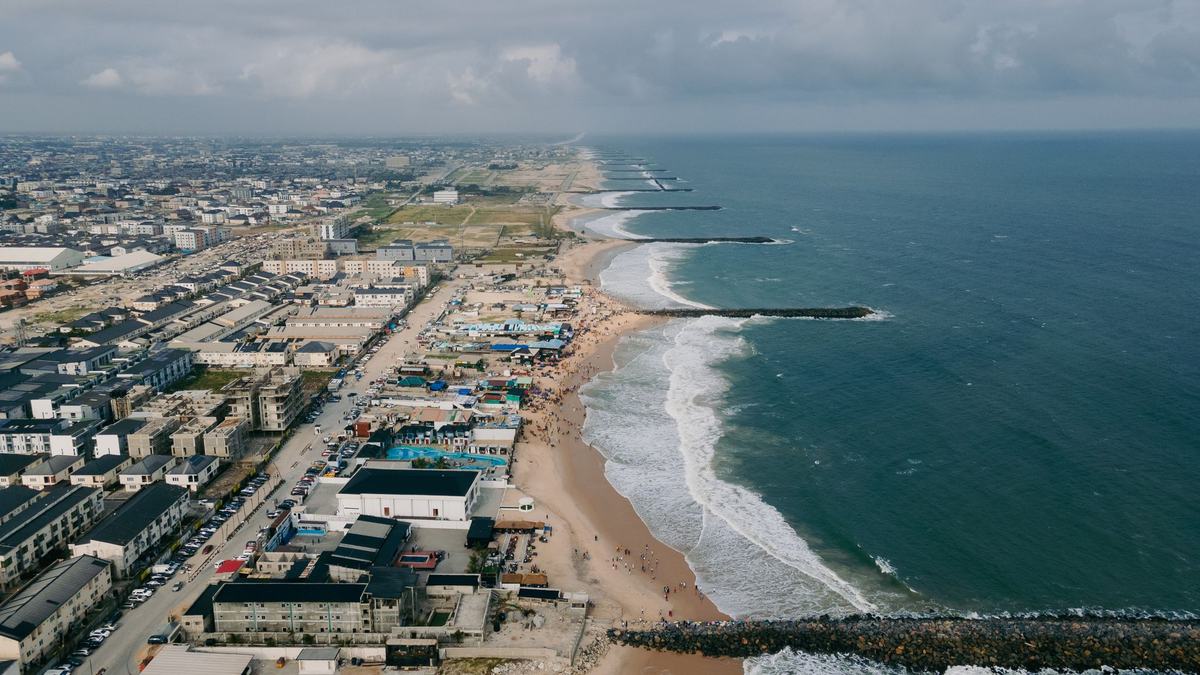
Lagos used to be the capital. It was the obvious choice - the biggest city, the economic engine, the place where the music and the money were. But by the late 1970s, Lagos was bursting at the seams, and the federal government wanted a capital that didn't belong to any single ethnic group. So they built one. From scratch. In the middle of the country.
Abuja became the official capital in 1991 [1]. It's planned, orderly, and deliberately neutral - the geographic and political center of a country that has spent decades trying to balance regional power. Lagos, meanwhile, kept doing what Lagos does: growing. The metro area is now home to more than 20 million people and is on track to become one of the largest cities on Earth. I had to look this up twice.
Nollywood: The Film Industry Nobody Talks About Enough
If you measure film industries by sheer output, Nigeria is number two in the world, behind only India's Bollywood and ahead of Hollywood [4]. Nollywood produces something like 2,500 films a year. Most are shot on tight budgets in a matter of days, distributed straight to streaming and DVD across West Africa, and watched by tens of millions of people across the diaspora.
What's wild is how little American audiences know about it. Nollywood has its own stars, its own conventions, its own genres. It built a film economy without waiting for Western validation, and now it's quietly shaping pop culture from Lagos to Atlanta to London. Streaming services have started taking notice in the last few years, but Nollywood's been a powerhouse for thirty.
Food, Especially the Jollof Rice Question
You cannot talk about Nigerian culture without bringing up jollof rice. It's a one-pot dish of rice cooked in a tomato and pepper base, often with chicken or beef, and it is the dish across West Africa. The catch is that Ghana and Senegal both lay claim to making the best version, and Nigerians do not concede. The "Jollof Wars" are a real thing - a friendly but extremely committed rivalry that plays out in restaurants, on social media, and at every wedding within a thousand miles.
Beyond jollof, Nigerian cuisine runs deep: egusi soup made from melon seeds, suya skewers grilled over open flame and dusted in peanut spice, pounded yam soft enough to scoop with your hand. The food is regional - what you eat in Kano is not what you eat in Calabar - and most of it is built to be shared.
Music That Took Over the World
Afrobeats, the genre, is a Nigerian export the way hip-hop is an American one. It started taking shape in Lagos in the 2000s, building on the older Afrobeat sound that Fela Kuti pioneered in the 1970s. By the 2020s, artists like Burna Boy, Wizkid, and Tems were filling stadiums in London and New York, winning Grammys, and getting played on radio stations that wouldn't have touched African pop a decade earlier. The sound is everywhere now, but it started in a specific place, with a specific scene.
Which, if you think about it, is the story of Nigeria in general: a place that does its thing on its own terms, and then the world catches up.
A Land of Real Geographic Range
Nigeria isn't just one landscape. The south is tropical - rainforest, mangroves, the long curve of the Niger Delta where the country's oil sits. The middle belt opens up into savanna. The far north pushes into the Sahel and edges toward the Sahara. You can drive from one end to the other and pass through more climate zones than I crossed driving from Montana to New Mexico.
The Niger River, which the country is named after, cuts through the country and joins the Benue at a place called Lokoja before emptying into the Atlantic through that delta. The delta itself is one of the largest in the world and one of the most ecologically complicated, both a wildlife haven and a region scarred by decades of oil extraction.
Frequently Asked Questions
What is the capital of Nigeria?
Abuja is the capital of Nigeria. It officially replaced Lagos in 1991 as part of a plan to put the federal government in a centrally located, ethnically neutral city. Lagos remains the largest city and the economic heart of the country.
How many languages are spoken in Nigeria?
More than 500 indigenous languages are spoken in Nigeria, making it one of the most linguistically diverse countries on Earth. The three largest are Hausa, Yoruba, and Igbo. English is the official language and is used in government, schools, and business.
Is Nigeria the most populous country in Africa?
Yes. With about 230 million people, Nigeria has the largest population of any African country and is among the most populous countries in the world. Roughly one in six people living in Africa is Nigerian.
What is Nollywood?
Nollywood is Nigeria's film industry, based mainly in Lagos. By volume, it is the second-largest film industry in the world after India's Bollywood, producing roughly 2,500 films a year. Its movies are widely watched across Africa and the global African diaspora.
What food is Nigeria known for?
Nigeria is best known for jollof rice, a tomato and pepper based rice dish, and for suya, a spicy grilled meat skewer. Other staples include egusi soup, pounded yam, and pepper soup. Nigerian cuisine varies sharply by region and ethnic group.