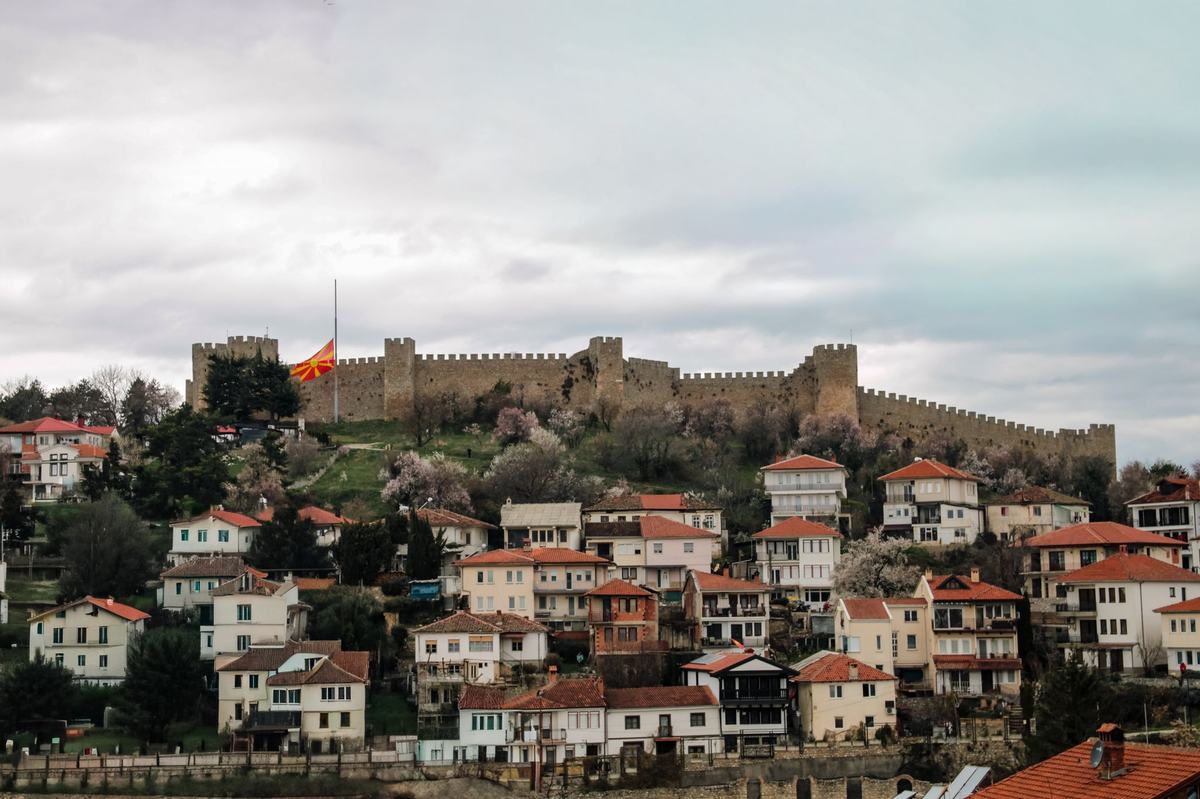
- Capital: Skopje [1]
- Population: about 1.83 million [2]
- Area: 25,713 square kilometers [1]
- Official languages: Macedonian and Albanian [1]
- Currency: Macedonian denar (MKD) [1]
- Home to Lake Ohrid, one of the oldest and deepest lakes in Europe [3]
Most countries don't change their name in the 21st century. North Macedonia did, in 2019, and the reason is one of the strangest diplomatic stories I've ever read. For nearly three decades, a small landlocked country in the Balkans argued with its much larger southern neighbor about a single word. Turns out that word was Macedonia. Greece said the name belonged to its own northern region, the historical heartland of Alexander the Great. The country to the north said the name belonged to them too. The dispute stalled NATO membership, blocked EU talks, and produced the longest-running naming argument in modern European history. Then they added one word: North. And just like that, a country that had been called "the Former Yugoslav Republic of Macedonia" at the UN since 1993 finally got to put a real name on the door.
A Country Made of Mountains and Lakes
If you flew over North Macedonia and didn't know where you were, you'd guess somewhere in the Alps. Roughly 80 percent of the country is mountainous, with peaks like Korab rising over 2,700 meters along the Albanian border. The valleys between them are stitched together by rivers and three big tectonic lakes - Ohrid, Prespa, and Dojran - that have been there since before recorded history.
Lake Ohrid is the one everyone talks about, and for good reason. Geologists estimate it formed somewhere between 2 and 3 million years ago, which makes it one of the oldest continuously existing lakes on Earth. It's also stunningly deep, about 288 meters at its lowest point. UNESCO listed both the lake and its town as a World Heritage Site back in 1979, partly for the water itself and partly because Ohrid the town has 365 churches, one for every day of the year, according to local legend. The actual number is lower, but the place still feels like the inside of a very old, very quiet hymn.
Back home in Montana I grew up around mountains that felt empty in the best way. North Macedonia has a different kind of emptiness - mountains stacked with monasteries, cave churches, and stone villages that have been there since the Byzantine era. You walk twenty minutes and run into a fresco from the 1300s. Twenty more and a shepherd waves you over for rakija.
Skopje, the Capital That Rebuilt Itself Twice
Skopje, the capital, is one of the more architecturally chaotic cities you'll ever visit. There's a reason for that. In 1963, a massive earthquake leveled around 80 percent of the city in about 20 seconds. Thousands died, tens of thousands lost their homes, and the rebuild that followed pulled in architects from around the world, including Japan's Kenge Tange, who drew the master plan. The result was a brutalist concrete skyline that aged into something both grand and worn.
Then in 2010 the government launched "Skopje 2014", a project that filled the city center with neoclassical facades, giant statues, fountains, and triumphal arches. Critics called it kitschy. Supporters said it was overdue. Either way, if you stand in the main square today, you're looking at a 24-meter bronze statue of a "Warrior on a Horse" that everyone in the country knows is Alexander the Great, even though it's officially just titled "Warrior on a Horse" for diplomatic reasons.
That's the whole country in one statue. The history is right there, but you're not always allowed to name it out loud.
The Name Dispute, Settled at Last
The argument with Greece went on for 27 years. Greece refused to accept "Republic of Macedonia" because Macedonia is also the name of its largest northern region, the one Alexander ruled from. The dispute wasn't just symbolic. It blocked the country from joining NATO and froze its EU accession talks. In 2018, after years of failed proposals, the two governments signed the Prespa Agreement, named after the lake where it was negotiated. The country agreed to become the Republic of North Macedonia. Greece agreed to drop its veto. NATO membership came in March 2020 [4].
I had to look this up twice to make sure I understood it correctly: a country renamed itself, by referendum and constitutional amendment, primarily to join an alliance. That's how much the geography of belonging matters here.
Wine, Ajvar, and Tavče Gravče
North Macedonia has been making wine for at least 4,000 years, which puts the local industry older than most of Europe's. The Tikveš region in the south produces around 85 percent of the country's wine, and the warm continental climate is good for hearty reds, especially Vranec, the local grape that tastes like blackberries and woodsmoke.
The food does the same work. Ajvar, a slow-roasted red pepper relish, is a national obsession. Families in villages still make it every autumn, in batches large enough to last the winter. Tavče gravče is baked beans cooked in a clay pot with paprika and onions, simple in the way every great peasant dish is simple. And every meal seems to start or end with rakija, the fruit brandy that comes in homemade variations and is offered the way coffee is offered in most countries.
Mother Teresa, Born in Skopje
Here's something that comes up surprisingly rarely in conversations about the country. Mother Teresa, born Anjezë Gonxhe Bojaxhiu in 1910, came from Skopje. She was Albanian by ethnicity, born in what was then the Ottoman Empire, raised in a Catholic family. She left at 18 to become a nun and never lived in Skopje again, but the city has built a memorial house near the spot where her childhood home stood. The 1963 earthquake destroyed the original [5].
Frequently Asked Questions
Why did North Macedonia change its name?
North Macedonia changed its name from the Republic of Macedonia in 2019 to resolve a 27-year dispute with Greece, which objected to the use of "Macedonia" because of its own historical region by the same name. The change unlocked NATO membership and EU accession talks.
Is North Macedonia a safe country to visit?
Yes, North Macedonia is generally considered a safe country for travelers, with low rates of violent crime and a welcoming attitude toward tourists. Standard precautions for petty theft in busy areas like Skopje's old bazaar are advised, but most visitors report easy and pleasant trips.
What language do people speak in North Macedonia?
The two official languages are Macedonian, a South Slavic language written in Cyrillic, and Albanian, spoken by about a quarter of the population. English is widely understood by younger people in cities, and many Macedonians also speak Serbian or other Balkan languages.
What is North Macedonia famous for?
North Macedonia is best known for Lake Ohrid, one of the oldest and deepest lakes in Europe, its connection to Alexander the Great's historical Macedonian kingdom, the ancient Ohrid Old Town, traditional dishes like ajvar and tavče gravče, and being the birthplace of Mother Teresa.
When did North Macedonia join NATO?
North Macedonia became the 30th member of NATO on March 27, 2020, shortly after the official name change took effect. NATO membership had been blocked for years by Greece during the long-running name dispute, which was resolved by the 2018 Prespa Agreement.