- Capital: Oslo [1]
- Population: about 5.5 million [1]
- Area: 385,207 square kilometers (including Svalbard and Jan Mayen) [1]
- Official languages: Norwegian (Bokmål and Nynorsk), with Sami as a co-official language in several northern municipalities [2]
- Currency: Norwegian krone (NOK)
- Distinguishing claim: home to the world's largest sovereign wealth fund, fed almost entirely by North Sea oil and gas revenue [3]
I used to think Norway was basically Sweden with mountains. Then I actually looked at a map and realized the country is so long that if you pinned its southern tip to Oslo and swung the northern tip down, it would land somewhere near Rome. That stretched-out geography shapes almost everything else about the place - the climate, the politics, the way people travel, the way they eat. Norway isn't one country so much as a long ribbon of very different countries stacked on top of each other.
A Country Stretched Thin Along the North Atlantic
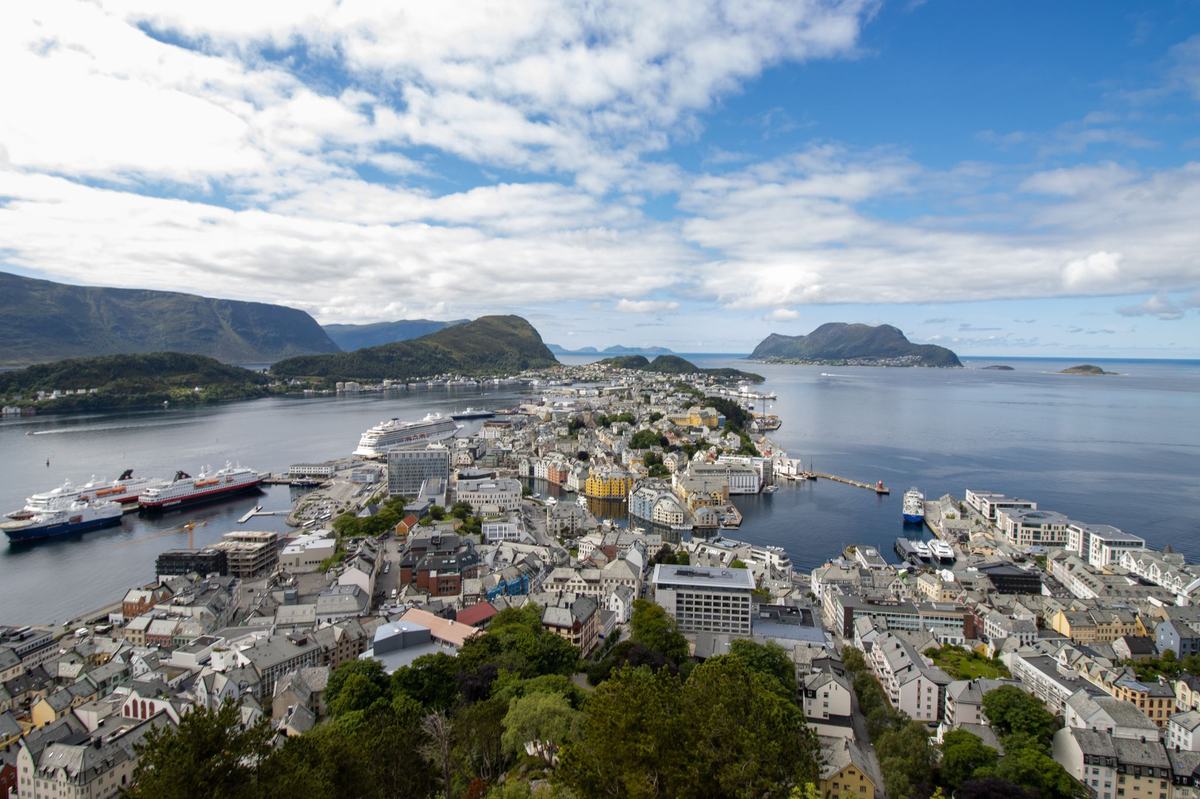
Norway runs about 1,750 kilometers from end to end, but in places it's barely six kilometers wide. The narrowest point is up by Tysfjord, where you could walk across the entire country in a long afternoon if the mountains let you. That shape is the legacy of glaciers carving long inlets straight into the rock, and those inlets - the fjords - are why the coastline is so wildly out of proportion. Measured around every cove and skerry, Norway's coast runs more than 100,000 kilometers, longer than the distance around Earth at the equator [4].
Most of that coast is empty. Half the population lives in a small belt around Oslo and the southeast, while the entire region north of the Arctic Circle holds fewer people than a mid-sized American suburb. Drive through northern Norway and you can go an hour without passing a gas station, then come around a bend and find a fishing village of forty people who have been there since the Vikings.
Fjords That Outlast Empires
The fjords are the postcard. Geirangerfjord and Nærøyfjord are UNESCO World Heritage sites, and for good reason - the walls rise so steeply out of the water that ferry passengers stand on deck and stare straight up. Sognefjord, the longest, runs 205 kilometers inland and reaches depths over 1,300 meters. That's deeper than most of the North Sea sitting right next to it [4].
Here's the thing about fjords - they're not just scenery, they're working infrastructure. Norwegians live on them, fish in them, ship goods through them, and increasingly, run electric ferries across them. Norway hit a strange and quiet milestone a few years back when more than 80 percent of new cars sold in the country were fully electric, the highest share anywhere on earth [5]. A country built on oil exports is also the country most aggressively replacing gasoline at home, and the contradiction doesn't seem to bother anyone there much.
The Oil Fund That Owns a Slice of Everything
Norway found oil in the North Sea in 1969. Most countries would have lit that money on fire over the next fifty years. Norway, very deliberately, did not. Instead, the government set up a sovereign wealth fund in 1990 and started funneling petroleum revenue into it, with a rule that the state could only spend the expected real return, not the principal. The fund is now worth more than 1.7 trillion US dollars, and it owns, on average, about 1.5 percent of every publicly listed company in the world [3].
That math is wild. It means every Norwegian, statistically, owns a small share of Apple, Toyota, Nestlé, and a few thousand other companies they've never heard of. The fund doesn't make Norwegians personally rich - they can't withdraw from it - but it backstops the welfare state, the pension system, and a quiet national confidence that the country has options. I had to look this up twice to be sure the numbers were real.
Daily Life, Weird Habits, and Brown Cheese
Facts about Norway culture are where it gets interesting, because the country is wealthy enough that you'd expect it to feel glossy, and it doesn't. The texture of daily life is closer to a high-functioning small town - people leave their strollers parked outside cafes with the baby still inside, kids walk to school in the dark in winter, and almost every family has a cabin somewhere out in the woods or up a fjord that they retreat to on weekends. That cabin tradition has a name, hytteliv, and it shapes how Norwegians think about rest.
Then there's brunost. Brown cheese. It's a caramelized whey product the color of peanut butter, served in thin slices on bread for breakfast, and Norwegians eat about a kilogram of it per person per year. It tastes nothing like cheese to an American palate. It tastes like the inside of a candy bar that got serious about life. Try it once. You'll either get it immediately or you won't.
Norwegians also have one of the most generous parental leave systems in the world, with mothers and fathers sharing close to a year of paid leave, and a culture of friluftsliv - "open-air living" - that treats hiking, skiing, and being outside in bad weather as moral virtues. There's a saying that there is no bad weather, only bad clothing, and after a winter there you stop laughing at it.
Polar Nights, Midnight Sun, and the Sami North
Above the Arctic Circle, the sun doesn't set for about two months in summer and doesn't rise for about two months in winter. Tromsø, the biggest city up there, makes a whole identity out of it - 24-hour light festivals, dark season aurora tours, the works. The northern lights are common enough that locals barely look up.
The far north is also home to the Sami, the Indigenous people of Norway, Sweden, Finland, and Russia's Kola Peninsula. They have their own parliament in Karasjok, their own languages, and a reindeer-herding tradition that goes back thousands of years [2]. Norway formally recognized Sami rights only in the late twentieth century, and the relationship is still being worked out. It's a piece of the country that doesn't show up in cruise ship brochures.
Frequently Asked Questions
Is Norway part of the European Union?
No. Norway is not an EU member. It's part of the European Economic Area, which gives it access to the EU single market and requires it to follow most EU economic rules, but Norway has voted against full EU membership twice, in 1972 and 1994.
What language do they speak in Norway?
Norwegian, which has two official written forms, Bokmål and Nynorsk. Sami is also co-official in several northern municipalities. Most Norwegians speak fluent English, especially under age 50, so travelers rarely have language trouble.
Why is Norway so rich?
Norway became wealthy primarily through North Sea oil and gas discovered in 1969. Rather than spending the revenue, the government invested it in a sovereign wealth fund now worth over $1.7 trillion. The fund backstops Norway's welfare state, pensions, and long-term public spending.
When is the best time to see the northern lights in Norway?
Late September through late March, in northern Norway above the Arctic Circle. Tromsø, Alta, and the Lofoten Islands are the most popular bases. You need dark, clear nights and a bit of luck with solar activity.
Is Norway expensive to visit?
Yes, Norway is one of the most expensive countries in Europe for travelers. Restaurant meals, alcohol, and hotels run well above EU averages. Self-catering, supermarket food, and using public transport keep costs down significantly.