- Capital: Ngerulmud, the smallest national capital in the world by population [1]
- Population: about 18,000 (2024 estimate) [2]
- Area: 459 square kilometers spread across roughly 340 islands [1]
- Official languages: Palauan and English [1]
- Currency: United States dollar (USD) [1]
- Home to the world's first shark sanctuary and the world's first national ban on reef-toxic sunscreens [3]
I had to look this up twice. Palau, a country I had genuinely never heard anyone talk about, has done more for ocean conservation than nations a thousand times its size. The whole place has fewer people than the high school district I grew up near in Montana. And yet when you ask marine biologists which country is setting the global standard for protecting reefs, Palau is the answer that keeps coming up.
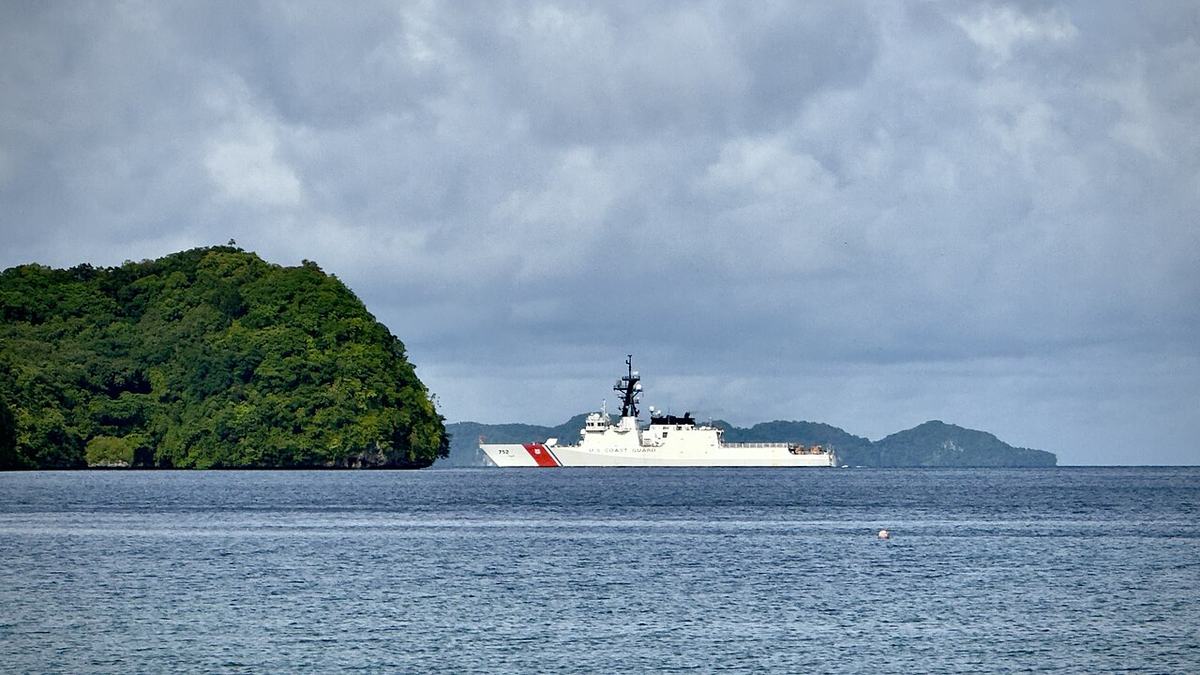
The country sits in the western Pacific, east of the Philippines and north of Indonesia, in a region called Micronesia. It's made up of roughly 340 islands, though only about nine of them are permanently inhabited. The rest are limestone and jungle and silence.
A Lake Full of Jellyfish That Can't Sting
The most famous thing about Palau, if it's famous for anything, is Jellyfish Lake. It's a marine lake on the island of Eil Malk, cut off from the open ocean for thousands of years. Inside, millions of golden jellyfish drift in a slow daily migration, following the sun across the surface so the algae living in their tissues can photosynthesize [4].
Here's the thing. Because they've been isolated from predators for so long, the jellyfish lost their sting. Or more precisely, the sting got so weak that humans can swim through clouds of them without feeling much of anything. You can snorkel in the lake (it's been opened and closed to tourists at various times depending on the population) and find yourself surrounded by pulsing, gold-colored creatures that bump softly into your arms and legs. It sounds made up. I watched footage and still wasn't fully convinced until I dug into the biology.
The World's First Shark Sanctuary
In 2009, Palau declared its entire exclusive economic zone, about 600,000 square kilometers of ocean, a shark sanctuary [3]. That's the first time any country had done it. Commercial shark fishing was banned outright. The president at the time, Johnson Toribiong, made a speech at the UN explaining the math: a live shark in Palauan waters generates around 1.9 million dollars in tourism revenue over its lifetime. A dead shark sold for its fins is worth a few hundred dollars, one time.
Palau didn't stop there. In 2020, the country closed 80 percent of its waters to all commercial fishing, creating one of the largest fully protected marine reserves in the world [5]. To put that in perspective, that's an ocean area larger than California. A country with the population of a US suburb is protecting a piece of the planet bigger than most US states.
The Sunscreen Ban That Actually Worked
In 2020, Palau also became the first country to ban sunscreens containing chemicals that bleach coral. Oxybenzone, octinoxate, and a few others were pulled from store shelves and prohibited from entering the country. Tourists arriving with banned sunscreens in their luggage now get them confiscated at the airport, and the customs agents are not joking around about it [3].
A small country can't fix climate change on its own. But chemical sunscreen damage was one piece of the reef-bleaching puzzle that Palau could actually control, so they did. The ban has since been studied as a model, and a handful of US states and tourist destinations have followed with their own versions.
The Palau Pledge
When you fly into Palau, you sign something. It's printed in your passport and you literally have to put your name to it before you're allowed in. The Palau Pledge is a promise to act as a steward of the country during your visit. To leave nothing behind but footprints. To not disturb wildlife. To take only memories [6].
It was written, in part, by the children of Palau. The English version reads like a letter from a kid to a grown-up visitor, asking them to be careful. I find this kind of moving. You don't get many countries that make the entry document an ethical commitment.
A Capital Most People Have Never Heard Of
Palau's capital, Ngerulmud, has fewer than 300 residents. It only became the capital in 2006, when the government building moved there from Koror, the country's biggest town. It's the least populous national capital in the world. The capitol complex looks oddly like a small American statehouse, which makes sense, because Palau was administered by the United States under a UN trusteeship from 1947 to 1994 [1]. The country still uses the US dollar and has a Compact of Free Association with the US.
Most government workers don't actually live in Ngerulmud. They commute in from Koror or the nearby villages. The capital is more of a working complex than a city.
Frequently Asked Questions
Where is Palau located?
Palau is an island country in the western Pacific Ocean, east of the Philippines and north of Indonesia. It is part of the Micronesia region and consists of around 340 islands spread across a wide stretch of tropical ocean.
Is Palau safe to visit?
Yes. Palau has very low crime rates and is widely considered one of the safer destinations in the Pacific. The biggest risks for visitors involve ocean conditions, strong currents, and remote diving, not crime or political instability.
What language is spoken in Palau?
Palau has two official languages: Palauan and English. Palauan is the everyday language for most residents, while English is used in government, business, and tourism. A few older Palauans also speak Japanese, a legacy of pre-1945 administration.
Why did Palau ban sunscreen?
Palau banned sunscreens containing chemicals like oxybenzone and octinoxate because research linked them to coral bleaching and reef damage. The 2020 law was the first nationwide ban of its kind in the world.
What currency does Palau use?
Palau uses the United States dollar as its official currency. This dates back to the country's period under US administration from 1947 to 1994, and the dollar was kept after independence under the Compact of Free Association.