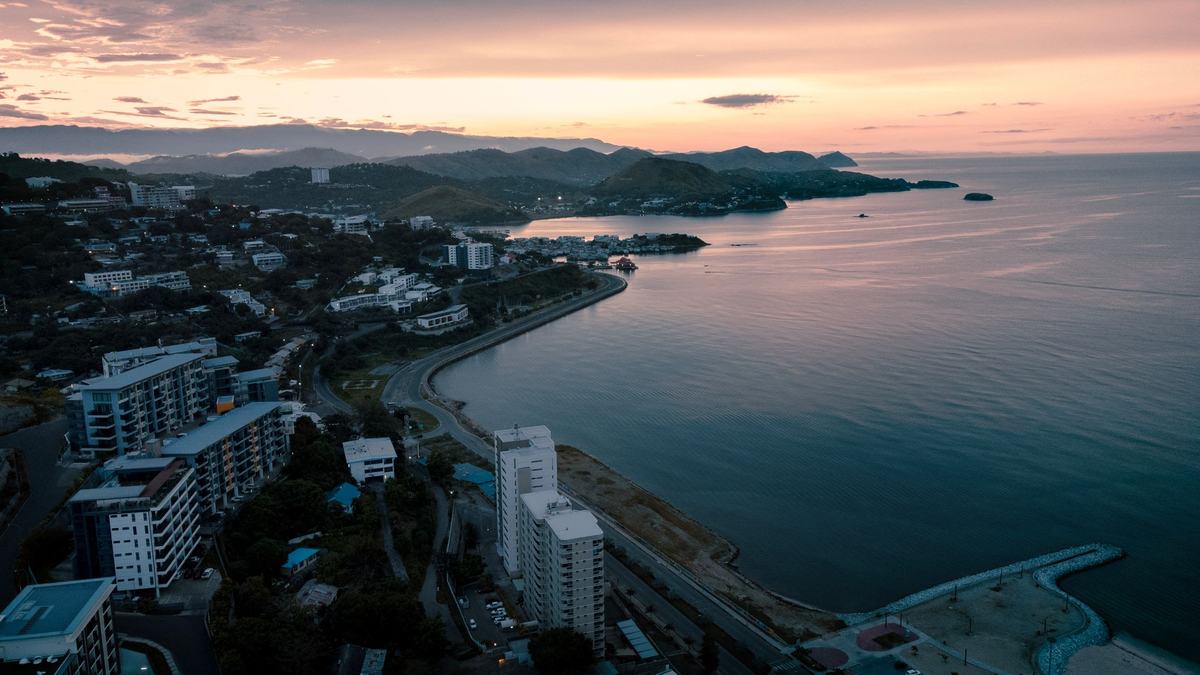
- Capital: Port Moresby [1]
- Population: roughly 10.3 million (2023 estimate) [1]
- Area: 462,840 square kilometers (about the size of California) [1]
- Official languages: Tok Pisin, English, Hiri Motu, and sign language [2]
- Currency: Papua New Guinean kina (PGK)
- Distinguishing claim: more than 800 living languages, the highest linguistic diversity of any country on the planet [2]
Most people I know couldn't point to Papua New Guinea on a map. I couldn't either, until I read a sentence in a National Geographic from the 1970s that stopped me cold: there were valleys in this country that nobody outside them knew existed until the 1930s. Not "remote villages". Whole valleys. Hundreds of thousands of people. A pilot flying over the highlands in 1933 looked down and saw smoke from cooking fires where the maps said nothing should be. Turns out, the maps were wrong.
I had to look this up twice. It still feels impossible.
The Most Linguistically Diverse Country on Earth
Papua New Guinea has more than 800 distinct living languages. Not dialects. Languages. To put that in perspective, the entire continent of Europe has somewhere around 200. One country, smaller than Texas in population, accounts for roughly 12% of all the languages spoken on Earth [2].
The geography did this. The country is a tangle of mountain ranges, river basins, and dense rainforest, and for thousands of years a community on one side of a ridge might live, hunt, marry, and die without ever meeting the community on the other side. So languages just kept branching, like a family tree with no pruning. There are languages here spoken by fewer than fifty people. There are languages that have no known relatives anywhere on the planet.
Tok Pisin, an English-based creole, became the glue. It's how a guy from the Sepik plains and a woman from the Highlands actually talk to each other. The name literally means "talk pidgin". And it's wonderful. "Bilum" is a string bag. "Haus sik" is a hospital. "Helikopta" is, well, you can guess.
The Last Lost Worlds
Here's the thing about the highlands. Until 1933, outsiders thought central New Guinea was uninhabited. The mountains looked too steep, the jungle too thick. Then Australian gold prospectors named the Leahy brothers flew over the central valleys and saw cultivated fields. Neat gardens. Pig pens. A million people, give or take, living in farming societies that had been there for thousands of years and had no idea the rest of the world existed.
The first contact footage exists. You can find it. The Leahys filmed villagers seeing white men for the first time, and the villagers filmed back, in a sense - they sang songs about the encounter for decades afterward, songs that anthropologists later recorded. Both sides were trying to make sense of what they were looking at. Which, if you think about it, is one of the more remarkable two-way moments in modern human history.
There are still small uncontacted groups today, mostly in remote parts of the western border with Indonesia.
Bird of Paradise Country
The bird of paradise is the national symbol. It's on the flag. It's on the currency. And once you see one in a wildlife documentary, you understand why - these are not normal birds. The males have feathers shaped like ribbons, antennas, and pom-poms, in colors that look painted on. They dance. They clear stages on the forest floor and perform for hours.
David Attenborough has called Papua New Guinea one of his favorite places on Earth to film, and the bird of paradise is a big reason why. Different species have wildly different dances. One spreads its feathers into a perfect oval and hops sideways. Another flips upside down and turns into what looks like a tiny black smiley face with iridescent blue eyes. Evolution got bored here and started making art.
There are around 40 species in the family, and most of them live only on the island of New Guinea or in the surrounding islands.
Cultural Practice and the Sing-Sing
Papua New Guinea culture isn't one culture. It's hundreds, sitting next to each other. The most visible expression is the sing-sing - gatherings where different tribes show up in full traditional dress to dance, drum, and present themselves. Body paint in red, yellow, and white. Headdresses built from bird of paradise feathers, cassowary plumes, and pigs' tusks. Shell necklaces. Bone ornaments through the nose. It's not a tourist performance, though tourists go. It's how communities introduce themselves to each other.
Pigs are central to social life in many highland communities. Wealth is measured in them. A wedding might involve a hundred pigs changing hands. A funeral, too. There's a moka tradition in the western highlands where a man builds his reputation by giving away more pigs than his rival, who then has to give away even more in return. It is, in a real sense, a competitive generosity economy.
The Kokoda Track
If you've heard of one place in Papua New Guinea, it might be Kokoda. The Kokoda Track is a 96-kilometer trail through the Owen Stanley Range, and during World War II it was the site of brutal fighting between Australian and Japanese forces in 1942. The Japanese were trying to take Port Moresby by crossing the mountains overland. The Australians, badly outnumbered and undersupplied, held them back in some of the hardest jungle warfare of the entire Pacific theater.
For Australians, Kokoda has become a kind of national pilgrimage. Thousands walk the track every year. Most of them are not soldiers, just regular people who want to see what their grandfathers came back changed by. The trail itself is steep, muddy, and unforgiving, and it gives you a small taste of what those eight weeks of fighting must have been like.
A Geological Strange Place
Papua New Guinea sits on the Ring of Fire. There are active volcanoes, frequent earthquakes, and a coastline shaped by tectonic violence. The town of Rabaul, on the island of New Britain, was buried in ash twice in the twentieth century, most recently in 1994, when two volcanoes erupted simultaneously on either side of the harbor. Most of the population had evacuated in time, but the town itself never recovered. People rebuilt on the edge of the ash field and just live with the geology.
The country also has some of the largest gold and copper deposits on Earth, which has been both a blessing and a complication. Mining brings in money. It also brings in arguments about land rights, environmental damage, and who actually owns what's underneath ground that families have farmed for centuries.
Frequently Asked Questions
What language do they speak in Papua New Guinea?
Papua New Guinea has four official languages: Tok Pisin, English, Hiri Motu, and sign language. In practice, Tok Pisin is the most widely used lingua franca. The country also has more than 800 indigenous languages, the highest linguistic diversity of any nation on Earth.
Is Papua New Guinea safe to visit?
Papua New Guinea is safe in many areas but requires planning. Major cities like Port Moresby have higher crime rates, and travel between regions often happens by small plane because of difficult terrain. Most visitors go with organized tours, trekking groups, or to specific resorts, and these experiences are generally low risk.
What is Papua New Guinea famous for?
Papua New Guinea is famous for having the most languages of any country, around 800 in total. It's also known for the Kokoda Track from World War II, its birds of paradise, vibrant tribal sing-sing festivals, and being one of the last places on Earth where uncontacted communities still exist.
Is Papua New Guinea the same as Indonesia?
No. Papua New Guinea is an independent country that occupies the eastern half of the island of New Guinea. The western half of the island is part of Indonesia and is known as Western New Guinea or Papua. The two share a long land border but are politically separate nations.
What currency is used in Papua New Guinea?
The currency is the Papua New Guinean kina, abbreviated PGK. The name comes from a traditional shell once used as currency by coastal communities. The kina is divided into 100 toea, also named after a shell. Cash is still widely used, especially outside major towns.