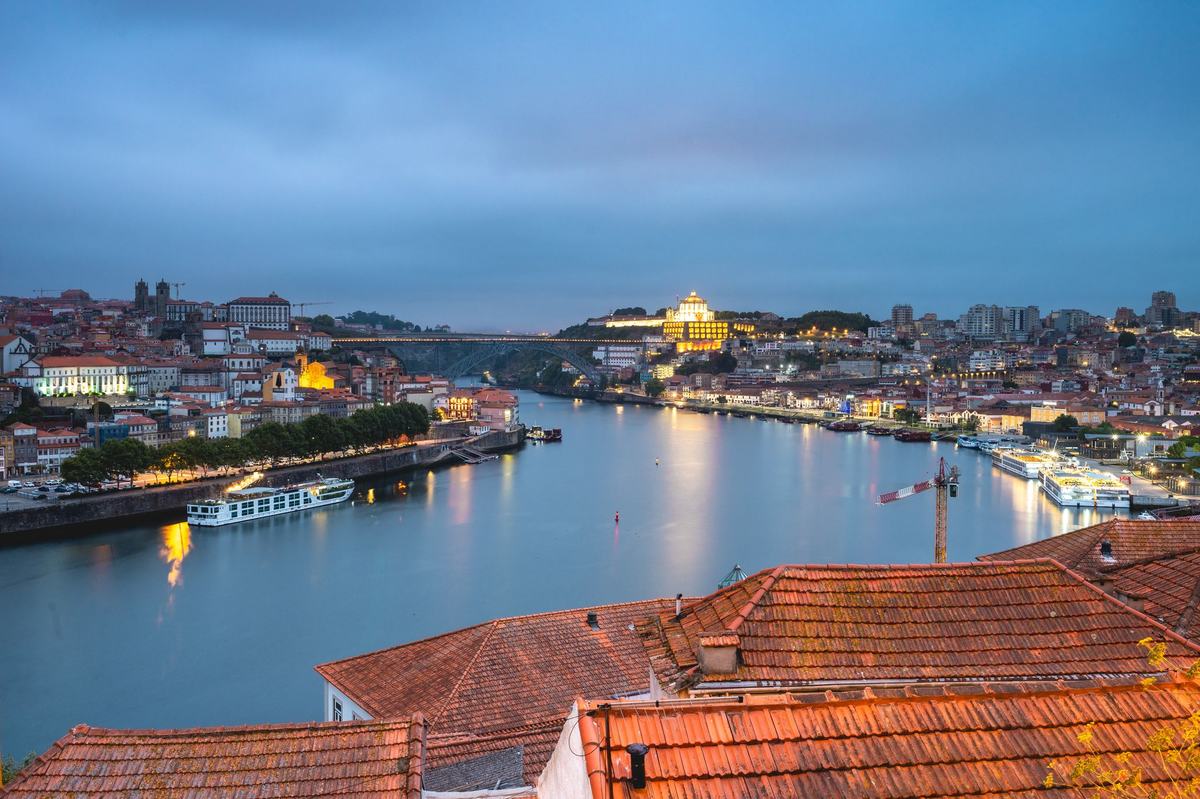
- Capital: Lisbon, one of the oldest cities in Western Europe [1]
- Population: about 10.6 million (2024 estimate) [2]
- Area: 92,225 square kilometers, including the Azores and Madeira [1]
- Official language: Portuguese, spoken by over 260 million people worldwide [3]
- Currency: Euro (EUR)
- Distinguishing fact: Portugal's mainland borders have stayed essentially unchanged since 1139, the oldest in Europe [3]
Here's something that'll ruin the next geography quiz you take: Portugal has had the same borders for nearly 900 years. The line between Portugal and Spain was drawn in 1139, formally recognized in 1143, and finalized in 1297 with the Treaty of Alcanices. Since then, while every other country in Europe has been redrawn, partitioned, merged, or shoved around by wars and treaties, Portugal has just stayed where it was. The Holy Roman Empire dissolved. Yugoslavia was invented and then unraveled. France lost and regained Alsace twice. And Portugal kept its same outline like a stone in a river.
I had to look this up twice. A country at the western edge of a continent that has spent most of the last millennium tearing itself apart, and the country never moved. That fact alone is worth more attention than it gets. But it also explains a lot about Portugal. There is a settled quality to the place. A sense that things have been done a certain way for a long time and probably will keep being done that way. The cobblestones, the tile, the slow lunches, the seven hundred year old cafes. Portugal doesn't feel like it's in a hurry, because it never had to be.
A Language Spoken on Four Continents
When the Portuguese sailed out in the fifteenth century, they took their language with them and left it everywhere they landed. Today Portuguese is spoken by more than 260 million people across Europe, South America, Africa, and Asia. Brazil alone has over 200 million Portuguese speakers, more than twenty times the population of Portugal itself. Angola, Mozambique, Cape Verde, Guinea-Bissau, Sao Tome and Principe, Equatorial Guinea, East Timor, and the special administrative region of Macau all use Portuguese as an official language.
This is one of the strangest facts about a country of ten million people. The language that started in a small kingdom on the western edge of Iberia is now the official language of countries on four continents, and the sixth most spoken language in the world. Portuguese is bigger than French. Bigger than German. Bigger, by speaker count, than Russian. The cultural reach of this small country has always punched well above the size of the country itself, which is one of the interesting facts about Portugal culture that people from larger places tend to overlook.
The World's Oldest Bookstore Still Sells Books
In downtown Lisbon, on Rua Garrett, sits Bertrand Bookstore. It opened in 1732 and has been selling books continuously ever since. The Guinness Book of World Records officially recognizes it as the oldest operating bookshop in the world. Bertrand has weathered the 1755 Lisbon earthquake, which destroyed most of the city, a Napoleonic invasion, the fall of the monarchy, the Estado Novo dictatorship, the Carnation Revolution, and the arrival of Amazon. It is still there, still selling books, and you can still walk in and buy one.
The earthquake bears mentioning, because it is the dividing line in Portuguese history. On November 1, 1755, a magnitude 8.5 quake hit Lisbon during All Saints' Day mass. The tremor knocked down churches with the congregations inside, fires from the candles spread for days, and a tsunami forty feet high came up the Tagus River and finished the job. About a third of the city died. The prime minister at the time, the Marques de Pombal, rebuilt central Lisbon in a grid of earthquake-resistant buildings reinforced with wooden cages called gaiolas, an early form of seismic engineering. The Baixa neighborhood you walk through today is what he made.
Fado: Music for Missing Something
Fado is the music Portugal invented to explain itself. It started in the working-class neighborhoods of Lisbon in the early 1800s, sung in taverns and on the docks, a slow guitar and a singer working through saudade. There is no single English word for saudade. It's the ache of missing something you love and might never have back. A person, a place, a version of yourself. A whole empire, possibly. Fado is built on that feeling.
UNESCO added fado to its list of Intangible Cultural Heritage in 2011. The genre splits into two main traditions, the Lisbon style and the Coimbra style, the latter sung mostly by male university students in dark robes. The most famous fado singer was Amalia Rodrigues, who carried the music to global audiences in the twentieth century. When she died in 1999, Portugal declared three days of national mourning. They buried her in the National Pantheon next to kings.
Port Wine and the Douro Valley
Port wine takes its name from Porto, the city at the mouth of the Douro River where the wine is aged in warehouses called caves. But the grapes grow upriver, in the Douro Valley, on terraces cut into hillsides so steep that everything has to be done by hand. The Douro is the oldest demarcated wine region in the world. The Marques de Pombal again, the same one who rebuilt Lisbon, drew the boundaries of the region in 1756 to protect port from imitation. The same lines are basically still in use.
Walking the valley in late summer, you see terraces that have been worked for centuries, sometimes stacked twenty levels high, the schist walls warm from the sun. Some of the families making port today are the descendants of the families who made it three hundred years ago. The wine is fortified, meaning grape spirit is added during fermentation to stop it and leave the natural sweetness in. A bottle of tawny port can age for forty years and still taste like a sunny afternoon.
A Country of Cork Trees
Portugal produces about half of the world's cork. The cork oak, Quercus suber, grows mostly in the Alentejo region in the south, where the trees stand in spread-out groves called montados. Cork is harvested by stripping the outer bark in long curling sheets, and a tree can only be stripped once every nine years. The first stripping happens when the tree is about twenty-five years old, and a cork oak can live and produce cork for two hundred years.
That timeline is the part I keep thinking about. Back home in Montana, the forests are dense and the wood is cut and gone. Cork is different. The tree gives, recovers, gives again, lives longer than the people who plant it. About 34 percent of the world's cork comes from Portugal alone, and the cork oak is the national tree, protected by law. You cannot cut one down without permission, even on your own land.
Frequently Asked Questions
What is Portugal best known for?
Portugal is best known for port wine, fado music, the cities of Lisbon and Porto, the Algarve coast, and its age of exploration history. It's also famous for cork production, pastel de nata custard tarts, the world's oldest bookstore, and having the oldest stable borders in Europe.
Is Portugal part of Spain?
No, Portugal is an independent country and has been since 1139. It shares the Iberian Peninsula with Spain, but the two countries have separate languages, governments, currencies historically, and distinct cultures. Portugal and Spain are both member states of the European Union and the Schengen Area.
What language is spoken in Portugal?
Portuguese is the official language of Portugal, spoken by nearly all residents. Mirandese is recognized as a co-official regional language in the northeastern Miranda do Douro area. English is widely spoken in tourist regions, larger cities, and by younger Portuguese, especially in hospitality and business.
Is Portugal a safe country to visit?
Portugal consistently ranks among the safest countries in the world, often in the top ten of the Global Peace Index. Violent crime against tourists is rare, and major cities like Lisbon and Porto are considered very safe. As anywhere, watch for pickpockets on trams and in crowded tourist neighborhoods.
What currency does Portugal use?
Portugal uses the euro (EUR), which it adopted in 2002 when the currency was introduced for everyday use across the eurozone. Before that, Portugal used the escudo. ATMs are widespread, credit and debit cards are accepted almost everywhere, and contactless payment is common.