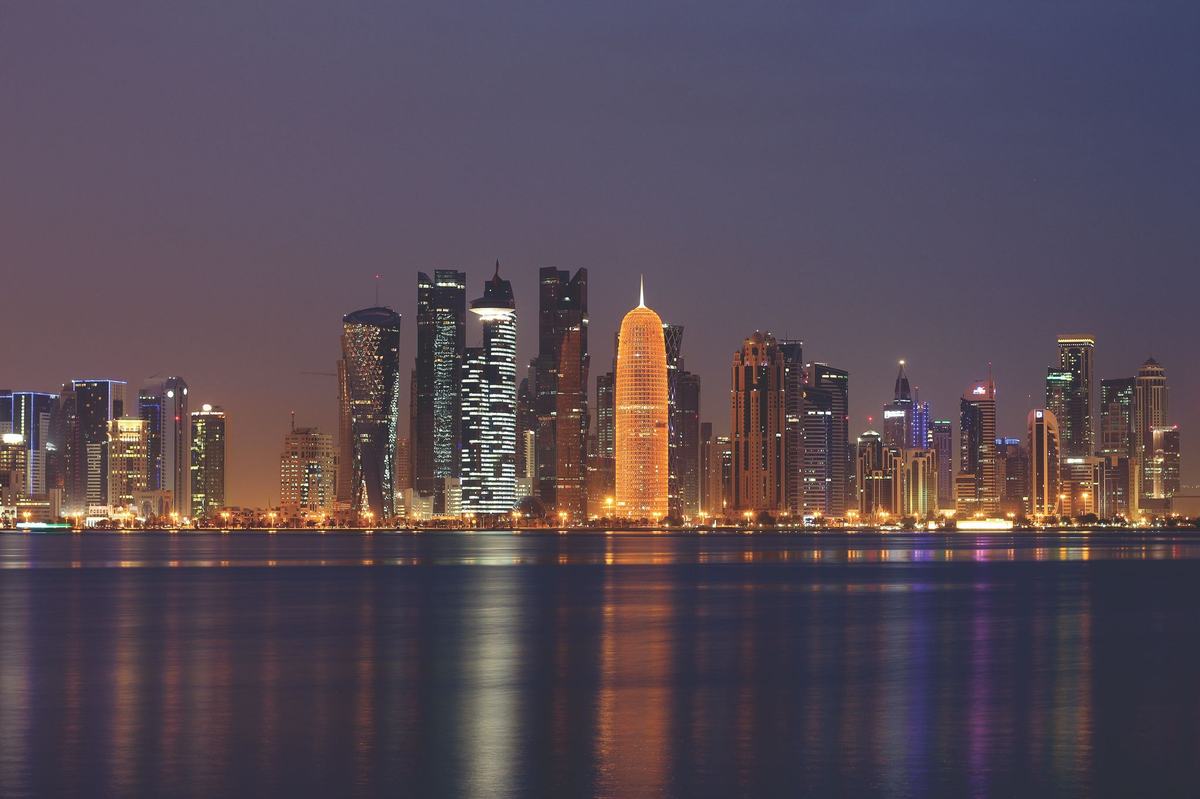
- Capital: Doha [1]
- Population: about 3.0 million, with roughly 88% foreign nationals [2]
- Area: 11,581 square kilometers, roughly the size of Connecticut [1]
- Official language: Arabic; English widely used in business [1]
- Currency: Qatari riyal (QAR), pegged to the US dollar [3]
- One of the world's largest natural gas reserves, third behind Russia and Iran [4]
Most people couldn't point to Qatar on a map before 2022. Then the World Cup happened, and suddenly everyone had an opinion about a country smaller than Connecticut. Here's the thing - the soccer was the loudest chapter, but it isn't the most interesting one. The interesting part is how a sandy thumb sticking out of the Arabian Peninsula went from pearl divers to the highest GDP per capita on Earth in about sixty years.
A Country Built on Gas, Not Just Oil
When people think Gulf states, they think oil. Qatar has oil too, sure, but the real story is gas. Specifically, the North Field, which Qatar shares with Iran (where it's called South Pars), and which holds the largest non-associated natural gas field on the planet [4]. That single underwater field is the reason Qatar can run an entire country on a population the size of metropolitan Chicago.
The country became the world's top exporter of liquefied natural gas in the early 2000s and held that title for years before Australia and the US started catching up [4]. LNG is essentially gas cooled down to about minus 162 degrees Celsius until it shrinks to a liquid you can ship in a tanker. Qatar figured out how to do this at industrial scale before most countries thought it was worth trying. Turns out, betting on cold liquid gas in the 1990s was one of the smartest energy plays of the last fifty years.
The Population Math Is Wild
Qatar has about 3 million people, but only around 350,000 of them are actually Qatari citizens [2]. The rest - Indian, Nepali, Filipino, Bangladeshi, Egyptian, plus a long list of Western expats - are there on work visas. That means in any given crowd in Doha, you might hear ten languages before you hear Arabic.
It also means the country runs on an unusual social contract. Citizens get free education, free healthcare, subsidized utilities, and generous state benefits. The work that builds and runs the country mostly happens through migrant labor. It's a system that's been heavily criticized internationally, especially around the kafala sponsorship rules, and Qatar has reformed parts of it in the last decade [5]. Whether those reforms went far enough is a debate that's still very much open.
No Rivers, No Lakes, No Problem
Here's a fact I had to look up twice: Qatar has no permanent rivers and no natural freshwater lakes. None. The entire country drinks water that started as seawater and went through a desalination plant.
Back home in Montana, water just falls out of the sky and runs down mountains. In Qatar, every glass of tap water in Doha exists because a plant on the coast boiled or filtered the Persian Gulf. About 99% of municipal water in Qatar comes from desalination [6]. The country basically engineered its way around not having a river, which is a sentence that would have sounded like science fiction to anyone living there a hundred years ago.
The Desert Goes Green for a Few Weeks
This is the one nobody talks about. The interior of Qatar looks like exactly what you'd expect, sand, scrub, the occasional camel. But in late winter, if the rain cooperates, parts of the desert turn green almost overnight. Wildflowers bloom, grasses come up, and Qatari families pack up tents and head out for what's called "barr" season, basically a national camping tradition that lasts a few weeks before the heat returns and burns everything brown again [7]. It's a side of the country tourists almost never see, because by the time most people arrive in March or April, it's already over.
Pearls Came First
Before gas, before oil, Qatar's economy was pearls. For centuries, men sailed out into the Gulf every summer and dove with weighted ropes and nose clips to depths of 60 to 80 feet, looking for oysters. It was brutal, dangerous work, and the Qatari pearl was famous across India, Europe, and the Americas. Then in the 1920s, the Japanese figured out how to culture pearls cheaply, and the global market collapsed almost overnight [8]. Qatar went from a working pearling economy to near-poverty in less than a decade. The Souq Waqif in Doha still has pearl merchants, and the national symbol on coins and ministries is, of all things, an oyster holding a pearl. Which, if you think about it, is a country choosing to remember exactly where it came from.
Frequently Asked Questions
Is Qatar a rich country?
Yes. Qatar consistently ranks in the top five countries worldwide by GDP per capita, largely because of natural gas exports and a small citizen population [2]. The wealth is distributed unevenly between citizens and migrant workers, but national infrastructure, healthcare, and education are well-funded by global standards.
What language do they speak in Qatar?
The official language is Arabic, specifically a Gulf dialect. English is widely spoken in business, hospitality, and government services, and is taught in schools alongside Arabic [1]. Because most residents are foreign workers, Hindi, Urdu, Tagalog, and Malayalam are also commonly heard in daily life.
Is Qatar safe for tourists?
Qatar has one of the lowest violent crime rates in the world and is generally considered very safe for visitors [9]. Travelers should respect local customs around dress and public behavior, especially during Ramadan. Alcohol is restricted to licensed hotels and the airport, not sold in general stores.
When is the best time to visit Qatar?
November through March, when daytime temperatures sit around 20-28 degrees Celsius (68-82 Fahrenheit). Summer, from June to September, regularly exceeds 45 Celsius (113 Fahrenheit), and many outdoor attractions effectively shut down during the day.
Sources
- The World Factbook: Qatar - CIA
- Qatar - World Bank Data
- Qatar Central Bank
- Qatar Country Analysis - US Energy Information Administration
- Qatar's Labour Reforms - International Labour Organization
- Water Resources in Qatar - FAO Aquastat
- Qatar's Winter Camping Tradition - Qatar National Tourism Council
- The Pearl Trade in the Gulf - UNESCO
- Qatar Travel Advisory - US Department of State