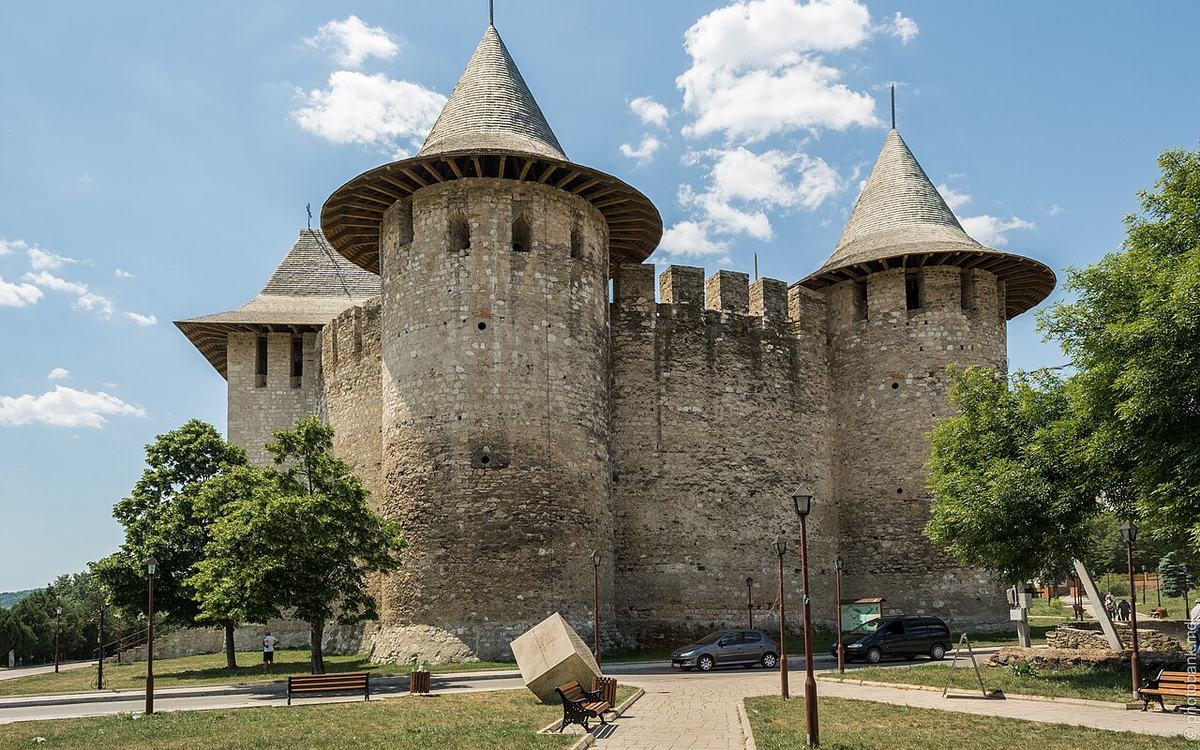
- Capital: Chisinau [1]
- Population: About 2.5 million [1]
- Area: 33,846 square kilometers (13,068 sq mi) [1]
- Official language: Romanian [1]
- Currency: Moldovan leu (MDL) [1]
- Distinguishing claim: Holds the Guinness record for the world's largest wine collection, stored in 200 kilometers of underground tunnels at Milestii Mici [2]
Most people couldn't find Moldova on a map. That's probably exactly how it stays the way it does. A small landlocked country tucked between Romania and Ukraine, it gets skipped over by almost every travel guide and almost every news cycle, which is a shame, because it's one of the strangest, most rewarding places I've ever read about. There's a wine cellar so big you have to drive through it. A self-declared country inside the country that still uses Soviet symbols. A capital city full of brutalist concrete next to crumbling tsarist villas. And a wine industry that traces back at least 5,000 years and somehow still operates under the radar. Here's the thing about Moldova: the more you learn, the less it makes sense, and the more you want to go.
A Country That's Mostly Vineyard
Moldova has more vineyards per square mile than almost anywhere on earth. About 3.8% of the entire country is planted with grapes [3], and roughly one in four working adults is connected somehow to the wine industry. Wine is not a hobby here. It's the economy, the culture, and a frequent dinner-table topic.
The wine cellar at Milestii Mici, just outside Chisinau, holds the Guinness World Record for the largest wine collection on the planet, with about two million bottles stored in 200 kilometers of limestone tunnels carved out of an old quarry [2]. You can drive a car through it. People do. The tunnels are wide enough that the company runs a kind of underground street system with traffic signs, and a few of the largest galleries are set up as tasting rooms behind heavy oak doors. Cricova, another famous cellar nearby, has 120 kilometers of its own tunnels and a private collection that once allegedly included bottles from Hermann Göring's looted wartime stash [4].
Moldova also has its own native grape varieties that exist almost nowhere else, like Feteasca Neagra and Rara Neagra, both of which produce dry reds that taste nothing like anything you'd find in a French or American supermarket. I had to look this up twice when I read that Moldovan winemaking traces back 5,000 years. That's older than written language in most of the world.
The Country Inside the Country
On the eastern bank of the Dniester River sits Transnistria, a strip of land that declared independence from Moldova in 1990 and has been quietly running itself ever since [5]. It has its own currency, its own border guards, its own parliament, its own army, its own license plates, and a flag that still proudly carries the Soviet hammer and sickle. No United Nations member state recognizes it. As far as the rest of the world is concerned, it is part of Moldova. As far as Transnistria is concerned, it is not.
Crossing into Transnistria feels like walking into a country that decided to stop the clock in 1989. Statues of Lenin still stand in the main squares. Government buildings still bear Soviet emblems. The capital, Tiraspol, has streets named after Bolshevik heroes that the rest of the post-Soviet world quietly renamed thirty years ago. And nobody talks about this, but it's one of the only places left on earth where you can buy a bottle of Kvint cognac (their pride and joy) using a currency that doesn't function anywhere else in the world.
Chisinau and the Soviet Inheritance
Chisinau is a city of contrasts that don't always sit well together. The center has wide tree-lined boulevards built in the Soviet style, full of heavy concrete government buildings and big public squares. Right next door you'll find pre-revolutionary villas with iron balconies and faded pastel paint, and on the same block a modern glass shopping center. The city was devastated by an earthquake in 1940 and then again by World War Two bombing, which is why so much of what's standing now is mid-century Soviet construction [6]. The old Moldova got mostly erased.
Still, Chisinau has more parks than most cities its size, including Stefan cel Mare Park in the very center, named for the medieval prince who fought off the Ottomans and is still the closest thing Moldova has to a national hero. Around three quarters of Moldovans say they're Orthodox Christian, and you'll find churches with onion domes and gilded interiors tucked between the apartment blocks [1].
A Language That's Basically Romanian
Officially, Moldova's language is Romanian. For decades during the Soviet period, the government insisted it was a separate language called Moldovan, written in the Cyrillic alphabet, and tried to enforce that distinction politically. In 2013, the Constitutional Court of Moldova confirmed that the official state language is Romanian, written in the Latin alphabet [7]. Linguistically, they are the same language, with regional accents and a few different words, the way American English and British English are the same language.
Russian is still widely spoken, especially among older Moldovans and in Transnistria. Ukrainian, Bulgarian, Gagauz, and a few other minority languages are also part of the national fabric. The Gagauz are a Turkic-speaking, Orthodox Christian minority concentrated in the south of the country in their own autonomous region called Gagauzia. Turns out you can be a Turkic Christian who lives in a Romanian-speaking former Soviet republic, and that's a perfectly normal Moldovan identity.
The Quiet Countryside
Drive an hour outside Chisinau and you're in a landscape that hasn't changed much in centuries. Rolling hills of vineyards and sunflower fields. Horse-drawn carts on the side of the road. Old men in flat caps sitting on benches outside village stores. The Orheiul Vechi monastery complex carved into a limestone cliff above the Raut River is one of those places that makes you stop and just stand there for a while [8]. Monks dug cave cells into the rock starting in the 13th century, and one of the small chapels is still in use, with a working bell tower up on the cliff top.
This is the kind of place where back home in Montana you'd expect to see maybe one truck pass an hour. In Moldovan villages, the rhythm feels similar. Slow, weathered, deeply rooted. The country exports a lot of fruit (apples, plums, walnuts, cherries) and most of it grows in this rural patchwork [9].
Frequently Asked Questions
Where is Moldova located?
Moldova is a landlocked country in Eastern Europe, bordered by Romania to the west and Ukraine to the north, east, and south. Its capital is Chisinau. It does not have a coastline, though the Danube River touches its southern border for just 480 meters.
Is Moldova part of the European Union?
Moldova is not yet a member of the European Union, but it became an official EU candidate country in June 2022 and accession negotiations opened in 2024. It already has visa-free travel agreements with the EU and uses many EU-aligned standards. Full membership is a long process.
What language do they speak in Moldova?
The official language is Romanian, written in the Latin alphabet. Russian is also widely spoken, especially in the Transnistria region and among older generations. Small communities speak Ukrainian, Gagauz, and Bulgarian. Most younger Moldovans in cities understand some English.
Is Moldova safe to visit?
Moldova is generally considered safe for travelers, with low rates of violent crime. Standard precautions apply in tourist areas around Chisinau. Travel to the breakaway region of Transnistria is possible but requires extra paperwork at the de facto border, and you should keep transit slips with you at all times.
What is Moldova famous for?
Moldova is best known for its vast wine industry, including the Milestii Mici cellars that hold the world's largest wine collection. It's also known for the breakaway Soviet-style region of Transnistria, the cave monastery at Orheiul Vechi, and one of the most rural, vineyard-covered landscapes in Europe.
Sources
- The World Factbook: Moldova
- Guinness World Records: Largest wine collection
- OIV: State of the World Vine and Wine Sector
- Encyclopaedia Britannica: Moldova
- BBC News: Transnistria profile
- UNESCO: Chisinau City Profile
- Constitutional Court of Moldova: Decision on State Language (2013)
- National Agency for Tourism of Moldova: Orheiul Vechi
- World Bank: Moldova Country Overview