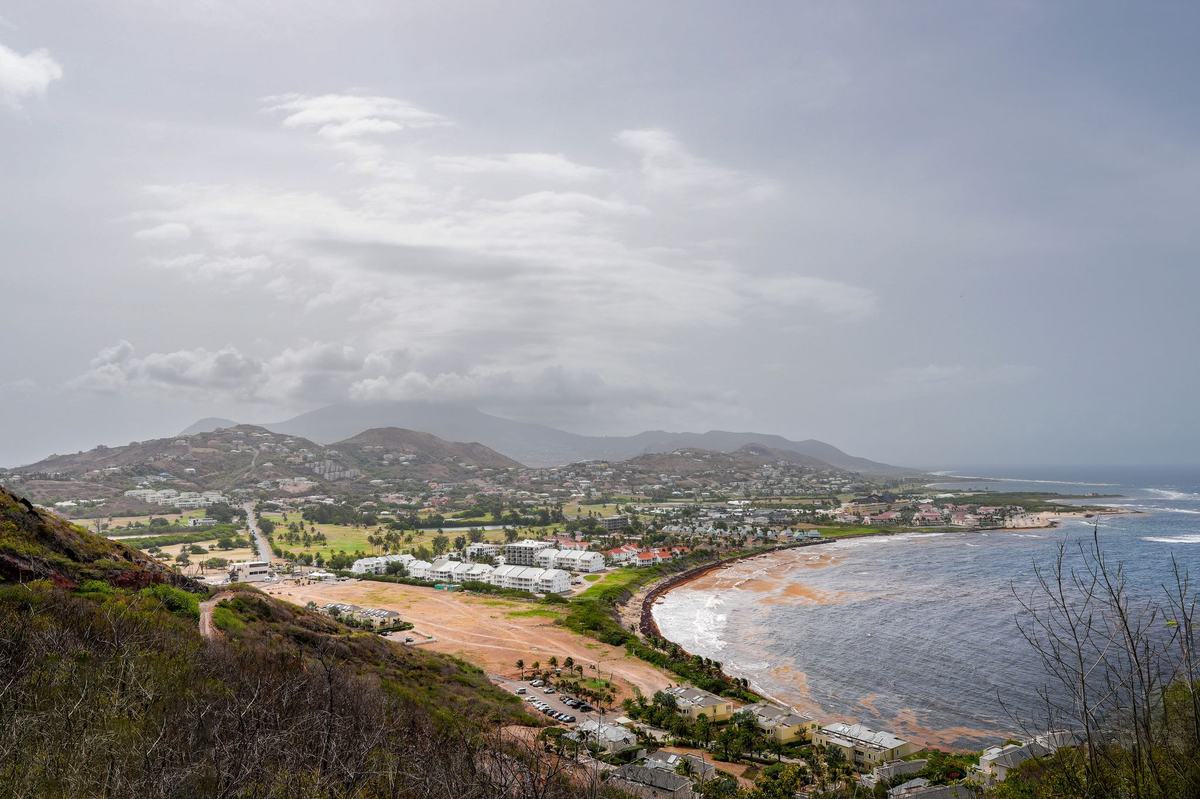
- Capital: Basseterre [1]
- Population: roughly 47,000 (2023) [2]
- Area: 261 square kilometers (101 sq mi) - smallest sovereign country in the Western Hemisphere [1]
- Official language: English [1]
- Currency: East Caribbean dollar (XCD), pegged to the US dollar at 2.70 [3]
- Distinguishing claim: first country in the world to offer citizenship by investment, since 1984 [4]
I grew up thinking the smallest countries in the world were all in Europe. Vatican City, Monaco, Liechtenstein, the usual suspects. Then I learned that the smallest sovereign nation in the entire Western Hemisphere is a pair of volcanic islands in the eastern Caribbean that most Americans couldn't place within a thousand miles. Saint Kitts and Nevis. Two islands separated by a two-mile channel called The Narrows. Total area: about a third the size of Rhode Island. And that's not even the strangest thing about it.
Two Islands, One Country, Almost a Divorce
Saint Kitts (officially Saint Christopher) and Nevis became one country when they gained independence from the United Kingdom on September 19, 1983. They were the last British colony in the Caribbean to do so [1]. The federation that emerged is unusual: Nevis, the smaller island with around 11,000 people, has its own premier, its own legislature, and a constitutional right to secede.
In 1998, Nevis actually held a referendum to leave. The vote was 62 percent in favor of independence, but the constitution required a two-thirds supermajority. They missed it by just over four points [5]. So the country stayed together by a margin you could fit on a single page of voters. Back home in Montana we'd call that a real close call.
Sugar Built It, Then Killed It
For more than 350 years, this place ran on sugar cane. The British established the first English colony in the Caribbean here on Saint Kitts in 1623, and Nevis followed in 1628. Sugar made fortunes, and that wealth was built on enslaved labor brought from West Africa. Most of the population today descends from those enslaved Africans [1].
The Saint Kitts Scenic Railway, which now hauls tourists in double-decker cars around the island's coast, was built between 1912 and 1926 to carry sugar cane from the fields to the factory in Basseterre [6]. The industry limped on for decades, propped up by the government. Then in 2005, the state-run sugar company closed for good. A 350-year monoculture ended in a single growing season. Tourism and finance had to fill the gap, and they mostly have.
You Can Buy a Passport Here
Here's the thing about Saint Kitts and Nevis that nobody talks about at the family dinner table: it invented the citizenship-by-investment industry. In 1984, a year after independence, the government created a program that grants full citizenship to foreigners who make a qualifying contribution to the country [4]. It was the first such program in the world.
Today, the threshold is a donation starting around 250,000 US dollars to a government fund, or a larger investment in approved real estate. In exchange, you get a passport that lets you travel visa-free to more than 150 countries, including the entire Schengen Area and the United Kingdom. The program has been copied by other small Caribbean states, but Saint Kitts was first, and for a while it was the gold standard. Critics say it's a backdoor for money laundering and tax avoidance. The government says it funds hospitals and schools. Both things can be true.
A Volcano, a Rainforest, and a President's Wife
Mount Liamuiga, the dormant volcano that dominates Saint Kitts, rises to 1,156 meters (3,792 feet) [1]. Its crater is a cool, misty rainforest where you can hike through tree ferns and hear vervet monkeys yelling at each other. The monkeys, by the way, aren't native. French settlers brought them from West Africa in the 1600s as pets and they escaped into the bush. There are now more monkeys on Saint Kitts than there are people. Estimates put the population around 60,000 to 75,000 [7].
Nevis has its own quieter claim to fame. Alexander Hamilton, the first United States Secretary of the Treasury and the guy on the ten-dollar bill, was born in Charlestown, Nevis, in either 1755 or 1757. The small stone house where he was born is now a museum [8]. And Nevis was where Horatio Nelson, the British admiral, met and married Frances Nisbet in 1787, eighteen years before he died at Trafalgar.
Frequently Asked Questions
Where is Saint Kitts and Nevis located?
Saint Kitts and Nevis is a two-island country in the Leeward Islands of the eastern Caribbean Sea, about 2,000 km southeast of Miami. The islands sit between the US Virgin Islands to the northwest and Antigua to the east, near the border between the Caribbean Sea and the Atlantic Ocean.
Is Saint Kitts and Nevis really the smallest country in the Americas?
Yes. By land area (261 km²) and by population (around 47,000), Saint Kitts and Nevis is the smallest sovereign state in the entire Western Hemisphere. Other small Caribbean nations like Antigua and Barbuda or Dominica are slightly larger in area or population.
What language do they speak in Saint Kitts and Nevis?
English is the official language and is used in government, schools, and media. In everyday conversation, most locals speak Saint Kitts Creole, an English-based creole influenced by West African languages. Visitors who speak standard English have no trouble being understood anywhere on the islands.
Can foreigners really buy citizenship in Saint Kitts and Nevis?
Yes. The Citizenship by Investment Program, launched in 1984, was the world's first. Applicants who make a qualifying donation or real estate investment, pass background checks, and pay due-diligence fees can obtain a Saint Kitts and Nevis passport, which offers visa-free travel to over 150 countries.
Sources
- The World Factbook - Saint Kitts and Nevis (CIA)
- World Bank Data - Saint Kitts and Nevis
- Eastern Caribbean Central Bank - About the EC Dollar
- Saint Kitts and Nevis Citizenship by Investment Unit - Official Site
- BBC News - Nevis Stays in Federation (1998)
- Saint Kitts Scenic Railway - History
- Smithsonian Magazine - The Monkeys of Saint Kitts
- Museum of Nevis History - Alexander Hamilton Birthplace