- Capital: Kingstown [1]
- Population: about 104,000 [1]
- Area: 389 square kilometers (150 square miles) [1]
- Official language: English [1]
- Currency: East Caribbean Dollar (XCD) [1]
- Made up of 32 islands and cays, of which only 9 are inhabited [1]
Most people couldn't find Saint Vincent and the Grenadines on a map. That's probably exactly how the locals like it. The country is a chain of 32 islands in the southeastern Caribbean, strung out for about 75 miles between Saint Lucia and Grenada. The main island, Saint Vincent, holds most of the population. The rest is a scatter of smaller landmasses called the Grenadines, with names like Bequia, Mustique, Canouan, Mayreau, and Union. Nine of the 32 islands have people living on them. The others belong to the seabirds and the sea grape trees.
Here's the thing. The country's name sounds like a law firm, but the place itself is one of the most interesting bits of geography in the Caribbean. It's tiny. The entire nation is smaller than the city of Wichita, Kansas. And yet within those 389 square kilometers, you get an active volcano, a coral reef system that's been used as a movie set, an island colony of celebrities, and a national tree that produces an arrow root used in baby food and computer paper. Turns out the smaller a country is, the weirder its inventory of distinguishing features tends to be.
La Soufriere: The Volcano That Won't Stop
Saint Vincent is dominated by a stratovolcano called La Soufriere. It sits at the northern end of the main island, rises to about 1,234 meters (4,049 feet), and has erupted at least five times in recorded history. The big one was in 1902, which killed roughly 1,600 people on the same day Mount Pelee erupted on nearby Martinique. The most recent eruption began in December 2020 and went into a violent explosive phase in April 2021. Ash fell as far as Barbados, about 120 miles away. Around 20,000 people had to be evacuated from the northern half of the island.
The thing about living next to an active volcano is that it shapes everything else. The soil on Saint Vincent is volcanic, which is part of why the agriculture works the way it does. Bananas, arrowroot, coconuts, and breadfruit all grow with very little encouragement. The breadfruit story is its own thing. In 1793, Captain William Bligh, of HMS Bounty mutiny fame, finally completed his original mission and delivered the first breadfruit trees to Saint Vincent. They were meant to feed enslaved workers on Caribbean plantations cheaply. One of those original trees, or at least a direct descendant of it, is still alive in the Kingstown Botanic Gardens, which are the oldest botanical gardens in the Western Hemisphere, founded in 1765.
The Grenadines: Islands You Can Walk Around in an Hour
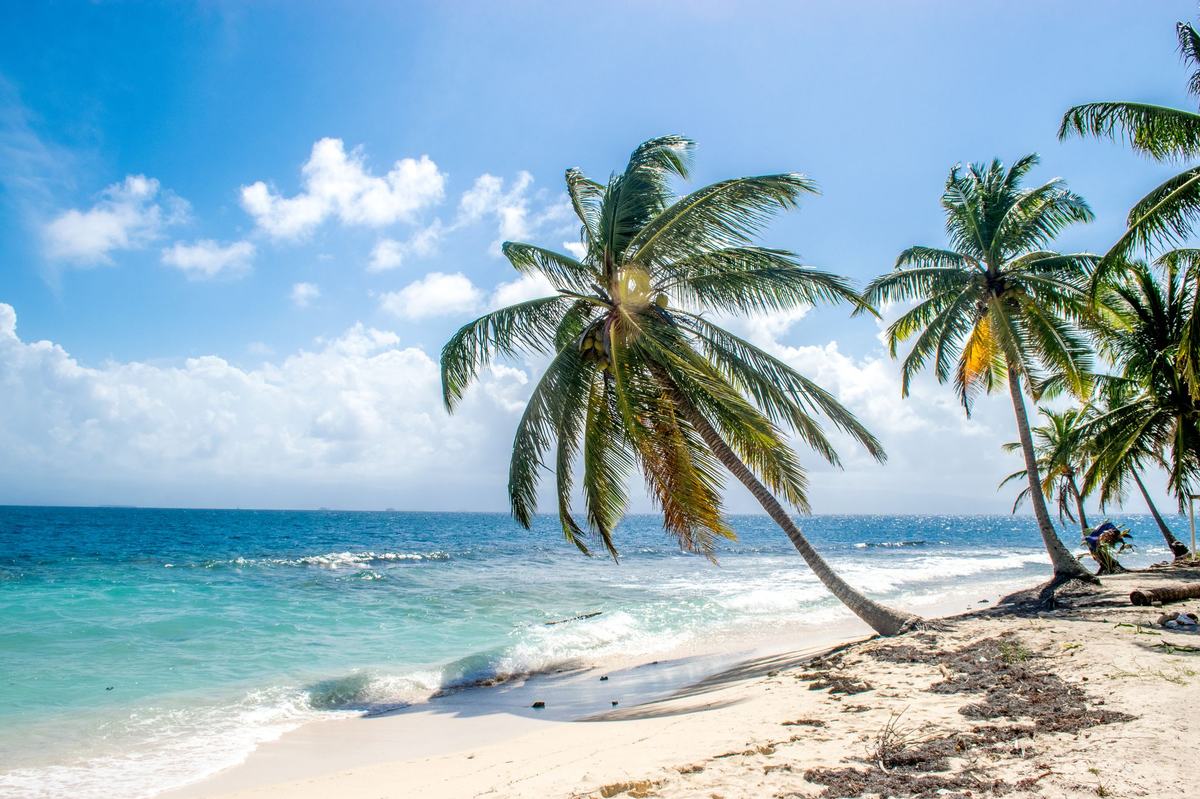
The Grenadines are what most people picture when they think of a Caribbean island in the abstract. White sand, water so clear you can see your shadow on the bottom in 30 feet, almost no buildings taller than a coconut palm. Bequia is the largest of the Grenadines and is famous for boat-building. The local craftsmen there can still build a traditional double-ended whaleboat by hand, and Bequia is one of only a handful of places on Earth allowed by the International Whaling Commission to take a small subsistence quota of humpback whales each year, using harpoons thrown from open boats. They almost never catch anything. The right to do it is the point.
Mustique is the strange one. It's a privately owned island of about 1,400 acres where Princess Margaret had a holiday house, Mick Jagger has one now, and David Bowie used to. The whole island is essentially a members club. You can visit, but the residents have included some of the more famous people of the last 60 years. Tobago Cays, just to the south, is a marine park of five uninhabited islands surrounded by a horseshoe reef. Parts of Pirates of the Caribbean: Dead Man's Chest were filmed there in 2005.
A Long Road to Independence
Saint Vincent was one of the last places in the Caribbean that European colonizers managed to take from the indigenous Caribs. The Black Caribs, also called Garifuna, resisted British control through most of the 1700s in two brutal wars. After the second war ended in 1797, the British deported about 5,000 surviving Black Caribs to the island of Roatan, off the coast of Honduras. Their descendants still live along the coast of Central America today and speak the Garifuna language, which UNESCO recognized as a Masterpiece of the Oral and Intangible Heritage of Humanity.
The country didn't become independent until October 27, 1979, making it one of the youngest sovereign nations in the Americas. It's a parliamentary democracy and a member of the Commonwealth. The King of the United Kingdom is technically the head of state, represented by a Governor-General on the islands. A referendum in 2009 to become a republic narrowly failed.
Frequently Asked Questions
What is the capital of Saint Vincent and the Grenadines?
The capital is Kingstown, located on the southwest coast of Saint Vincent. It has a population of around 12,000 in the city proper. Kingstown is the country's main port and home to the Botanic Gardens, which are the oldest in the Western Hemisphere.
How many islands make up Saint Vincent and the Grenadines?
The country consists of 32 islands and cays. Only 9 of them are inhabited, including the main island of Saint Vincent and the populated Grenadines such as Bequia, Mustique, Canouan, Mayreau, Union Island, and Palm Island.
What language is spoken in Saint Vincent and the Grenadines?
The official language is English. Most people also speak Vincentian Creole English, an English-based creole that mixes vocabulary from African languages, French, and the indigenous Carib language, in everyday conversation.
Is La Soufriere volcano still active?
Yes, La Soufriere is an active stratovolcano. Its most recent eruption began in December 2020 and entered an explosive phase in April 2021, forcing the evacuation of around 20,000 people from the northern half of Saint Vincent.
What currency is used in Saint Vincent and the Grenadines?
The country uses the East Caribbean Dollar (XCD), shared with seven other nations in the Organisation of Eastern Caribbean States. It is pegged to the US dollar at a fixed rate of approximately 2.70 XCD to 1 USD.
Sources
- Saint Vincent and the Grenadines Country Profile - CIA World Factbook
- Saint Vincent and the Grenadines - Encyclopaedia Britannica
- La Soufriere Volcano Eruption 2021 - University of the West Indies Seismic Research Centre
- Saint Vincent and the Grenadines - UNESCO Country Profile
- The World Bank in Saint Vincent and the Grenadines