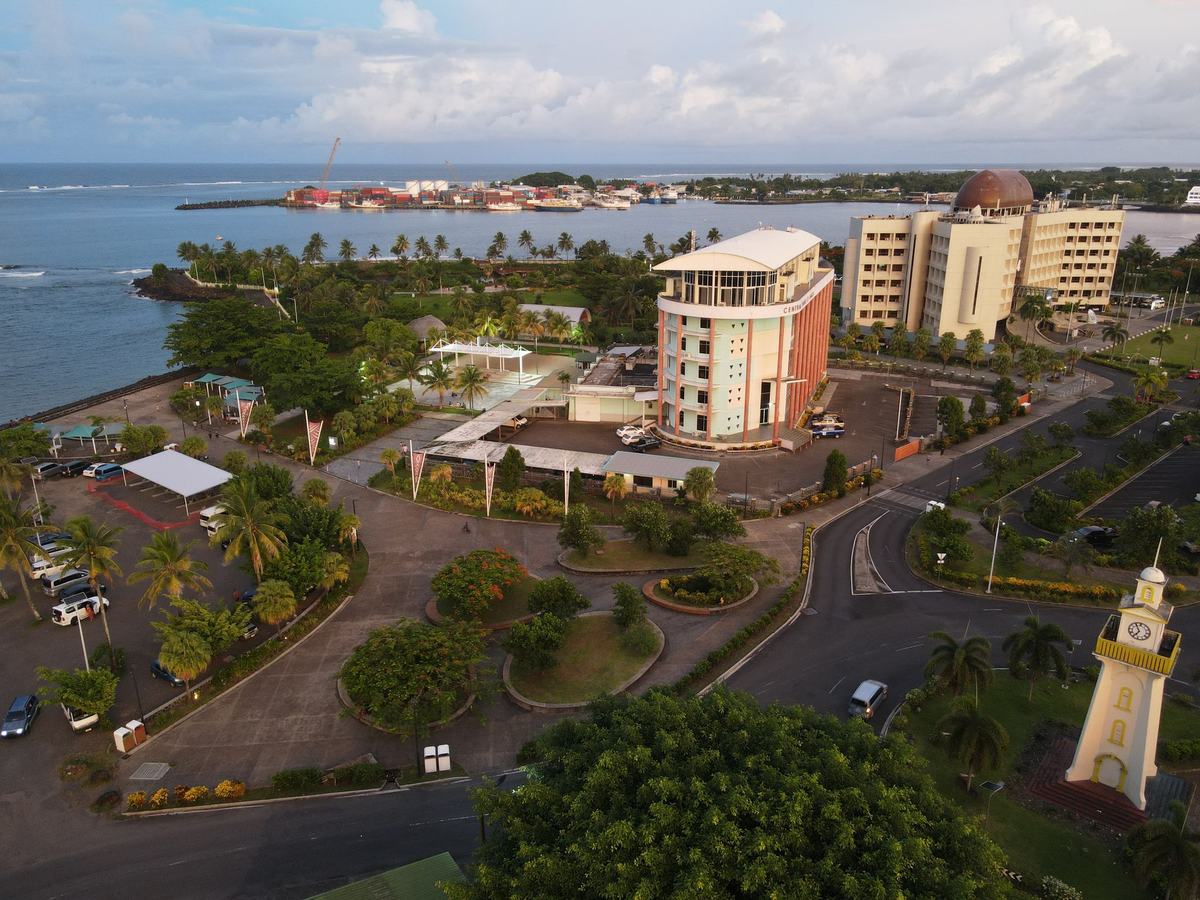
- Capital: Apia, on the island of Upolu [1]
- Population: roughly 218,000 people [2]
- Area: about 2,842 square kilometers across two main islands and seven smaller ones [1]
- Official languages: Samoan and English [1]
- Currency: Samoan tala (WST) [3]
- Distinguishing claim: in 2011, Samoa skipped December 30 entirely to switch sides of the International Date Line [4]
Here's something that'll ruin the next geography quiz you take: there are people alive today who can honestly say they've never lived through December 30, 2011. They went to bed on the 29th, woke up on the 31st, and the calendar just moved on. That happened in Samoa, and the country did it on purpose.
The Day Samoa Erased From History
For over a hundred years, Samoa sat on the eastern side of the International Date Line. The story goes that in 1892, an American trader convinced the king to switch over so the country would share a calendar with California, where most of the trade was happening. They celebrated July 4 twice that year to make the math work.
By 2011, the math had flipped. Australia and New Zealand had become Samoa's biggest trading partners, and being a full day behind them meant a Samoan business trying to call Auckland on a Friday was already looking at the weekend. So the government did the only logical thing. They jumped forward, deleted December 30, 2011, and woke up on the same day as their neighbors.
If you were born on December 30 in Samoa, the government had to figure out what to do about your birthday. Turns out the answer was "celebrate it on December 31, sorry about that". [4]
Fa'a Samoa, the Way Everything Works
You can't write about Samoa without writing about fa'a Samoa, which translates roughly as "the Samoan way". It's not a slogan. It's the operating system the country runs on, and it predates contact with Europeans by something like three thousand years.
The core unit is the aiga, the extended family. Each aiga is led by a matai, a chief who's chosen by family consensus to represent them in village affairs. There are tens of thousands of matai titles registered in Samoa, and a single person can hold more than one. Land is held communally by aiga, not by individuals. You can't really buy customary land in Samoa, which is about 80 percent of the country. You belong to it through your family. [5]
Back home in Montana, land is something you fence off and put your name on at the courthouse. In Samoa, it's something your great-grandfather's grandfather farmed, and your sister's kids will farm after you. The difference takes a while to sit with.
Two Islands That Do Most of the Living
Samoa has nine islands total, but almost everyone lives on two of them. Upolu, the smaller one, holds Apia and roughly three-quarters of the population. Savai'i, the bigger island to the west, is more volcanic and more rural, with lava fields you can still walk across from eruptions in the early 1900s.
Savai'i is also one of the largest volcanic islands in Polynesia by area, and some researchers think it may be the legendary Hawaiki, the ancestral homeland that shows up in oral traditions across Polynesia from New Zealand to Hawaii. [6] That's the kind of fact I had to look up twice. A small island in the South Pacific that might be the origin story for a third of the ocean.
A Country That Used to Be Western
Samoa was called Western Samoa until 1997. The name was a colonial leftover, distinguishing the independent country from American Samoa, the U.S. territory next door. Western Samoa won independence from New Zealand in 1962, the first Pacific Island nation to do it, and forty-five years later the government dropped the "Western" because, at that point, who was it for?
The two Samoas share a language and a culture and a lot of family, but they're separate countries with separate passports, separate currencies, and separate sides of the date line. You can fly from Apia to Pago Pago in about half an hour and arrive a full day earlier than you left. [4]
Tattoos That Take Weeks
The Samoan word "tatau" is where the English word "tattoo" comes from, brought back by European sailors in the 18th century. The traditional pe'a, the male tattoo, covers a man from the waist to the knees in dense geometric patterns and takes weeks of daily sessions to complete. It's done with hand tools, by a tufuga, a master practitioner whose techniques have been passed down through specific family lines for centuries.
The female version, the malu, is lighter but no less meaningful. Getting one isn't a fashion decision. It's a commitment to fa'a Samoa, taken on with family witness, and it stays with you for life. [7]
Frequently Asked Questions
What is the capital of Samoa?
Apia is the capital of Samoa. It sits on the northern coast of Upolu and is home to about 36,000 people, making it the country's only real urban center.
Is Samoa the same as American Samoa?
No. Samoa is an independent country, and American Samoa is a U.S. territory. They share a culture and a language but have separate governments, currencies, and time zones. American Samoa is also a full day behind Samoa.
What language do Samoans speak?
Samoan and English are both official languages. Samoan is a Polynesian language spoken by virtually everyone, and English is widely used in business, government, and education.
Why did Samoa skip a day in 2011?
Samoa switched from the eastern to the western side of the International Date Line on December 30, 2011, to align its calendar with Australia and New Zealand, its main trading partners. The country effectively deleted that day from its calendar.
Sources
- CIA World Factbook: Samoa
- World Bank: Samoa Country Profile
- Central Bank of Samoa
- BBC News: Samoa skips a day to align with Asia and Australia
- Government of Samoa: Ministry of Natural Resources and Environment, Customary Land
- Encyclopaedia Britannica: Samoa
- Smithsonian Magazine: The Ancient and Mysterious History of Samoan Tatau