- Capital: Singapore (the country is the city) [1]
- Population: about 6.04 million [2]
- Area: 735.7 square kilometers (284 square miles) [1]
- Official languages: English, Malay, Mandarin Chinese, Tamil [1]
- Currency: Singapore dollar (SGD) [1]
- One of only three surviving city-states in the world, alongside Monaco and Vatican City [3]
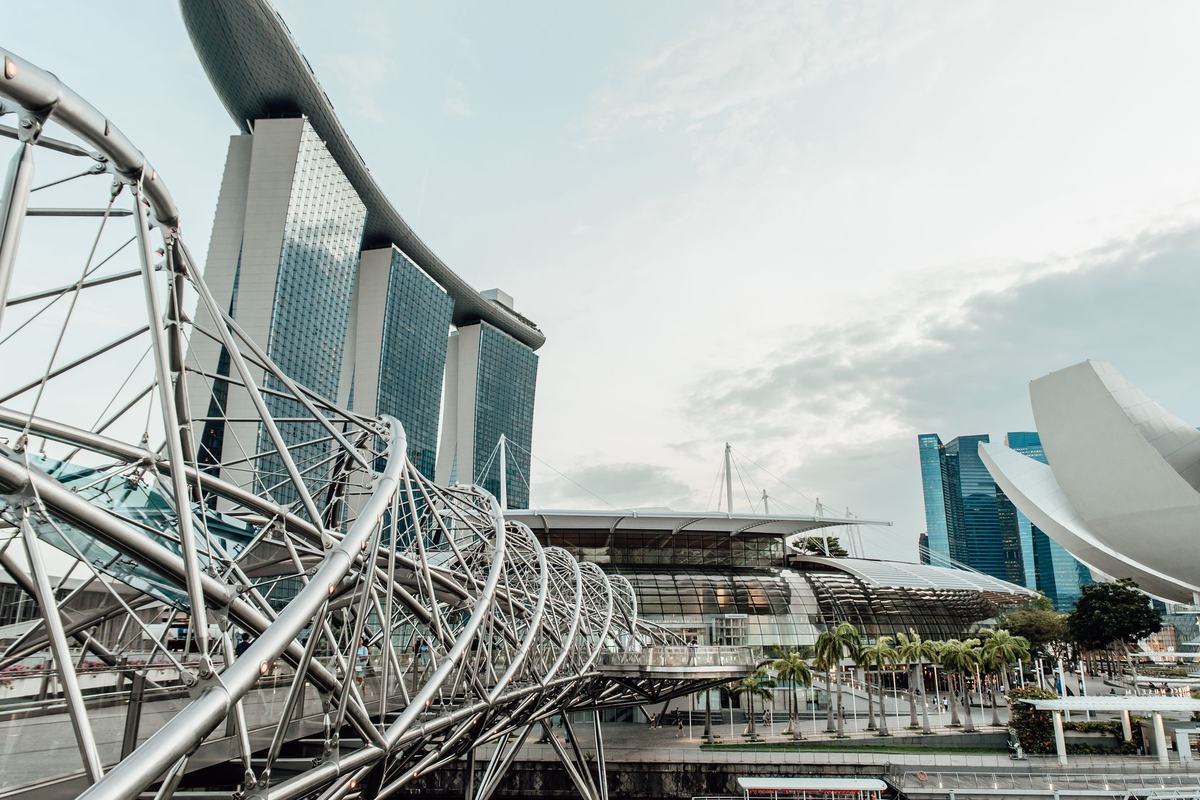
Here's something that'll ruin the next geography quiz you take: Singapore is smaller than New York City. Not the metro area. Just the five boroughs. And yet this dot at the southern tip of the Malay Peninsula somehow runs one of the busiest ports on the planet, hosts more banks than most G20 countries, and built a skyline that looks like it was rendered by a video game studio with an unlimited budget.
I had to look this up twice. In 1965, Singapore got kicked out of Malaysia. Not seceded - kicked out. Lee Kuan Yew, the country's first prime minister, cried on television announcing it. Sixty years later, Singapore's GDP per capita is higher than the United States'. The story of how that happened is the actual interesting fact about Singapore. Everything else is footnotes.
A Country That Used to Be a Swamp
When the British showed up in 1819, Singapore had maybe a thousand people on it. Most of the island was mangrove swamp and jungle. Sir Stamford Raffles took one look at the location and saw what nobody else did: a deep natural harbor sitting exactly where the trade winds change direction between the Indian Ocean and the South China Sea. Every ship going from Europe to East Asia had to pass through this strait whether the captain liked it or not.
Raffles set up a free port, meaning no taxes on goods coming in or going out, and within five years Singapore had ten thousand people. Within fifty, it had a quarter million. The British ran the place for over a hundred years, the Japanese took it during World War II in one of the most humiliating defeats in British military history, and then independence came in stages between 1959 and 1965. The land area kept growing too. Roughly 25% of modern Singapore is reclaimed - literal new land made by dumping sand into the ocean [4]. The country is geographically larger now than it was when it became independent. Try wrapping your head around that.
Four Languages, One Country, No Drama
Most countries with this much linguistic diversity have a language war going on somewhere. Singapore just shrugged and made all four official. English is the language of government, business, and school. Mandarin is what most ethnic Chinese Singaporeans speak at home, though plenty of older folks still use Hokkien, Teochew, or Cantonese. Malay is the national language - the anthem is sung in Malay even though most citizens don't speak it as a first language. Tamil represents the Indian community, mostly descendants of laborers and traders who arrived during the British colonial period [1].
Then there's Singlish. Officially the government discourages it. Unofficially everyone speaks it. It's English structured by Chinese and Malay grammar, sprinkled with words from all four official languages plus Hokkien. You'll hear someone say "Can lah, no problem one" and somehow it's a complete, grammatically internally consistent sentence. Linguists who study creole languages adore Singlish. The Singapore tourism board treats it like an embarrassing teenage diary.
The Food Is Religion
Hawker centers are open-air food courts where vendors sell single dishes for two to six Singapore dollars (roughly the price of a coffee at any chain back in Portland). The food at these places is so good that two hawker stalls have won Michelin stars. A plate of chicken rice from a Michelin-starred chef for four bucks. That's the deal Singapore has been quietly offering for years.
Hawker culture got added to UNESCO's Intangible Cultural Heritage list in 2020 [5]. Each ethnic group brought its own dishes and somewhere along the way they all started borrowing from each other. Chili crab is Chinese-Singaporean. Laksa is Malay with Chinese noodles. Roti prata is Indian but heavier and crisper than anything you'd find in actual India. Bak kut teh is a pork rib soup that ethnic Chinese laborers used to eat before dawn shifts at the docks. Now it's a national dish. The whole cuisine is the country's history on a plate, and the country is small enough that you can eat across it in a single day.
The Garden in the City
Almost half of Singapore is green space. In a country where land is the single most expensive resource on Earth, the government still chose to plant trees on every street, build vertical gardens up the sides of buildings, and turn old reservoirs into nature reserves. The official policy is called "City in a Garden", and it isn't marketing. It's enforced. Developers can't get permits without integrating greenery into their designs.
The Gardens by the Bay project, with those giant tree-shaped structures that look like something out of a science fiction movie, sits on reclaimed land that didn't even exist a generation ago. The supertrees are real trees too, eventually. The vertical structures are scaffolds covered in climbing plants that collect rainwater and generate solar power. Coming from Montana, where green space meant whatever grew on its own, I find the engineered version genuinely beautiful. It looks like what humans would do if we actually planned cities the way we plan our own homes.
The Strictest Country You'll Actually Want to Visit
You've heard the rules. No chewing gum (mostly true - selling it is banned, importing small amounts for personal use was legalized in 2004). Fines for jaywalking, littering, smoking in the wrong place, not flushing public toilets. Caning is still a legal punishment for vandalism, which is how Michael Fay, an American teenager, got himself caned in 1994 for spray-painting cars. The incident caused a diplomatic incident with the US government and a national shrug in Singapore.
Which, if you think about it, is the trade. Singapore took one of the highest-crime port cities in Southeast Asia in 1965 and turned it into one of the safest places on Earth. Women walk home alone at 2am. People leave their laptops on cafe tables to go to the bathroom. The streets are spotless because spitting gum on them costs you 1,000 Singapore dollars. The country is genuinely one of the safest places in the world to live, according to most international rankings, and the citizens by and large made peace with the bargain a long time ago.
A Government That Owns the Country (Sort Of)
Around 80% of Singaporeans live in public housing built by the Housing and Development Board [6]. Public housing here doesn't mean what it means in the US. These are mostly nice apartments that families buy on 99-year leases, with prices subsidized by the government but rising in value over time. It's the largest public housing program in the world by percentage of population, and it's the main reason Singapore has near-zero homelessness and a homeownership rate above 90%.
The government also owns about 90% of the land in the country. Most companies you've heard of - Singapore Airlines, the port operator, the telecom company - are partially state-owned through a sovereign wealth fund called Temasek. The whole economic model is technocratic capitalism with a heavy state hand. Lee Kuan Yew used to call it pragmatism. Critics call it soft authoritarianism. Both descriptions are partly right.
A Tiny Country That Punches Way Above Its Weight
Singapore has no oil, no real natural resources, no agriculture to speak of. What it has is location, education, and discipline. The country built one of the best school systems in the world, attracts foreign companies with low taxes and almost zero corruption, and runs Changi Airport, which has won the title of world's best airport so many times the award stopped being interesting. There's a butterfly garden in the airport. And a movie theater. And a four-story slide.
Coming from a country with fifty states and three hundred million people, it's strange to spend time in a place where one decision in 1965 by basically one guy set the entire trajectory. Lee Kuan Yew died in 2015 and his son led the country until 2024. The model he built is being studied by other small countries trying to figure out their own escape from the resource curse or the development trap. Some things transfer. Most don't. Singapore is its own thing, the way Montana ranches are their own thing, and pretending you can replicate either one by writing down the rules is missing the point entirely.
Frequently Asked Questions
Is Singapore a country or a city?
Singapore is both - it's a sovereign island country and a city at the same time, called a city-state. It's one of only three surviving city-states in the world, alongside Monaco and Vatican City. The entire country covers just 735.7 square kilometers.
What language do they speak in Singapore?
Singapore has four official languages: English, Malay, Mandarin Chinese, and Tamil. English is the main language of government, business, and education. Most Singaporeans are bilingual, and many also speak Singlish, a local creole that mixes English with Chinese, Malay, and Tamil vocabulary.
Is Singapore safe for tourists?
Yes. Singapore is consistently ranked among the safest countries in the world. Violent crime is extremely rare, the streets are well-lit and clean, and public transport is reliable around the clock. The country enforces strict laws on littering, drugs, and public behavior, which contributes to its reputation for orderliness.
Why is Singapore so rich?
Singapore became wealthy through a deliberate state strategy: a free-trade port at a strategic shipping location, low corporate taxes, almost zero corruption, and heavy investment in education and infrastructure. From the 1960s onward, the government attracted multinational corporations and built a financial center that now rivals Hong Kong and London.
What is Singapore famous for?
Singapore is famous for its hawker food culture, Changi Airport (regularly named the world's best), strict laws including a ban on selling chewing gum, the Gardens by the Bay supertree grove, and being one of the wealthiest countries per capita despite having no natural resources. It's also known as one of the cleanest cities on Earth.