- Capital: Bratislava (population about 475,000) [1]
- Total population: roughly 5.4 million [1]
- Area: 49,035 square kilometers (a bit smaller than West Virginia) [1]
- Official language: Slovak
- Currency: Euro (EUR), since 2009 [2]
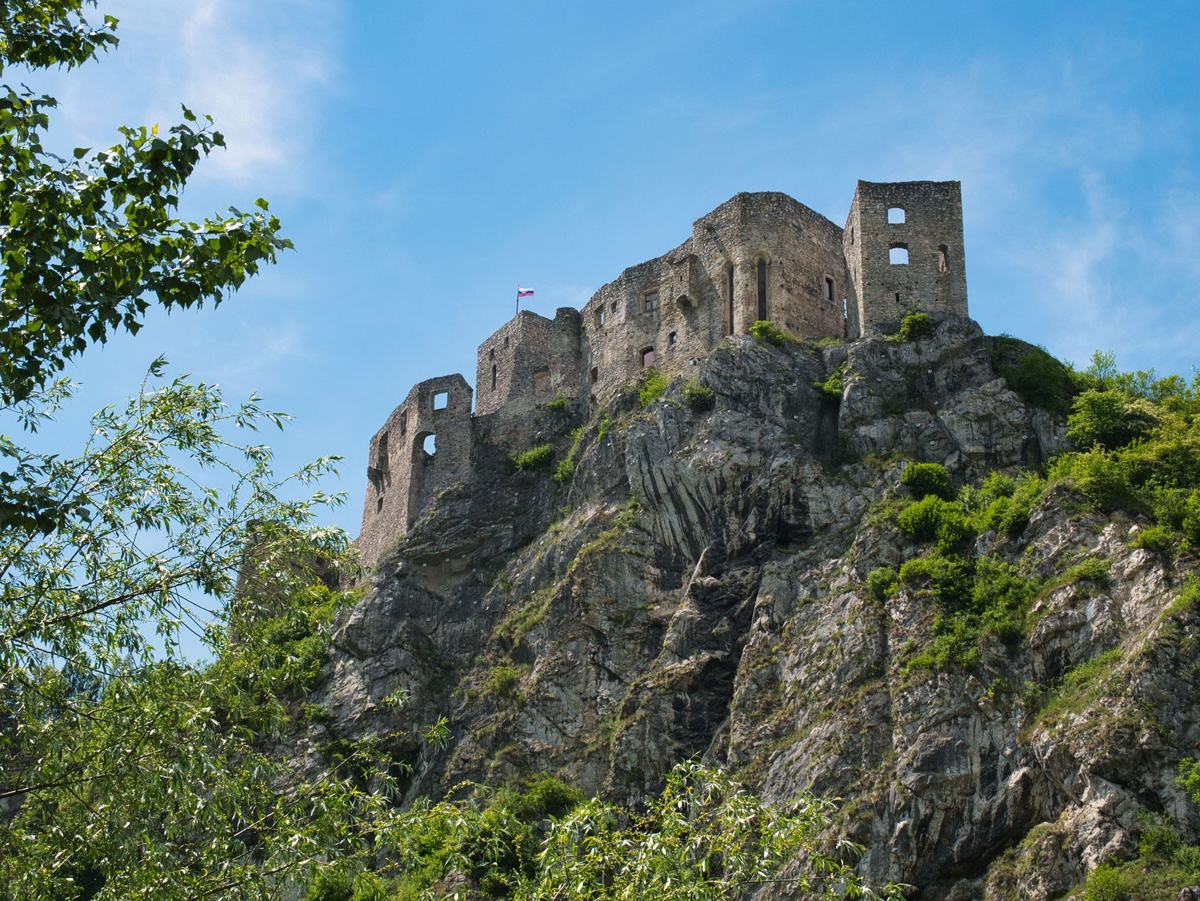
- More than 180 castles and 425 chateaux, the highest density per capita in the world [3]
Most Americans I know couldn't separate Slovakia from the Czech Republic on a map if you spotted them both names. I was the same way until a college roommate from Košice spent a whole night explaining the difference to me, and even then I had to look it up twice the next morning. The two countries split apart on January 1, 1993, in what is now called the Velvet Divorce. No protests. No troops. They just shook hands and walked off in different directions. Three decades later, Slovakia has quietly turned into one of the most surprising countries in Europe, and almost nobody outside Central Europe has caught on.
A Capital That Touches Three Countries
Bratislava is the only capital city in the world that borders two other countries [4]. You can sit on a park bench in the suburb of Devín, look across the Danube, and see Austria. Walk twenty minutes upstream and you are at the Hungarian border. Vienna is only 55 kilometers away, closer than most American suburbs are to their own downtowns. There is a regular bus that gets you from one capital to the other in about an hour.
The city sits where the Carpathian Mountains end and the Danube Plain begins. For centuries it was called Pressburg in German and Pozsony in Hungarian, and it served as the coronation city of the Kingdom of Hungary for almost 300 years. Eleven Hungarian kings and eight queens were crowned in St. Martin's Cathedral, including Maria Theresa in 1741 [4]. The cathedral still stands, with a gilded crown on its spire instead of a cross, a reminder of what this city used to be.
The Highest Density of Castles in the World
Here's the thing about Slovak castles. There are more of them than the country knows what to do with. Officially, the count sits at over 180 castles and 425 chateaux, scattered across a country roughly the size of West Virginia [3]. That works out to one castle for every 27,000 people, which is the highest concentration anywhere on the planet.
Spiš Castle in the east is one of the largest castle complexes in Central Europe, sprawling across more than four hectares of a high limestone ridge [5]. It has been a UNESCO World Heritage Site since 1993. From the top you can see the Tatras on a clear day. Then there is Bojnice Castle, a Disney-looking fairytale fortress in the central highlands, the most visited castle in the country. Orava Castle perches on a sheer cliff above a river, and parts of the 1922 silent film "Nosferatu" were shot there. Most of these places sat in ruins for decades. Slovaks have spent the last thirty years patiently rebuilding them, stone by stone.
The Tatras Rise Out of Nowhere
The High Tatras are the smallest alpine mountain range in the world, but you would never guess it standing at the base of them [6]. They run for only about 26 kilometers, and yet they hold 25 peaks above 2,500 meters. The highest, Gerlachovský štít, tops out at 2,655 meters. You drive across flat farmland for an hour and then suddenly there is a wall of jagged granite in front of you, the way the Tetons appear when you come into Jackson Hole from the east.
The Tatras National Park is the oldest in Slovakia and protects roughly 738 square kilometers of alpine terrain, glacial lakes, and the densest population of brown bears in Central Europe. Marmots whistle from the scree fields. Chamois pick their way across rock faces that would make a climber sweat. Slovaks treat hiking up here the way Coloradans treat their 14ers, with a mix of pride and slight competitiveness. There are huts. There is hot soup at the top. It is the best deal in European mountaineering.
Europe's Geographic Heart
There is a small stone monument near the village of Kremnické Bane that claims to mark the exact geographic center of Europe [7]. The claim is disputed. Lithuania, Ukraine, and Belarus all have their own monuments making the same case, and which one you believe depends on which definition of Europe you accept and which mathematical method you trust. The Slovak version was calculated by Hungarian geographers in the 19th century. The marker is a quiet little stone in the woods, with a small chapel nearby. You drive up a forest road, park, and walk maybe two minutes. There is no gift shop. Just the marker and the trees and a sense that somebody, a long time ago, picked up a compass and decided this was the middle of something.
A Country of Folk Traditions
Slovak folk culture is still alive in a way that surprises visitors from places where these things faded a century ago. The villages of the central and northern regions still hold traditional Easter celebrations where young men splash water on young women, supposedly for health and beauty, though everyone laughs about it now. Wooden churches in the eastern Carpathian foothills are UNESCO listed, built entirely without nails, some of them dating back to the 16th century [8].
Then there is the fujara, a Slovak shepherd's flute that is almost two meters tall and has to be played standing up. It produces a low, breathy sound that carries across whole valleys. UNESCO listed it as a Masterpiece of the Oral and Intangible Heritage of Humanity in 2005 [8]. Watch a video of someone playing one. It does not sound like any other instrument on earth. It sounds like wind, if wind had a voice.
Caves, Hot Springs, and Underground Surprises
Slovakia sits on top of a karst landscape, which means the country is honeycombed with caves. There are more than 7,000 known caves, and a few of them are extraordinary [9]. The Domica Cave on the Hungarian border has been continuously inhabited or visited by humans for over 6,000 years. Ochtinská Aragonite Cave is one of only three aragonite caves open to the public in the world. The mineral grows in white clusters that look like coral, or fireworks frozen in place.
The country also has roughly 1,200 mineral and thermal springs, more than almost any other European country its size [9]. Spa towns like Piešťany have been attracting visitors for over 800 years. The mud there is reputedly so dense in minerals that you can shape it like clay. Romans bathed in some of these springs. So did Beethoven, who stopped in Piešťany to soak his hands and complained about everything else.
The Velvet Divorce
I keep coming back to this. In December 1992, the leaders of Czechoslovakia signed an agreement to dissolve the country in eleven days. Eleven days. No referendum. No bloodshed. The currency split. The flag changed. Embassies were divided up. On January 1, 1993, Slovakia woke up as an independent country for the first time in its modern history. Slovaks and Czechs still understand each other's languages without subtitles. The split was friendly enough that the two countries share a hockey league.
Slovakia joined the European Union in 2004 and adopted the euro in 2009 [2]. The economy has grown faster than almost any other in Central Europe. Slovakia produces more cars per capita than any country in the world, with major plants from Volkswagen, Kia, Peugeot, and Jaguar Land Rover all operating inside its borders [10]. Not bad for a country that did not technically exist thirty years ago.
Frequently Asked Questions
What is Slovakia famous for?
Slovakia is famous for having the world's highest density of castles per capita, the High Tatras mountains, and being one half of the former Czechoslovakia. It is also the world's largest car producer per capita and the home of Bratislava, the only capital city that borders two countries.
Is Slovakia the same as the Czech Republic?
No. Slovakia and the Czech Republic were one country, Czechoslovakia, from 1918 to 1992. They split peacefully on January 1, 1993, in what is called the Velvet Divorce. The two languages are closely related and mutually intelligible, but they are separate countries with separate governments, currencies, and capitals.
What language do they speak in Slovakia?
Slovak is the official language, spoken by about 80 percent of the roughly 5.4 million population. It is a West Slavic language similar to Czech and Polish. Hungarian is widely spoken in the south, and English is common among younger people in Bratislava and other cities.
What currency does Slovakia use?
Slovakia uses the euro (EUR), making it one of the few Central European countries to have adopted the common currency. It joined the eurozone on January 1, 2009. Cards are widely accepted in cities, but cash is still useful in rural areas, small shops, and at trailheads.
Is Slovakia worth visiting?
Yes. Slovakia offers some of the best value in European travel, with the High Tatras for hiking, Spiš Castle and Bojnice for medieval history, Bratislava for a compact walkable capital, and folk villages in the east that still feel rooted in another century. Crowds are thin compared to neighboring countries.
Sources
- Statistical Office of the Slovak Republic: Population
- European Central Bank: Slovakia and the Euro
- Slovakia.travel: Castles and Chateaux
- Britannica: Bratislava
- UNESCO World Heritage Centre: Spiš Castle and Associated Cultural Monuments
- Tatra National Park Administration
- Britannica: Slovakia Geography
- UNESCO: Fujara and Its Music
- Slovak Caves Administration
- OECD Economic Survey: Slovak Republic