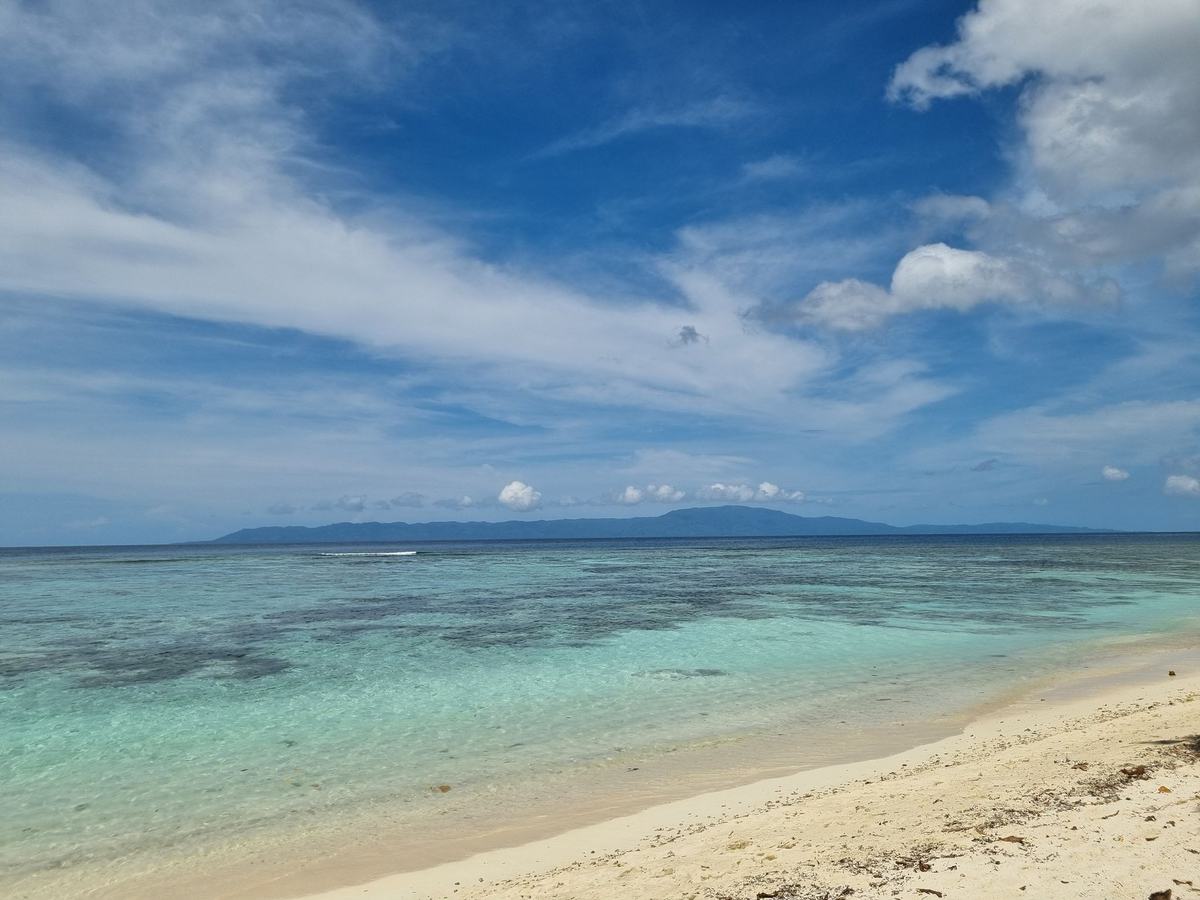
- Capital: Honiara, on the island of Guadalcanal [1]
- Population: about 740,000 people across the inhabited islands [2]
- Area: roughly 28,900 square kilometers of land scattered over a vast Pacific exclusive economic zone [1]
- Official language: English, with Solomon Islands Pijin as the everyday lingua franca and over 70 indigenous languages spoken [1]
- Currency: Solomon Islands dollar (SBD)
- One claim to fame: the stretch of water off Guadalcanal known as Iron Bottom Sound holds dozens of warships and aircraft sunk during the Pacific campaign of World War II [3]
Most people couldn't find the Solomon Islands on a map. That's probably how the islands have stayed the way they are: jungle to the waterline, villages reachable only by boat, and a culture that still moves at the pace of the tide. Then you read that the sea floor right outside the capital is a graveyard of warships, and the whole picture rearranges itself.
I grew up in Montana thinking the Pacific was one big blue blank between California and Asia. The Solomons make a strong case that the Pacific is actually a country-by-country mosaic, and this one is doing things you won't find anywhere else. Nearly a thousand islands. More than seventy languages still in active daily use. Saltwater crocodiles in the lagoons. And a national music tradition built on bamboo panpipes the size of a couch.
Nearly a Thousand Islands, About 350 Inhabited
The Solomon Islands archipelago stretches roughly 1,500 kilometers across the southwestern Pacific, just east of Papua New Guinea. The country counts somewhere around 990 islands, depending on whether you include the smaller coral cays. Six big ones do most of the heavy lifting: Guadalcanal, Malaita, Makira, Santa Isabel, Choiseul, and New Georgia.
Only about 350 of these islands have permanent residents. The rest are forested rocks, atolls, and coral outcrops where the only footprints are from seabirds. Honiara, the capital, sits on Guadalcanal and houses around 85,000 people, which makes it one of the smaller national capitals on Earth. Most Solomon Islanders live in coastal villages connected to each other not by roads but by outboard-motor canoes and the occasional cargo ship.
What gets me is how green it all is. The islands are largely volcanic, draped in rainforest that runs straight to the beach. From the air it looks less like a country and more like the pieces of one, scattered.
Iron Bottom Sound and the War That Stayed
For six months between August 1942 and February 1943, the waters around Guadalcanal were the most violent stretch of ocean on the planet. The Battle of Guadalcanal pitted the United States and its allies against Japan in a brutal campaign that combined jungle warfare, naval surface battles, and air combat. By the time the fighting ended, the bottom of the channel between Guadalcanal and the Florida Islands had collected so many sunken warships that sailors started calling it Iron Bottom Sound. The name stuck.
Today the sound is one of the most famous wreck-diving sites in the world. Cruisers, destroyers, transports, and Japanese, American, and Australian aircraft sit in the dark water, some of them broken open, some of them strangely intact. Local fishermen still pull up unexploded ordnance in their nets every year. Honiara's small national museum exhibits relics from the campaign, and unmarked monuments are tucked into the jungle outside the city where you wouldn't think to look. The war ended eighty years ago. In the Solomons, it never quite left.
More Than Seventy Living Languages
For a country of about 740,000 people, the linguistic density is staggering. Linguists count more than 70 indigenous languages still actively spoken across the archipelago, plus English as the official tongue and Solomon Islands Pijin as the everyday glue that lets people from different islands talk to each other.
Pijin grew out of the 19th-century plantation labor trade, when Solomon Islanders worked alongside speakers of dozens of unrelated languages on sugarcane fields in Queensland and Fiji. They needed a shared way to communicate, and a creole did the work. Today Pijin is the language you hear in Honiara markets, on the radio, and in church. It looks like English on the page, sounds nothing like it out loud, and packs a lot of feeling into very few words.
Bamboo Panpipes the Size of Furniture
Music in the Solomon Islands isn't background. It's an art form built on engineering. The traditional bamboo panpipe ensembles of Malaita and Guadalcanal use enormous instruments, some of them taller than the musicians playing them, struck with rubber sandals to produce deep wooden notes that carry across whole villages.
A French ethnomusicologist named Hugo Zemp recorded a panpipe group called the Are'are in the late 1960s and early 1970s, and the recordings ended up sampled by the dance group Deep Forest in their 1992 hit "Sweet Lullaby". Most of the world heard the voice of a Solomon Islander named Afunakwa singing a Baegu lullaby and had no idea where it came from. The royalties question that followed became one of the early flashpoints in the global conversation about indigenous music and copyright.
Frequently Asked Questions
Where are the Solomon Islands located?
The Solomon Islands are an archipelago in the southwestern Pacific Ocean, just east of Papua New Guinea and northeast of Australia. The country spans roughly 1,500 kilometers and includes nearly a thousand islands, though only about 350 are inhabited. It sits in the region called Melanesia.
What language is spoken in the Solomon Islands?
English is the official language, but Solomon Islands Pijin is the everyday lingua franca that connects speakers of more than 70 indigenous languages. Pijin developed in the 19th century from contact between English speakers and Pacific laborers, and is now the dominant spoken language across the country.
Is it safe to visit the Solomon Islands?
The Solomon Islands are generally safe for travelers who stick to known areas and respect local customs. Honiara has occasional petty crime, and political tensions have caused unrest in the past. Outer islands are typically very welcoming, but require careful planning because of limited infrastructure, transportation, and medical facilities.
What happened in the Battle of Guadalcanal?
The Battle of Guadalcanal was a major World War II campaign fought between August 1942 and February 1943, when Allied forces drove Japanese troops off the island of Guadalcanal. It marked a turning point in the Pacific War. The naval battles offshore left so many wrecks that the channel is now called Iron Bottom Sound.
What is the capital of the Solomon Islands?
The capital of the Solomon Islands is Honiara, located on the northern coast of Guadalcanal Island. It is home to roughly 85,000 people and serves as the country's main port, government center, and gateway for international flights. Honiara grew rapidly after World War II from a wartime supply base.