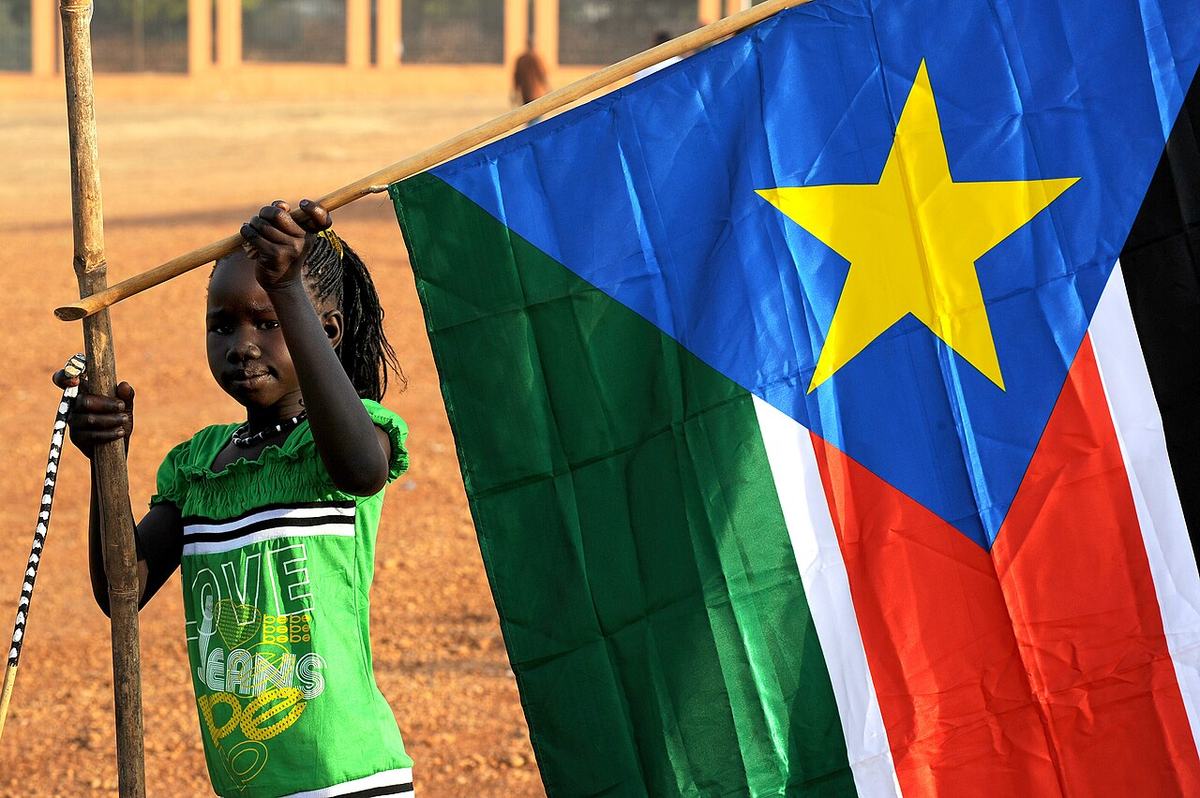
- Capital: Juba, on the west bank of the White Nile [1]
- Population: roughly 11 million [2]
- Area: about 644,329 square kilometers (248,777 square miles) [1]
- Official language: English, with Juba Arabic and over 60 indigenous languages widely spoken [3]
- Currency: South Sudanese Pound (SSP)
- Independence year: July 9, 2011, after the longest civil war in Africa [3]
Here's something I had to look up twice. South Sudan is younger than the iPhone. It officially became a country on July 9, 2011, which means kids born on independence day are still in elementary school. That makes it the youngest country in the world, full stop. And yet the land underneath it, the swamps and savannas along the White Nile, has been holding cattle herders, fishermen, and traders together for thousands of years. The country is new. The place is ancient. That gap is most of the story.
A Wetland the Size of England
In the middle of South Sudan there's a place called the Sudd, and it's one of the largest wetlands on the planet. The White Nile spreads out across it, slows down, and turns into a vast maze of channels, papyrus reeds, and floating islands of vegetation. In the rainy season the Sudd can swell to roughly 130,000 square kilometers, which is bigger than England [4]. So much water sits there that something like half the Nile's flow evaporates into the sky before it gets a chance to head north toward Egypt.
The name "Sudd" comes from an Arabic word for "barrier", and that's exactly what it was for centuries. Explorers trying to find the source of the Nile in the 1800s would push their boats into the swamp and just get stuck. Floating mats of vegetation would close behind them. Some expeditions never came back. Which, if you think about it, is a pretty effective way for a region to stay off everyone's maps.
Sixty Languages and Counting
South Sudan recognizes more than 60 indigenous languages spread across at least as many ethnic groups [3]. The Dinka are the largest, followed by the Nuer, then the Shilluk, the Bari, the Azande, the Murle, and dozens more. English is the official language, inherited from the British era and chosen at independence partly to not pick favorites among the local tongues. Juba Arabic, a creolized form of Arabic that grew up in the capital, is the everyday lingua franca that most people actually use to talk across groups.
Back home in Montana I grew up hearing English and a little Spanish. The idea of a country where a market vendor might switch between Dinka, Juba Arabic, and English in the same five-minute conversation is something I keep turning over in my head.
Cattle Are Currency, Identity, and Family
For the Dinka and Nuer especially, cattle are not livestock the way I'd think of livestock. They're the center of everything. A young man's wealth is measured in head of cattle. A bride price is paid in cattle. Songs are written about specific cows. Boys are given a "name-ox" in adolescence and sometimes take a praise-name from their favorite animal. Cattle camps move with the seasons, following the floodwaters of the Nile out into the dry-season grazing lands and back again.
Turns out that this isn't ceremonial nostalgia. It's a working economy. The herds are still the main form of stored wealth across huge stretches of the country, and rural life is organized around them in a way that hasn't really changed in centuries.
The Boma Plateau and the Great Migration Almost Nobody Talks About
In eastern South Sudan, near the Ethiopian border, there's a wildlife migration that rivals the Serengeti and gets almost zero international attention. Aerial surveys have counted well over a million white-eared kob, tiang, and Mongalla gazelle moving across the Boma and Badingilo landscapes each year [5]. For a long time during the civil wars no one knew if the herds had survived. When researchers finally got planes back into the air, they found the migration had kept going the entire time, with the animals adapting their routes around the conflict.
The country is now slowly building a national park system around it, but the infrastructure is thin. There are basically no lodges. No paved access. Just a migration that has been happening more or less the same way since long before any of these borders existed.
Frequently Asked Questions
When did South Sudan become a country?
South Sudan became an independent country on July 9, 2011, after a referendum in which nearly 99 percent of voters chose to separate from Sudan. It is the world's youngest internationally recognized sovereign state and the most recent member admitted to the United Nations.
What is the capital of South Sudan?
The capital of South Sudan is Juba, located on the west bank of the White Nile in the south of the country. It grew rapidly after independence in 2011 and now has a population of around 500,000, though estimates vary because of ongoing migration from rural areas.
What languages are spoken in South Sudan?
English is the official language of South Sudan, inherited from the colonial era and chosen at independence. Juba Arabic serves as the most common everyday lingua franca. More than 60 indigenous languages are spoken, including Dinka, Nuer, Shilluk, Bari, and Zande.
What is the Sudd?
The Sudd is one of the largest freshwater wetlands in the world, formed where the White Nile spreads out across central South Sudan. In the wet season it can cover around 130,000 square kilometers. It supports vast bird populations and traditional fishing communities and has historically blocked navigation up the Nile.