- Capital: Sri Jayawardenepura Kotte (administrative) and Colombo (commercial), a split arrangement most people don't know about [1]
- Population: roughly 22 million [2]
- Area: about 65,610 square kilometers, slightly larger than West Virginia [1]
- Official languages: Sinhala and Tamil, with English used widely in business and government [1]
- Currency: Sri Lankan rupee (LKR)
- Distinguishing claim: the world's largest cinnamon exporter, producing about 85 percent of true Ceylon cinnamon [3]
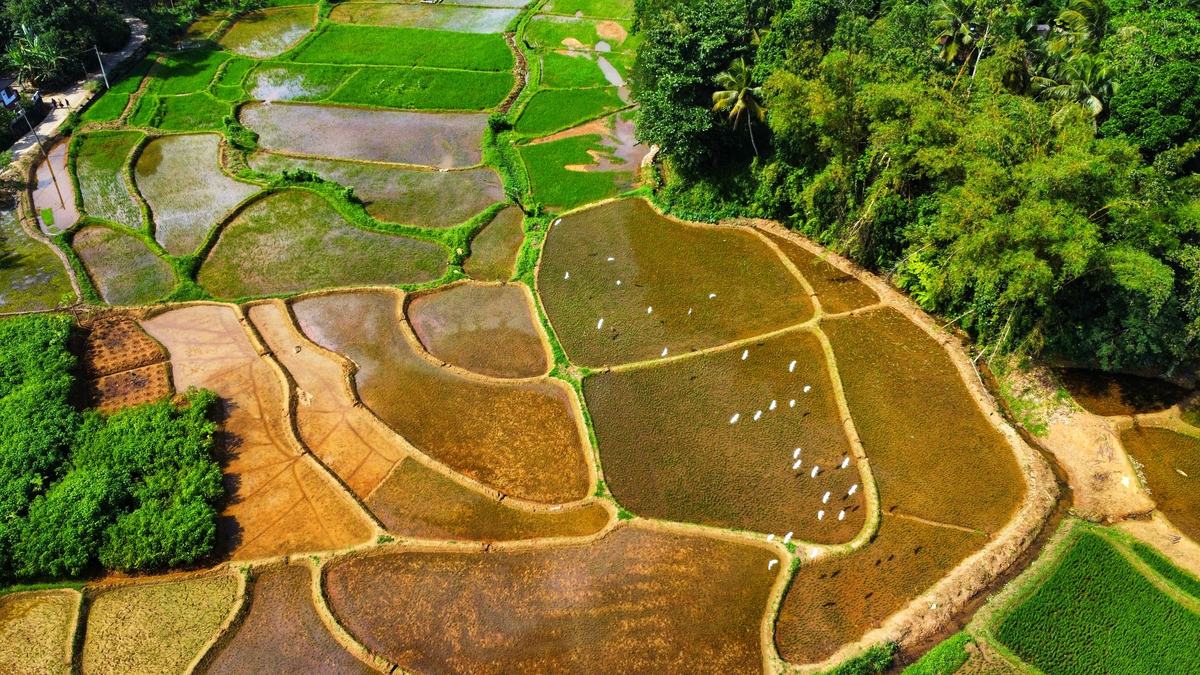
Most Americans I know couldn't place Sri Lanka on a map if you gave them three tries. They'd look for it somewhere near Vietnam, or maybe think of it as part of India. Here's the thing: it's an island roughly the size of Ireland, hanging off the southern tip of the Indian subcontinent like a teardrop. And for an island that small, it has been quietly shaping the modern world for two thousand years. The cinnamon in your morning oatmeal, the tea in your afternoon mug, and a chunk of the gemstones in jewelry stores around the world all trace back to this one piece of land in the Indian Ocean.
A Country with Two Capitals
Sri Lanka has two capitals, and they sit about 10 kilometers apart [1]. Colombo is the commercial capital, the place with the port, the financial district, and most of the embassies. Sri Jayawardenepura Kotte, usually shortened to Kotte, is the administrative capital, home to the parliament. The split happened in 1985, when the government decided it wanted some distance between the political center and the chaos of downtown Colombo.
The name of the country itself changed in 1972. Before that, it was called Ceylon, the name the British had used during the colonial era. Sri Lanka means "resplendent island" in Sanskrit. You still see "Ceylon" on tea boxes and cinnamon labels because the brand value is enormous, but politically the country has been Sri Lanka for over half a century.
Ancient Cities Most Travelers Have Never Heard Of
Anuradhapura was the capital of Sri Lanka for more than a thousand years, from around the 4th century BCE to the 11th century CE [4]. At its peak, it was one of the largest cities in the ancient world, with sophisticated irrigation systems, monasteries housing thousands of monks, and dagobas (Buddhist stupas) that rivaled the pyramids of Giza in scale. The Jetavanaramaya stupa, completed around 300 CE, was the third tallest structure on Earth at the time, beaten only by the two largest pyramids in Egypt.
Then there's Sigiriya, which I had to look up twice the first time I read about it. It's a massive column of rock that rises 200 meters out of the jungle, and in the 5th century CE a paranoid king named Kashyapa built an entire palace complex on top of it [5]. Halfway up the rock, there's a section of frescoes painted directly onto the cliff face, depicting women whose identity nobody is entirely sure about. The whole place got abandoned after Kashyapa died and was reclaimed by the jungle for over a thousand years before archaeologists found it again.
Polonnaruwa replaced Anuradhapura as the capital in the 11th century and lasted for about 200 years before that too was abandoned. The country has so many ancient capitals scattered across its interior that they collectively form a UNESCO-recognized region known as the Cultural Triangle.
Where Real Cinnamon Comes From
Here's something nobody talks about, but Sri Lanka is the source of "true" cinnamon, the kind labeled Cinnamomum verum or Ceylon cinnamon [3]. Most cinnamon sold in American grocery stores is actually cassia, a related but different spice from China, Vietnam, or Indonesia. The two have different flavors and chemical profiles. Cassia is sharper and contains higher levels of coumarin, a compound that can be hard on the liver in large doses. Ceylon cinnamon is more delicate, sweeter, and has been the preferred grade for European chefs since the 1500s.
The Portuguese, Dutch, and British all fought over Sri Lanka in succession largely because of cinnamon. Before the colonial era, the spice was so valuable that European merchants made literal fortunes from a single shipload. Today, Sri Lanka still produces about 85 percent of the world's true cinnamon, and the harvesting process hasn't changed much in centuries. Workers strip the inner bark from young branches by hand, then roll the strips into the quills you see in glass jars.
Tea Country in the Highlands
The British planted the first commercial tea estates in the central highlands in the 1860s, after a coffee blight wiped out the previous plantations [6]. Within a few decades, Ceylon tea became one of the most recognizable brands in the world. Today, Sri Lanka is one of the top four tea producers on the planet, alongside China, India, and Kenya.
The tea country itself, around Nuwara Eliya and Ella, sits at elevations between 1,200 and 2,000 meters. It's cool enough that the British colonists built mock-Tudor cottages and called the area "Little England". Back home in Montana, we don't think of the tropics as having anything like a temperate climate, but at 2,000 meters near the equator you can need a sweater in July. The high-grown teas from this region are prized for their bright, brisk flavor, and they show up in premium blends worldwide.
Wildlife and Geography on a Small Island
For a country smaller than most US states, Sri Lanka packs an absurd amount of biodiversity. There are around 6,000 wild Asian elephants on the island, one of the largest populations outside of India [7]. Yala National Park, in the southeast, has the highest density of leopards anywhere in the world. Whales, including blue whales, can be spotted off the southern coast, and the waters around the island are some of the best in the world for marine wildlife.
The country is also famous for its gemstones. The mines around Ratnapura, in the southwest, have produced sapphires, rubies, garnets, and topaz for over two thousand years. The "Star of Adam", one of the largest sapphires ever found, was unearthed there in 2015 and weighs over 1,400 carats. Marco Polo described the island as having more rubies than anywhere else on Earth, and the trade is still going strong today.
Frequently Asked Questions
What is the capital of Sri Lanka?
Sri Lanka has two capitals. Sri Jayawardenepura Kotte is the official administrative capital and home to parliament, while Colombo serves as the commercial capital and the country's largest city. The two are located about 10 kilometers apart and effectively function as a single metropolitan area.
What languages do people speak in Sri Lanka?
The official languages are Sinhala and Tamil, with Sinhala spoken by about 75 percent of the population and Tamil by around 15 percent. English is widely used in government, business, and tourism. Many Sri Lankans speak two or all three languages, especially in urban areas.
Is Sri Lanka the same as Ceylon?
Yes, Ceylon was the name used during British colonial rule, from 1815 until independence in 1948. The country officially became the Republic of Sri Lanka in 1972. "Ceylon" still appears on tea and cinnamon labels because the brand has high commercial value, but politically the country has been Sri Lanka for over fifty years.
What is Sri Lanka famous for?
Sri Lanka is best known for Ceylon tea, true cinnamon, gemstones, and ancient Buddhist sites like Anuradhapura, Polonnaruwa, and Sigiriya. It also has eight UNESCO World Heritage sites, one of the highest densities of wild elephants in Asia, and the world's highest concentration of leopards in Yala National Park.
How big is Sri Lanka?
Sri Lanka covers about 65,610 square kilometers, making it slightly larger than the US state of West Virginia and a little smaller than Ireland. Despite its compact size, it contains tropical beaches, dry plains, dense rainforests, and high-elevation tea country, sometimes all within a few hours' drive.